Recognizing Patterns Adding up to 50 Worksheets for Ages 6-7
7 filtered results
-
From - To
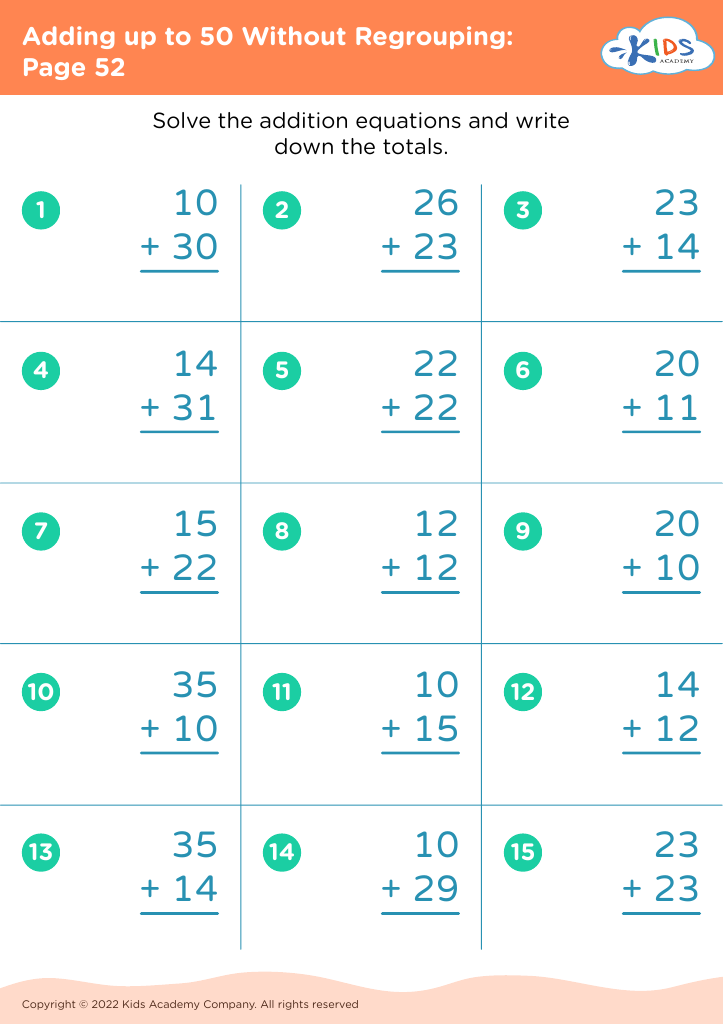
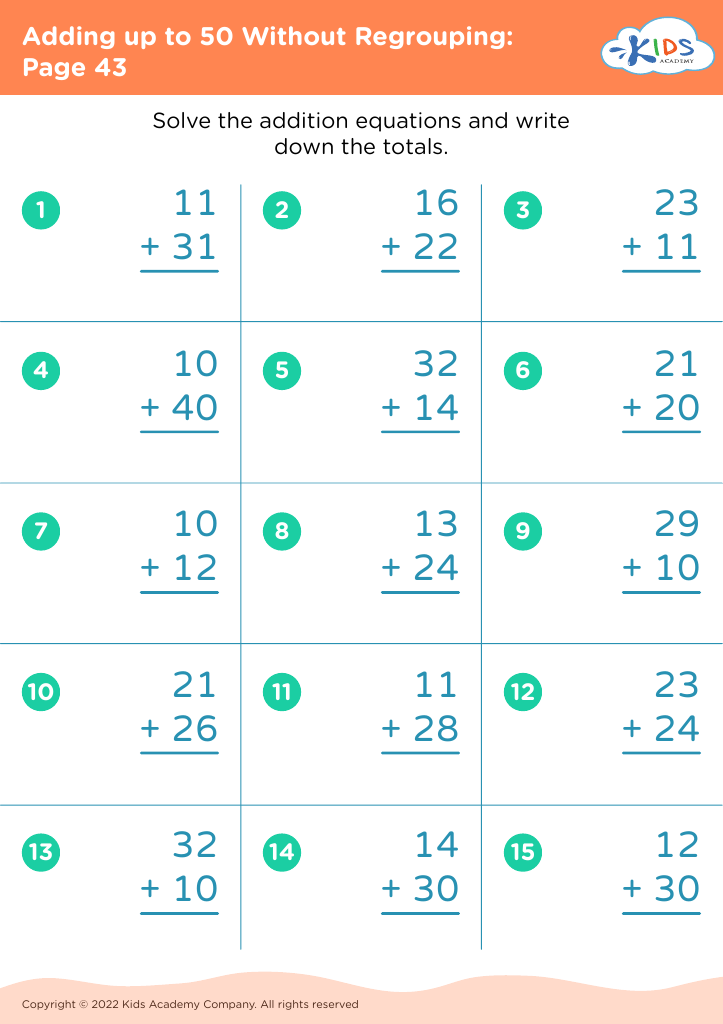
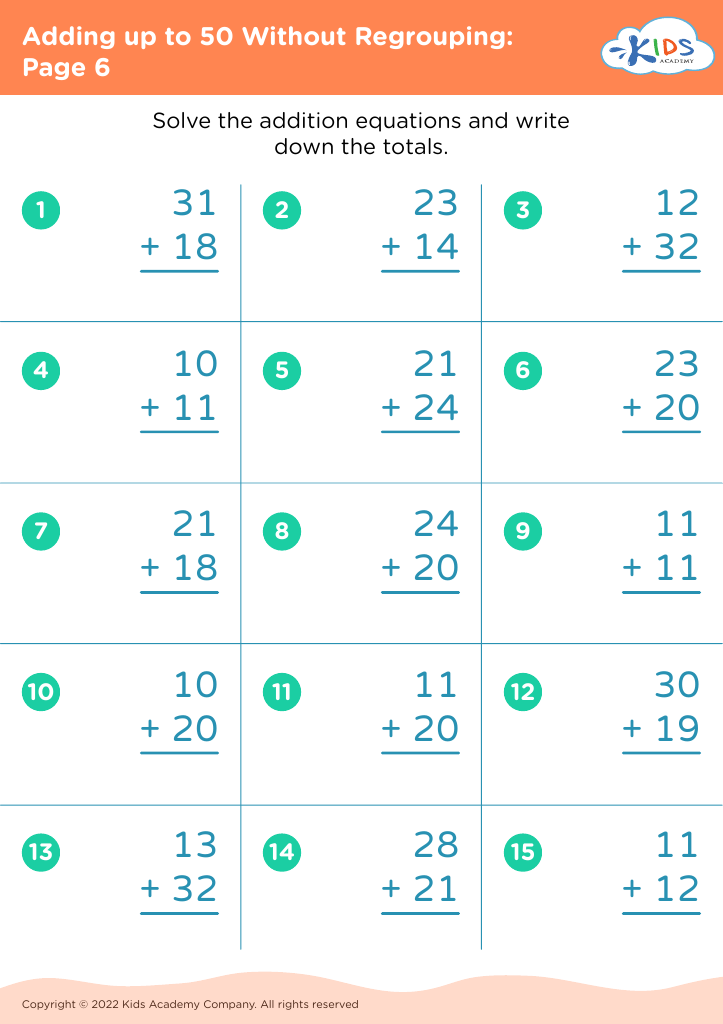
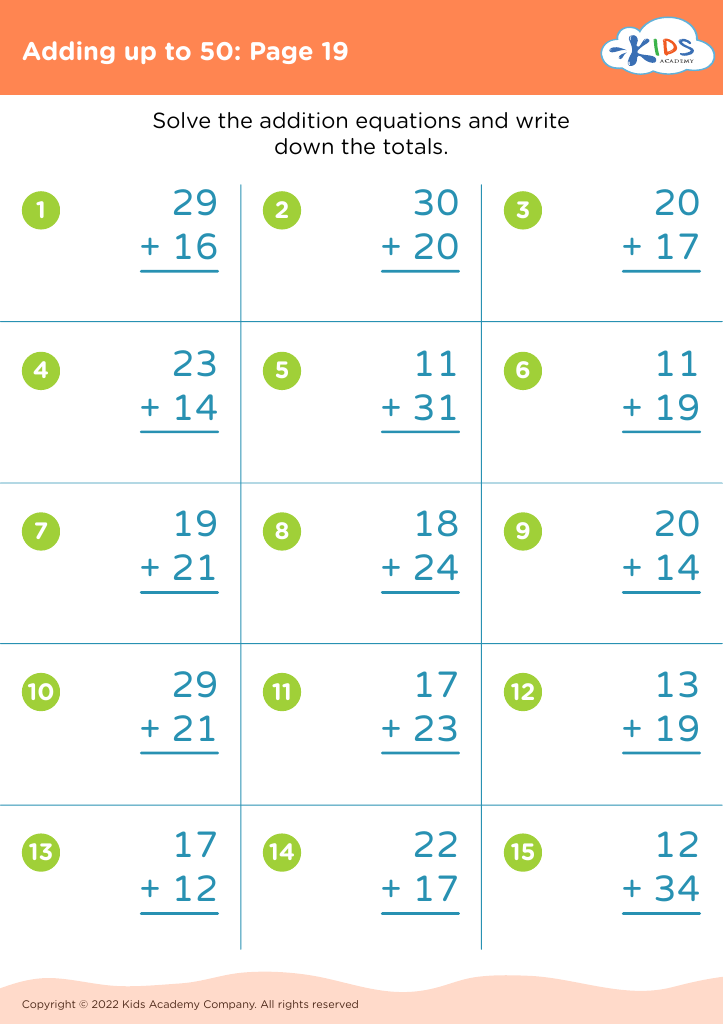
Discover our "Recognizing Patterns Adding up to 50 Worksheets" designed for ages 6-7! These engaging activities help young learners grasp addition up to 50 by identifying patterns, enhancing their problem-solving skills and mathematical fluency. Children will enjoy the colorful, fun exercises while developing critical thinking abilities. Ideal for home or classroom use, these worksheets are perfect for providing extra practice or reinforcing lessons, ensuring well-rounded mastery in early math. Encourage your child's confidence in math with these expertly crafted resources from Kids Academy. Visit our webpage today to explore and download these valuable worksheets!
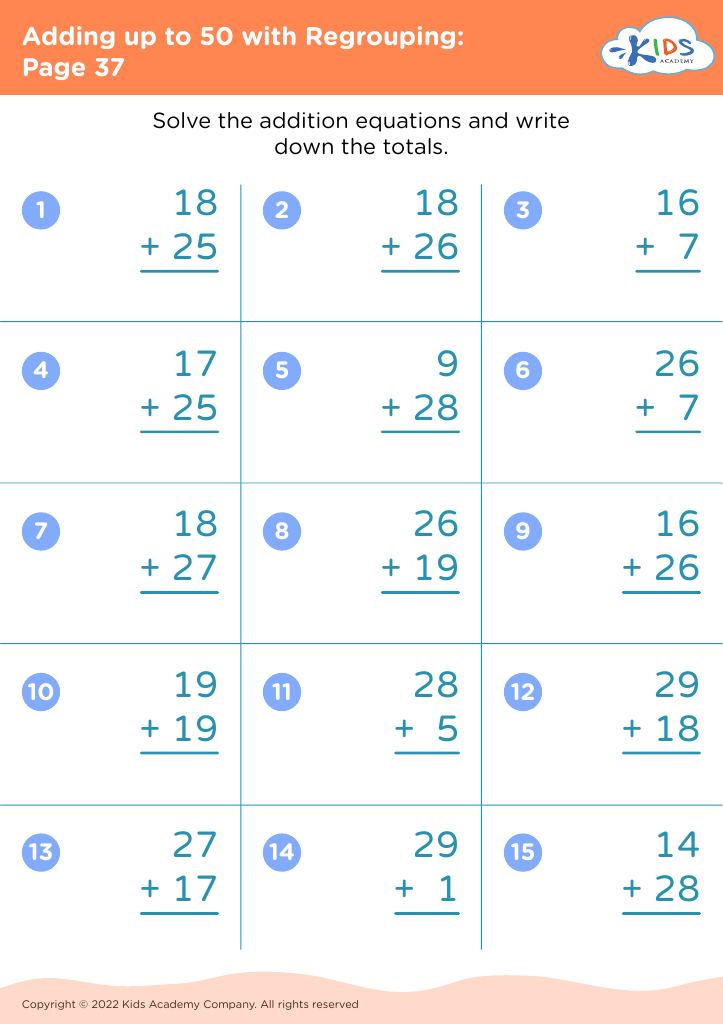
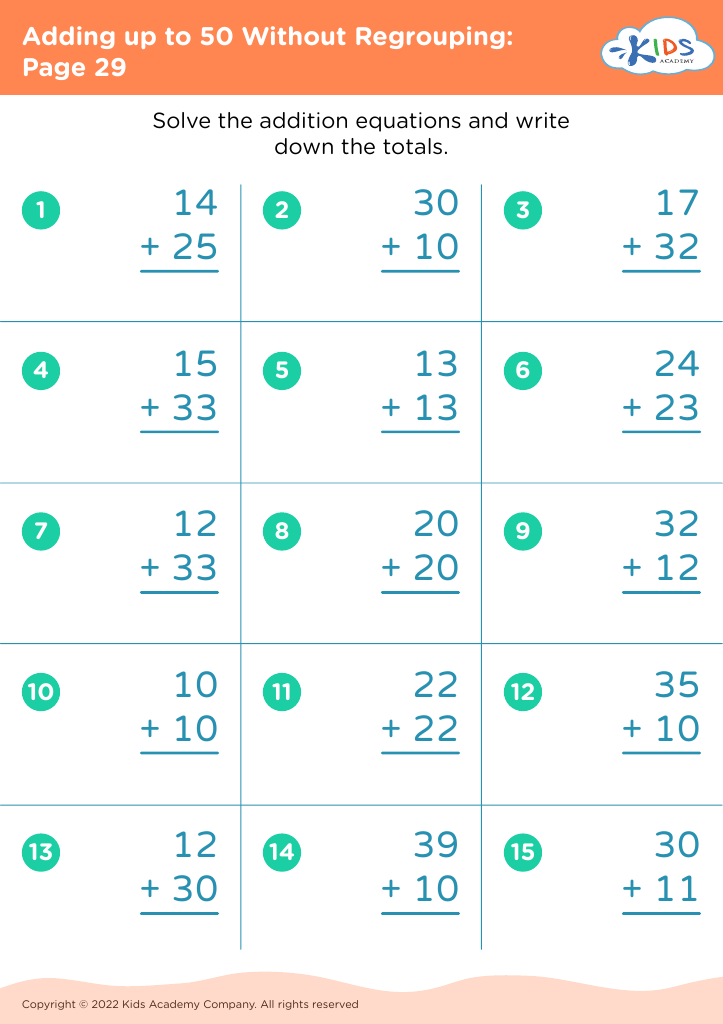
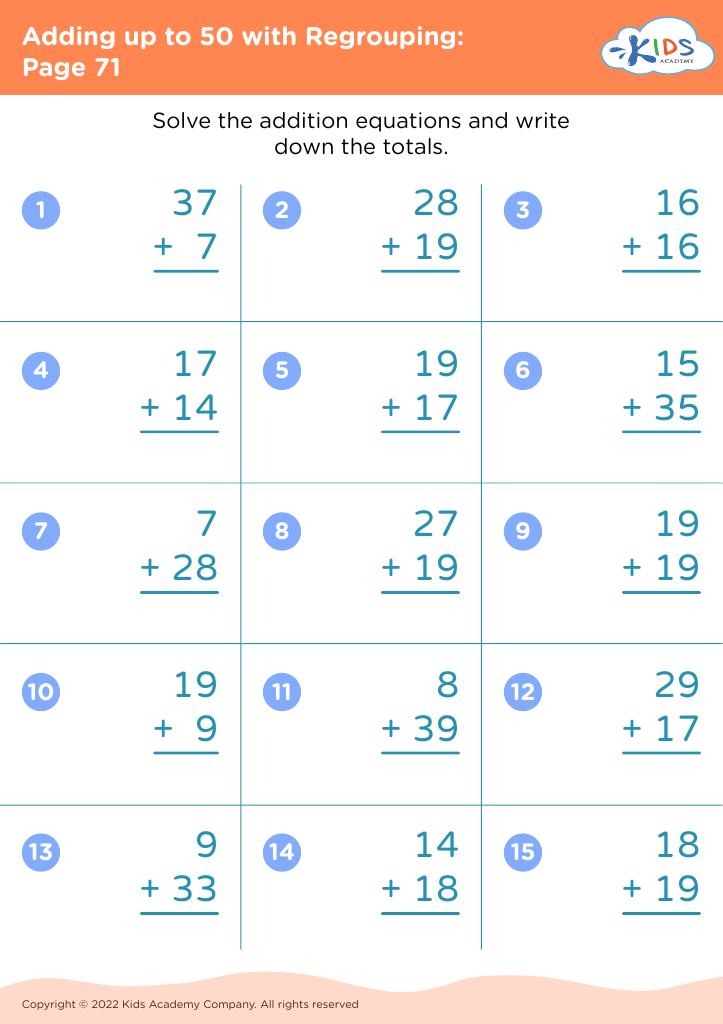




Recognizing patterns and learning to add up to 50 at ages 6-7 are foundational skills that are crucial for early cognitive development and future academic success. At this age, children's brains are exceptionally receptive to grasping new concepts, and pattern recognition lays the groundwork for critical thinking and problem-solving. Patterns help children understand and predict the world around them, fostering logical thinking skills and a sense of order.
Additionally, the ability to add up to 50 solidifies basic arithmetic skills that are essential for more advanced mathematics. This range ensures that children become comfortable with numbers and builds their confidence in handling increasingly complex problems. Mastery of these skills not only contributes to a child's mathematical abilities but also enhances their overall academic achievement, as numeracy is closely tied to subjects like science and technology.
Beyond academics, working with patterns and numbers aids in developing organizational, sequential thinking, and enhancing concentration, attention to detail, and memory retention. For teachers and parents, prioritizing these skills underscores a commitment to creating a robust educational foundation, thereby empowering children to excel in learning and navigating the intricacies of everyday life. Early intervention in these areas aligns well with long-term educational goals, ensuring that children become proficient learners and thinkers.








