Filters

47 filtered results

Clear all filters
Favorites
With answer key
Interactive

47 filtered results

Difficulty Level

Grade


Check out this FREE Trial Lesson on Adding up to 50 for age 6-7!

X

Favorites
With answer key
Interactive
  • 6-7
  • Understanding fractions
  • Adding up to 50
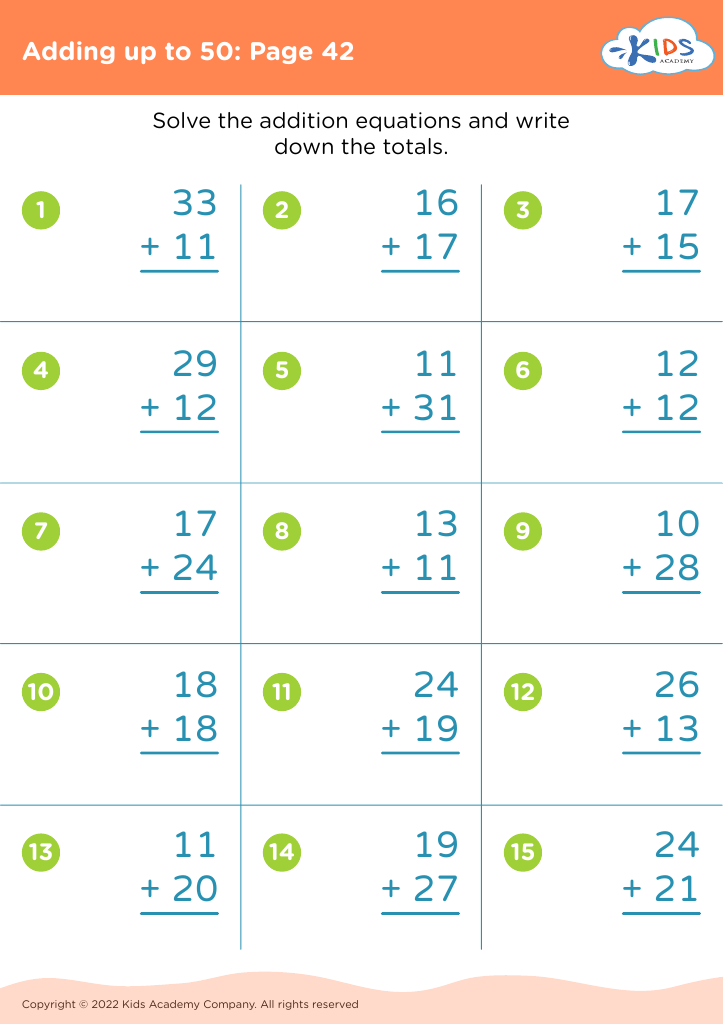
Adding up to 50: Page 42

Adding up to 50: Page 42

Adding up to 50: Page 42
Worksheet
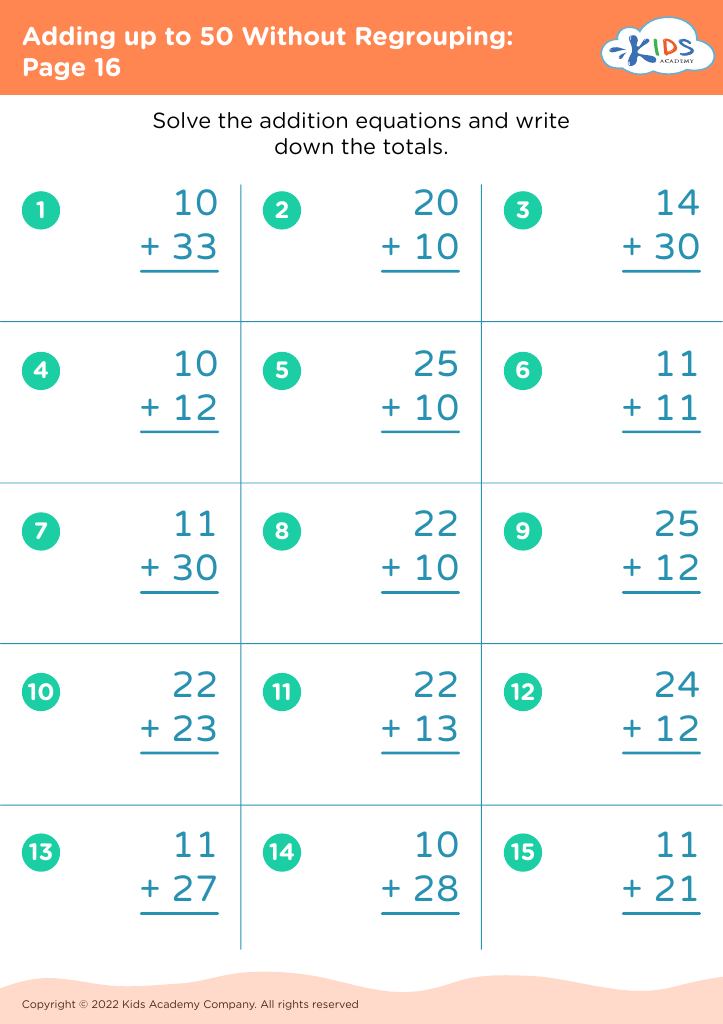
Adding up to 50 Without Regrouping: Page 16
Worksheet
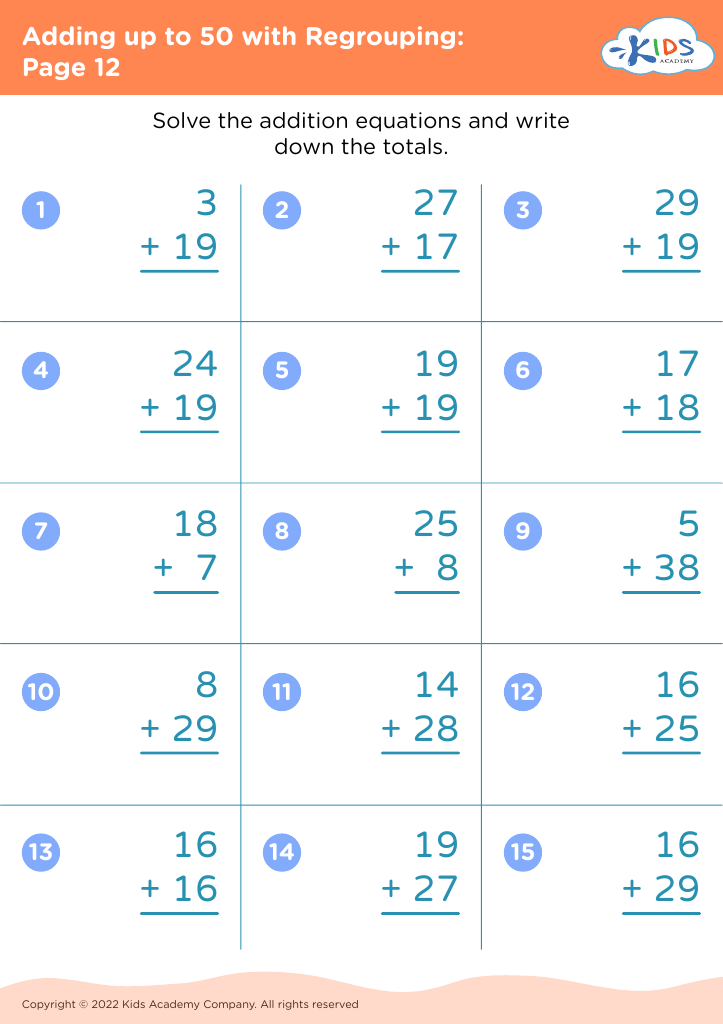
Adding up to 50 with Regrouping: Page 12
Worksheet
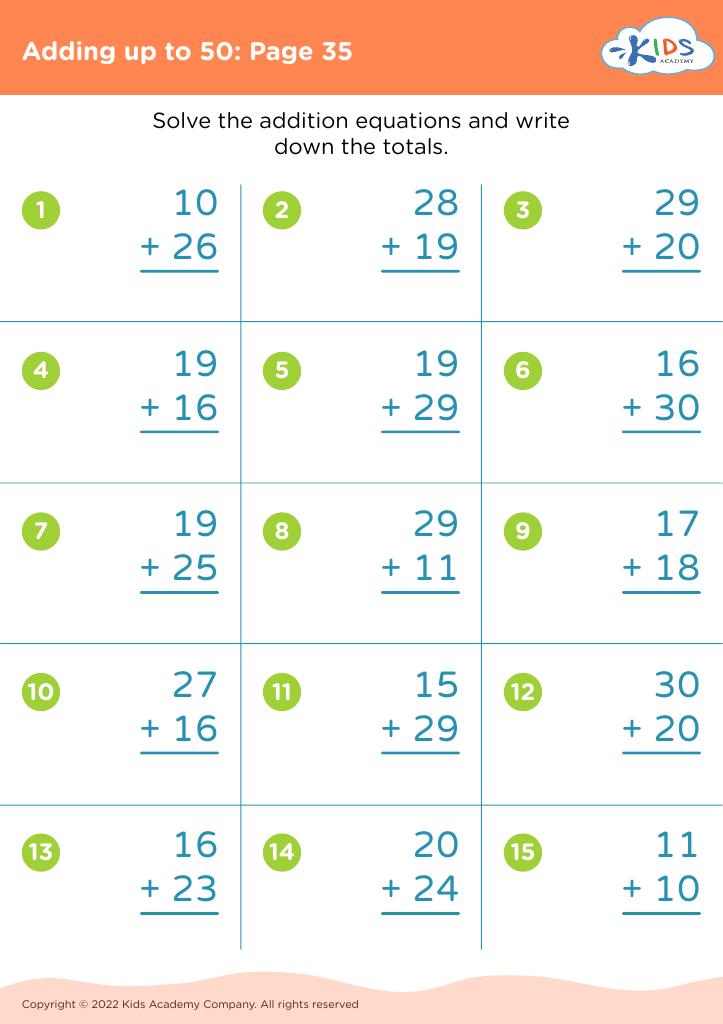
Adding up to 50: Page 35

Adding up to 50: Page 35

Adding up to 50: Page 35
Worksheet
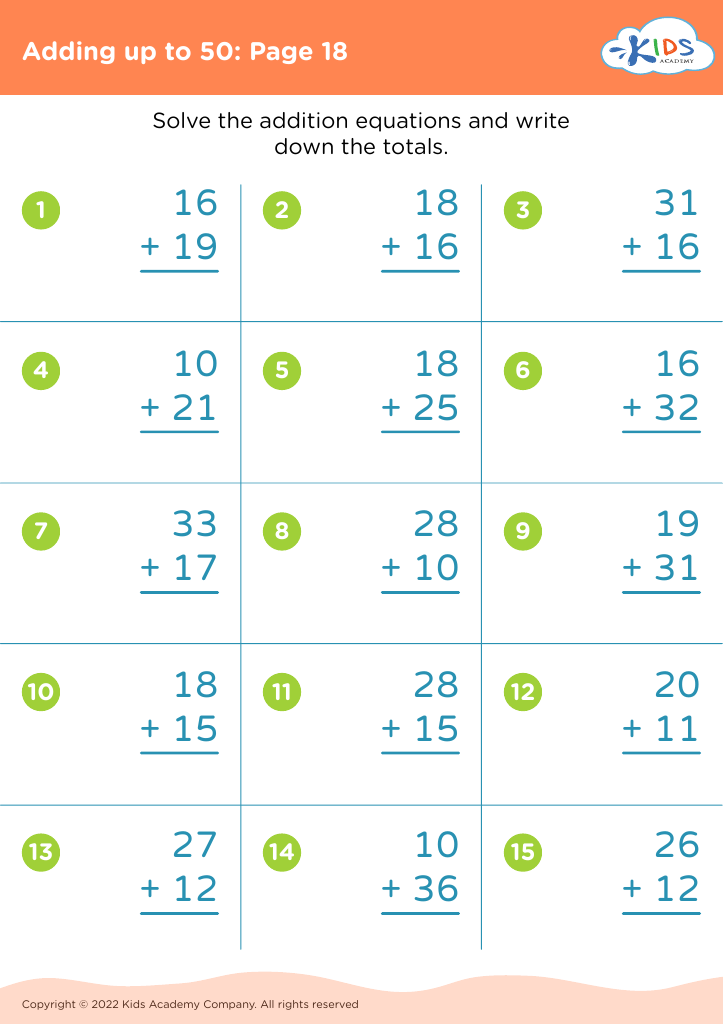
Adding up to 50: Page 18

Adding up to 50: Page 18

Adding up to 50: Page 18
Worksheet
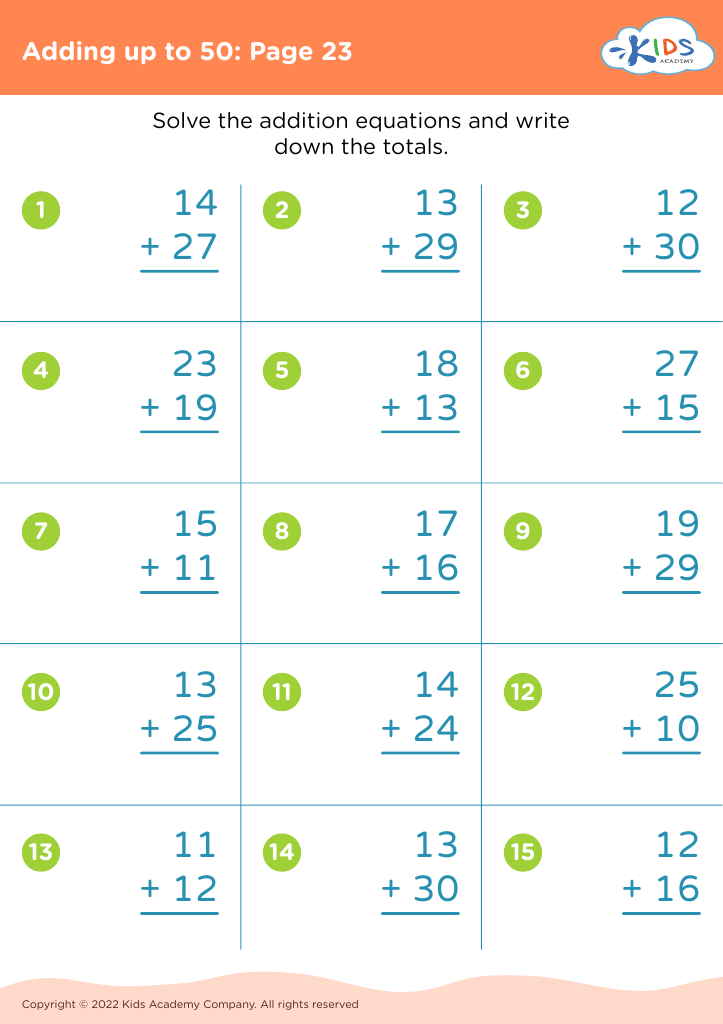
Adding up to 50: Page 23

Adding up to 50: Page 23

Adding up to 50: Page 23
Worksheet
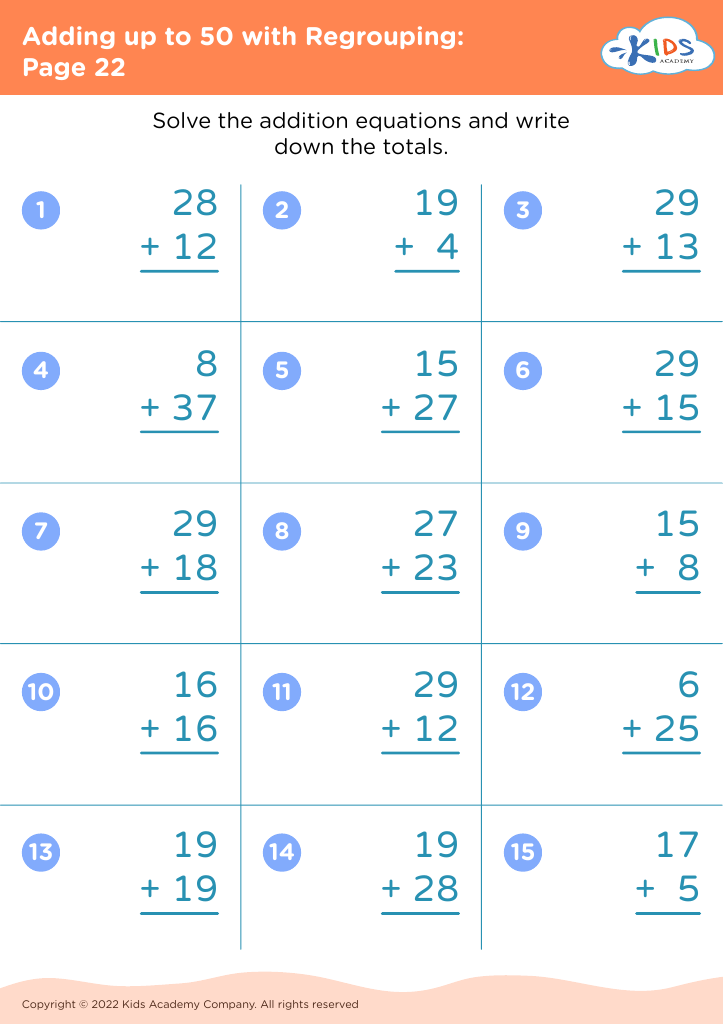
Adding up to 50 with Regrouping: Page 22
Worksheet
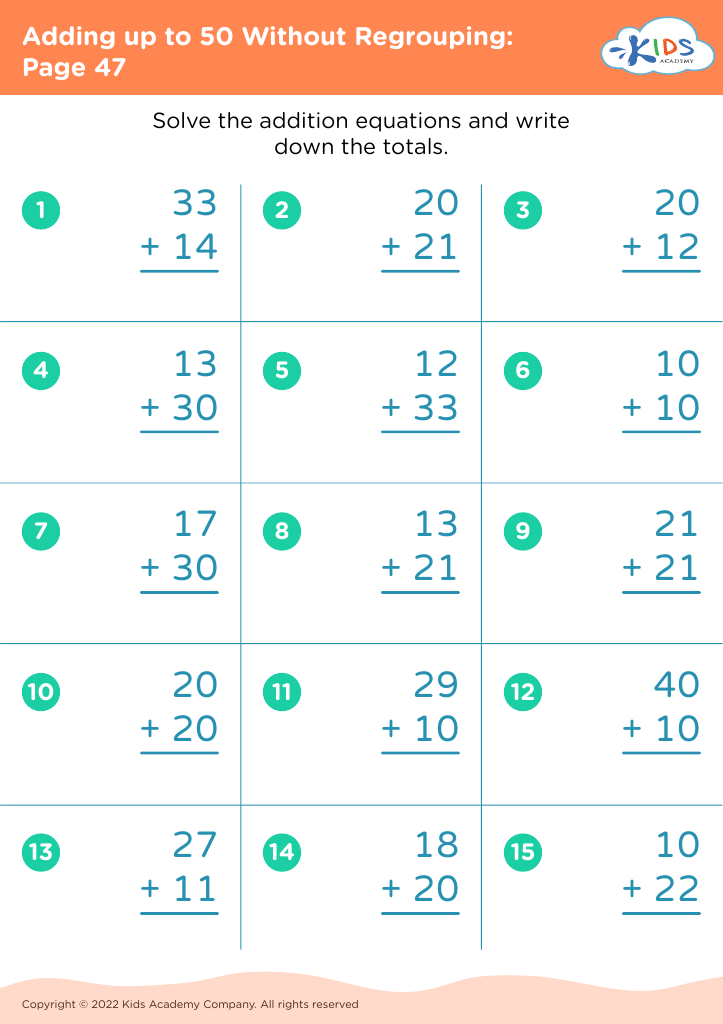
Adding up to 50 Without Regrouping: Page 47
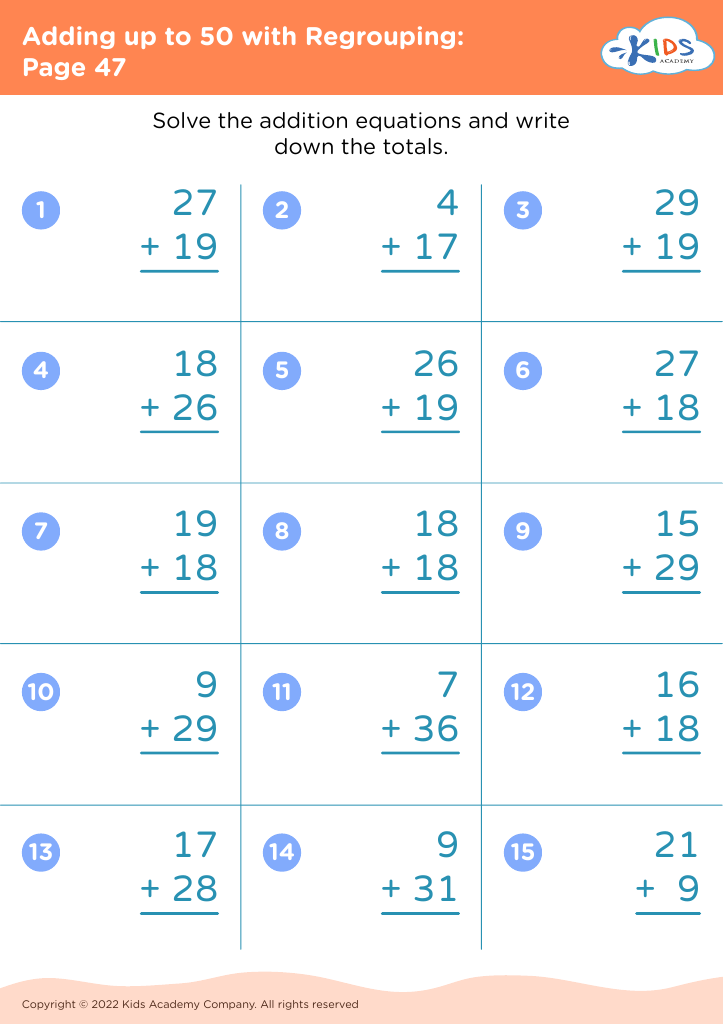
Worksheet
Adding up to 50 with Regrouping: Page 47
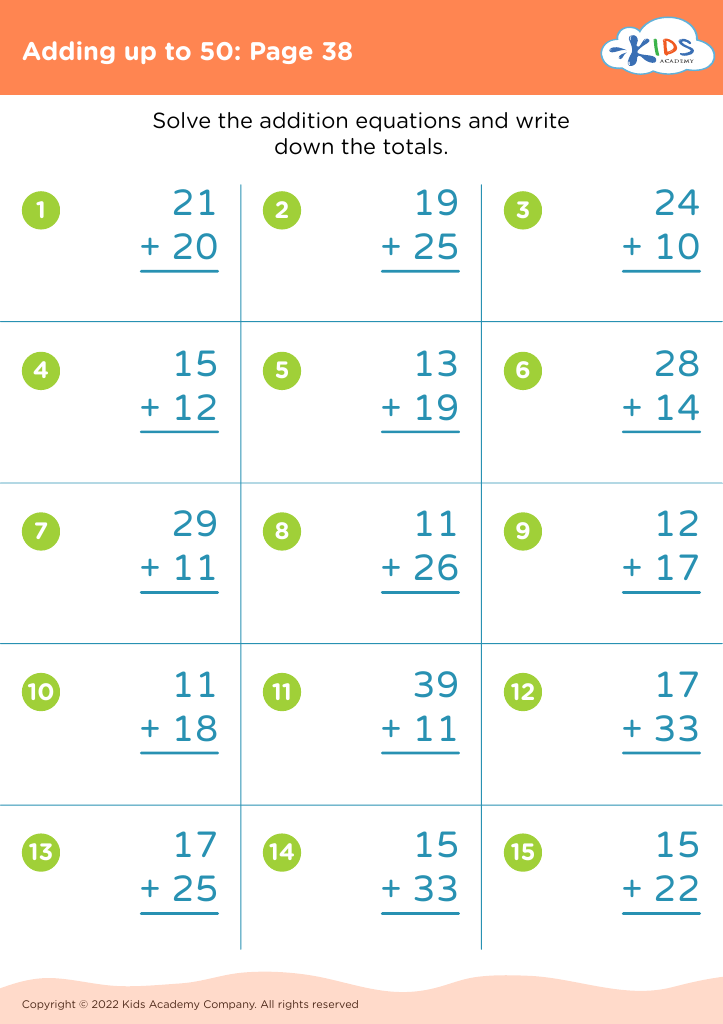
Worksheet
Adding up to 50: Page 38

Adding up to 50: Page 38

Adding up to 50: Page 38
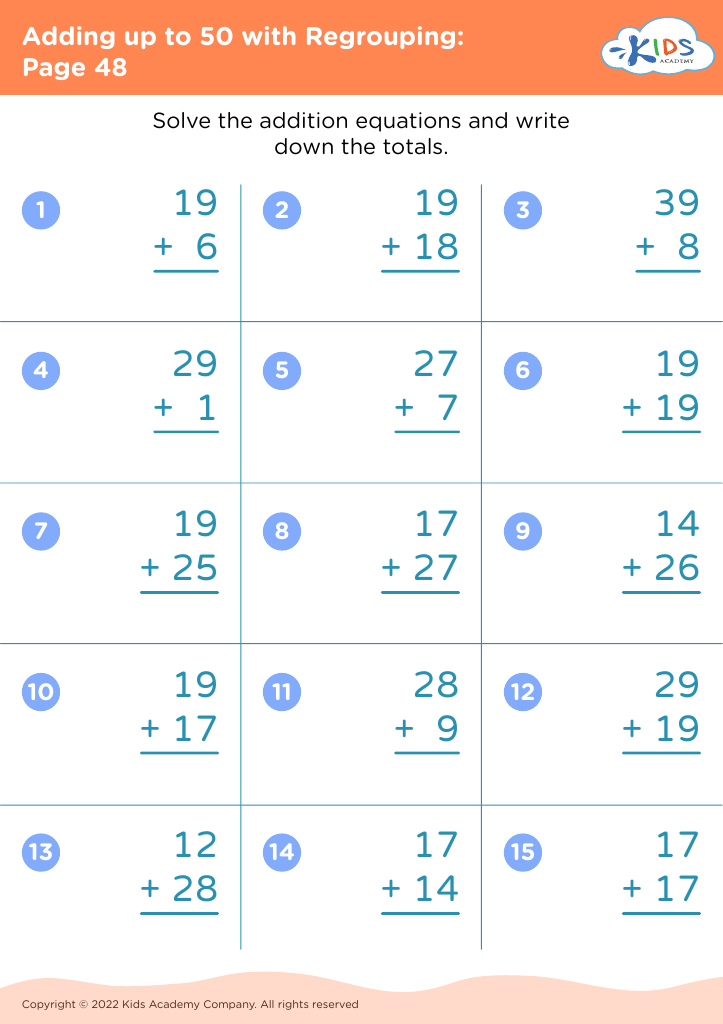
Worksheet
Adding up to 50 with Regrouping: Page 48
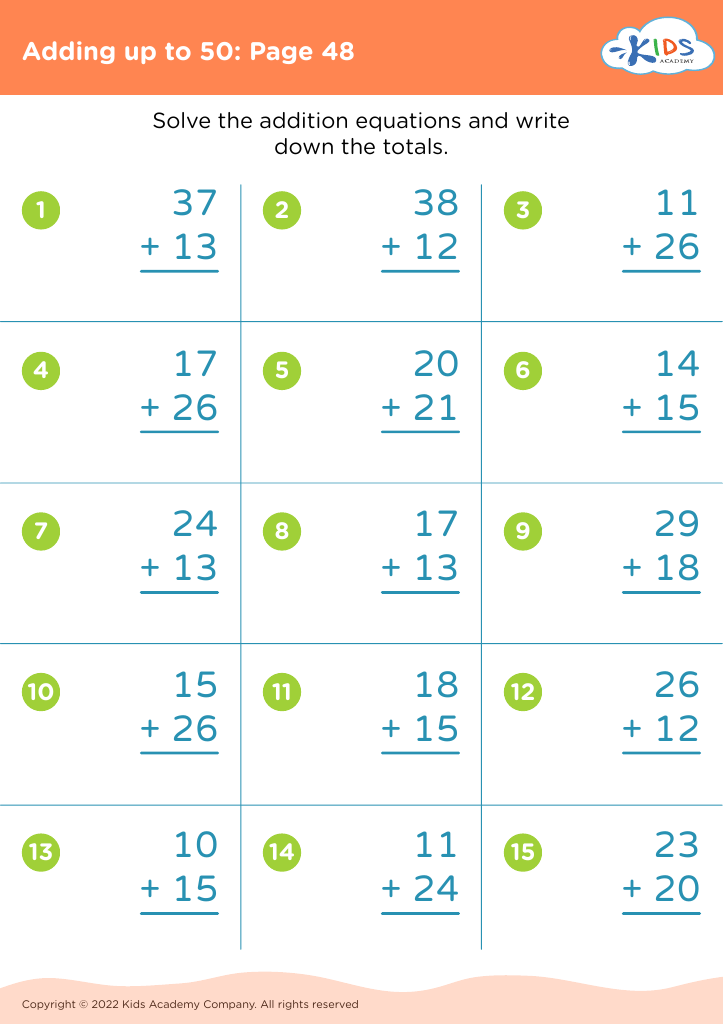
Worksheet
Adding up to 50: Page 48

Adding up to 50: Page 48

Adding up to 50: Page 48
Worksheet
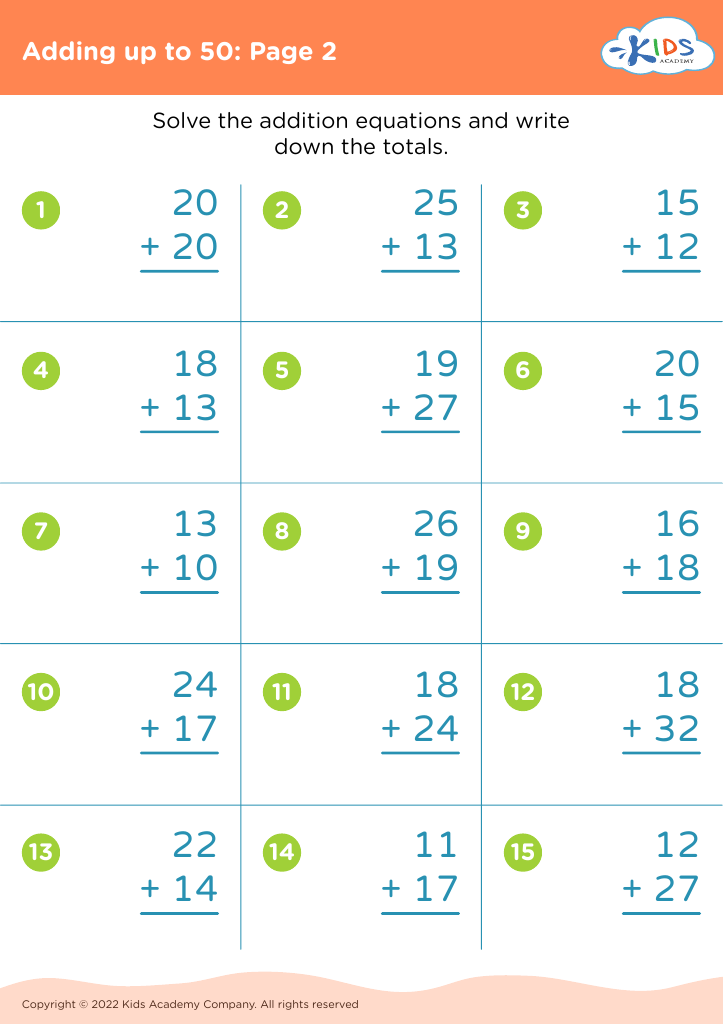
Adding up to 50: Page 2

Adding up to 50: Page 2

Adding up to 50: Page 2
Worksheet
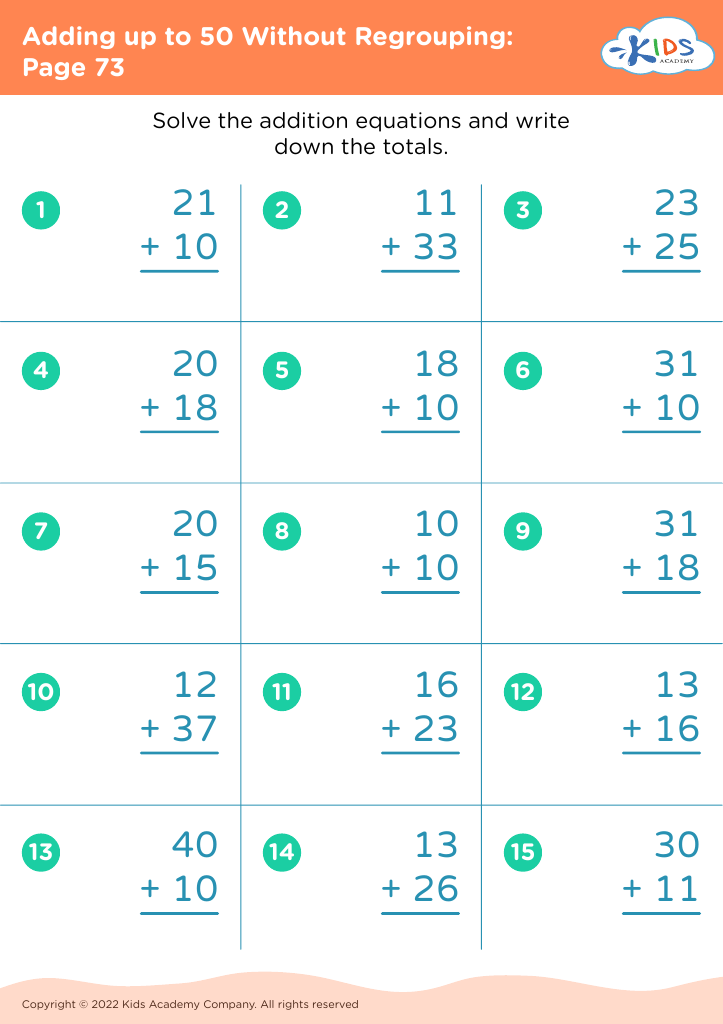
Adding up to 50 Without Regrouping: Page 73
Worksheet
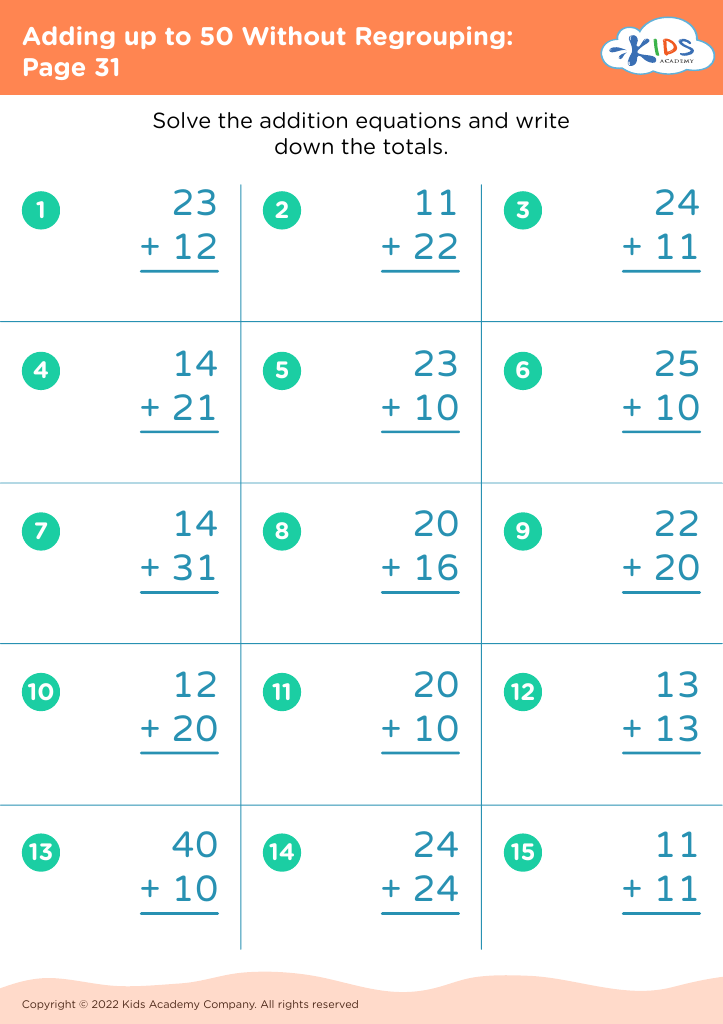
Adding up to 50 Without Regrouping: Page 31
Worksheet
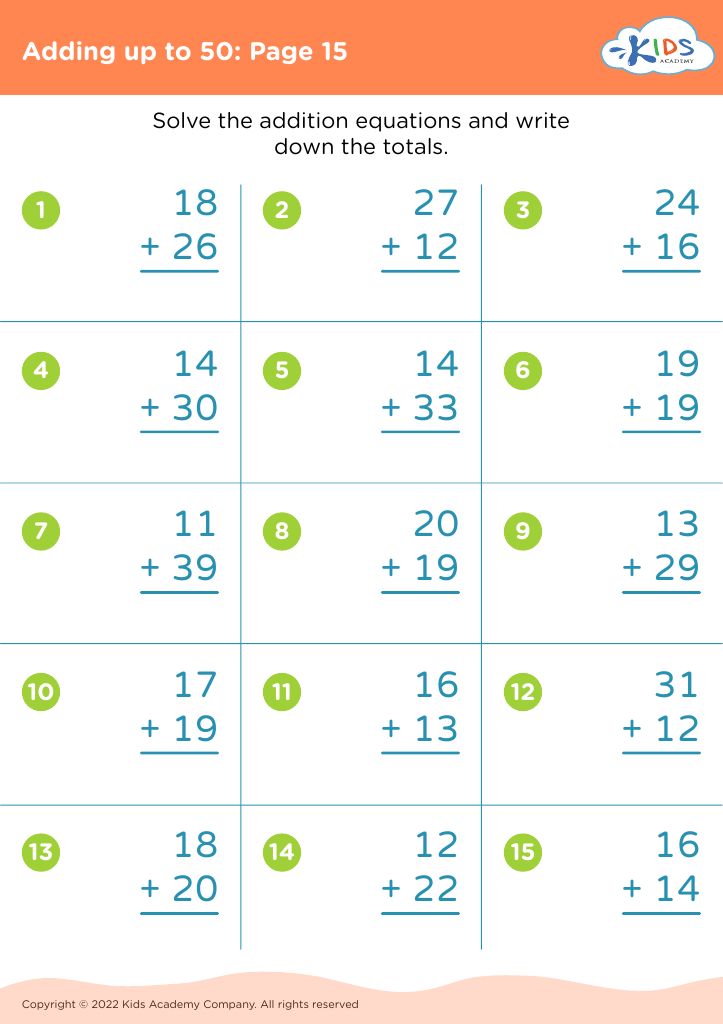
Adding up to 50: Page 15

Adding up to 50: Page 15

Adding up to 50: Page 15
Worksheet
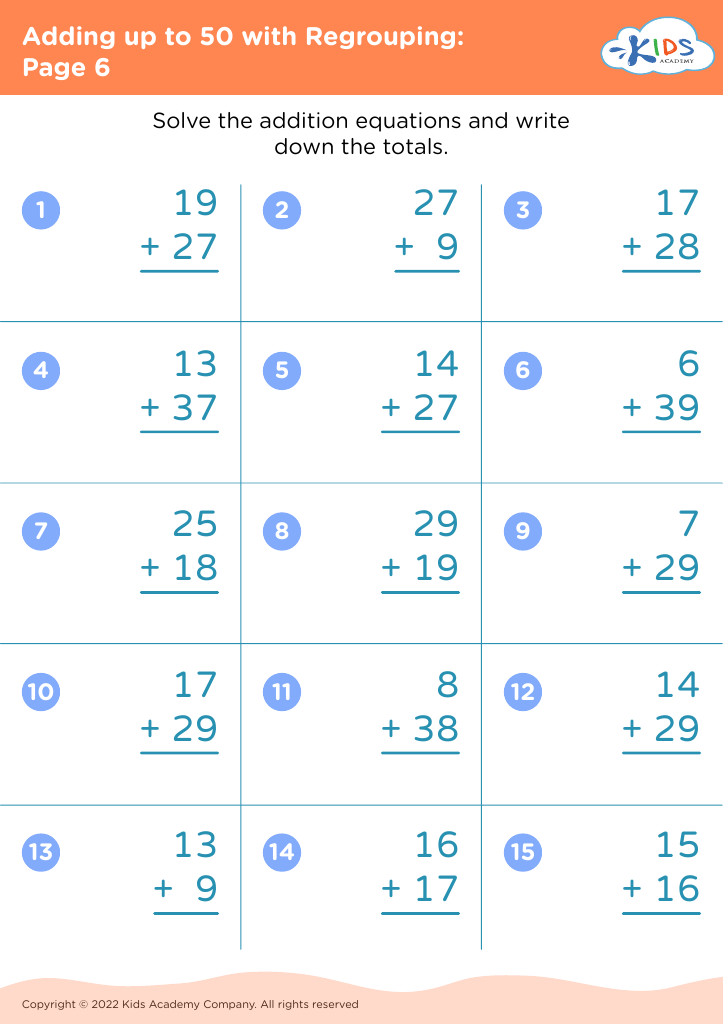
Adding up to 50 with Regrouping: Page 6
Worksheet
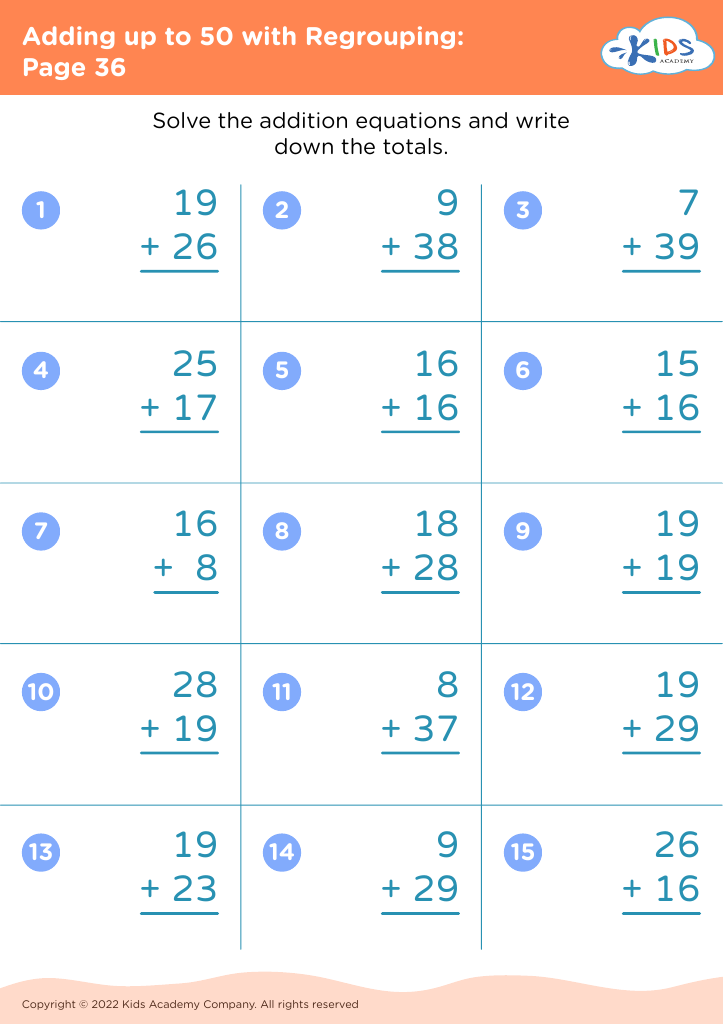
Adding up to 50 with Regrouping: Page 36
Worksheet
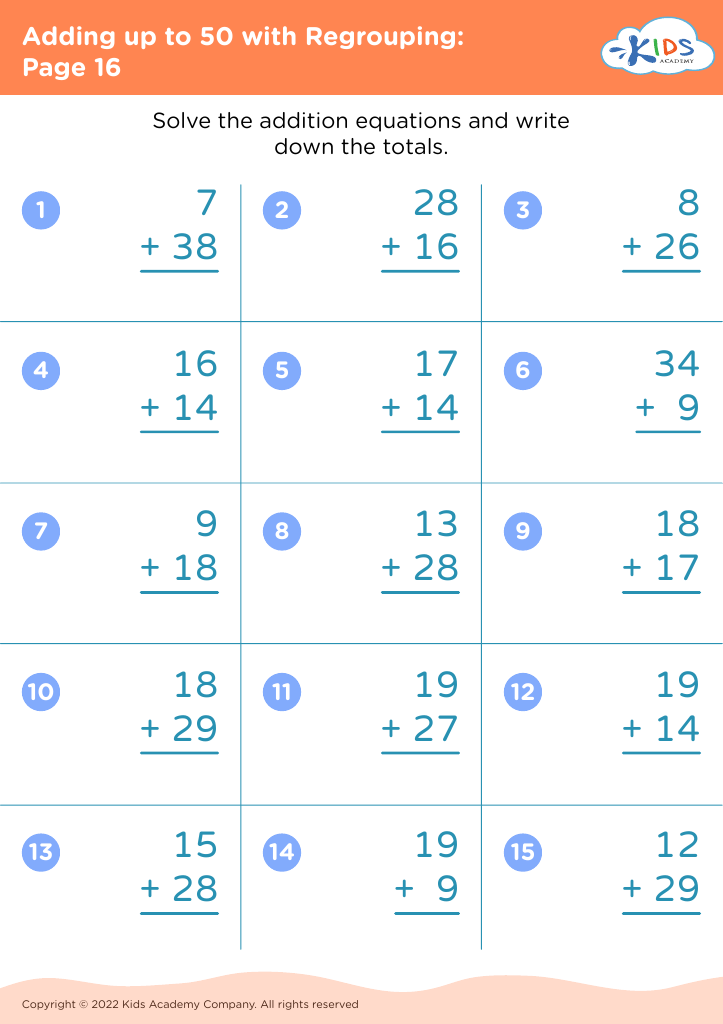
Adding up to 50 with Regrouping: Page 16
Worksheet
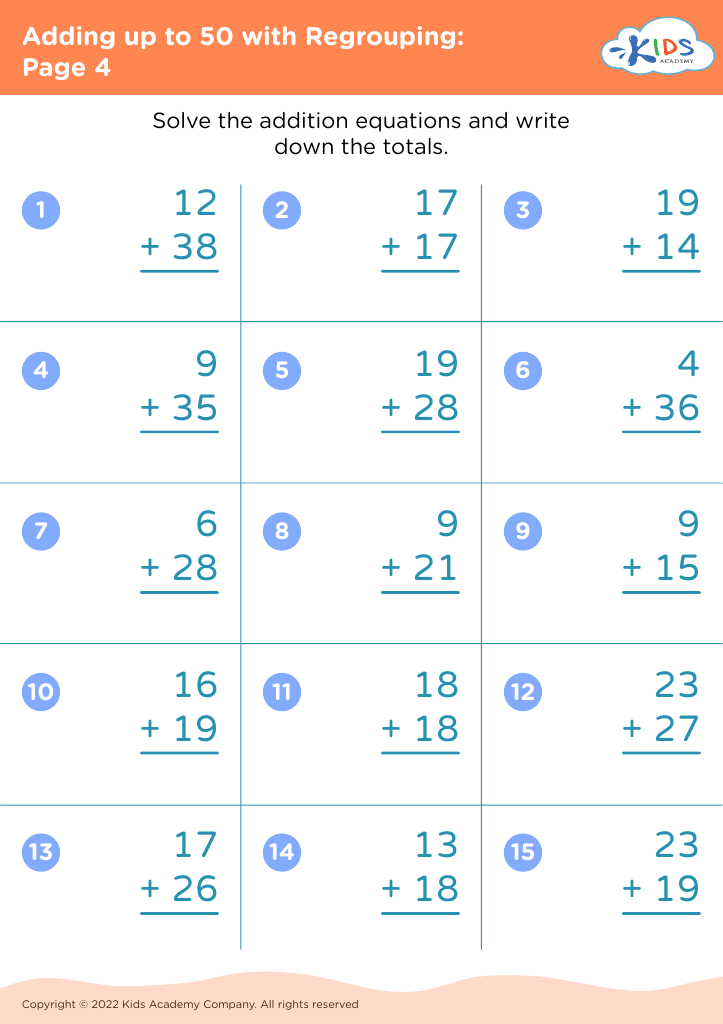
Adding up to 50 with Regrouping: Page 4
Worksheet
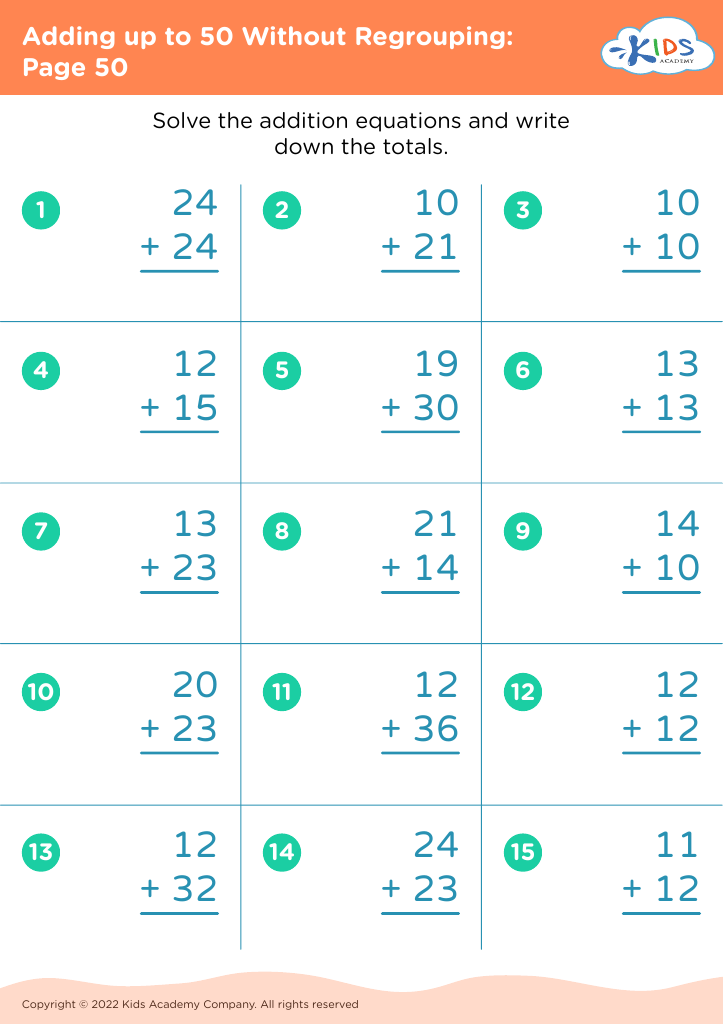
Adding up to 50 Without Regrouping: Page 50
Worksheet
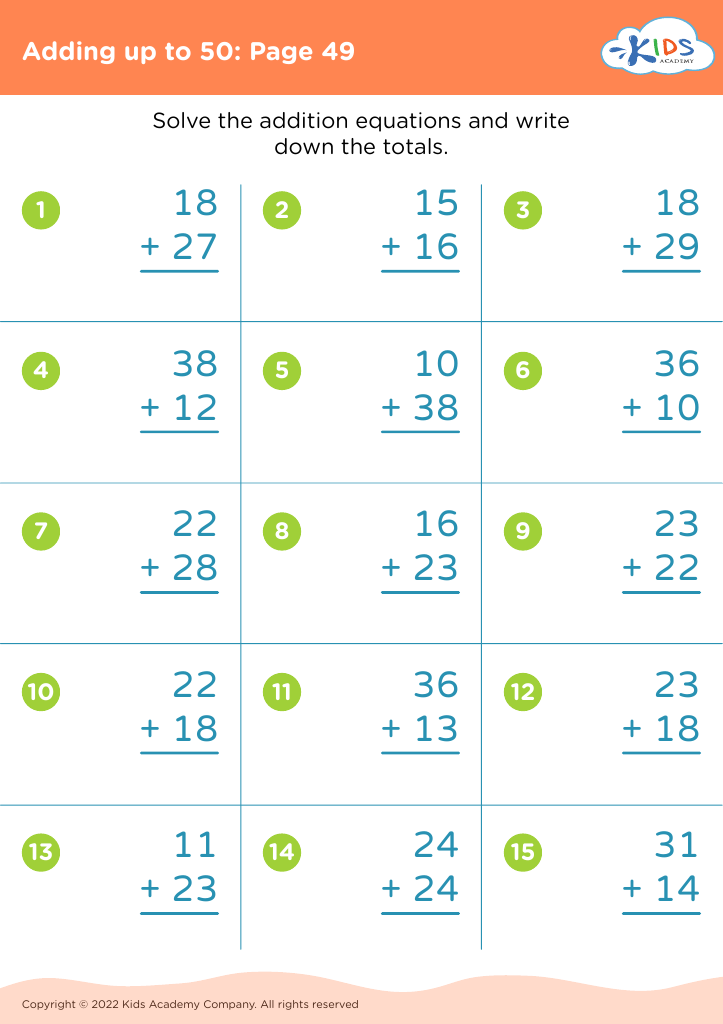
Adding up to 50: Page 49

Adding up to 50: Page 49

Adding up to 50: Page 49
Worksheet
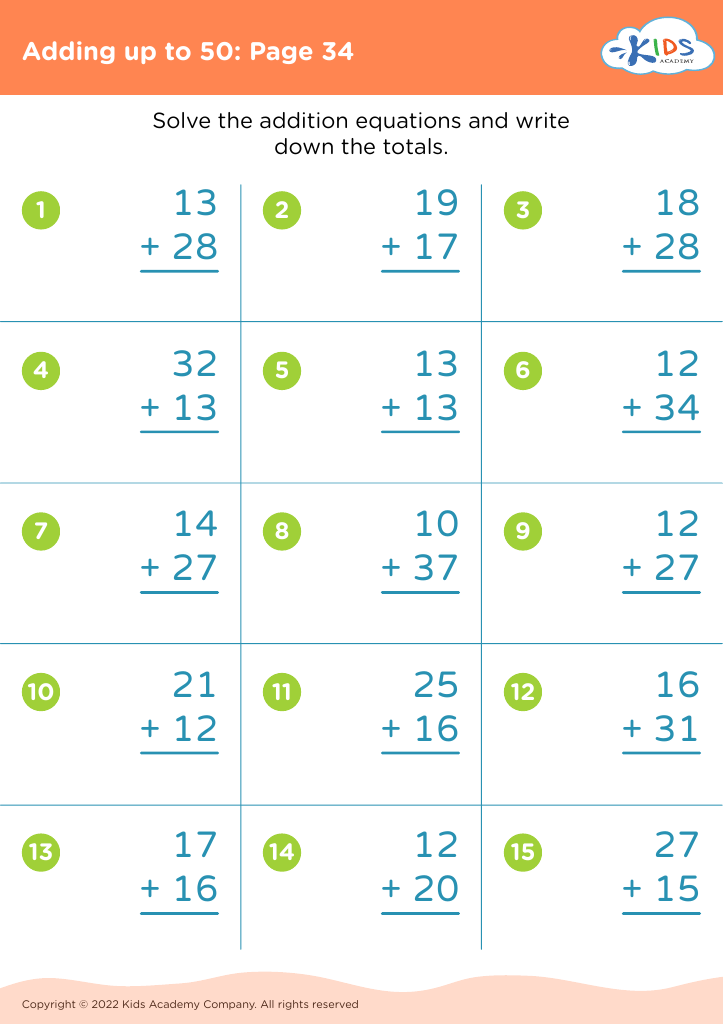
Adding up to 50: Page 34

Adding up to 50: Page 34

Adding up to 50: Page 34
Worksheet


Understanding fractions and their addition is a crucial concept for children ages 6-7, serving as the foundation for more complex mathematical skills. At this developmental stage, children begin to grasp the idea of parts of a whole, using visual aids like pies or blocks to visualize fractions. By engaging with concepts like adding fractions that total 50, children practice not only their computation but also their problem-solving skills.

Parents and teachers should prioritize this understanding because clear comprehension of fractions enhances a child's overall math fluency. Fractions relate to everyday activities, such as sharing food, measuring ingredients for cooking, or dividing toys, making this knowledge practical and relevant.

Moreover, introducing graphical representations encourages visual thinking, allowing children to solve problems without relying solely on memorization. This conceptual approach fosters confidence and a love for mathematics, leading to improved academic performance.

Finally, building a strong foundation in fractions aids in future learning opportunities such as ratios, decimals, and percentages, ensuring children are well-prepared for more advanced mathematics. Encouraging engagement in this area can create lasting benefits, equipping children with essential life skills and nurturing their analytical thinking.