Unlock your child's mathematical potential with our "Enhance Number Recognition: Addition & Subtraction Worksheets" tailored for ages 6-7! These engaging and fun worksheets are designed to strengthen number recognition while practicing essential addition and subtraction skills. Each activity is crafted to capture your child's interest and encourage active learning, ensuring they build confidence in their math abilities. Our worksheets offer a variety of exercises, from pictorial representations to number lines, making learning enjoyable. Perfect for homeschoolers or supplemental practice, these resources are ideal for fostering foundational math skills in young learners. Download today and watch your child thrive in math!
Check out this FREE Trial Lesson on Addition & Subtraction for age 6-7!

X

Favorites
With answer key
Interactive
  • 6-7
  • Enhance number recognition
  • Addition & Subtraction
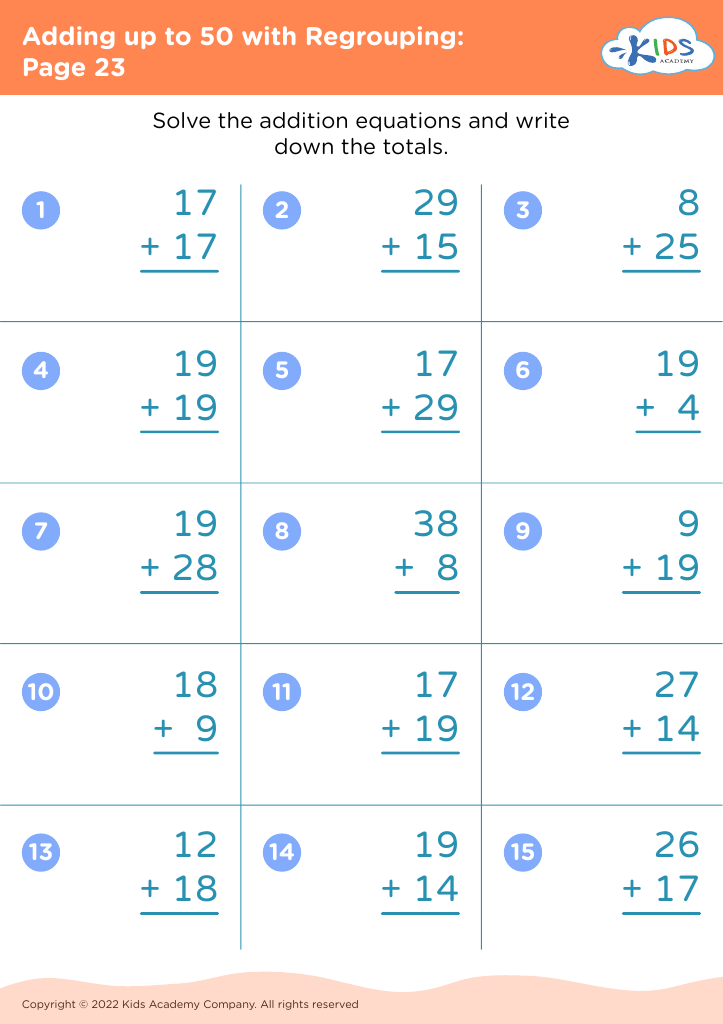
Adding up to 50 with Regrouping: Page 23
Worksheet
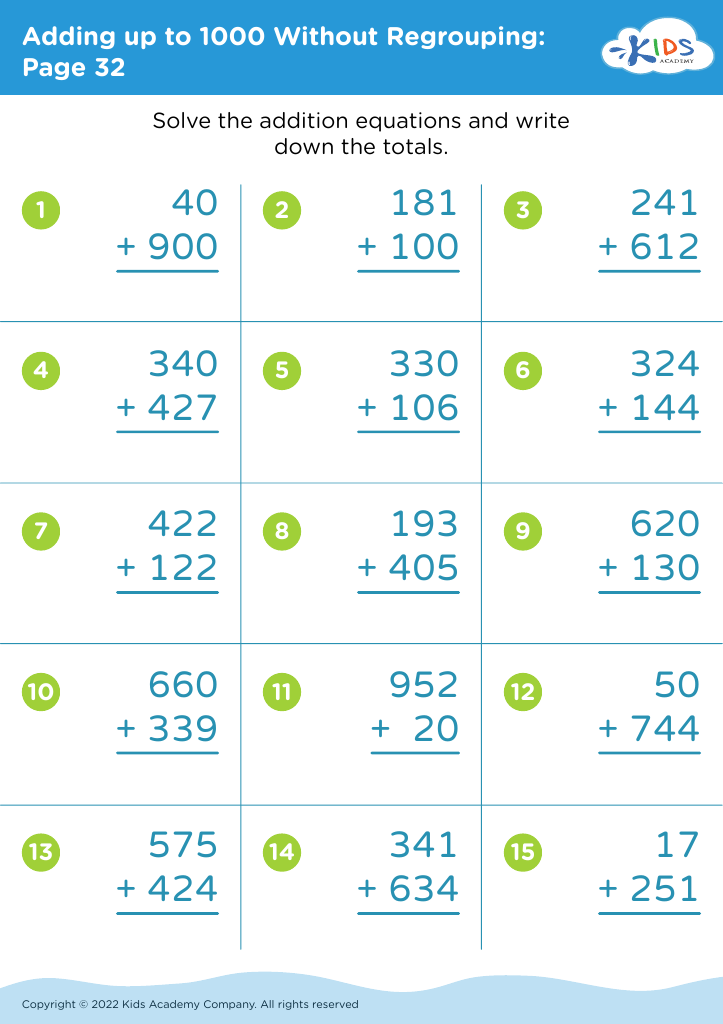
Adding up to 1000 Without Regrouping: Page 32
Worksheet
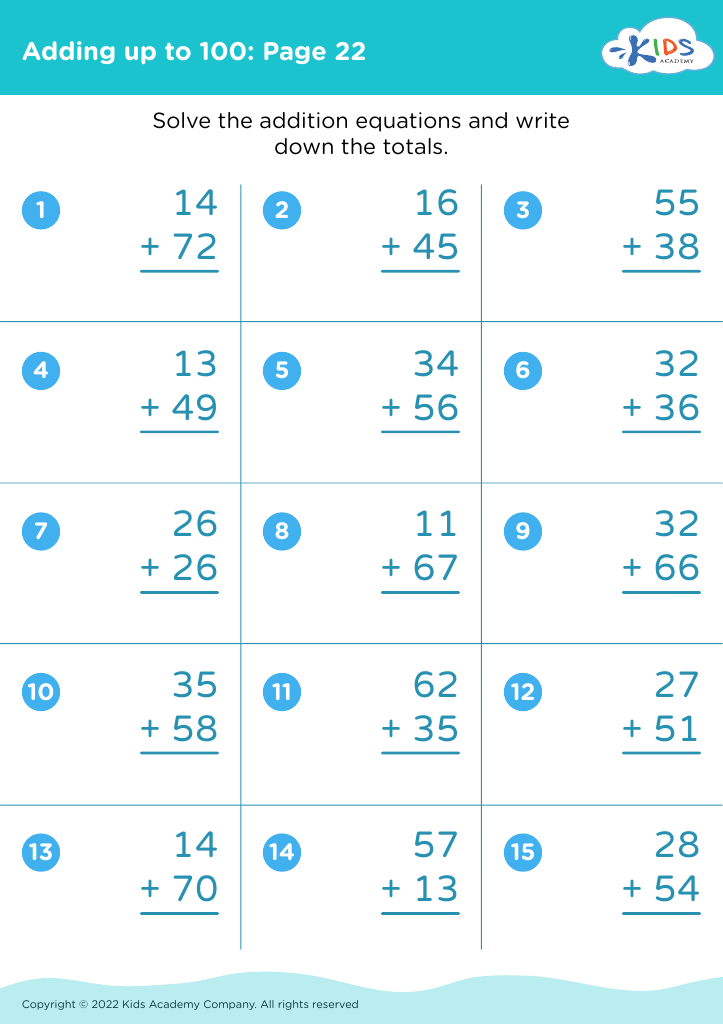
Adding up to 100: Page 22

Adding up to 100: Page 22

Adding up to 100: Page 22
Worksheet
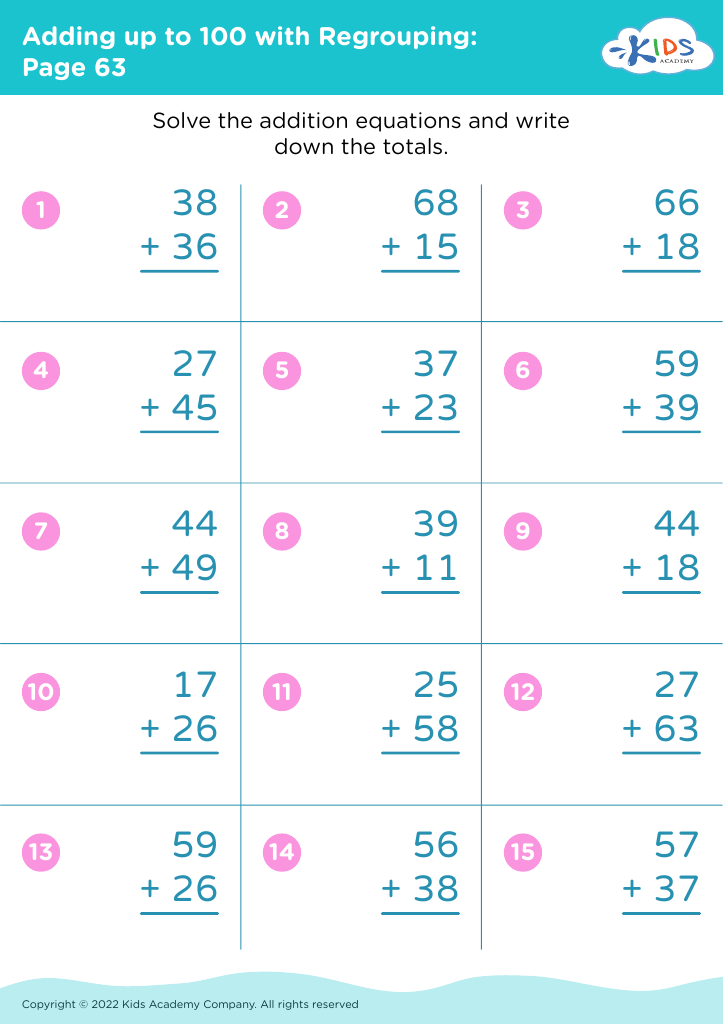
Adding up to 100 with Regrouping: Page 63
Worksheet
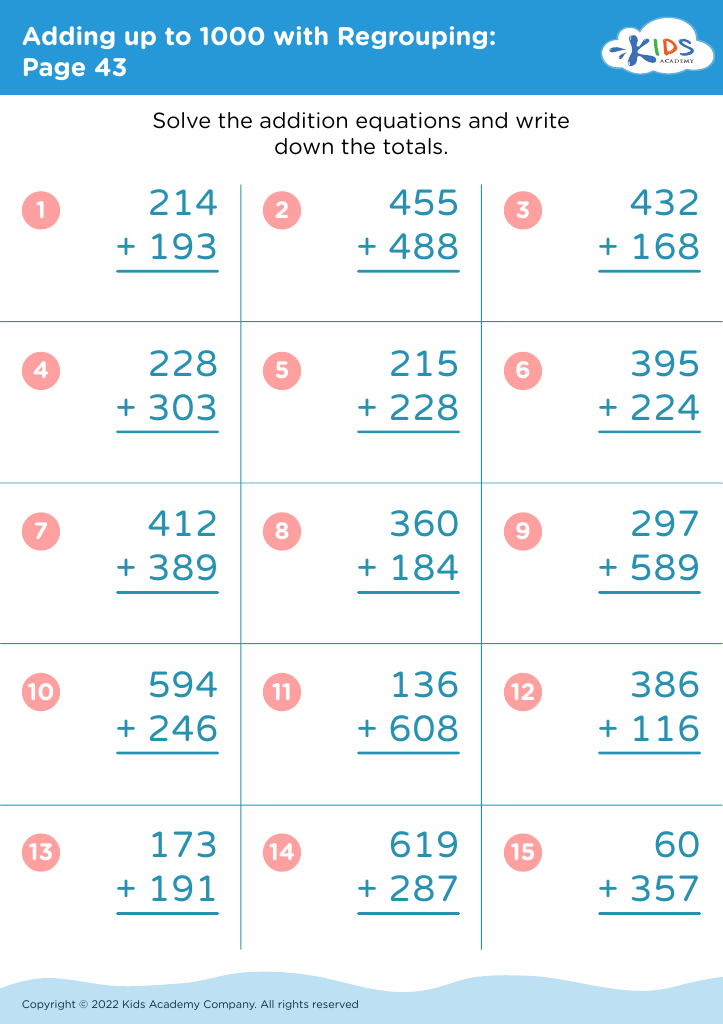
Adding up to 1000 with Regrouping: Page 43
Worksheet
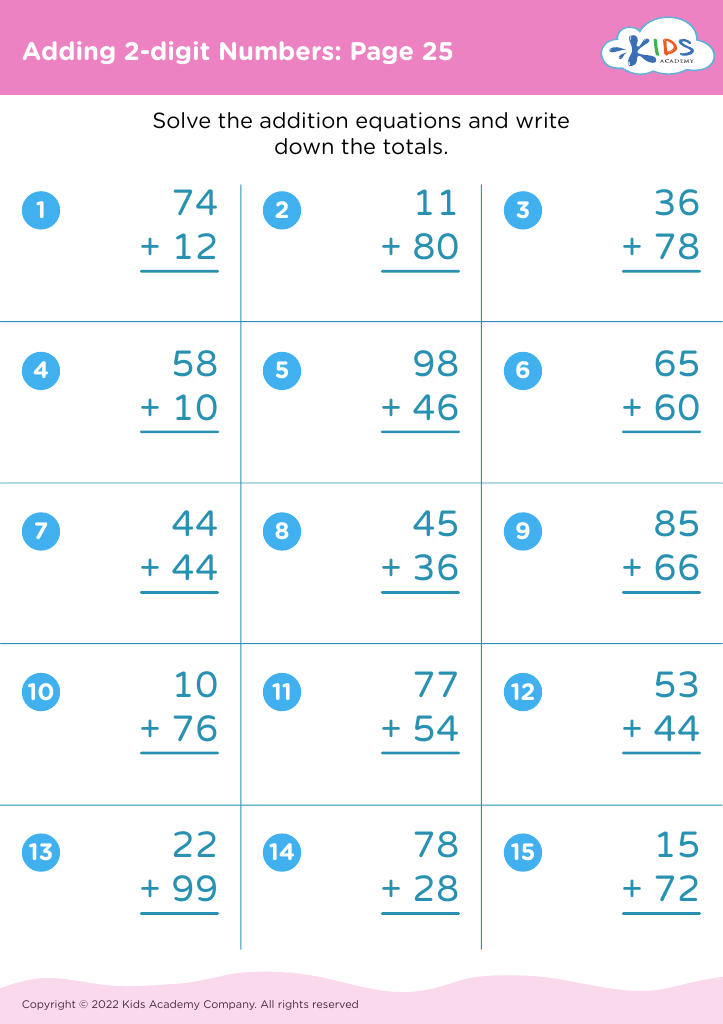
Adding 2-digit Numbers: Page 25

Adding 2-digit Numbers: Page 25

Adding 2-digit Numbers: Page 25
Worksheet
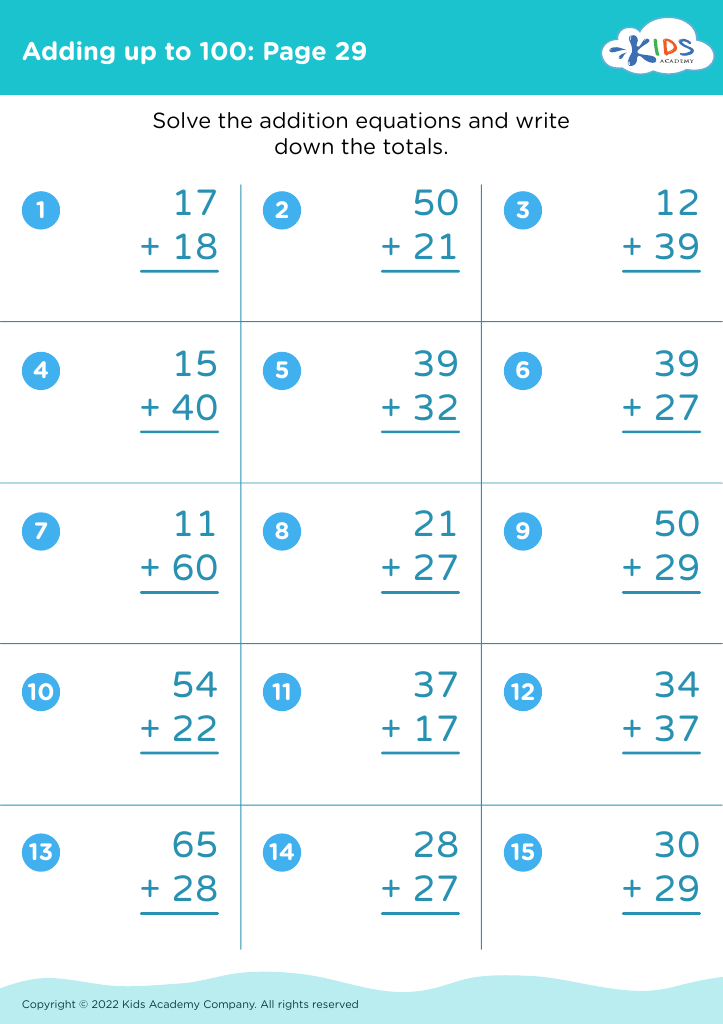
Adding up to 100: Page 29

Adding up to 100: Page 29

Adding up to 100: Page 29
Worksheet
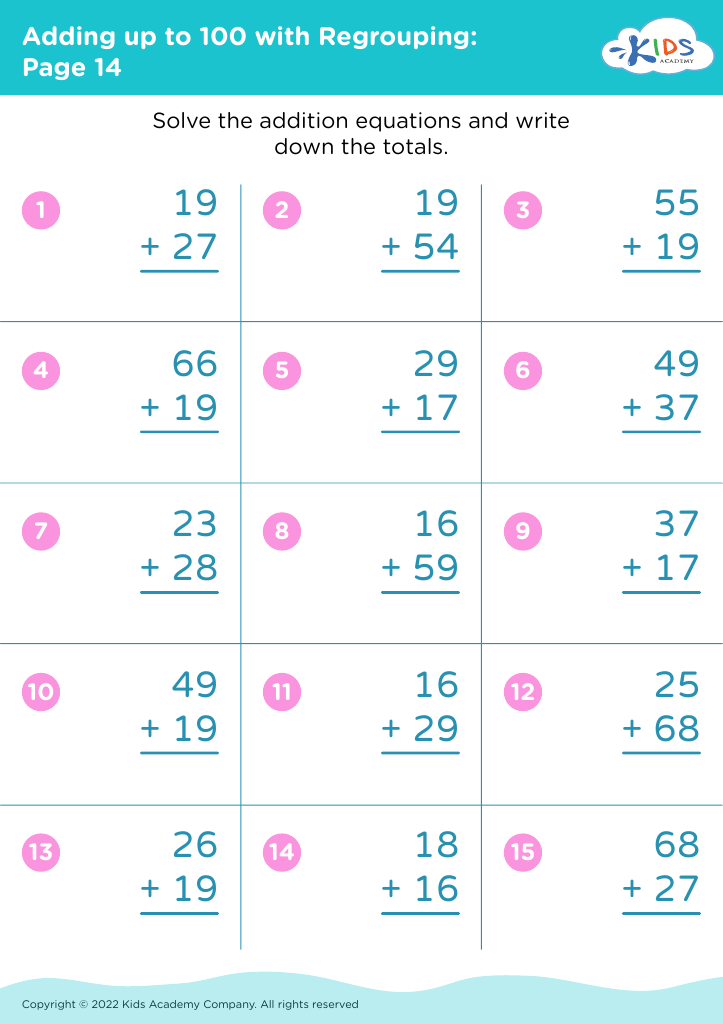
Adding up to 100 with Regrouping: Page 14
Worksheet
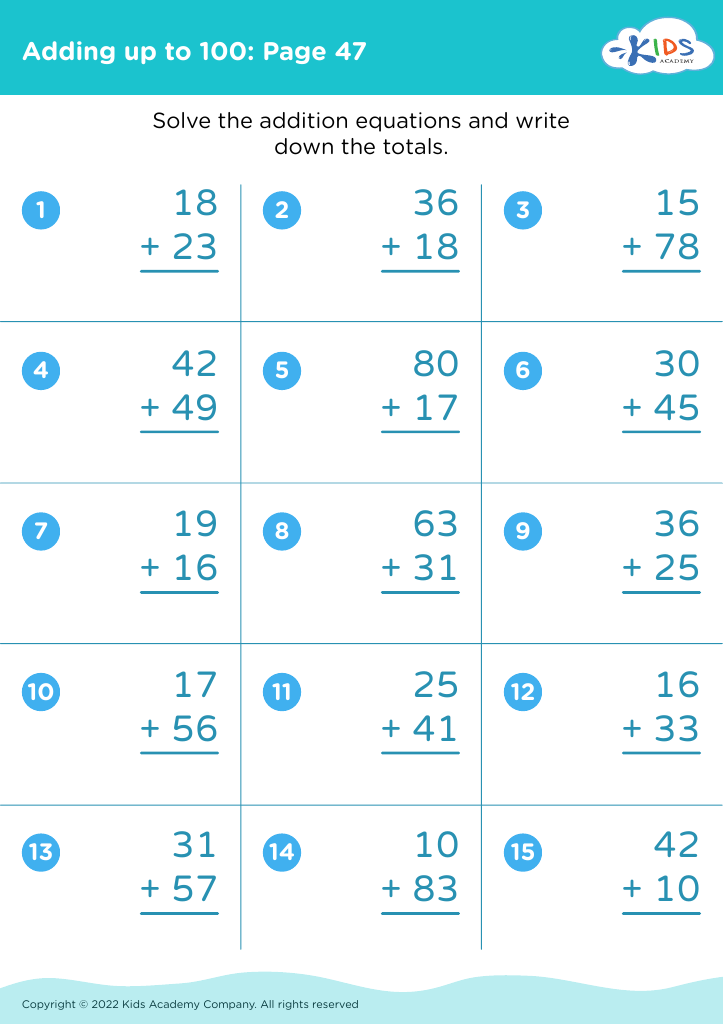
Adding up to 100: Page 47

Adding up to 100: Page 47

Adding up to 100: Page 47
Worksheet
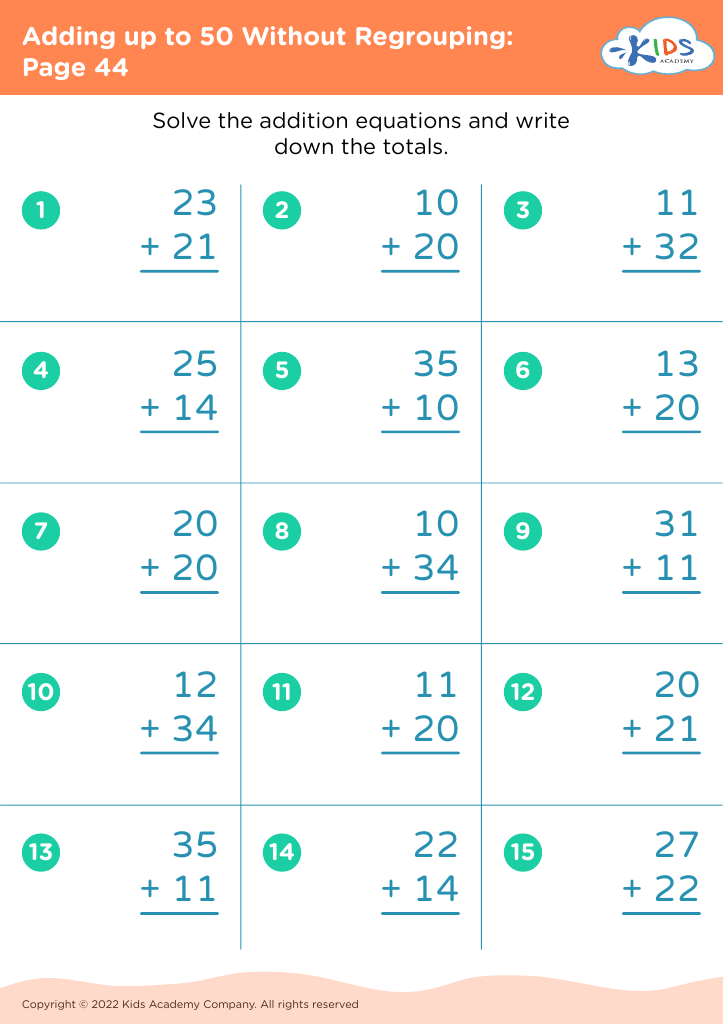
Adding up to 50 Without Regrouping: Page 44
Worksheet
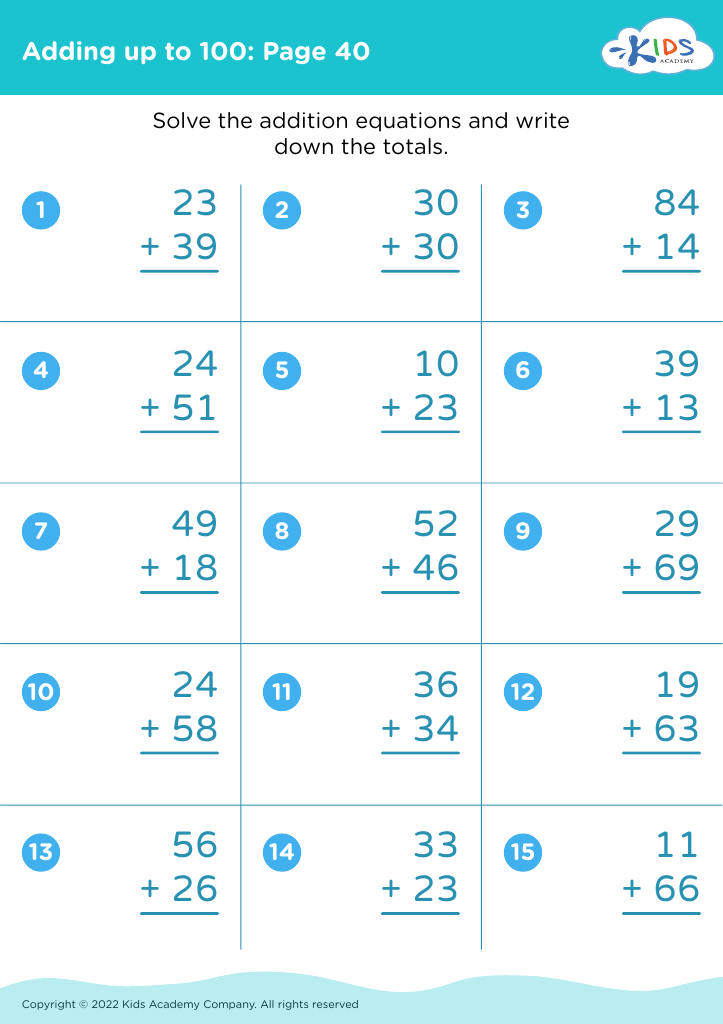
Adding up to 100: Page 40

Adding up to 100: Page 40

Adding up to 100: Page 40
Worksheet
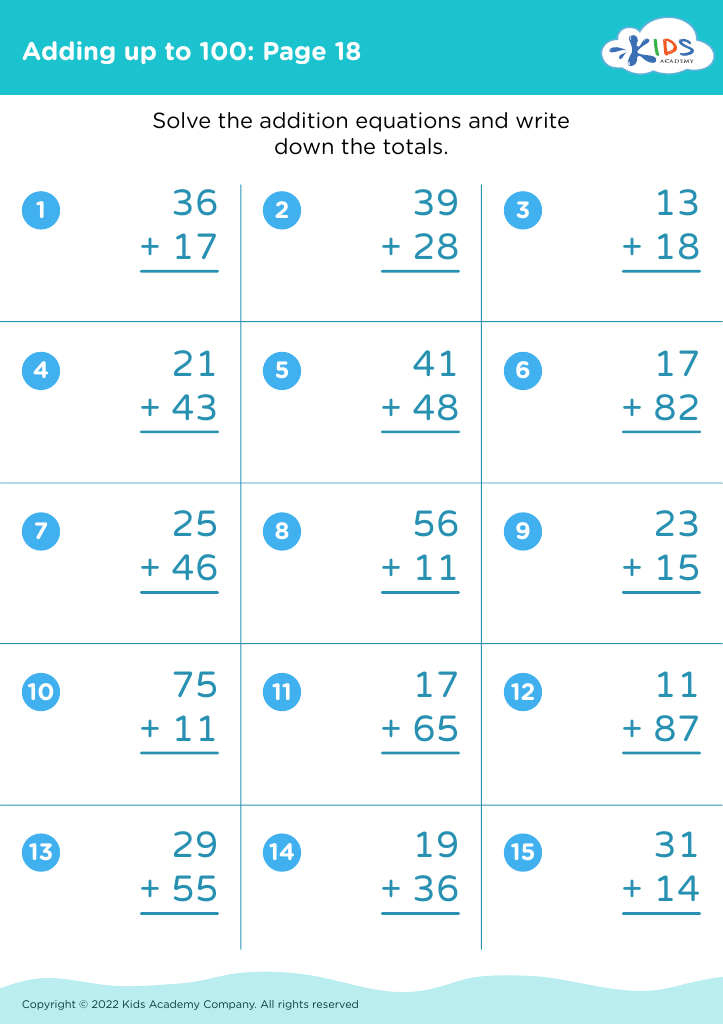
Adding up to 100: Page 18

Adding up to 100: Page 18

Adding up to 100: Page 18
Worksheet
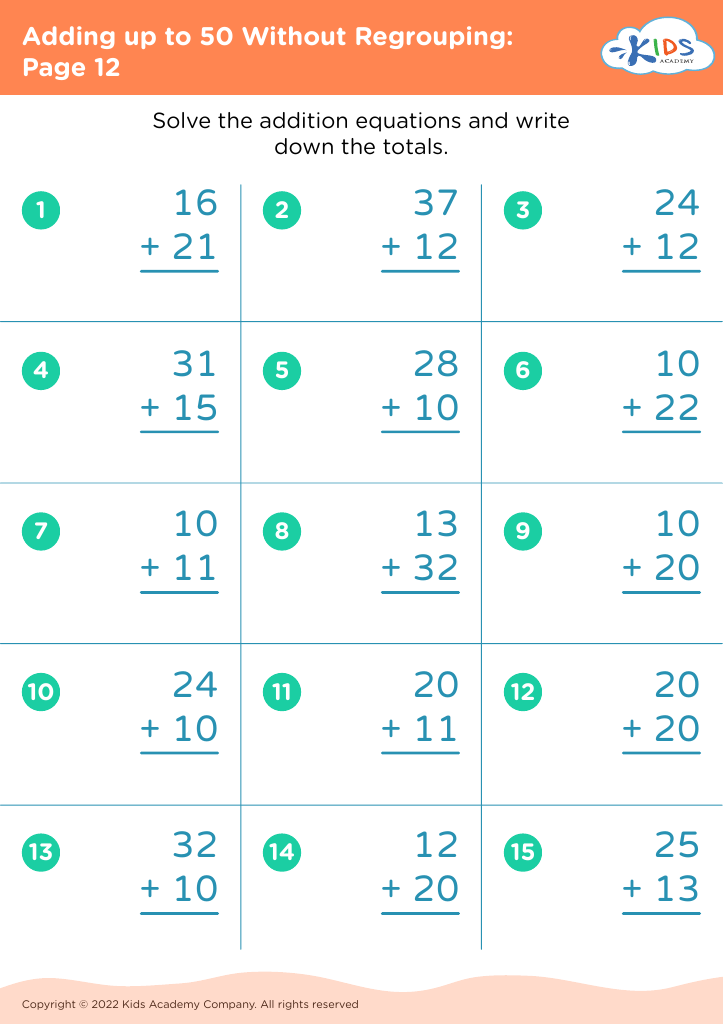
Adding up to 50 Without Regrouping: Page 12
Worksheet
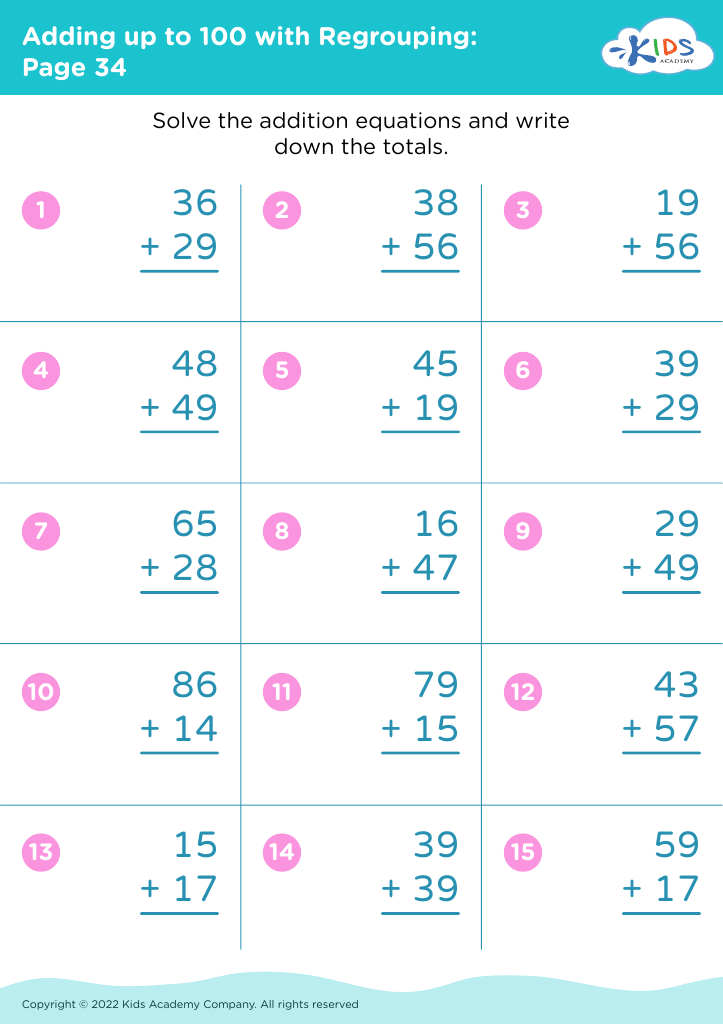
Adding up to 100 with Regrouping: Page 34
Worksheet
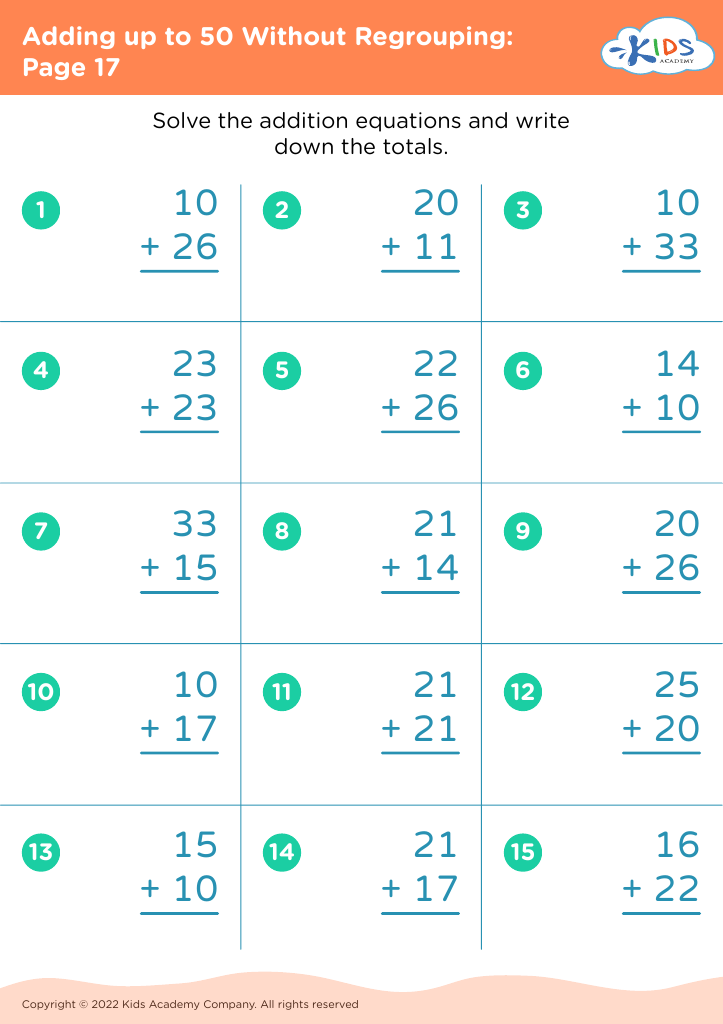
Adding up to 50 Without Regrouping: Page 17
Worksheet
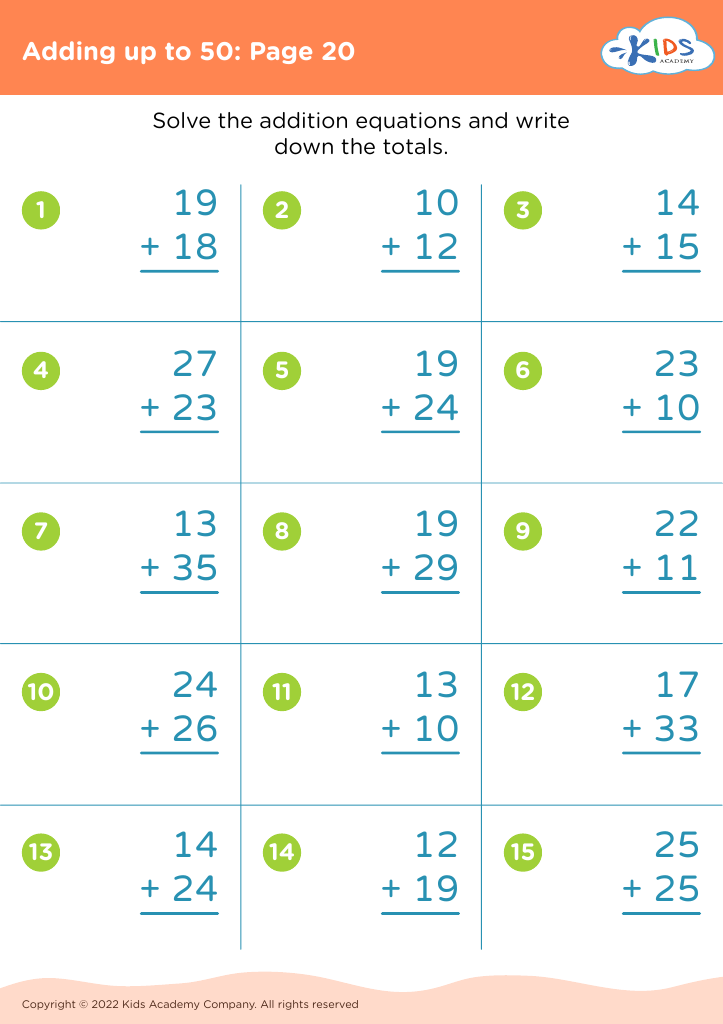
Adding up to 50: Page 20

Adding up to 50: Page 20

Adding up to 50: Page 20
Worksheet
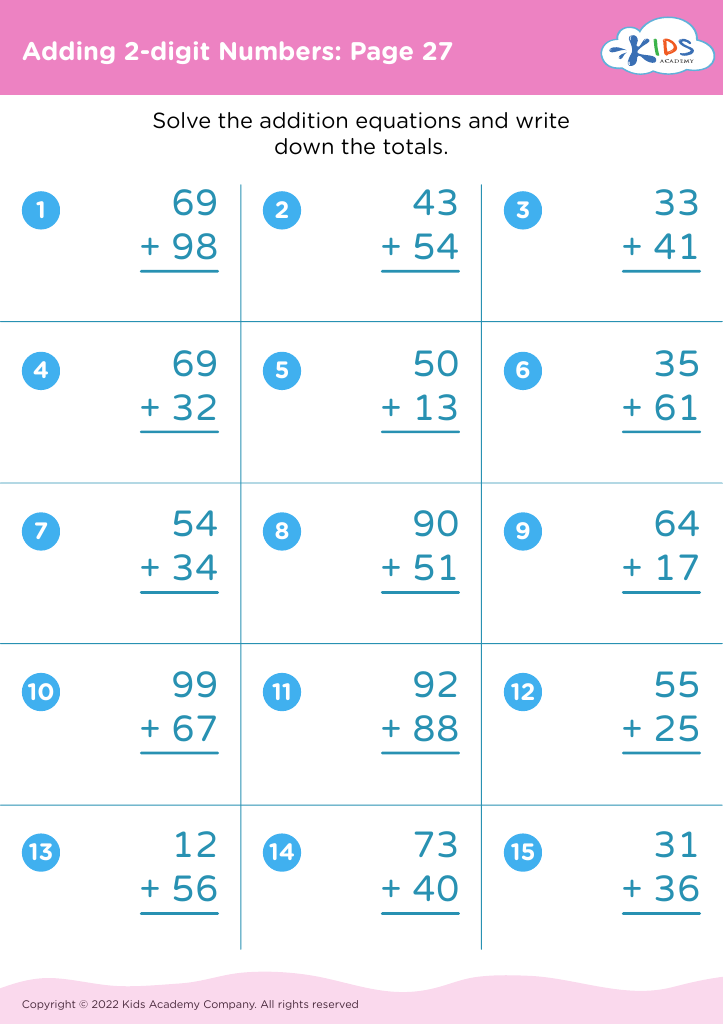
Adding 2-digit Numbers: Page 27

Adding 2-digit Numbers: Page 27

Adding 2-digit Numbers: Page 27
Worksheet


Enhancing number recognition and basic addition and subtraction skills for children aged 6-7 is crucial as these form the foundation of mathematical understanding. At this age, children transition from concrete counting to more abstract mathematical concepts, making it essential to solidify their ability to recognize numbers and perform simple operations.

A strong grasp of number recognition helps children identify quantities in everyday situations, enabling them to make sense of their environment. It boosts their confidence and encourages participation in activities that involve math. Furthermore, mastering addition and subtraction sets the stage for more complex math concepts introduced later, such as multiplication and division.

For parents and teachers, supporting children in developing these skills can lead to improved academic performance and a positive attitude toward math. Engaging children in fun activities, games, and challenges can promote a love for learning and help them view math as an enjoyable subject rather than a chore.

Additionally, early mastery of these skills fosters problem-solving abilities and logical thinking, essential skills for all areas of life. By prioritizing number recognition and basic operations, parents and teachers invest in children’s futures, equipping them with the tools needed for success in both academics and daily living.