Identifying Animals Addition & Subtraction Worksheets for Ages 6-7
4 filtered results
-
From - To
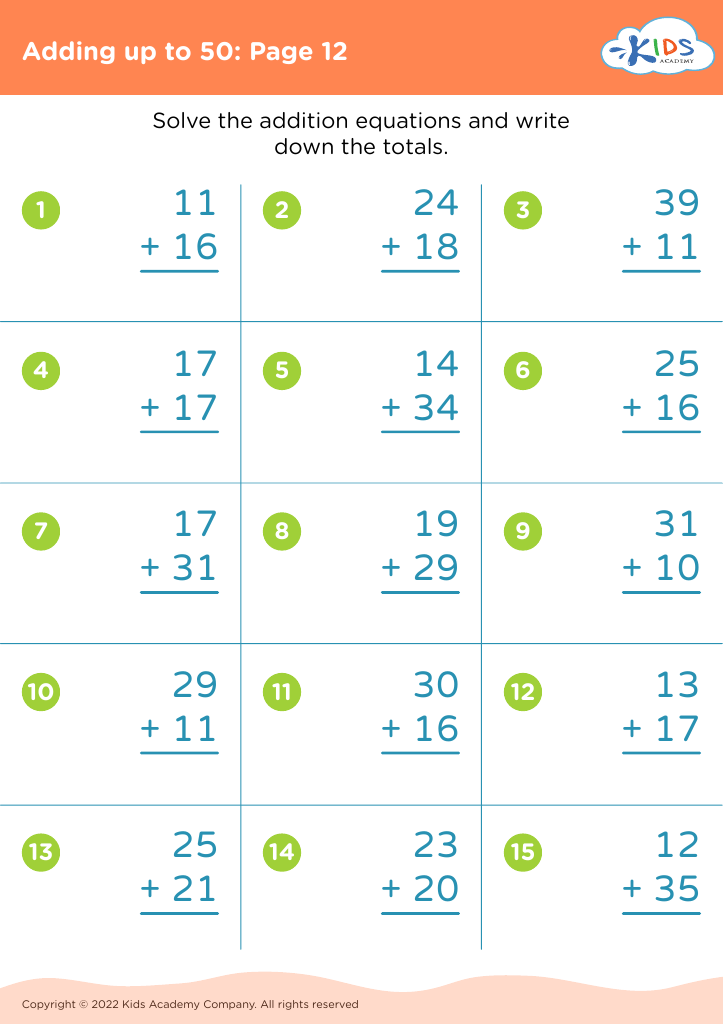
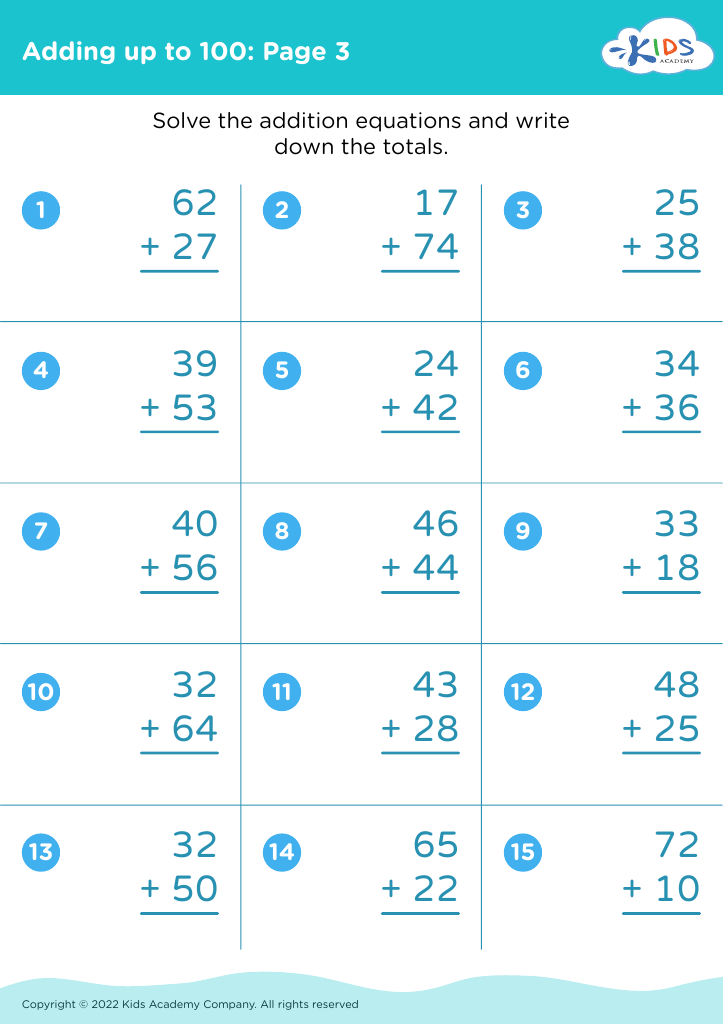
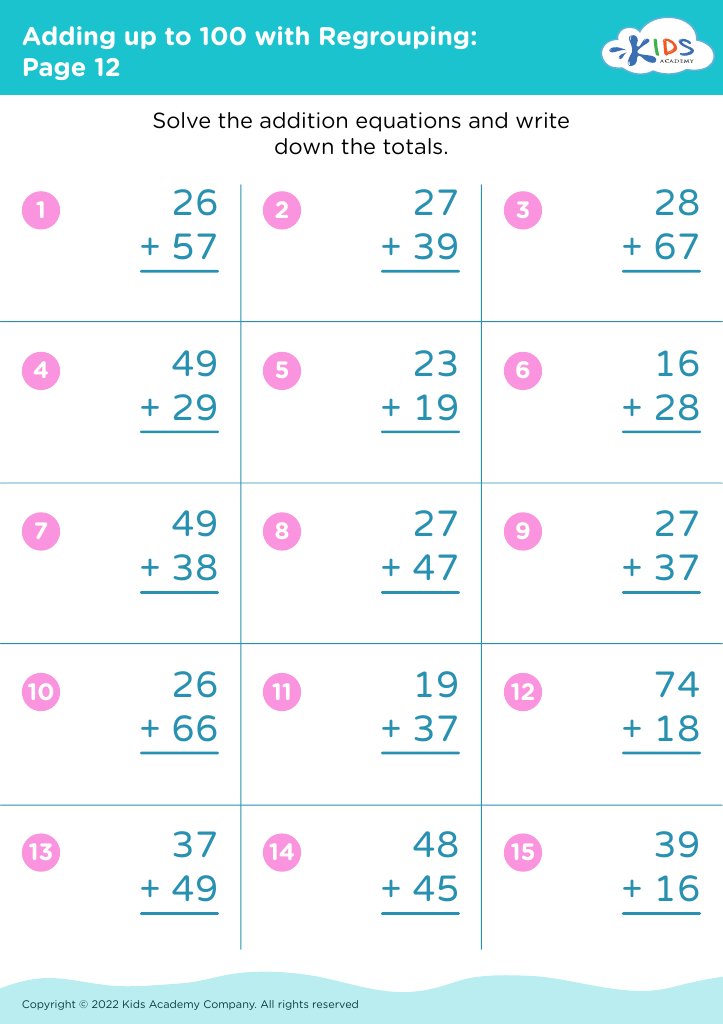
Explore our engaging "Identifying Animals Addition & Subtraction Worksheets" specially designed for children ages 6-7! These interactive worksheets help young learners combine essential math skills with exciting animal themes. Kids will practice addition and subtraction while identifying various animals, making math fun and relatable. Our resources foster critical thinking and problem-solving skills through colorful illustrations and creative activities. Perfect for at-home learning or classroom use, these worksheets promote understanding of mathematical concepts in an enjoyable way. Encourage your child's love for learning and animal identification while they build a strong foundation in mathematics today!
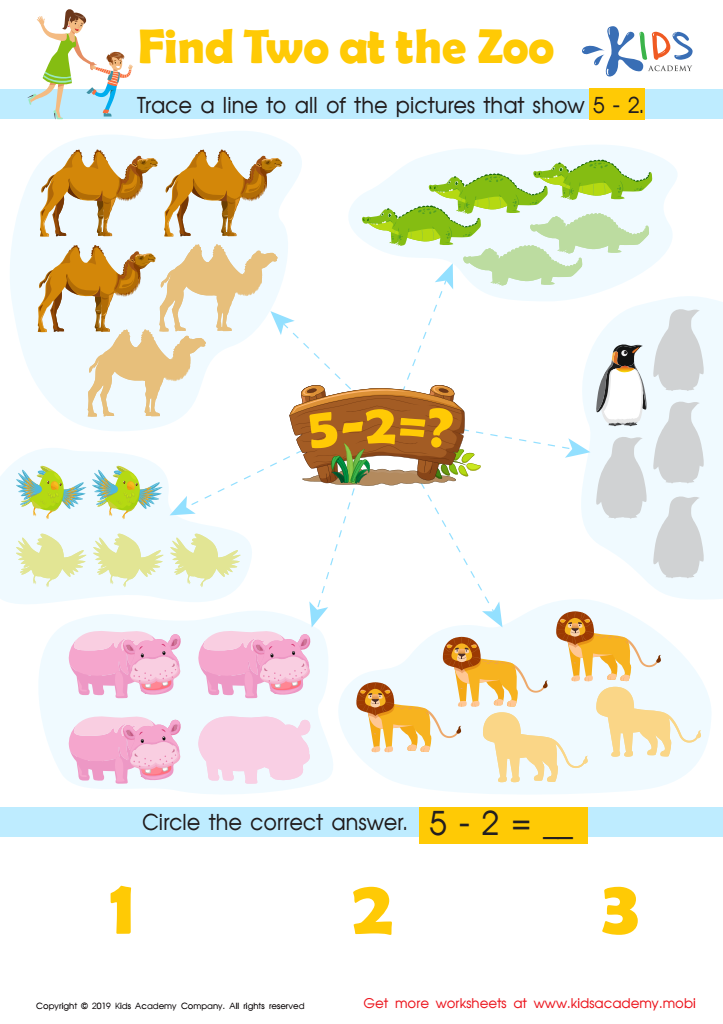
Find Two at the Zoo Worksheet
 Assign to My Students








Identifying Animals Addition & Subtraction offers a playful and engaging way for children aged 6-7 to develop essential early math skills. At this age, children are naturally curious, and integrating familiar themes like animals into learning helps maintain their interest and motivation. By using colorful visuals and fun animal characters, this approach captures their attention and fosters a positive learning environment.
Parents and teachers should care because this method reinforces foundational concepts in mathematics, making addition and subtraction more relatable. It also helps enhance critical thinking as children learn to categorize animals while solving math problems. Additionally, integrating animals into math promotes cross-curricular learning, connecting mathematics with science and fostering a more holistic educational experience.
Moreover, this approach builds confidence in mathematical abilities. Young learners can tackle problems with less anxiety when the subject matter resonates with their interests. Encouraging playful learning through animals not only improves academic skills but also nurtures a love for learning, which is vital for future educational success. Ultimately, focusing on enjoyable math practices promotes not just skill acquisition but also emotional and social development, as children work collaboratively and share their enthusiasm for learning.








