Improving number sense Addition & Subtraction Worksheets for Ages 6-7
3 filtered results
-
From - To
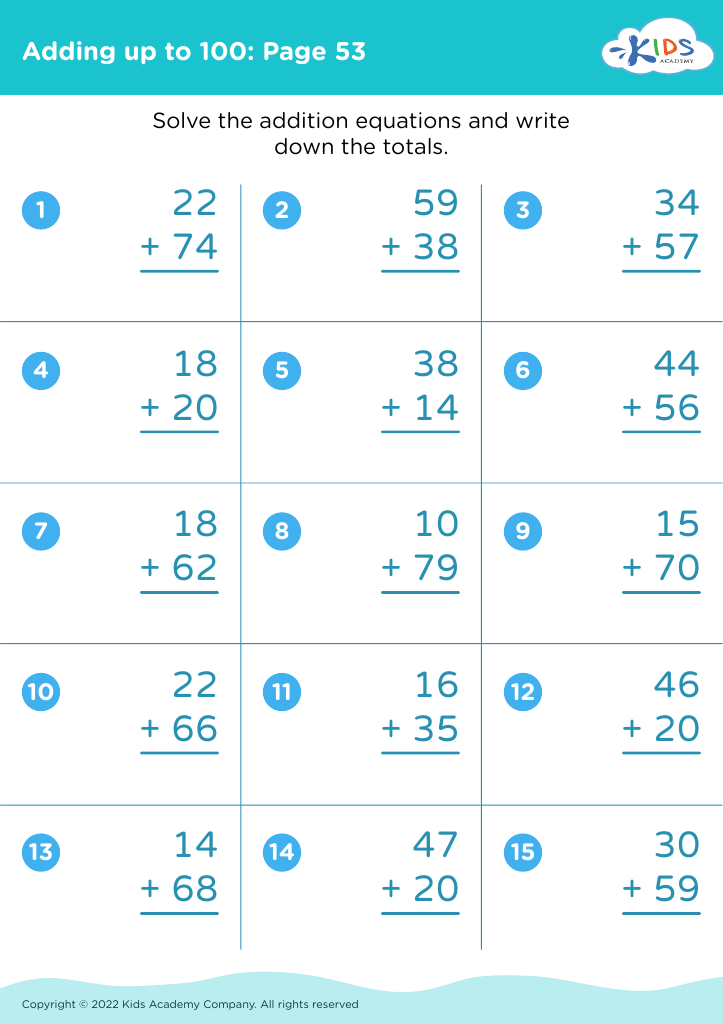
Enhance your child's math skills with our "Improving Number Sense Addition & Subtraction Worksheets" for ages 6-7. These thoughtfully designed worksheets focus on fostering a strong foundation in number sense, helping young learners confidently navigate addition and subtraction problems. Through a variety of fun, engaging exercises, children will develop critical math skills, improve their ability to recognize number patterns, and gain mastery in counting. Ideal for classroom use or home practice, our worksheets provide a stepping stone to advanced mathematical concepts, ensuring your child builds a solid understanding from the ground up. Start their math journey today!
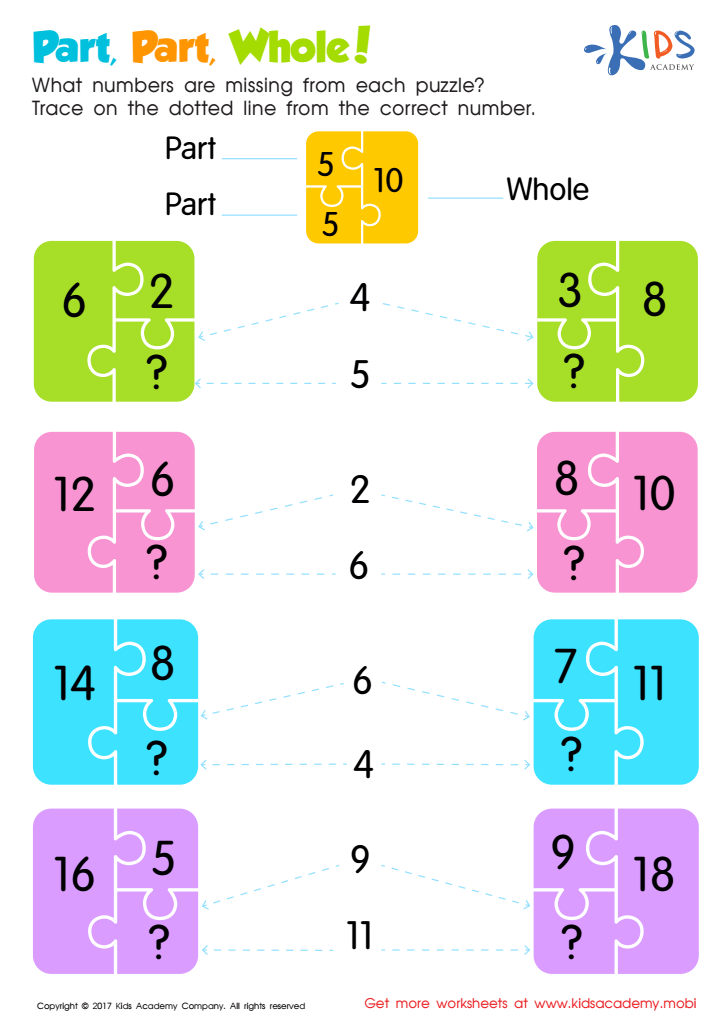
Part, Part, Whole Worksheet
 Assign to My Students
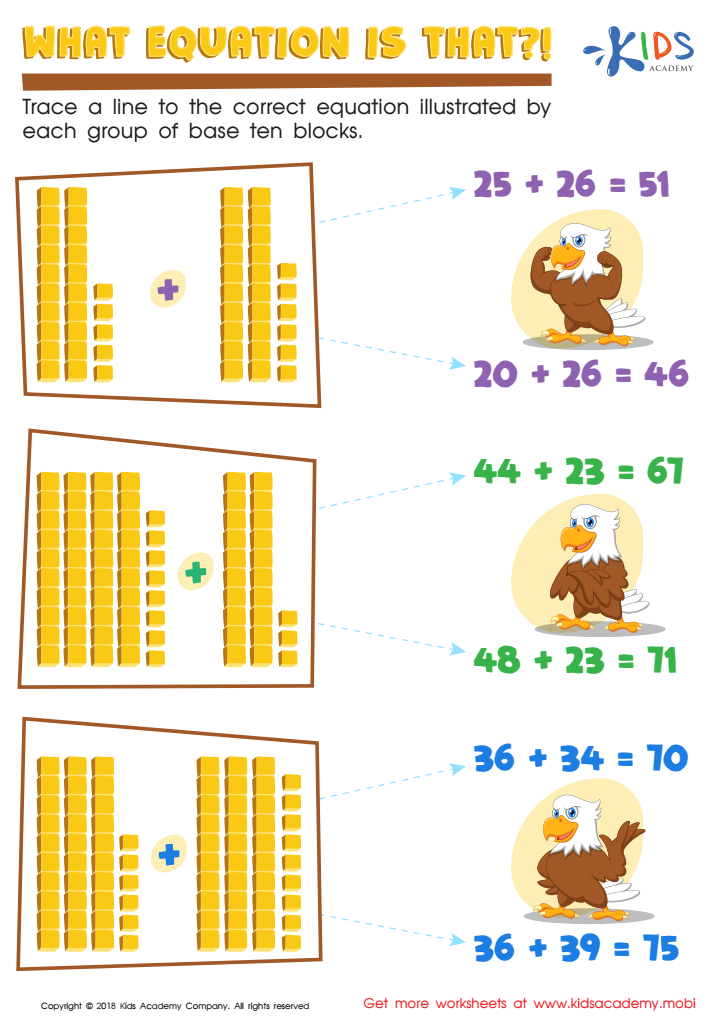
What Equation Is That? Worksheet








Improving number sense, particularly in addition and subtraction, for children aged 6-7 is crucial for their foundational understanding of mathematics. At this developmental stage, children's brains are exceptionally receptive to learning basic numerical concepts, and solidifying these skills lays the groundwork for more complex arithmetic and problem-solving abilities later in life.
Number sense refers to a child's intuitive grasp of numbers, their relationships, and how they are affected by operations such as addition and subtraction. This foundational competency promotes mental math, allowing children to estimate, compare quantities, and understand the concept of magnitude—all essential skills for everyday life. By focusing on number sense, parents and teachers help children move beyond rote memorization to develop a deeper, more flexible understanding of mathematics.
Moreover, proficient number sense in early childhood education significantly enhances a child's confidence and enjoyment in math, reducing math anxiety and fostering a positive attitude towards learning. When children are confident with basic operations, it boosts their self-esteem and encourages them to tackle more challenging mathematical concepts.
For teachers and parents, supporting this developmental milestone through engaging lessons and everyday practice (such as counting objects, playing number games, and real-life math scenarios) creates a strong mathematical foundation, fostering lifelong learners who are well-prepared to face academic challenges head-on.








