
Multiplication practice Addition & Subtraction Worksheets for Ages 6-7
9 filtered results
Difficulty Level
Grade
Age
-
From - To
Subject
Activity
Standards
Discover an engaging collection of multiplication practice, addition, and subtraction worksheets specially designed for children ages 6-7. Our vibrant and interactive resources help young learners build a solid foundation in math while enhancing their problem-solving skills. Each worksheet offers step-by-step exercises that reinforce core concepts and encourage confidence in mathematical reasoning. These materials allow teachers and parents to facilitate enjoyable learning experiences, making math fun and accessible. Perfect for classroom activities or home practice, our multiplication, addition, and subtraction worksheets support early childhood math development and inspire a love for numbers. Start exploring today and watch your child's skills grow!
Favorites
With answer key
Interactive
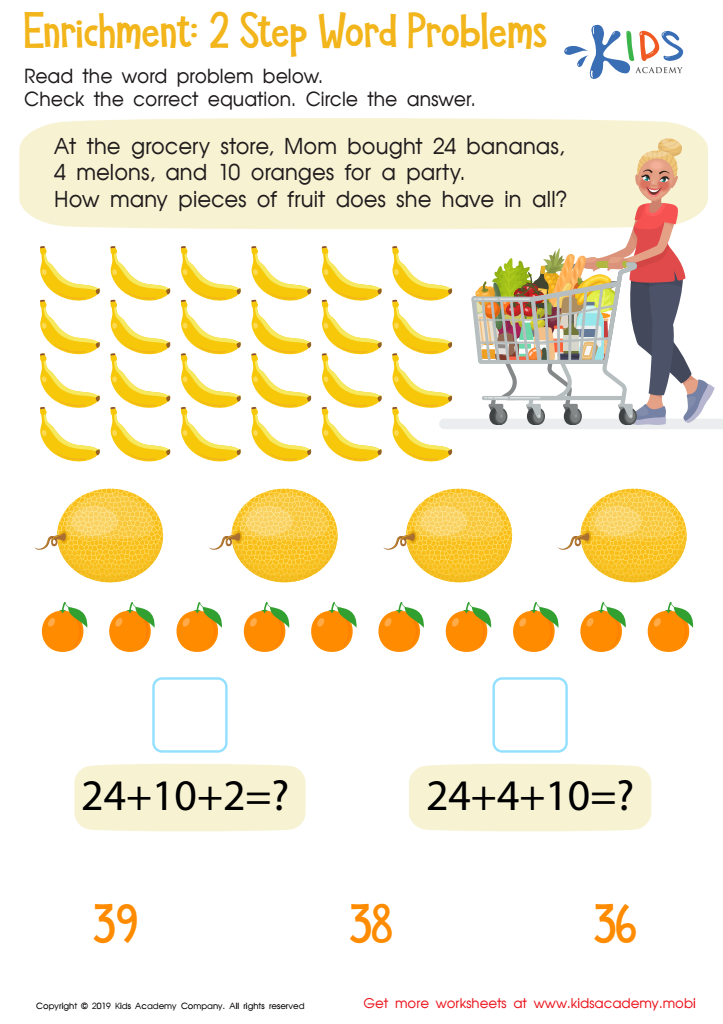
Enrichment -2 Step Word Problems Worksheet
Help your students learn math easier and faster with this colorful worksheet. Read the word problem and then guide them in checking the correct equation and finding the answer. Your students will benefit from the extra help, as they work through new concepts each day.
 Assign to My Students
Enrichment -2 Step Word Problems Worksheet
Worksheet
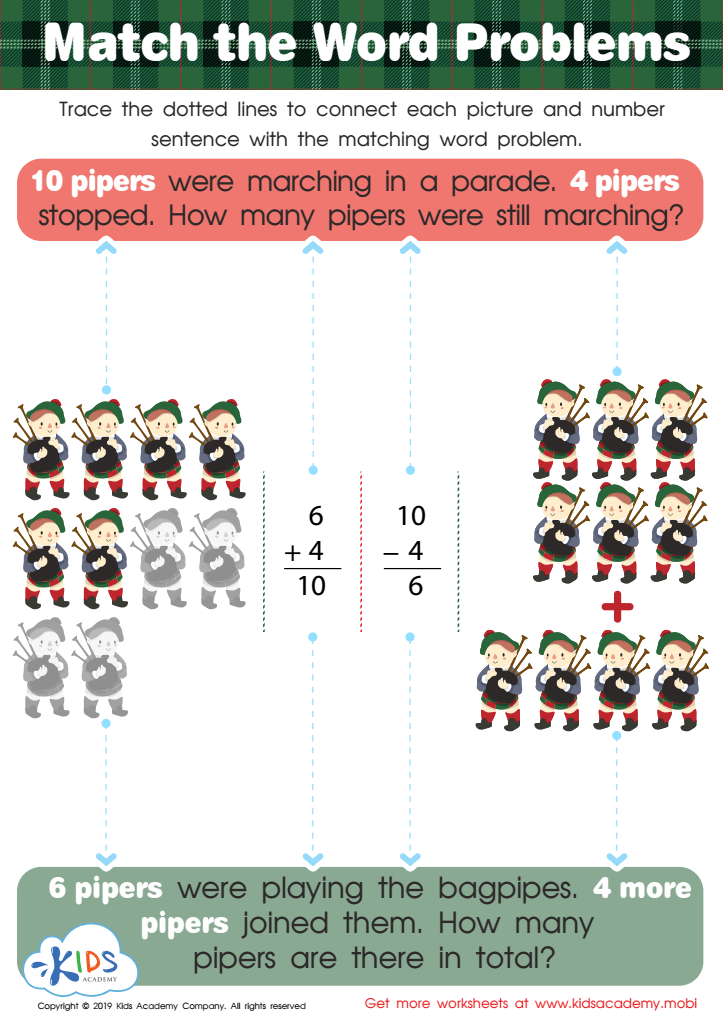
Match the Word Problems Worksheet
Read this word problem to your kids: Help them understand how it can be translated into a number problem. Trace the dotted lines to see how each picture and number sentence match the problem. With this worksheet, you can show your kids how easy it is to transform a word problem into a number problem.
Match the Word Problems Worksheet
Worksheet
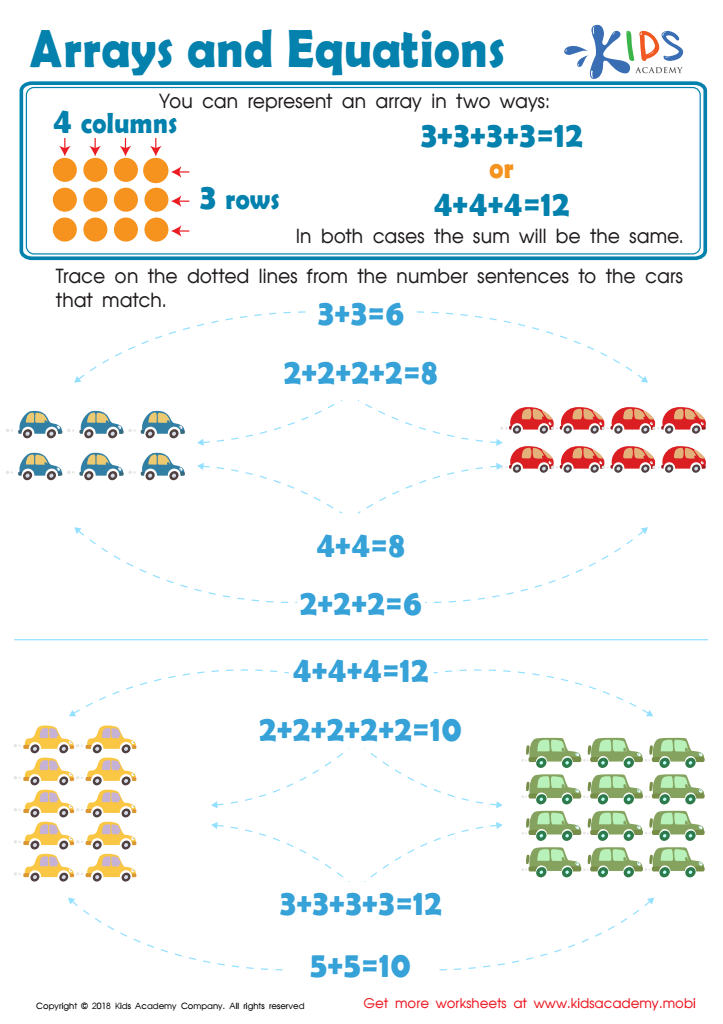
Arrays and Equations Worksheet
An array is objects, pix, or numbers organized in rows and columns. Show kids two ways to interpret this: 3 rows in 4 places = 12 and 4 columns in 3 places = 12. Help your child trace the number sentences to the matching cars. All equations always add up to the same amount.
Arrays and Equations Worksheet
Worksheet
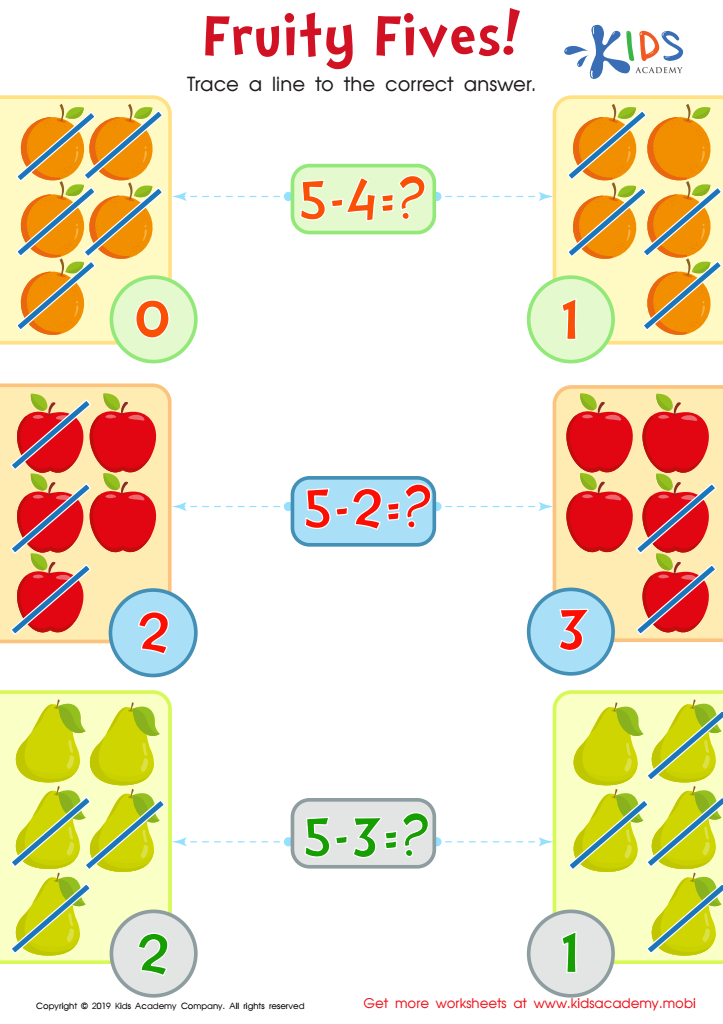
Fruity Fives! Worksheet
This tracing sheet has three equations for your kids to solve. Make learning fun with colorful objects and text! They may need help, so be prepared to assist them. Help them solve the equations and trace a line to the correct answer.
Fruity Fives! Worksheet
Worksheet
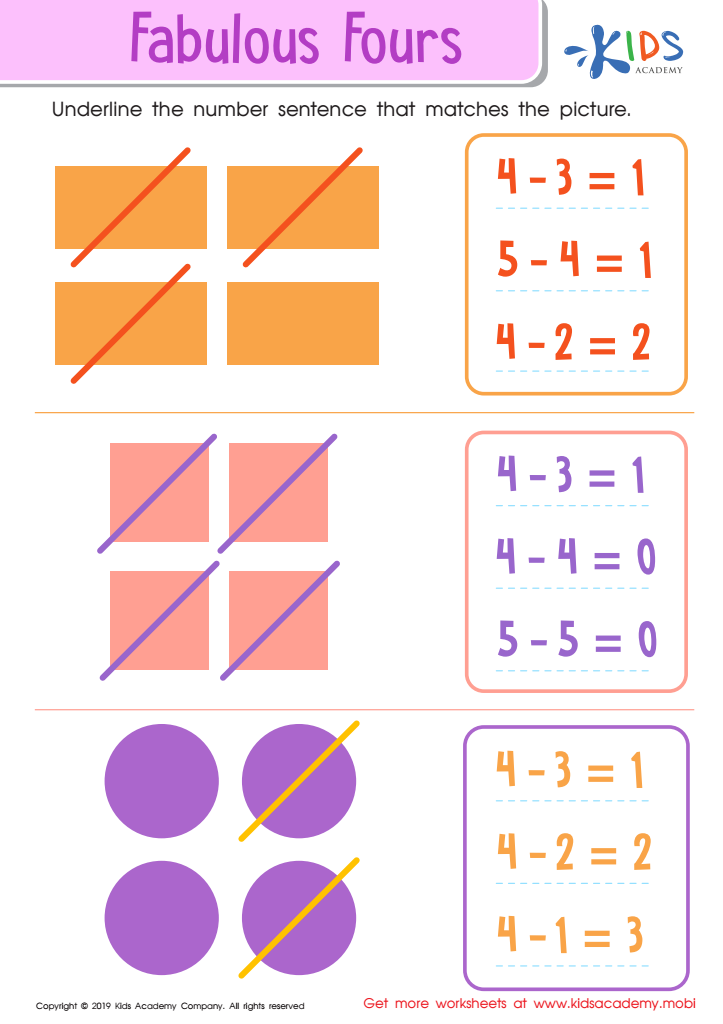
Fabulous Fours Worksheet
Mastering basic math like addition and subtraction is essential for your kids. Use fun exercises and tests to evaluate their understanding of equations. Challenge them with this worksheet - have them count the objects in each picture, then trace a line to the pictures which show the equation 3-2.
Fabulous Fours Worksheet
Worksheet
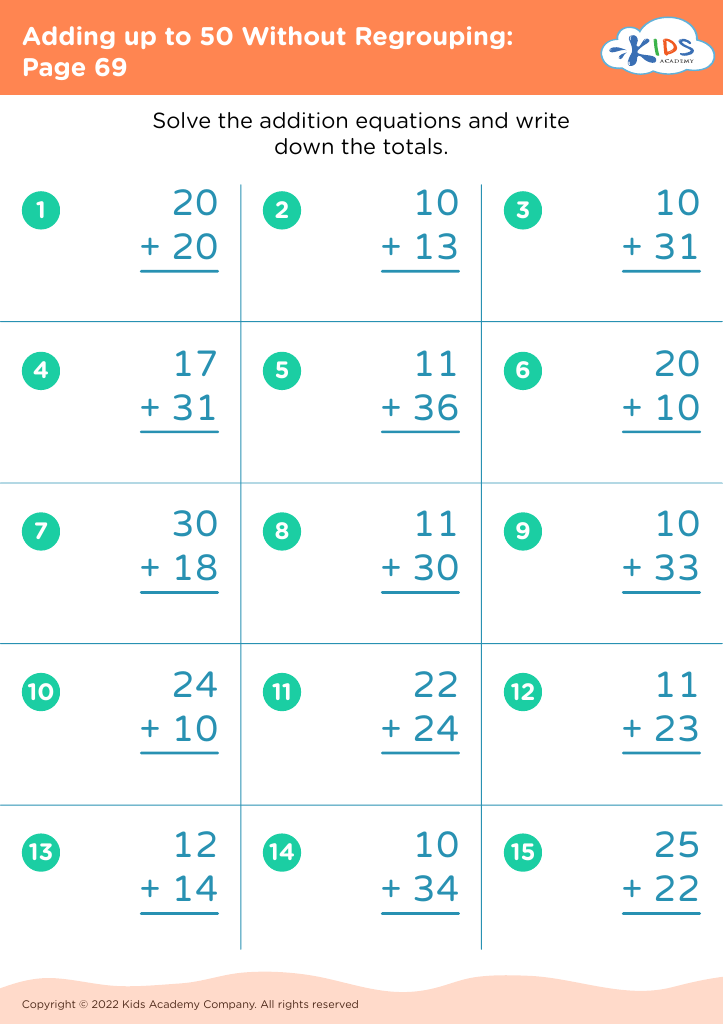
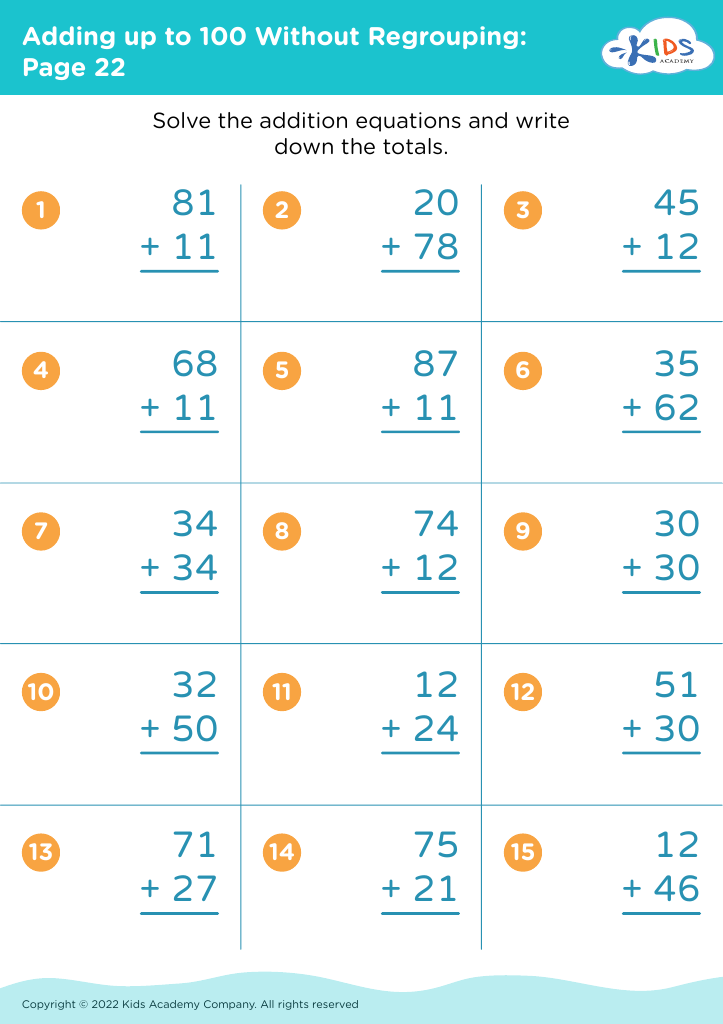
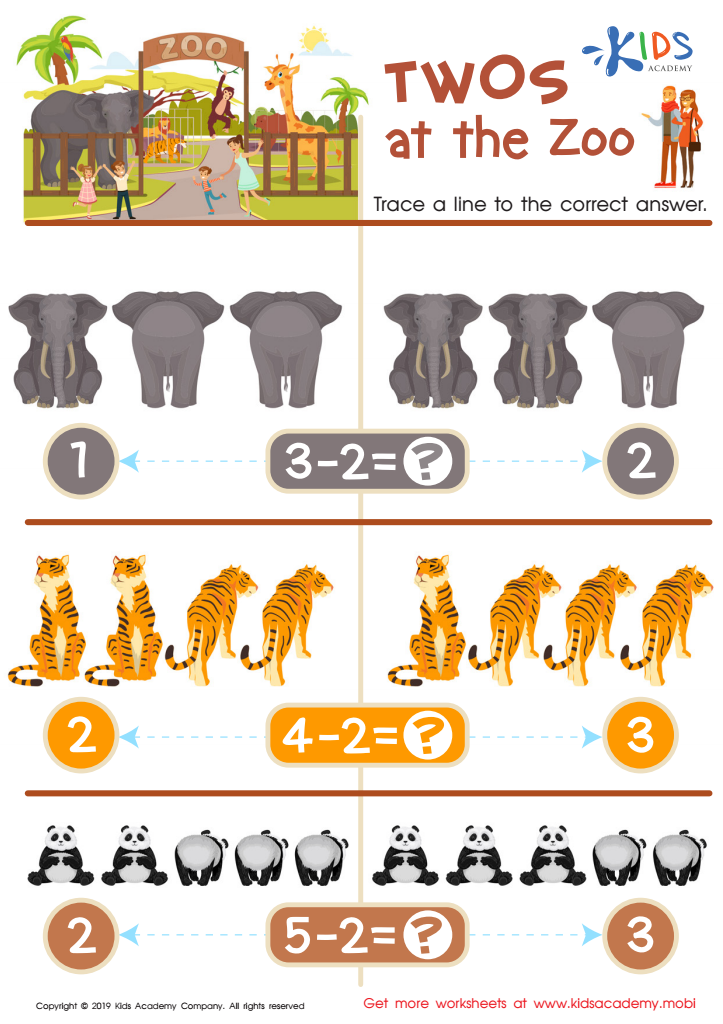
Twos at the Zoo Worksheet
At the zoo, your kids can have fun with animals. Ask them to name their favorite ones and identify them in the printout. Count animals in each group together, then help your kids solve the equations and trace a line to the answer. It's an enjoyable way to combine learning and exploration!
Twos at the Zoo Worksheet
Worksheet
Join Kids Academy for Free
Who is primarily going to use this learning content?








Parents and teachers should prioritize multiplication practice alongside addition and subtraction for children aged 6-7 because these foundational math skills are essential for cognitive development and real-life application. At this age, children begin to grasp the principles of multiplication as a shortcut to repeated addition, helping them conceptualize quantities and improve their number sense.
Practicing multiplication reinforces concepts learned in addition and subtraction, fostering a deeper understanding of numbers. Engaging with these operations cultivates problem-solving abilities, critical thinking, and logical reasoning. Mastering multiplication at an early age boosts confidence, making students more willing to tackle complex math challenges in the future.
Furthermore, strong multiplication skills lay the groundwork for more advanced mathematics, such as division and fractions, which become increasingly important in later grades. As children practice these skills, they also develop perseverance and resilience through overcoming challenges—crucial traits for success both in and out of the classroom.
Incorporating multiplication into daily routines can make learning engaging and fun. Parents and teachers can use games, activities, and practical examples to reinforce skills, ensuring a well-rounded and confident mathematical foundation that will benefit students throughout their academic journey.








