Problem-solving ability Addition & Subtraction Worksheets for Ages 6-7
3 filtered results
-
From - To
Boost your child's problem-solving skills with our engaging Addition & Subtraction Worksheets designed specifically for ages 6-7. These worksheets focus on real-life scenarios that encourage critical thinking and mathematical reasoning, making learning both fun and meaningful. Through a variety of challenges, children will enhance their ability to tackle addition and subtraction problems, fostering a deeper understanding of math concepts. Our resources align with educational standards and are tailored to suit young learners' developmental needs. Help your child build confidence and proficiency in math while enjoying the process with these interactive worksheets. Start their journey towards mathematical success today!
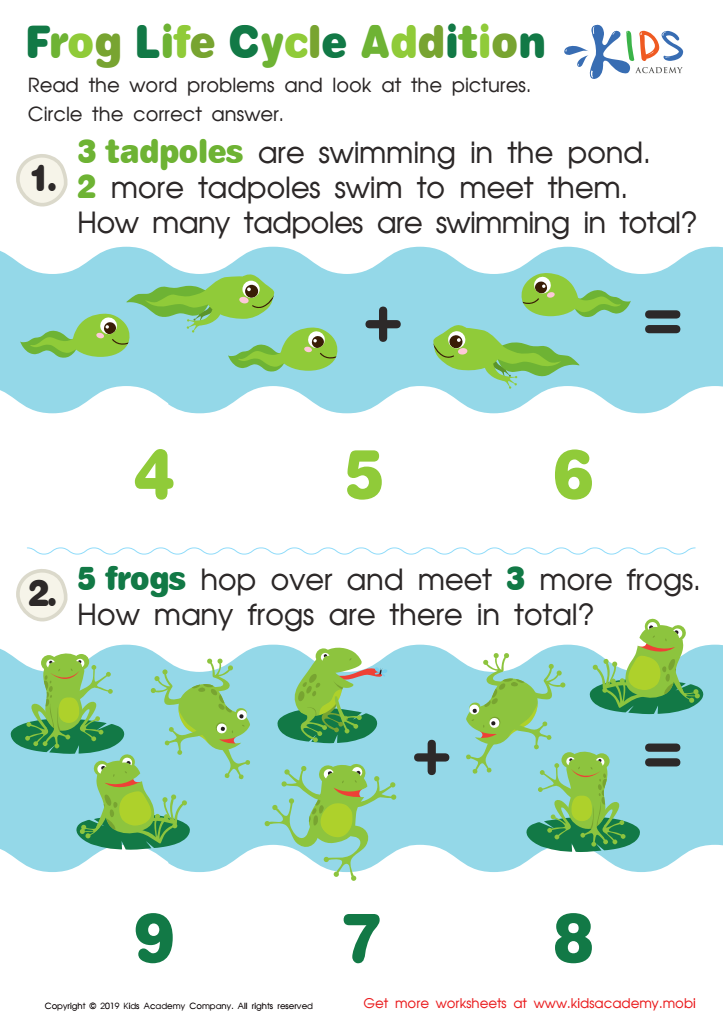
Frog Life Cycle Addition Worksheet
 Assign to My Students
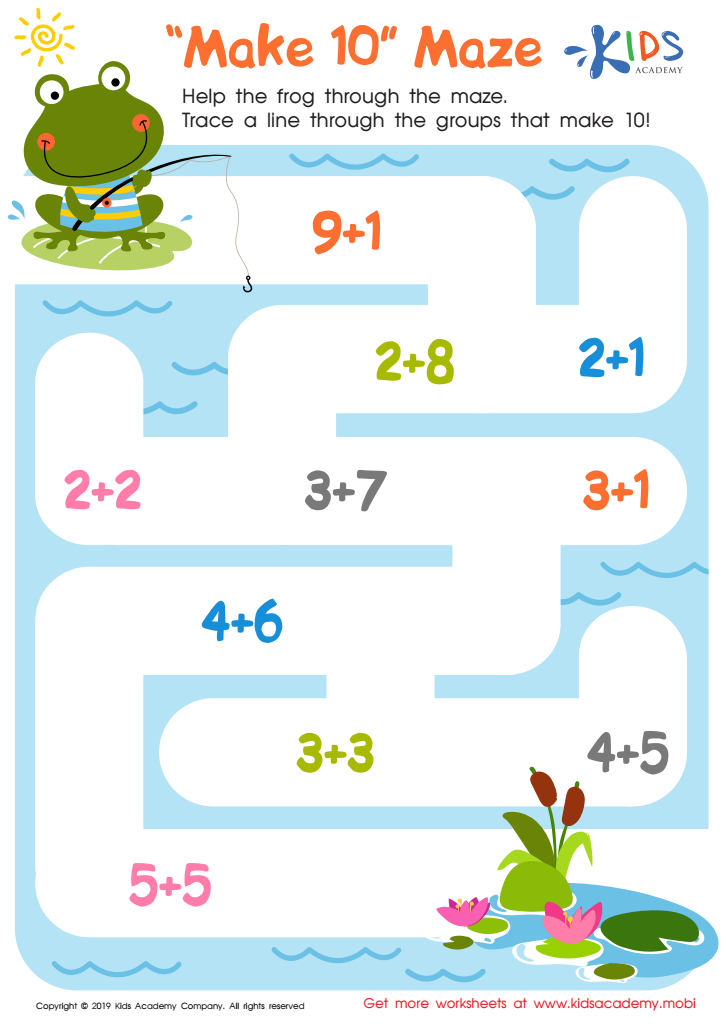
Make 10 Maze Worksheet








Parents and teachers should prioritize problem-solving abilities in addition and subtraction for children aged 6-7 because these skills form the foundation for all future learning in mathematics. At this stage, children are developing critical thinking and cognitive skills essential for academic success. Encouraging strong problem-solving techniques helps students understand the “why” behind mathematical operations, rather than just memorizing facts. This deep comprehension fosters a growth mindset, enabling kids to tackle more complex mathematical challenges as they progress.
Additionally, enhanced problem-solving ability contributes to a child's confidence and independence. Children who practice these skills tend to approach tasks with greater resilience, as they learn to devise strategies, analyze different approaches, and evaluate solutions. Such skills are not limited to mathematics; they are transferable and beneficial across multiple subjects and real-life situations.
Moreover, acquiring solid addition and subtraction skills in early life encourages a sense of achievement and motivation to learn. This positive reinforcement is crucial at a developmentally sensitive time when children form attitudes towards math and education. By focusing on these essential skills, parents and teachers lay the groundwork for future success, creating engaged learners who appreciate the relevance and application of math in everyday life.








