
Sequencing Skills Addition & Subtraction Worksheets for Ages 6-7
3 filtered results
Difficulty Level
Grade
Age
-
From - To
Subject
Activity
Standards
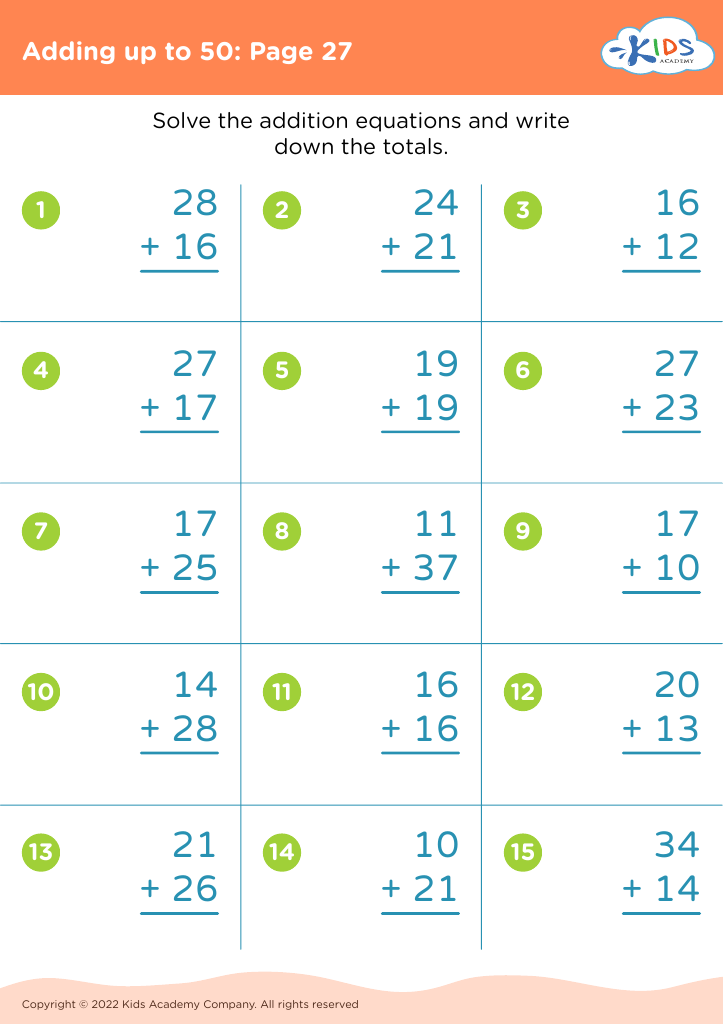
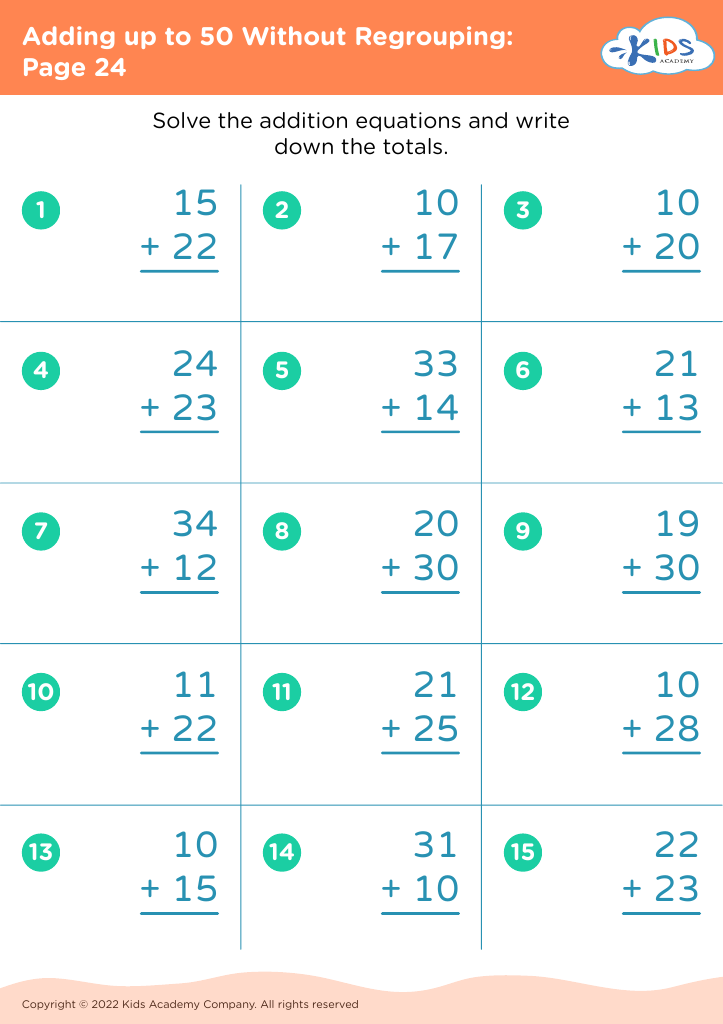
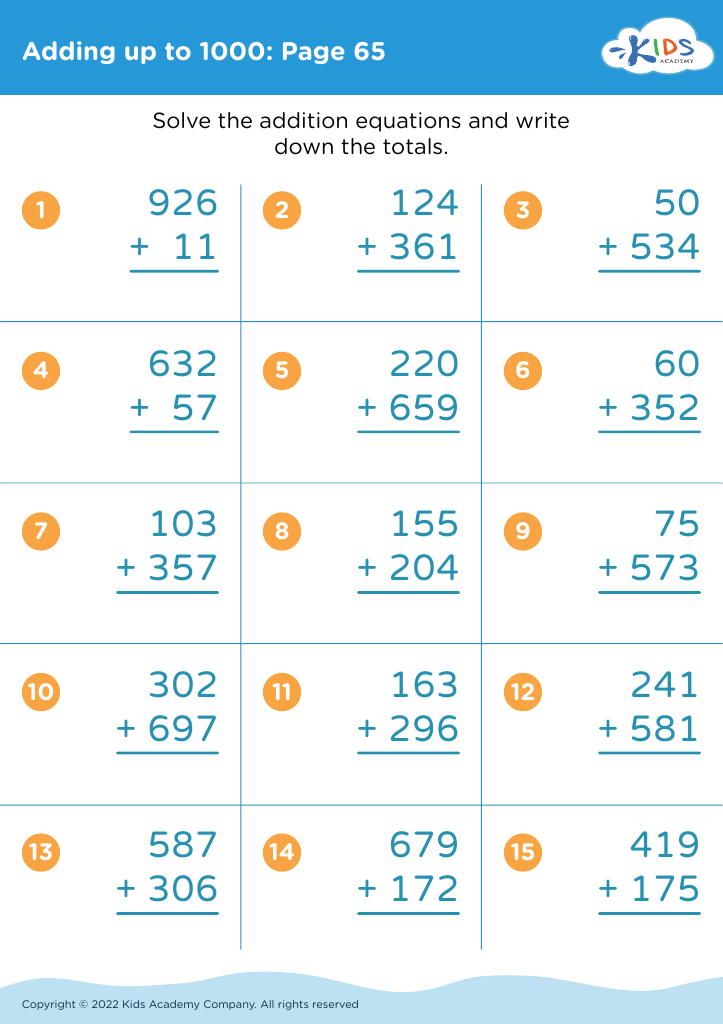
Our Sequencing Skills Addition & Subtraction Worksheets are tailored for children aged 6-7, offering an engaging approach to mastering essential math skills. These worksheets help young learners build a solid foundation in sequencing, addition, and subtraction through fun and interactive activities. Perfect for homeschooling or supplemental classroom practice, each worksheet enhances critical thinking and problem-solving abilities. Kids will enjoy solving math problems that promote logical order and flow, preparing them for more advanced math concepts. Discover the perfect educational resource that makes learning math enjoyable and effective at Kids Academy!
Favorites
With answer key
Interactive
Join Kids Academy for Free
Who is primarily going to use this learning content?








Sequencing skills in addition and subtraction are crucial for children aged 6 to 7 because they form the foundation for later mathematical understanding. At this developmental stage, kids are moving beyond the basics and starting to engage with more complex problem-solving. Mastery of sequencing helps them understand the order of processes, which is essential in math as well as in everyday tasks.
Understanding how to sequence steps accurately allows kids to follow procedures, such as the correct order of operations in math problems. This is key for getting the right answers and for developing a logical way of thinking. Addition and subtraction are among the first significant mathematical concepts children learn, and good sequencing skills ensure they can perform these operations confidently and accurately.
In addition, sequencing skills boost general cognitive development. Knowing what comes first, next, and last helps children in reading, following instructions, organizing their thoughts, and managing time effectively. This links to better academic performance across various subjects.
For teachers and parents, fostering these skills can be as simple as guiding children through step-by-step instructions and encouraging them to articulate the steps as they solve problems. Addressing sequencing skills at this early age ensures a strong mathematical foundation and nurtures overall intellectual growth. This support helps set children up for success in their future educational journeys and everyday life skills.








