Understand number relationships Addition & Subtraction Worksheets for Ages 6-7
3 filtered results
-
From - To
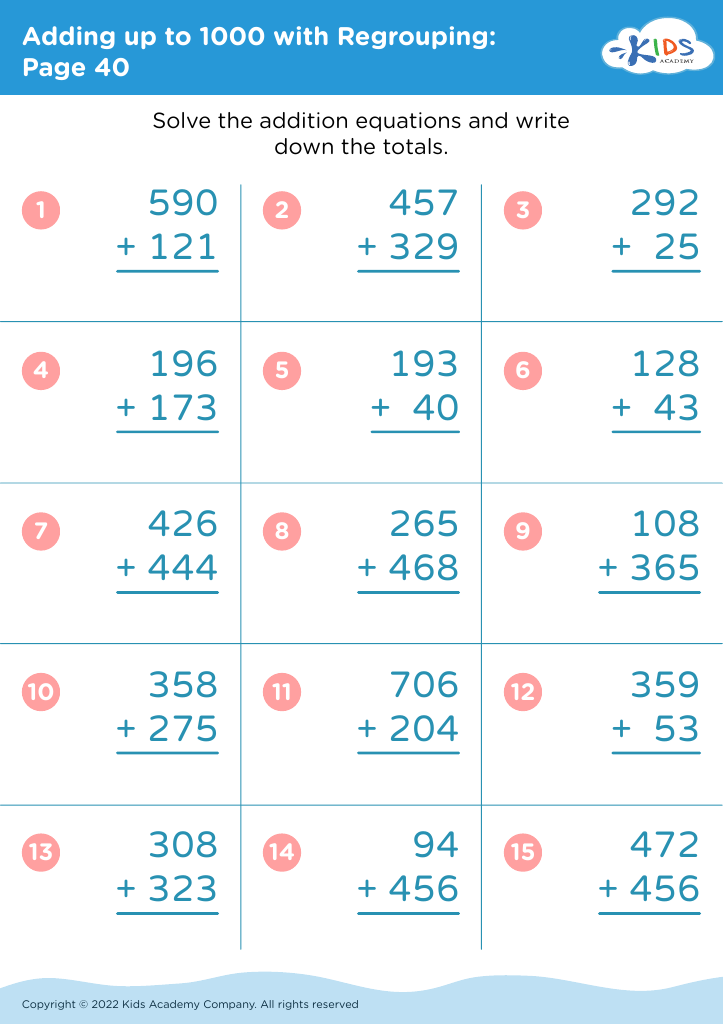
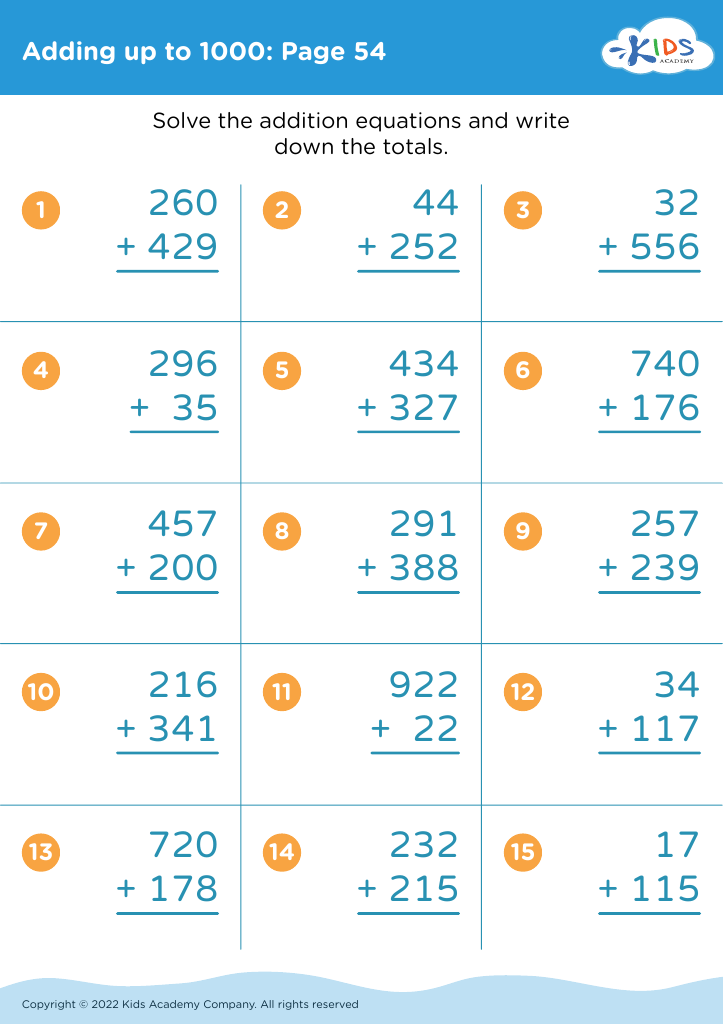
Explore our "Understand Number Relationships" Addition & Subtraction worksheets designed for children aged 6-7. These engaging resources help young learners grasp the foundational concepts of addition and subtraction by showcasing how numbers relate to each other. With a variety of interactive activities, students will enhance their mathematical skills while developing critical thinking. The worksheets incorporate fun visuals and relatable scenarios to maintain interest and engagement. Perfect for both classroom use and at-home practice, these worksheets encourage young mathematicians to build confidence as they master key number relationships. Equip your child with the tools they need for success in math today!
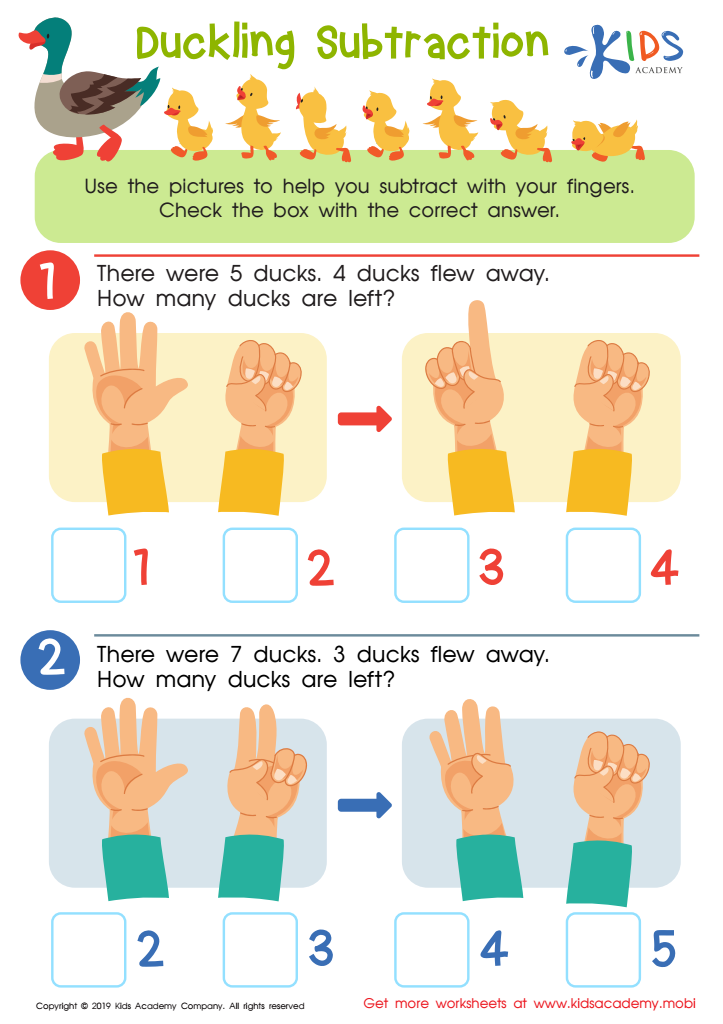
Duckling Subtraction Worksheet
 Assign to My Students








Understanding number relationships in addition and subtraction is crucial for children aged 6-7 as it lays the foundation for their entire mathematical development. At this age, children are transitioning from concrete to more abstract thinking, and their grasp of how numbers relate to each other helps in developing critical problem-solving skills. When children learn that subtraction is related to addition, for example, they begin to see numbers as interconnected rather than isolated, which enhances their numerical fluency.
This understanding promotes flexibility in thinking. Children who can recognize relationships can use various strategies to solve problems, making them more adept at tackling complex mathematical concepts later on. Additionally, it fosters confidence. When children can see the links between digits, they're more likely to approach challenges with a positive mindset, paving the way for a lifelong love of learning.
Moreover, teaching number relationships naturally opens the door for discussions about patterns, sequences, and the real-world applications of math, making learning relevant and engaging. For parents and teachers, prioritizing this understanding ensures that children are not only prepared for higher-level math but are also equipped with essential life skills such as critical thinking and logical reasoning.








