Understand patterns Addition & Subtraction Worksheets for Ages 6-7
6 filtered results
-
From - To
Explore our "Understand Patterns: Addition & Subtraction Worksheets for Ages 6-7" designed to help young learners grasp essential math skills. These engaging worksheets encourage students to recognize and create patterns in addition and subtraction, laying a solid foundation for future mathematical concepts. With vibrant visuals and intuitive exercises, children will enjoy practicing their skills while developing critical thinking abilities. Ideal for home or classroom use, these worksheets foster independence and confidence in young minds. Help your child build a strong mathematical foundation and spark a love for learning with our expertly crafted resources today!
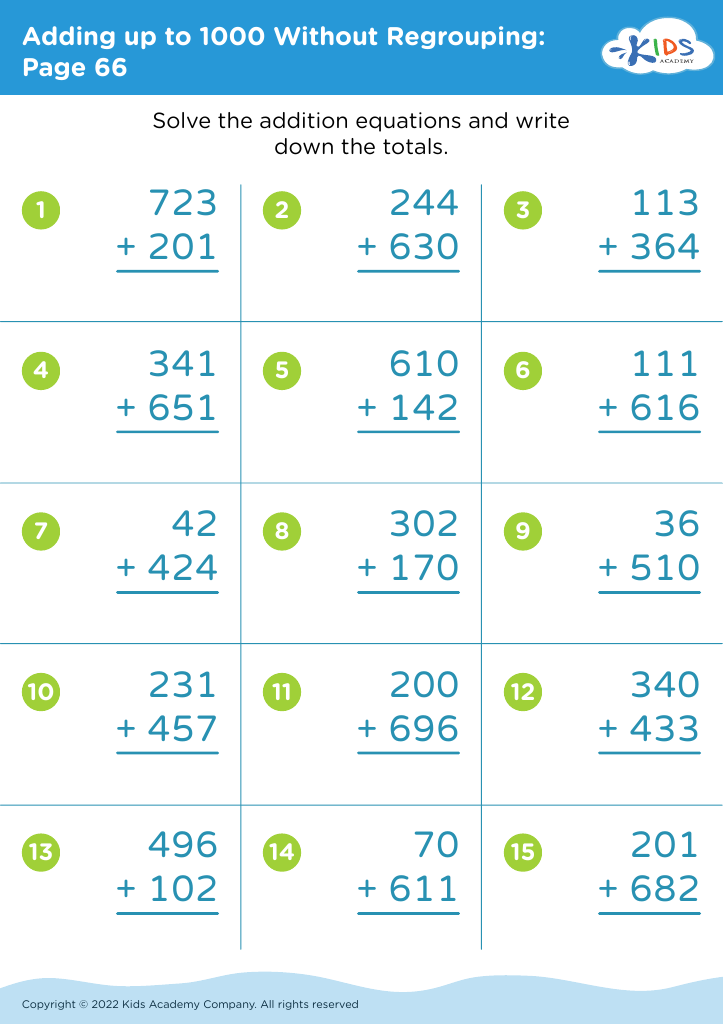
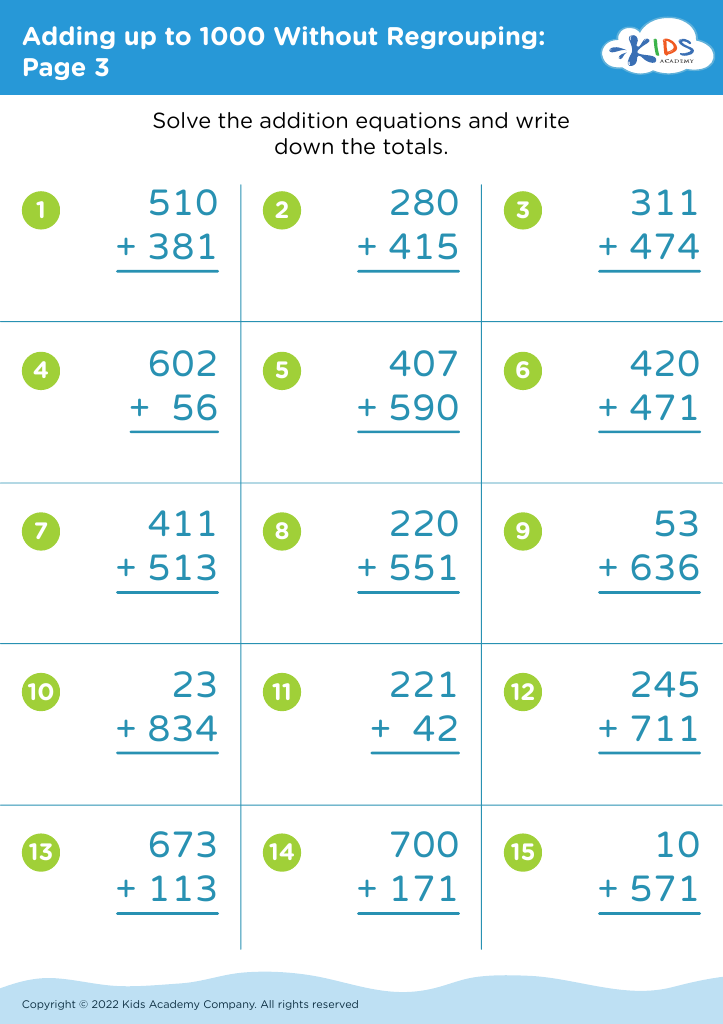
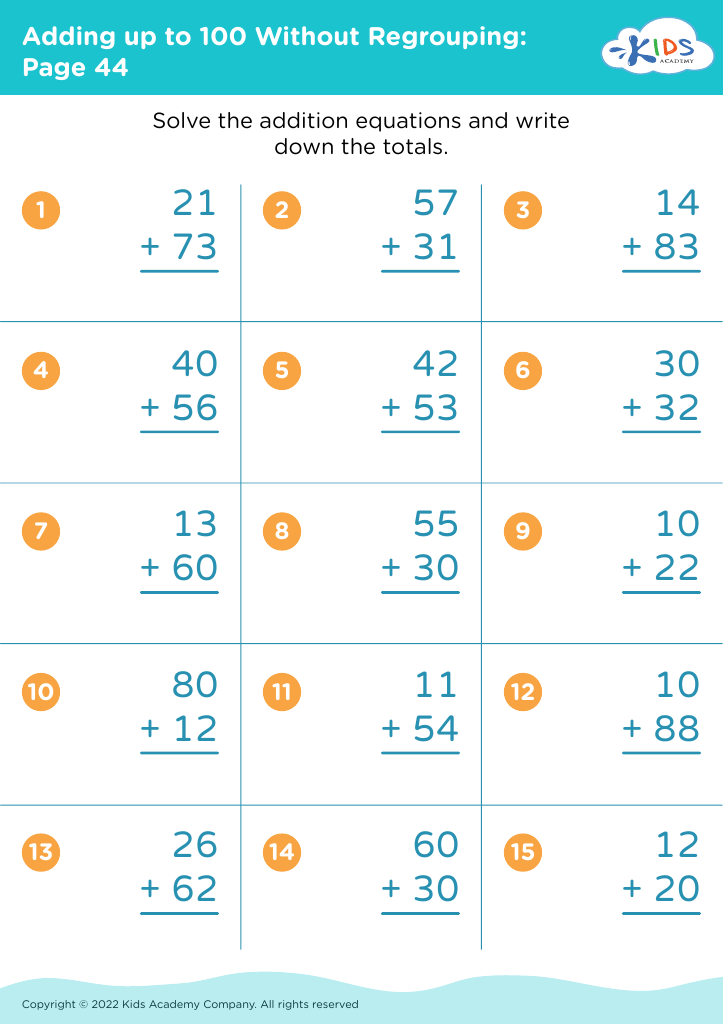
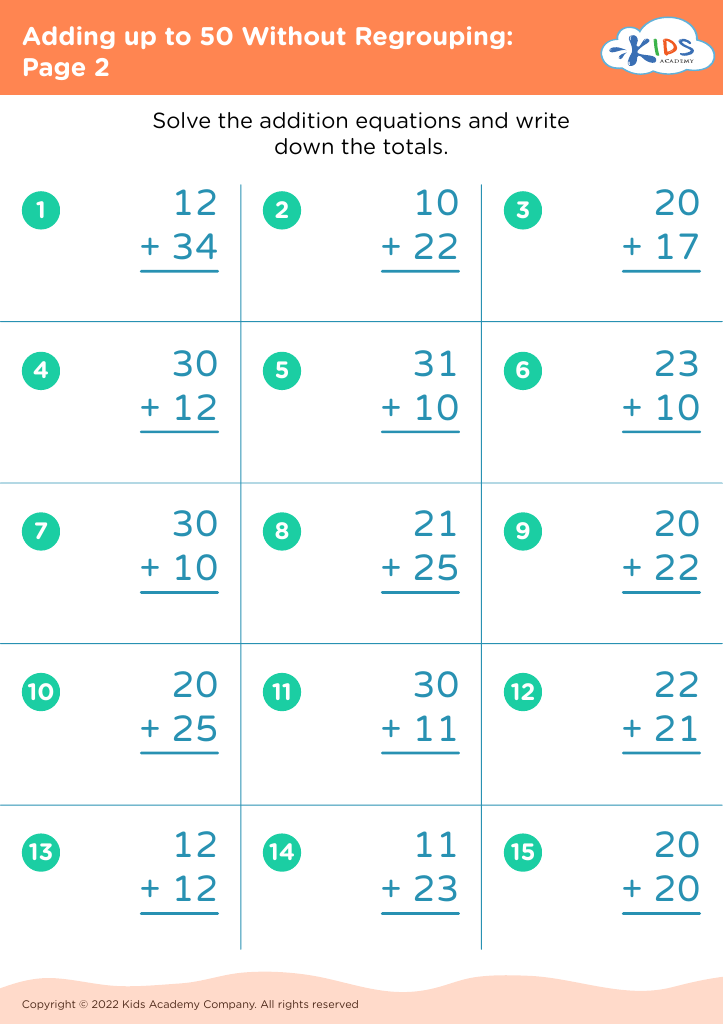








Understanding patterns in addition and subtraction is vital for children aged 6-7 as it lays a strong foundation for their mathematical skills. Patterns can help children recognize relationships between numbers, which enhances their ability to count, add, and subtract more confidently. This understanding aids in developing critical thinking and problem-solving skills that are essential in daily life and future learning.
When children learn to identify and create patterns, they can predict outcomes, making mathematical reasoning more intuitive. For example, recognizing that adding 2 repeatedly creates an increasing sequence allows them to grasp the concept of multiplication later on. Such foundational skills are crucial as they transition into more complex mathematical concepts.
Moreover, engaging with patterns fosters a positive attitude toward math. When children see the structure and predictability in mathematics, they may feel less anxiety and more curiosity about the subject. Teachers and parents can utilize everyday examples—like counting objects or organizing items by color—to teach these concepts. Encouraging curiosity and exploration of patterns not only improves their mathematical abilities but also nurtures a lifelong love of learning. Supporting children in understanding patterns now will benefit them immensely as they progress through their educational journey.








