Understand sequences Addition & Subtraction Worksheets for Ages 6-7
5 filtered results
-
From - To
Explore our engaging "Understand Sequences Addition & Subtraction Worksheets" designed specifically for children ages 6-7. These worksheets help young learners grasp the concept of numerical sequences through fun activities that combine addition and subtraction. By practicing with colorful, themed pages, kids will improve their math skills while developing logical thinking. Each worksheet is crafted to make learning enjoyable, fostering confidence and proficiency in math. Perfect for both classroom use and homeschooling, these resources encourage children to recognize patterns and solve problems effectively. Download our worksheets today and watch your child excel in understanding sequences while building a solid foundation in math!
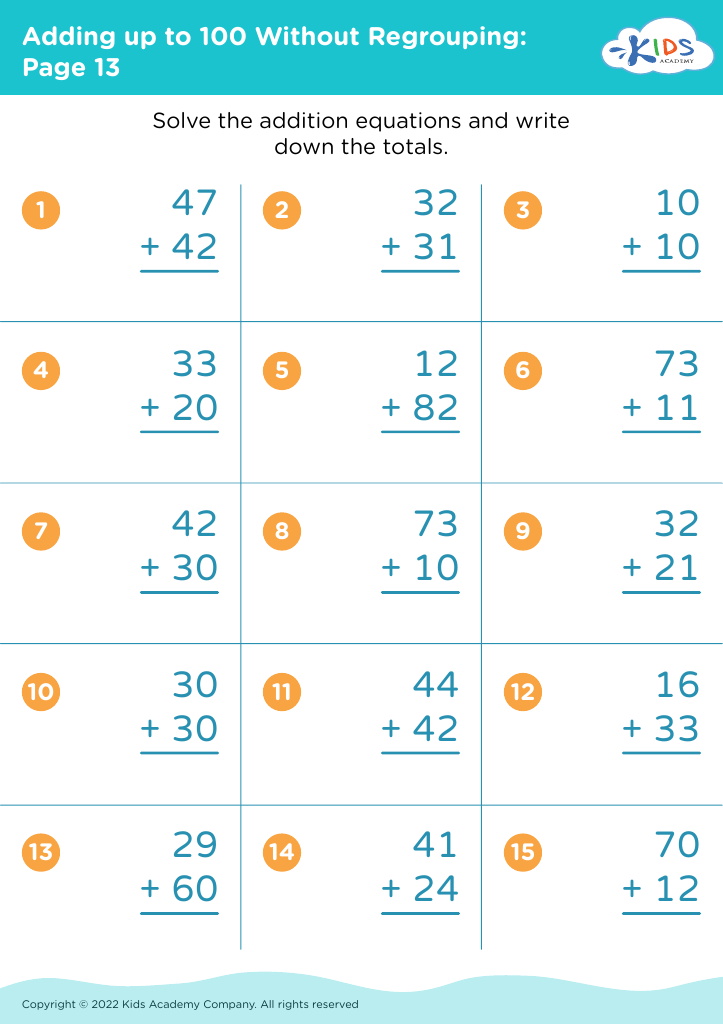
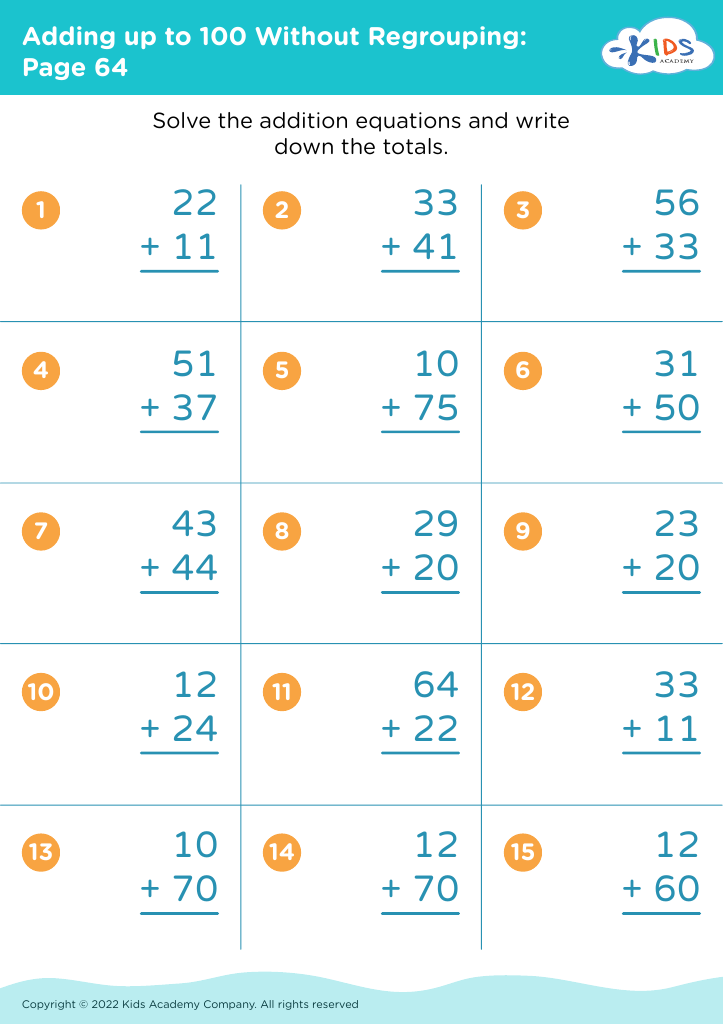
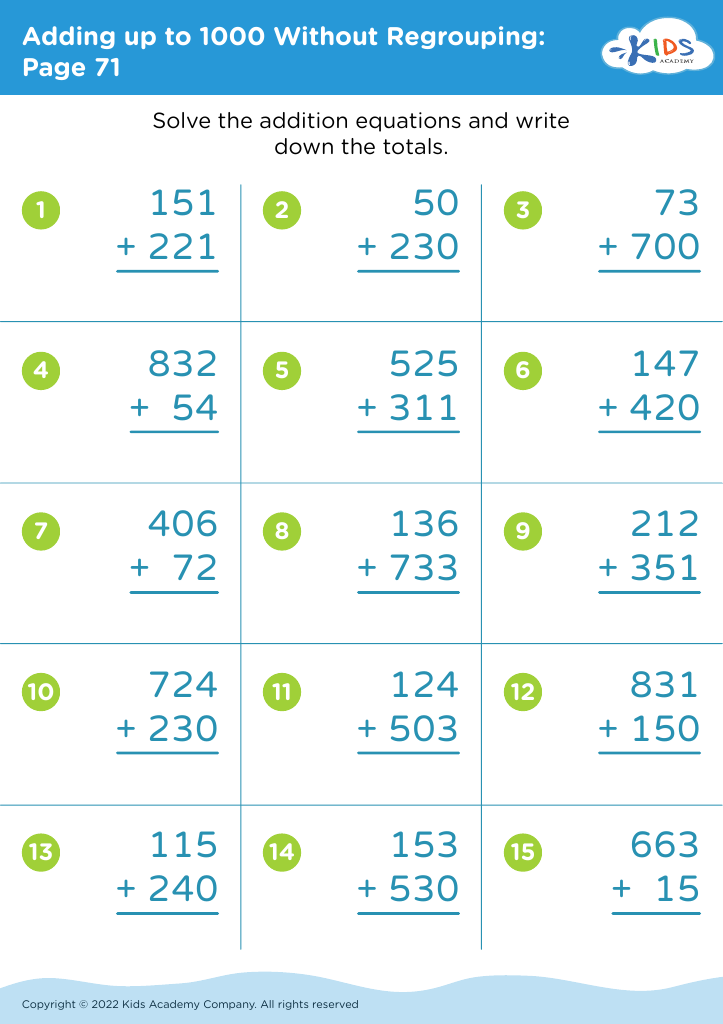
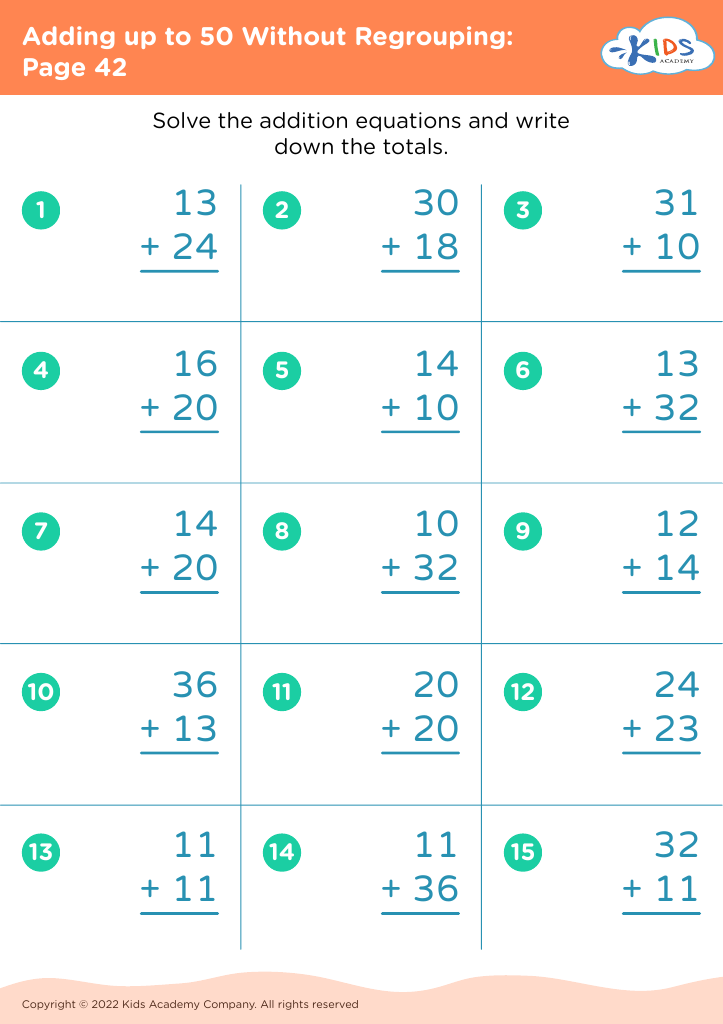
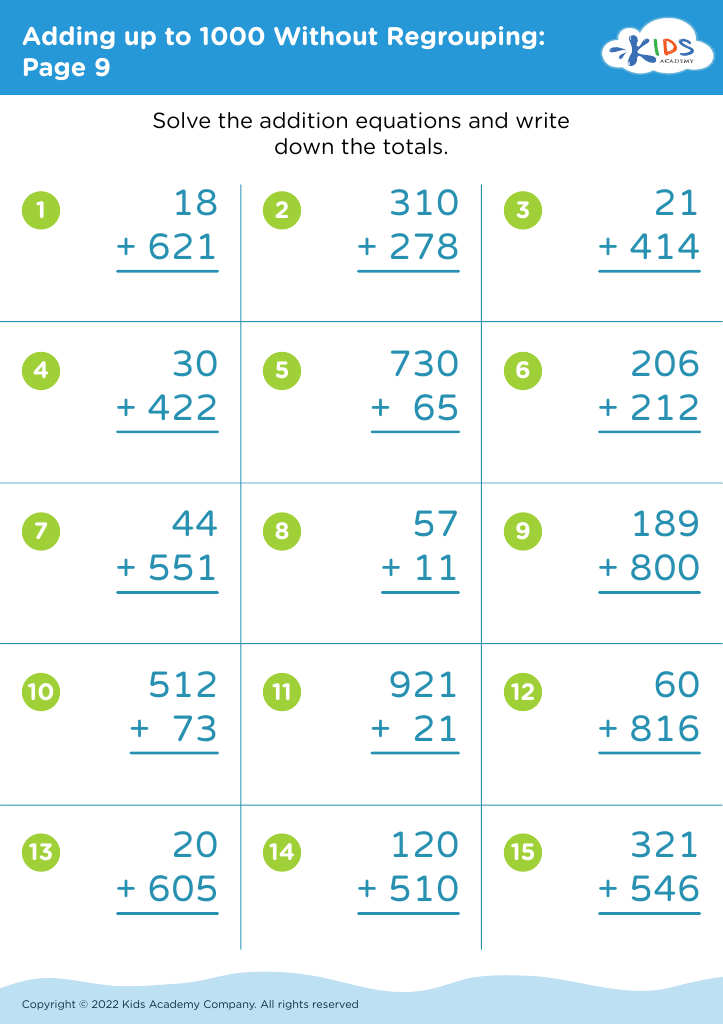








Understanding sequences in addition and subtraction is crucial for children aged 6-7, as it lays the foundation for their mathematical development. At this stage, students begin interacting with numbers more deeply, learning not only how to add and subtract but also recognizing numeric patterns and relationships.
For parents and teachers, caring about this concept is vital because it helps children develop critical thinking and problem-solving skills. When kids grasp sequences, they can predict outcomes and make connections between numbers, paving the way for advanced math topics like multiplication and division. This awareness fosters a sense of confidence and curiosity, essential traits for lifelong learners.
Moreover, mastering basic addition and subtraction sequences assists with daily life skills, such as budgeting, time management, and cooking, taking the classroom experience beyond academic settings. Engaging in these skills also nurtures social skills as children work collaboratively, learning to communicate their thought processes.
Finally, helping children understand these foundational concepts can improve their overall academic performance, creating a solid groundwork for future learning. Investing time and resources in this crucial area can empower young learners, setting them on a successful educational path that prepares them well for challenges ahead.








