Check out this FREE Trial Lesson on Addition & Subtraction for age 6-7!

Making 11

Favorites
With answer key
Interactive
  • 6-7
  • Understanding fractions
  • Addition & Subtraction
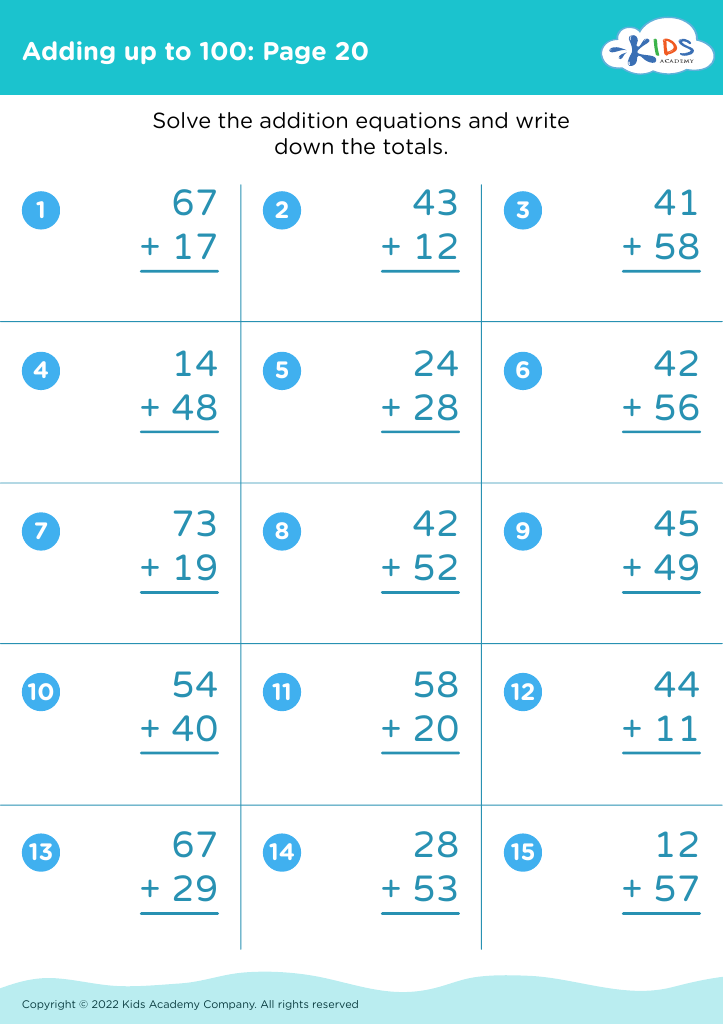
Adding up to 100: Page 20

Adding up to 100: Page 20

Adding up to 100: Page 20
Worksheet
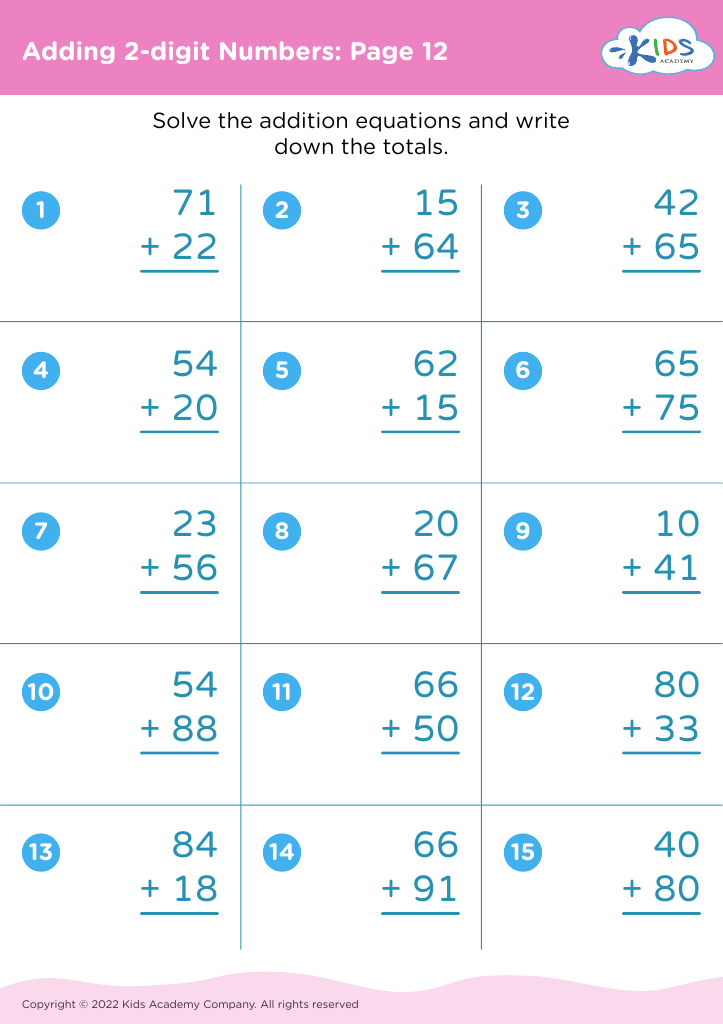
Adding 2-digit Numbers: Page 12

Adding 2-digit Numbers: Page 12

Adding 2-digit Numbers: Page 12
Worksheet
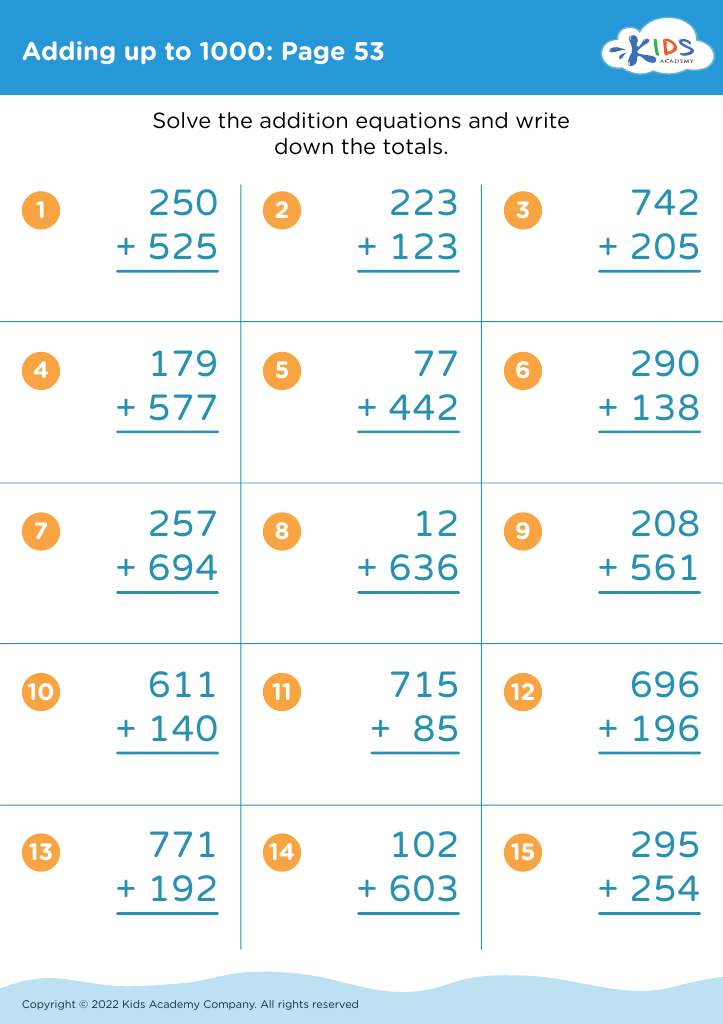
Adding up to 1000: Page 53

Adding up to 1000: Page 53

Adding up to 1000: Page 53
Worksheet
Piecing Together 11 Worksheet

Piecing Together 11 Worksheet

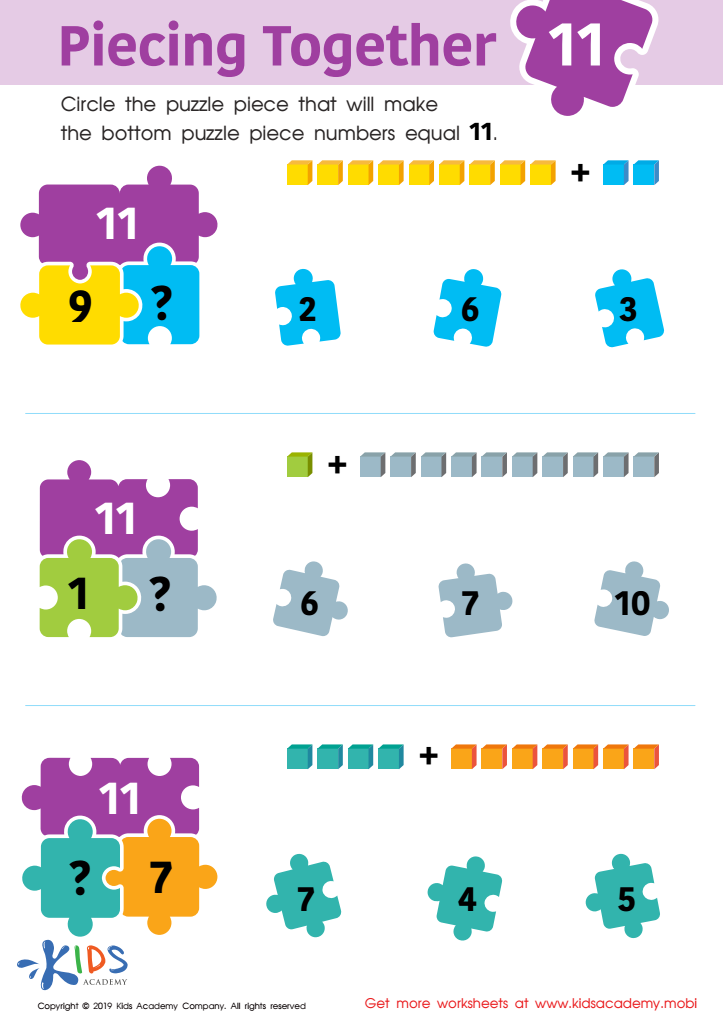
Engage your preschoolers with learning-filled fun! Show them this colorful worksheet, and ask them to identify the figures. Each puzzle piece features an equation, except one which is missing. Help the kids solve the problems and circle the piece that'll make the numbers equal 11. It's a surefire way to make learning enjoyable!
Piecing Together 11 Worksheet
Worksheet
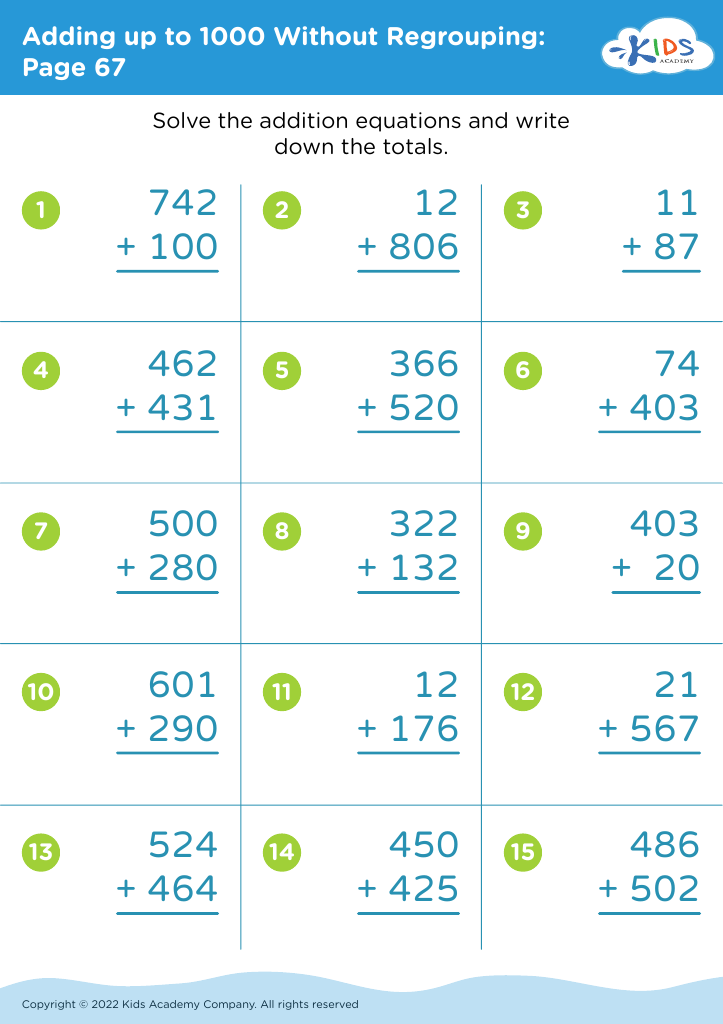
Adding up to 1000 Without Regrouping: Page 67
Worksheet
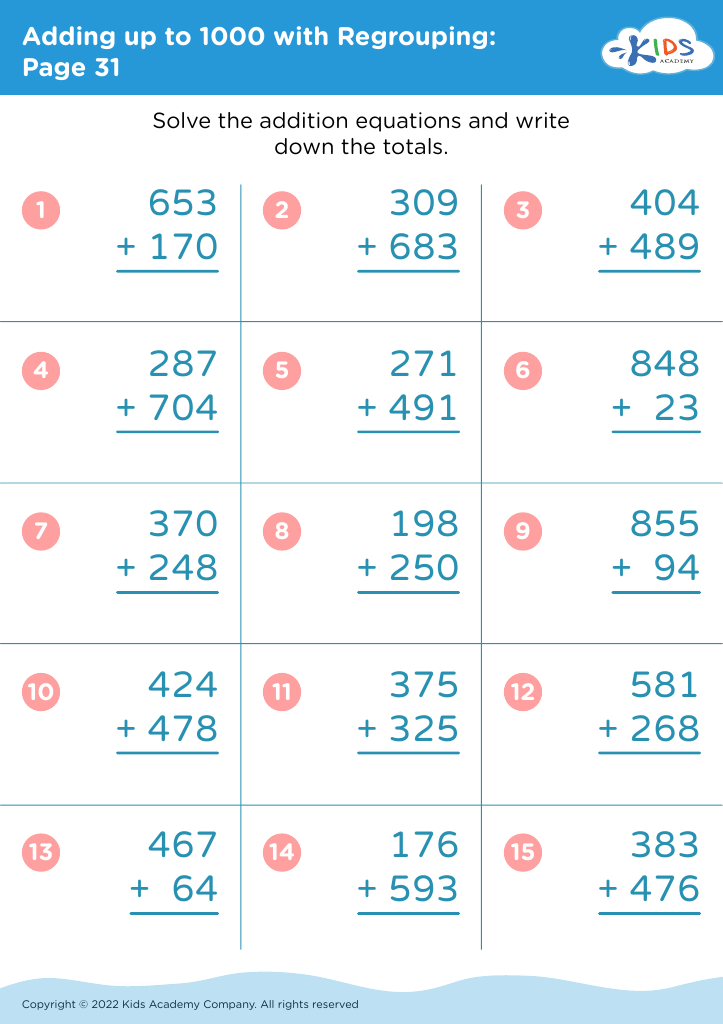
Adding up to 1000 with Regrouping: Page 31
Worksheet
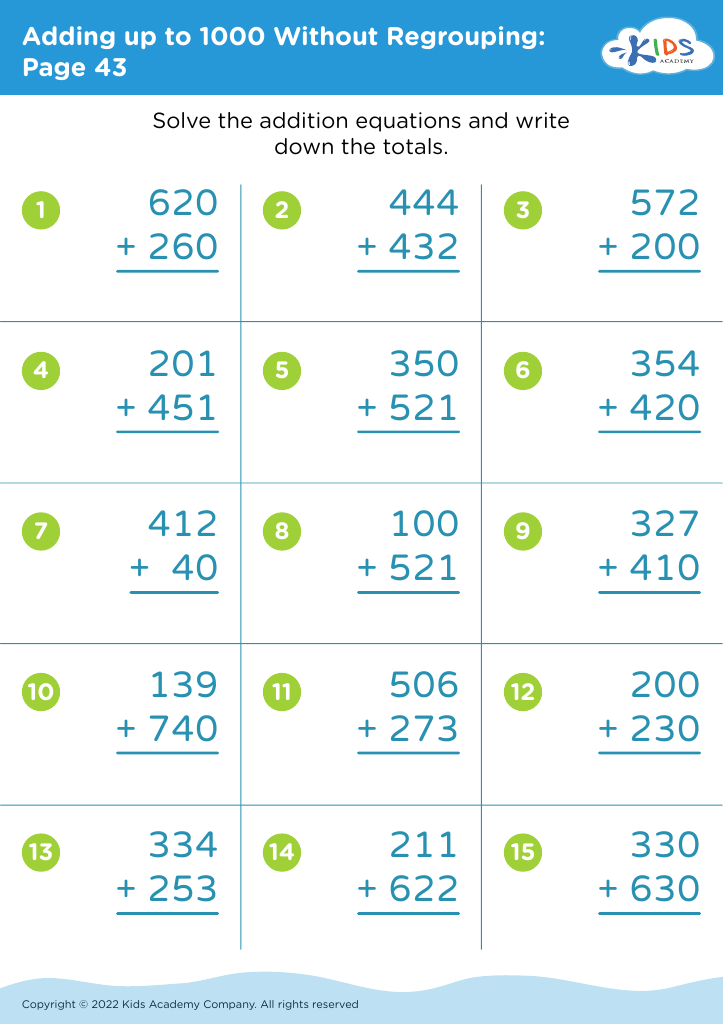
Adding up to 1000 Without Regrouping: Page 43
Worksheet
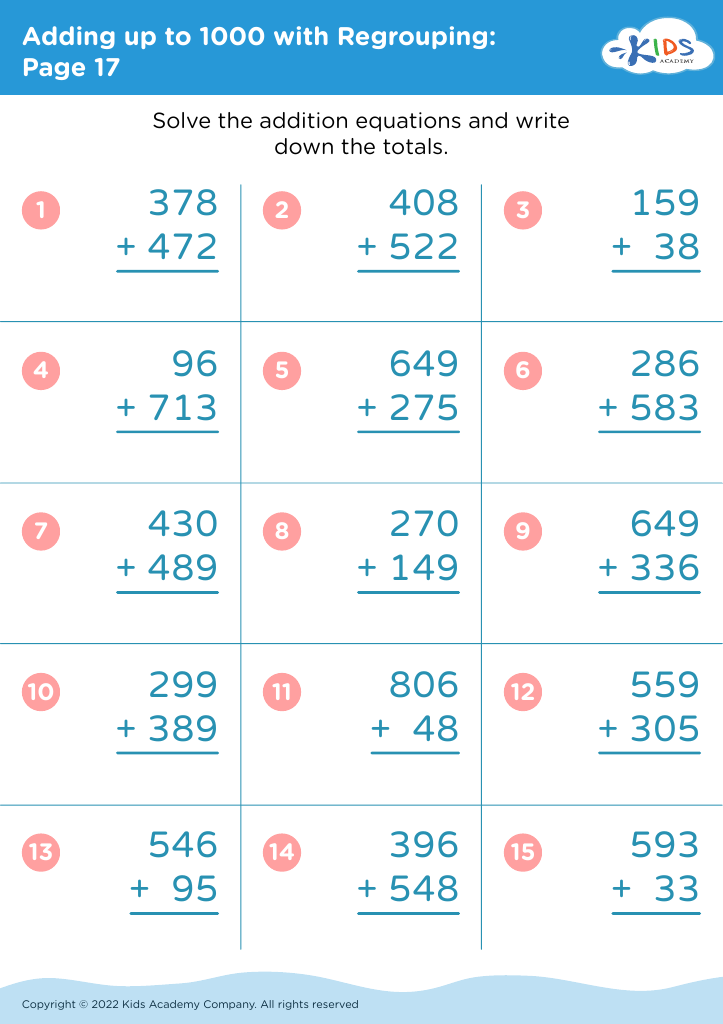
Adding up to 1000 with Regrouping: Page 17
Worksheet
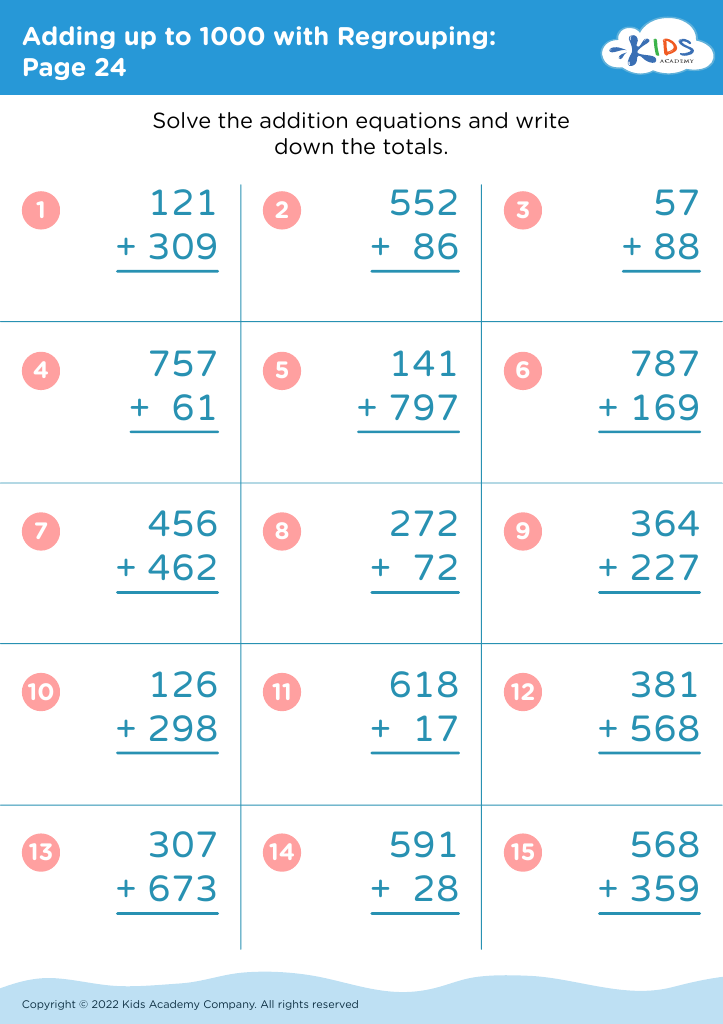
Adding up to 1000 with Regrouping: Page 24
Worksheet
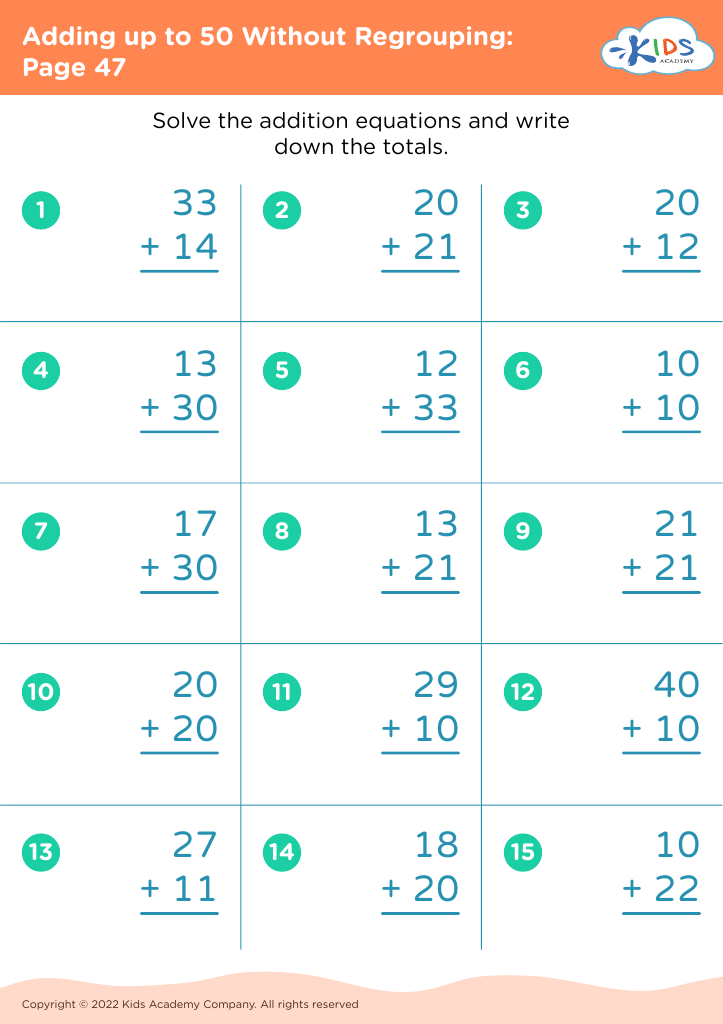
Adding up to 50 Without Regrouping: Page 47
Worksheet
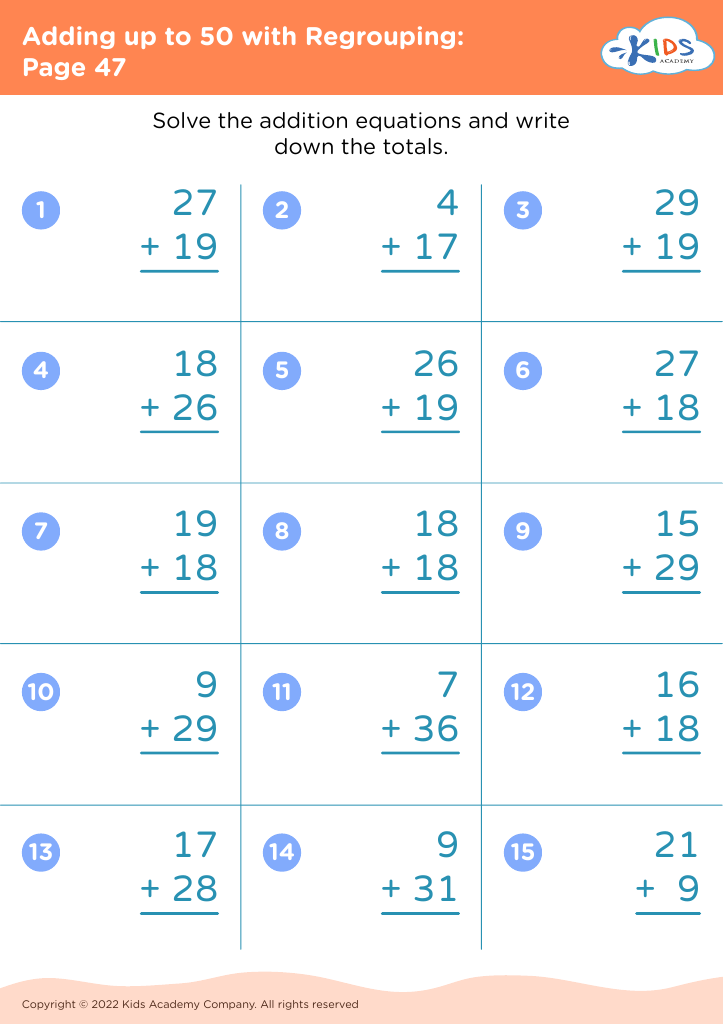
Adding up to 50 with Regrouping: Page 47
Worksheet
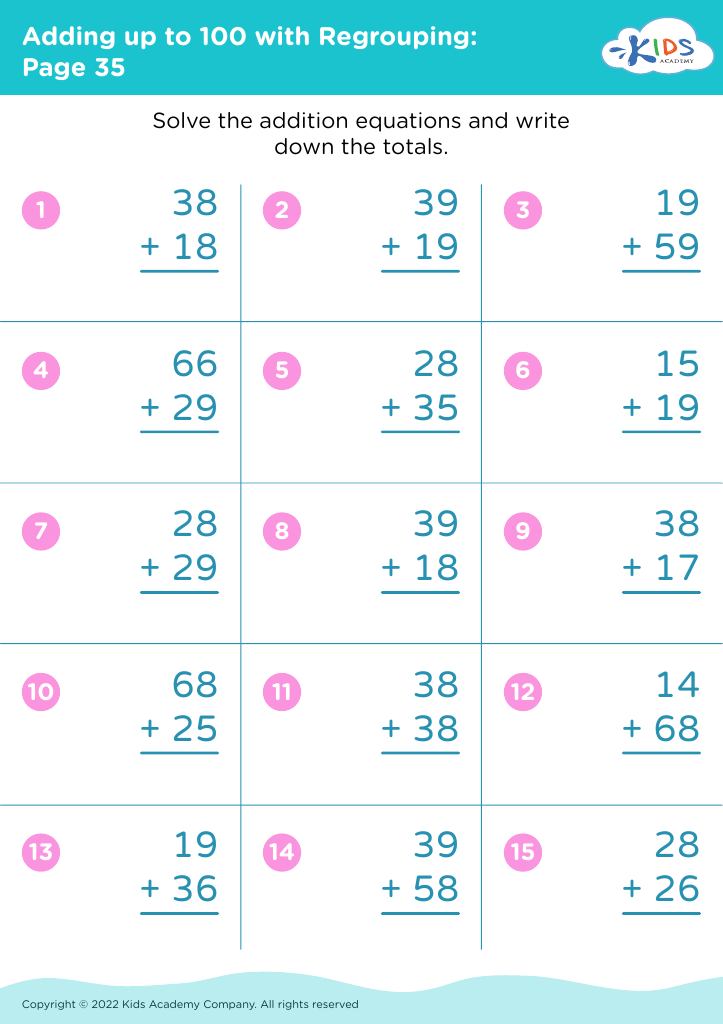
Adding up to 100 with Regrouping: Page 35
Worksheet
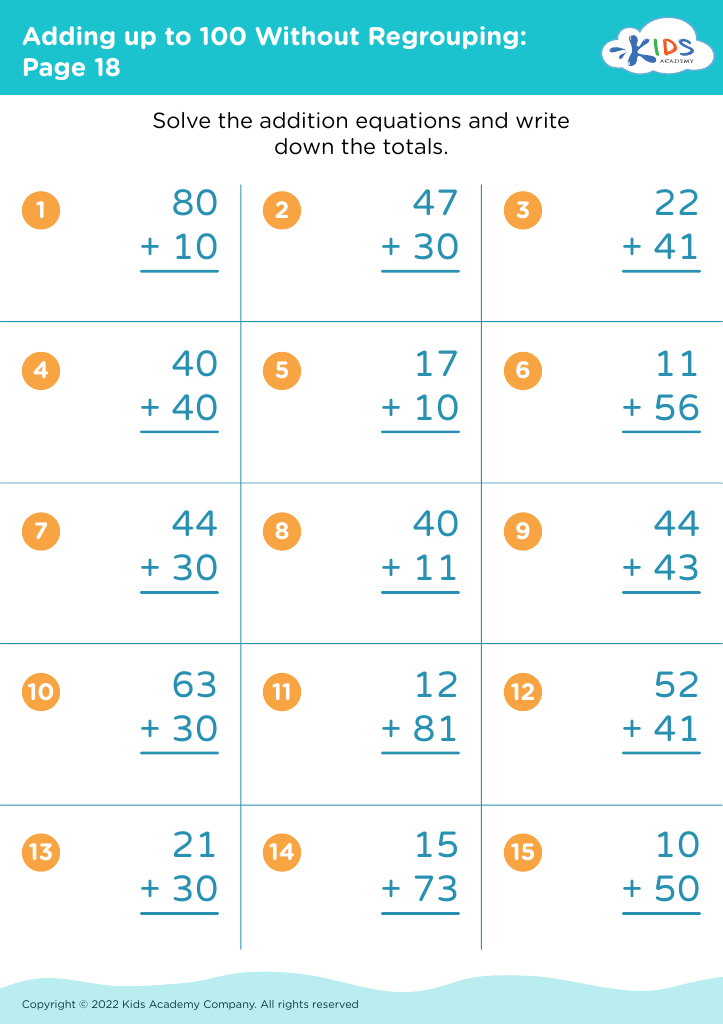
Adding up to 100 Without Regrouping: Page 18
Worksheet
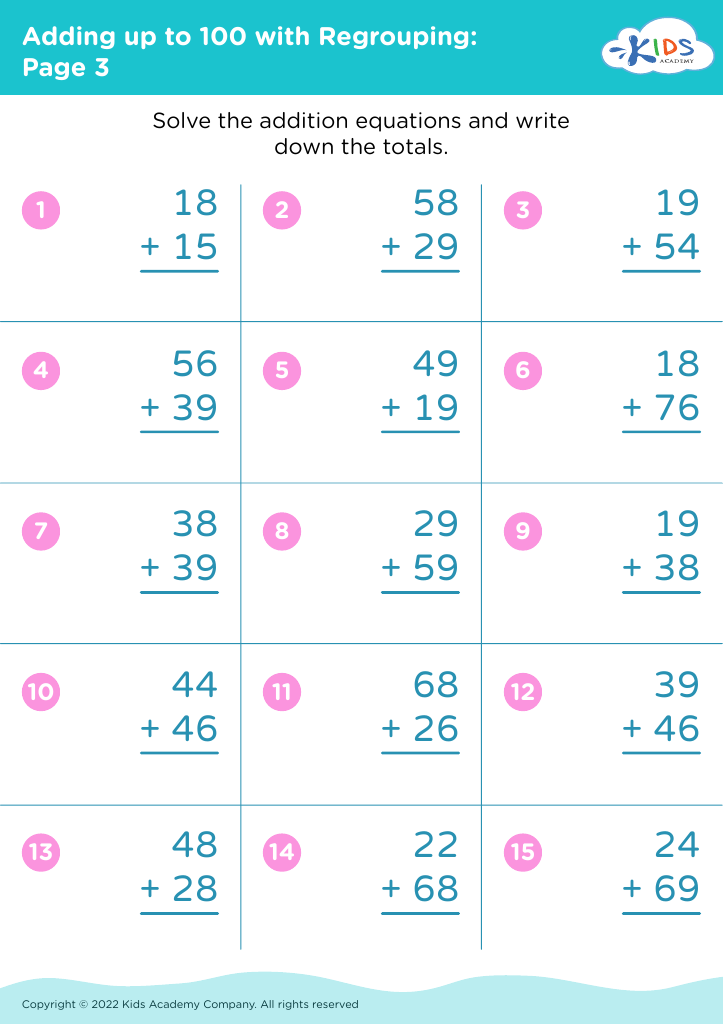
Adding up to 100 with Regrouping: Page 3
Worksheet
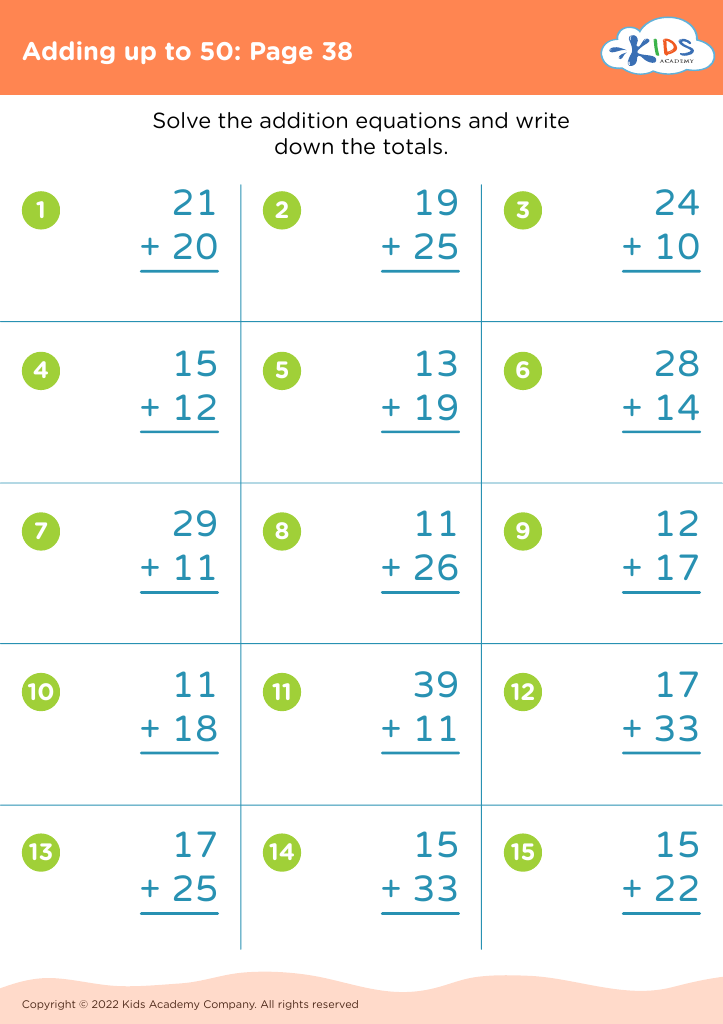
Adding up to 50: Page 38

Adding up to 50: Page 38

Adding up to 50: Page 38
Worksheet
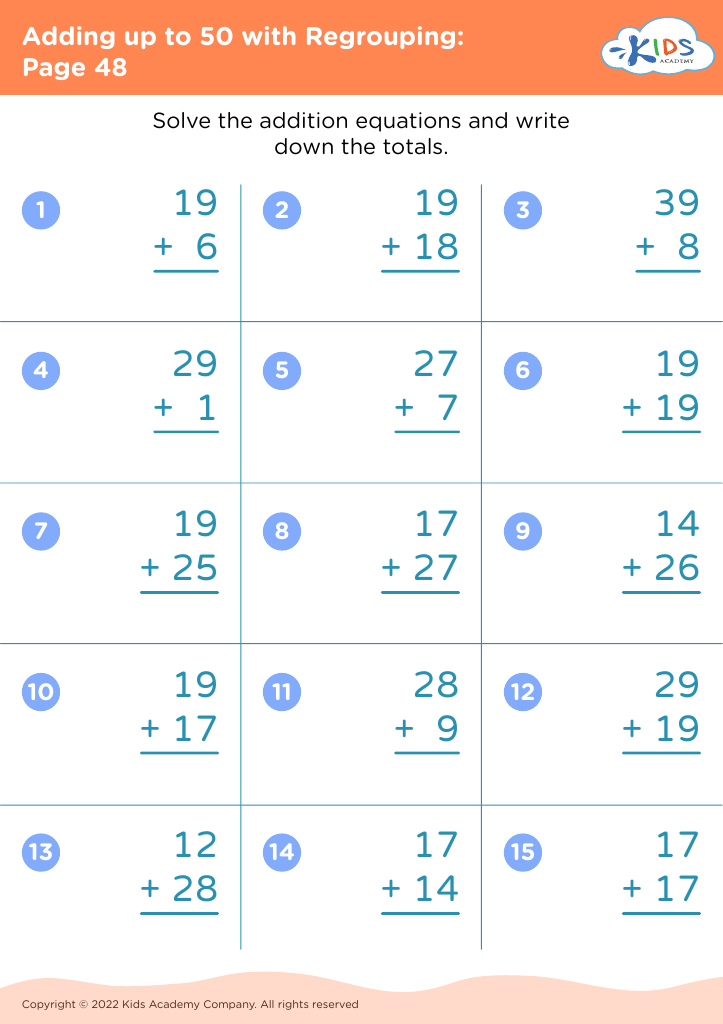
Adding up to 50 with Regrouping: Page 48
Worksheet
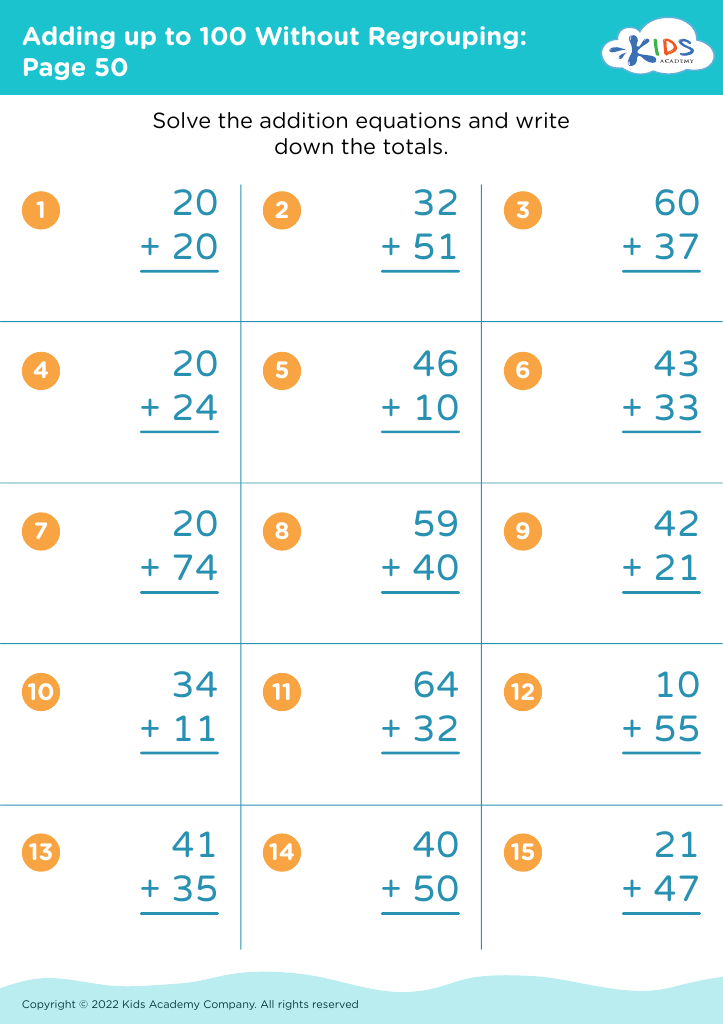
Adding up to 100 Without Regrouping: Page 50
Worksheet
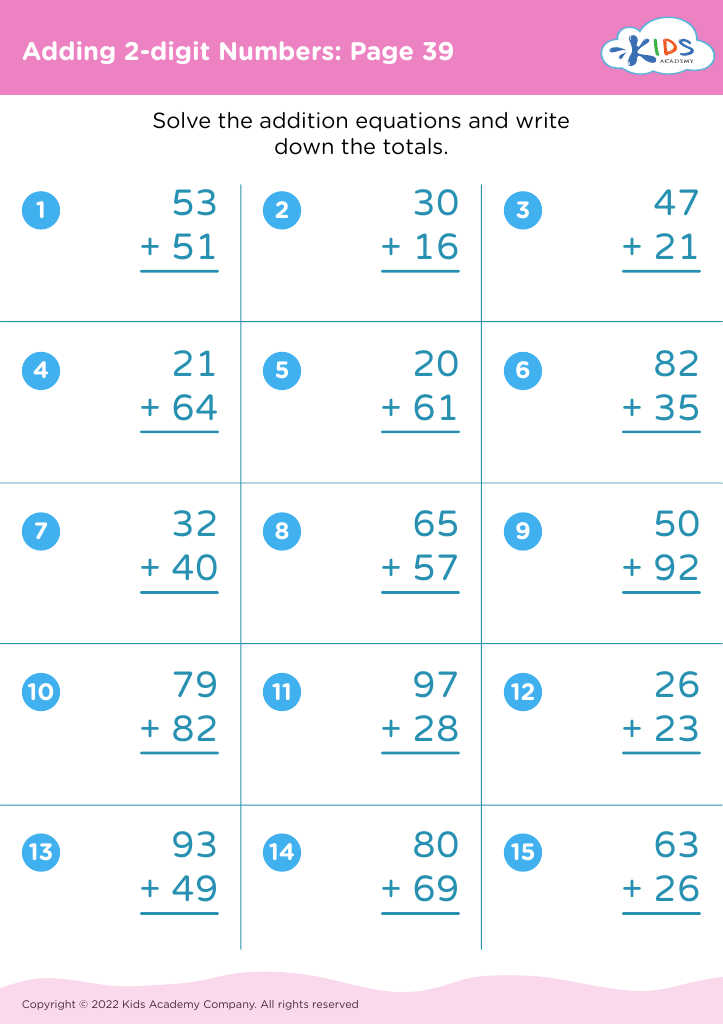
Adding 2-digit Numbers: Page 39

Adding 2-digit Numbers: Page 39

Adding 2-digit Numbers: Page 39
Worksheet
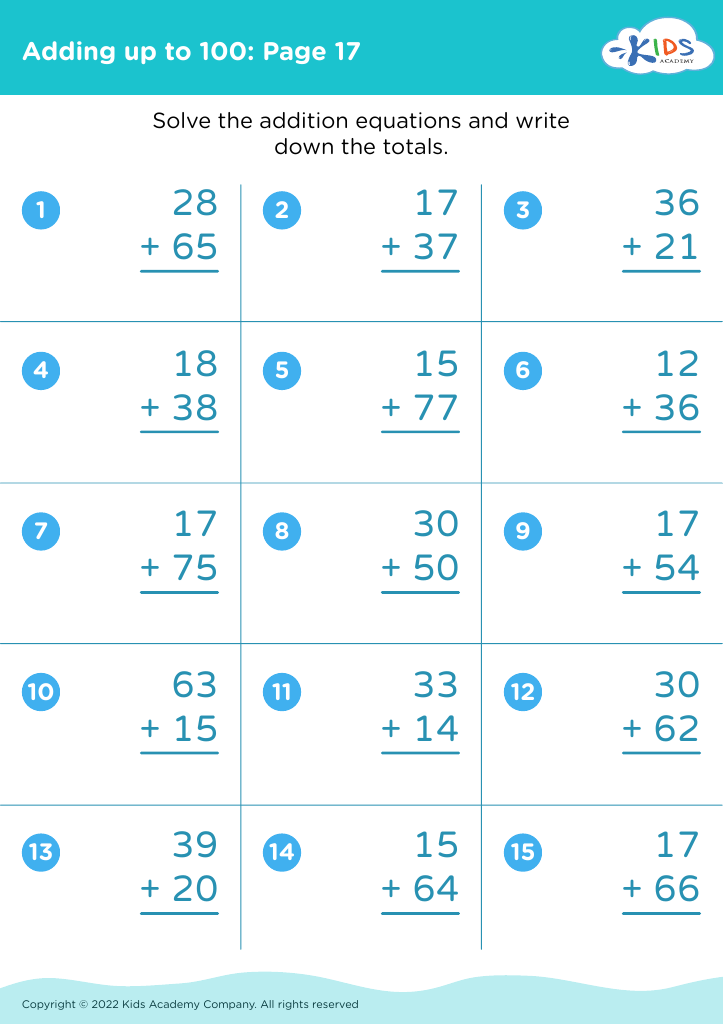
Adding up to 100: Page 17

Adding up to 100: Page 17

Adding up to 100: Page 17
Worksheet
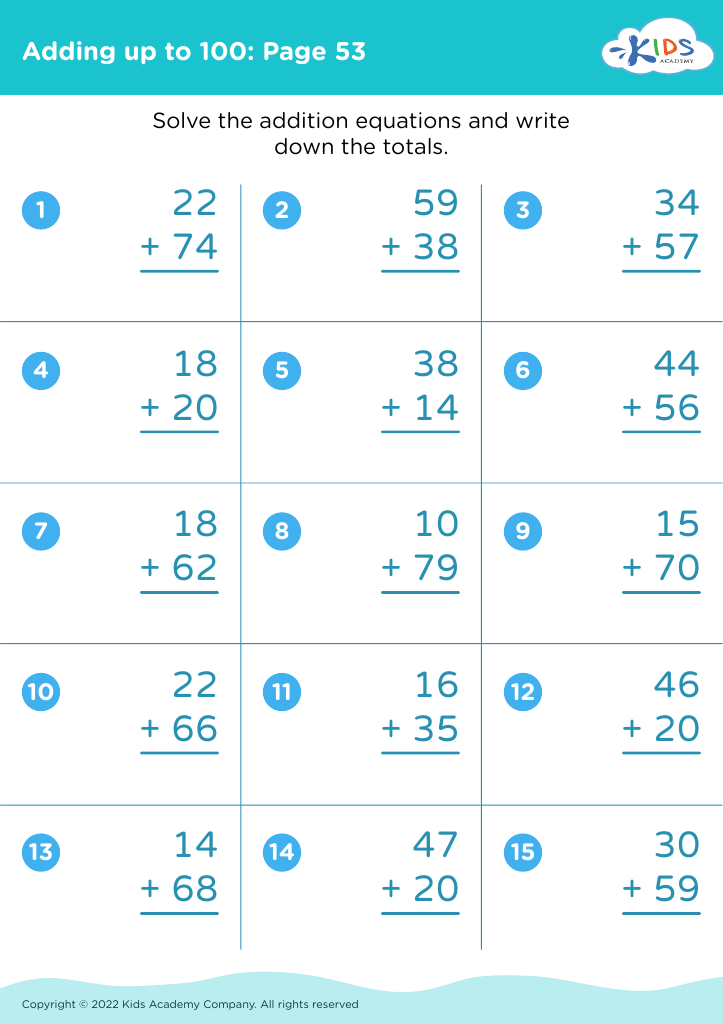
Adding up to 100: Page 53

Adding up to 100: Page 53

Adding up to 100: Page 53
Worksheet
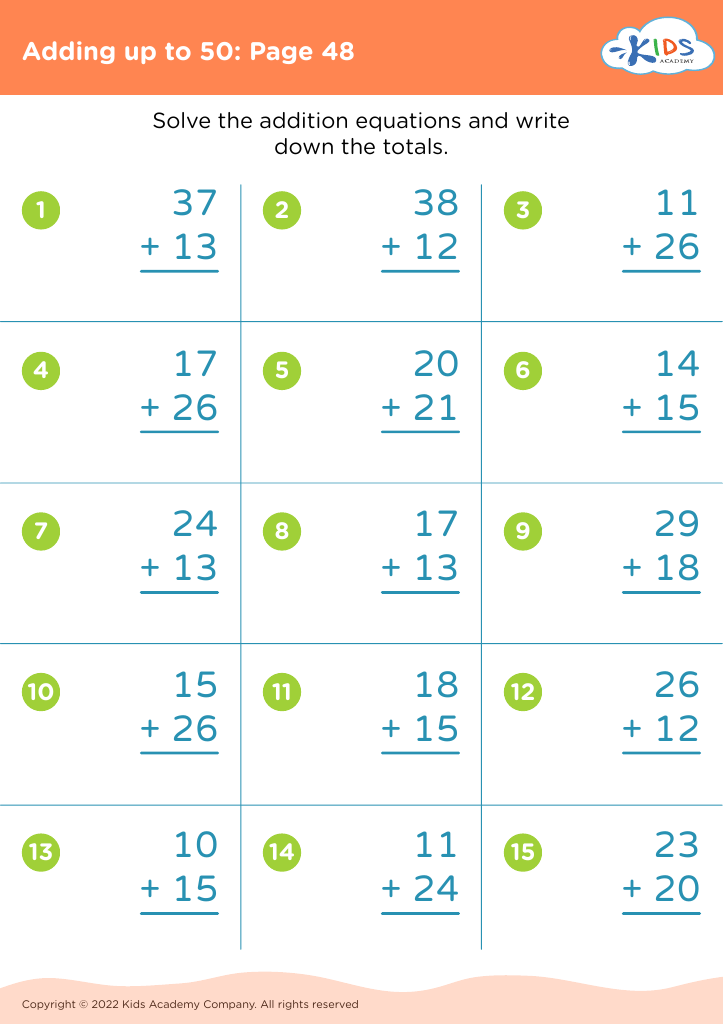
Adding up to 50: Page 48

Adding up to 50: Page 48

Adding up to 50: Page 48
Worksheet
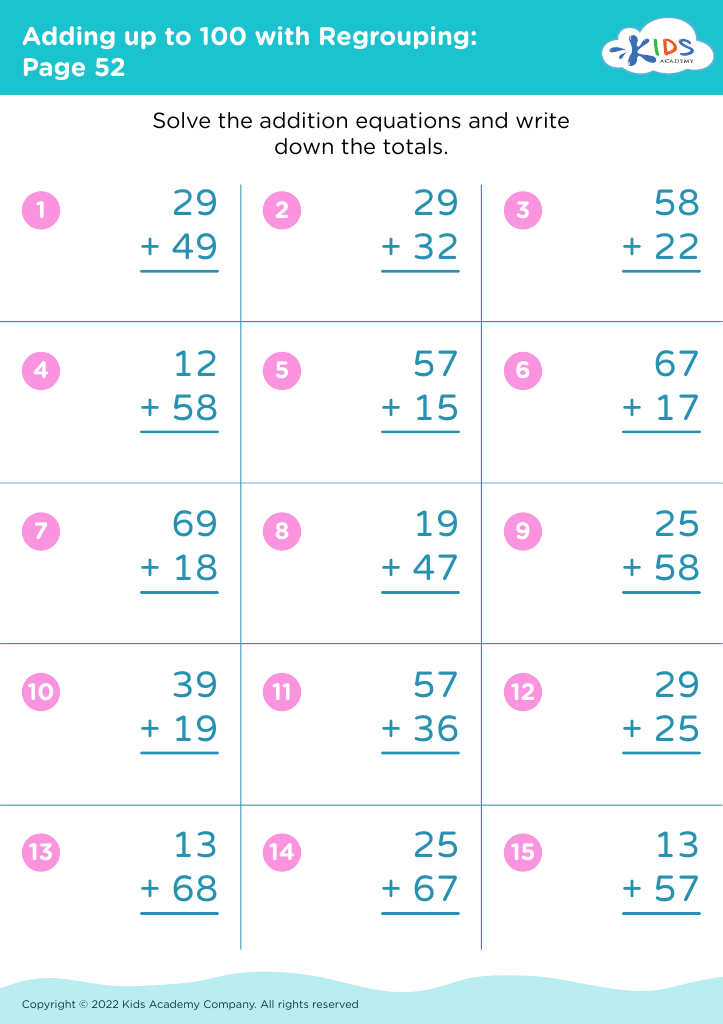
Adding up to 100 with Regrouping: Page 52
Worksheet
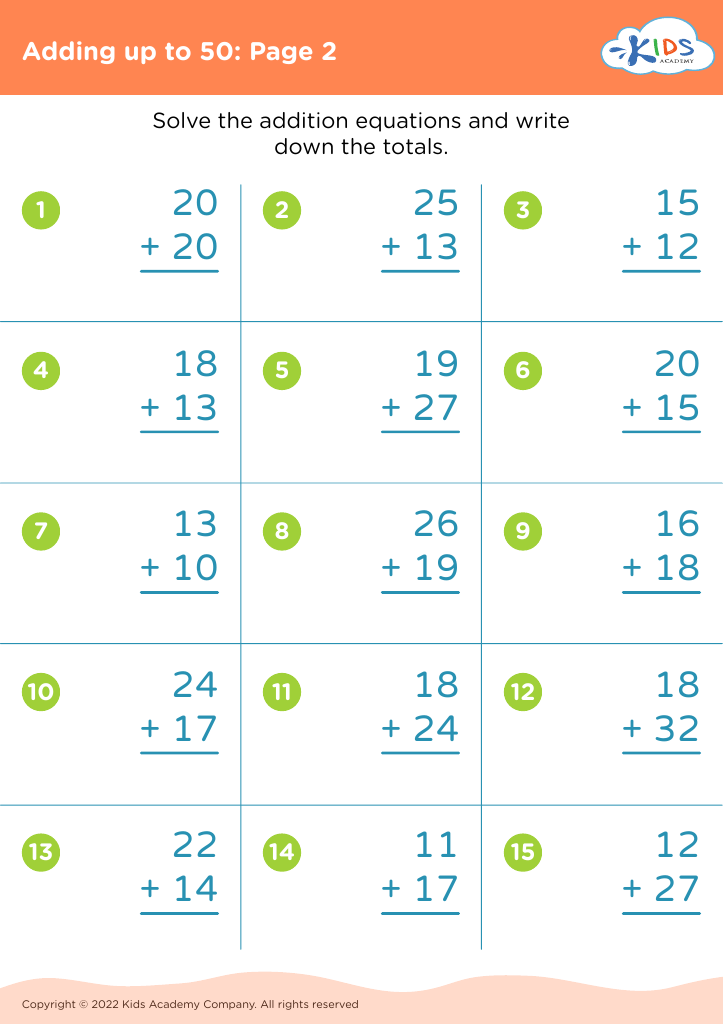
Adding up to 50: Page 2

Adding up to 50: Page 2

Adding up to 50: Page 2
Worksheet
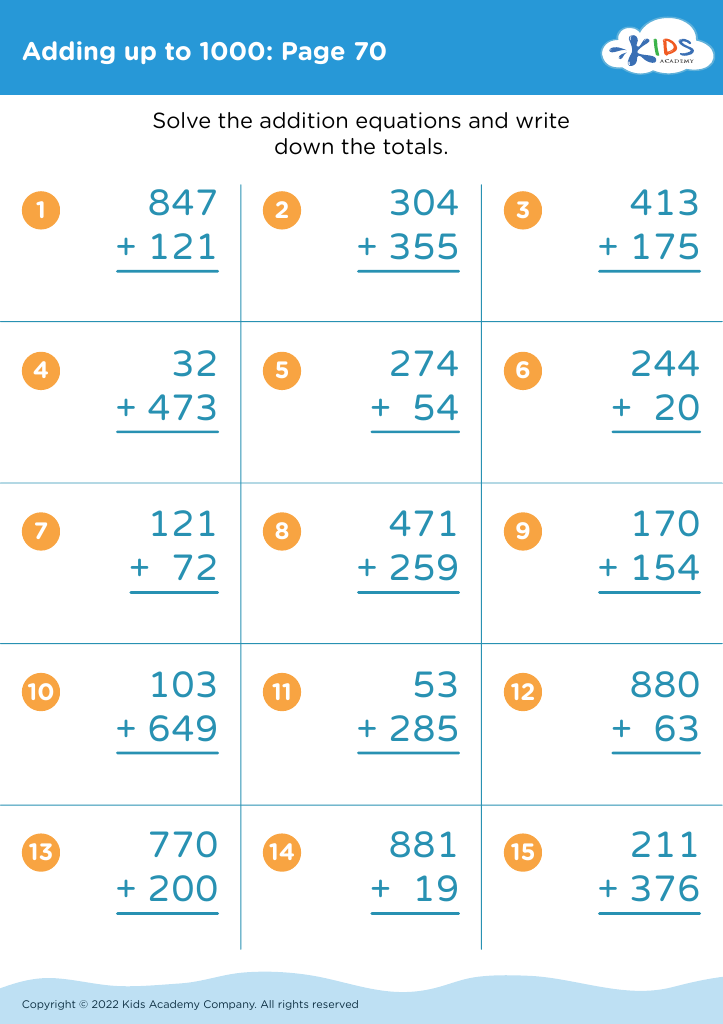
Adding up to 1000: Page 70

Adding up to 1000: Page 70

Adding up to 1000: Page 70
Worksheet


Understanding fractions addition and subtraction for ages 6-7 is essential for several reasons, both academic and practical. During early childhood, developing a strong foundation in math concepts is crucial, as it sets the stage for more complex mathematical learning in the future. Comprehending fractions helps children grasp the idea that numbers can represent parts of a whole, which is fundamental for understanding more sophisticated math topics.

From an academic perspective, understanding fractions enhances problem-solving skills and logical thinking. It promotes a deeper understanding of proportional relationships and equivalence, which are vital in subjects like algebra, geometry, and even science. Early mastery of fractions addition and subtraction bolsters a child's confidence, encouraging a positive attitude toward math as they progress through school.

Practically, fractions are ubiquitous in everyday life. From cooking measurements to dividing objects or time, having a solid grasp of fractions helps children navigate real-world tasks with ease. For example, sharing a pizza or following a recipe requires an understanding of how to manage parts and wholes.

Therefore, parents and teachers should prioritize helping children understand fractions addition and subtraction. This foundational knowledge not only supports academic success but also equips children with essential life skills, promoting both intellectual growth and practical competence.