Understanding sequence Addition & Subtraction Worksheets for Ages 6-7
4 filtered results
-
From - To
Discover our "Understanding Sequence Addition & Subtraction Worksheets" designed for children aged 6-7. These engaging resources help young learners master essential math skills through fun, sequential activities. By following step-by-step problems, children will improve their addition and subtraction abilities while developing critical thinking and problem-solving skills. Our worksheets are tailored to meet the developmental needs of early learners, ensuring a strong foundation in math concepts. With colorful visuals and interactive exercises, these worksheets make learning enjoyable and effective. Perfect for classroom use or at-home practice, boost your child's confidence in math with our comprehensive sequencing worksheets today!
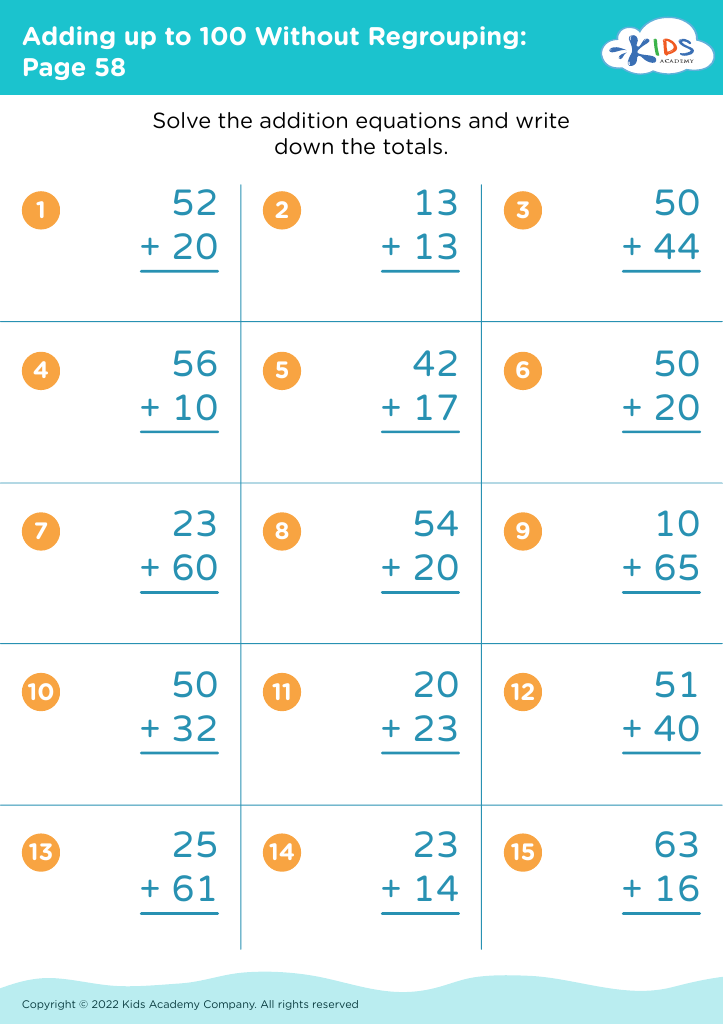
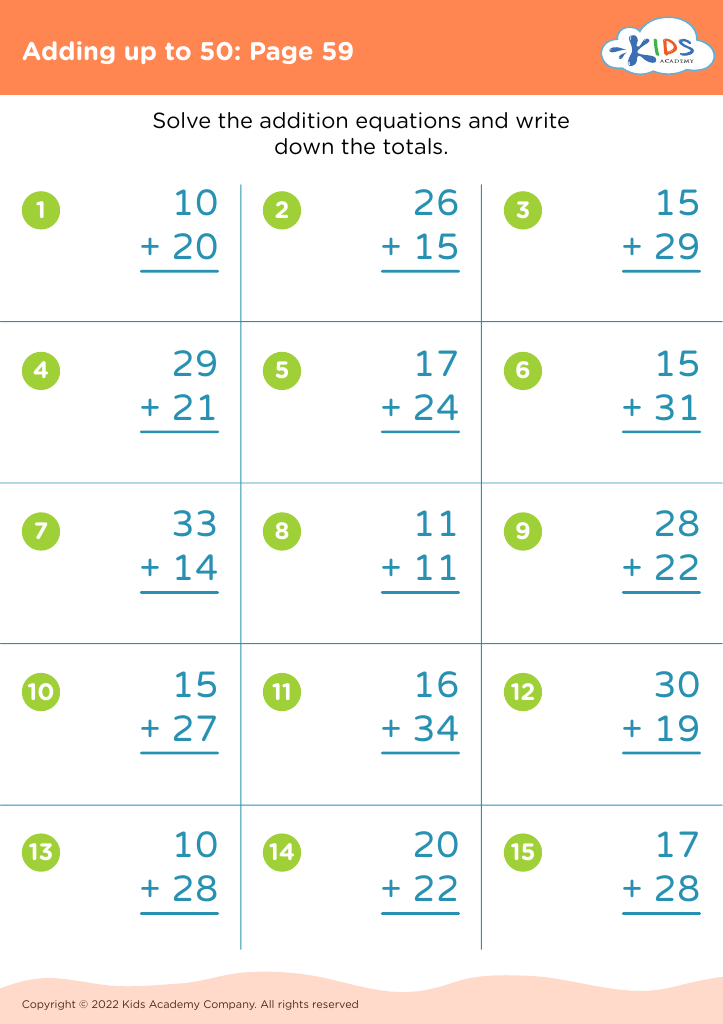
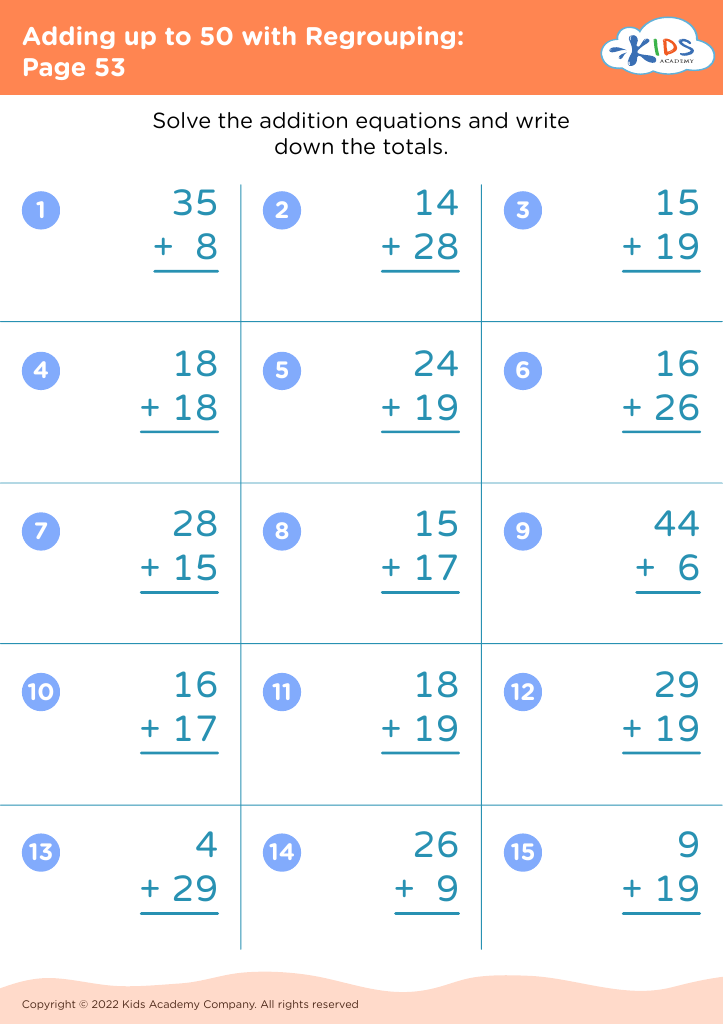
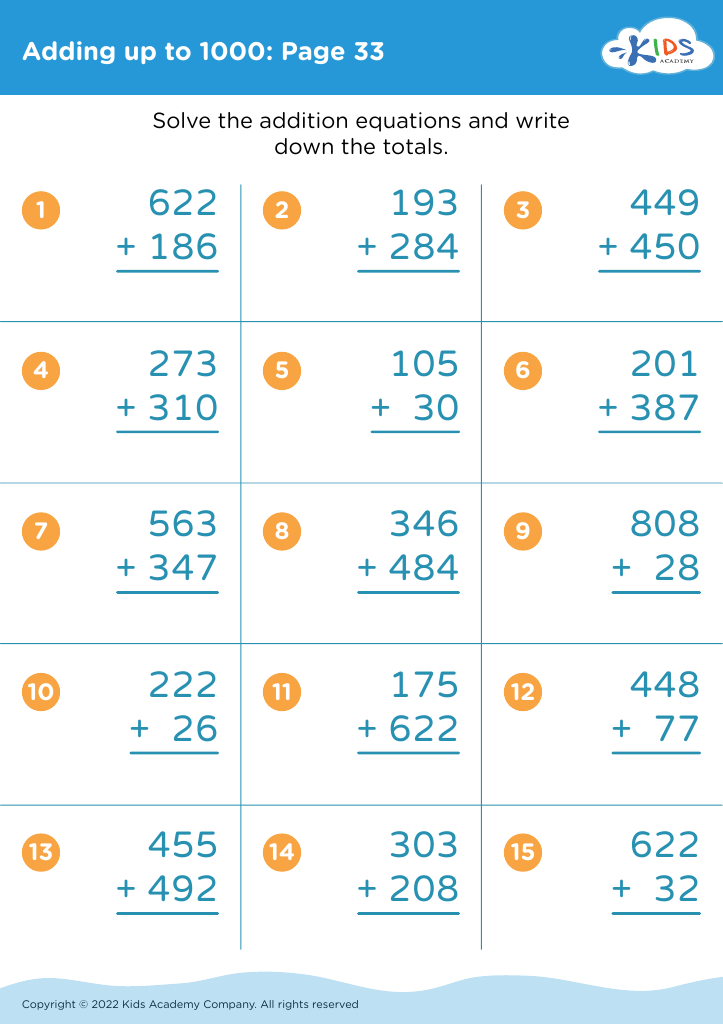








Parents and teachers should prioritize helping children ages 6-7 understand the sequence of addition and subtraction because it forms the foundation of their numerical literacy. At this age, children are transitioning from basic counting to more complex operations, and grasping the order of these mathematical processes is critical for their success in future learning.
Understanding the sequence allows children to see relationships between numbers and operations. This foundational knowledge enhances their problem-solving skills and fosters number sense, which is essential for more advanced mathematics. For instance, knowing that addition and subtraction are inverse operations can help children choose the correct operation in real-world situations, such as determining how much change they will receive when making a purchase.
Moreover, mastering these concepts builds confidence. When children effectively apply their understanding, they are more likely to engage in math with a positive attitude. It also enables teachers and parents to identify areas where children might struggle, allowing for timely support. Lastly, a strong grasp of sequencing in addition and subtraction will also aid in other mathematical concepts such as multiplication and division, promoting a lifelong appreciation for math. Engaging children in these concepts early lays a strong groundwork for their future academic success.








