Understanding sequencing Addition & Subtraction Worksheets for Ages 6-7
7 filtered results
-
From - To
Discover our engaging "Understanding Sequencing Addition & Subtraction Worksheets" designed for children aged 6-7. These worksheets focus on helping young learners grasp the concept of sequencing in math. By practicing addition and subtraction in a structured manner, students enhance their problem-solving skills and build a solid foundation for future math concepts. Our colorful, interactive worksheets encourage children to follow step-by-step sequences while solving problems, making math both fun and educational. Ideal for classroom use or at-home learning, these resources promote critical thinking and help kids gain confidence in their mathematical abilities. Explore our collection now and watch your child's skills flourish!
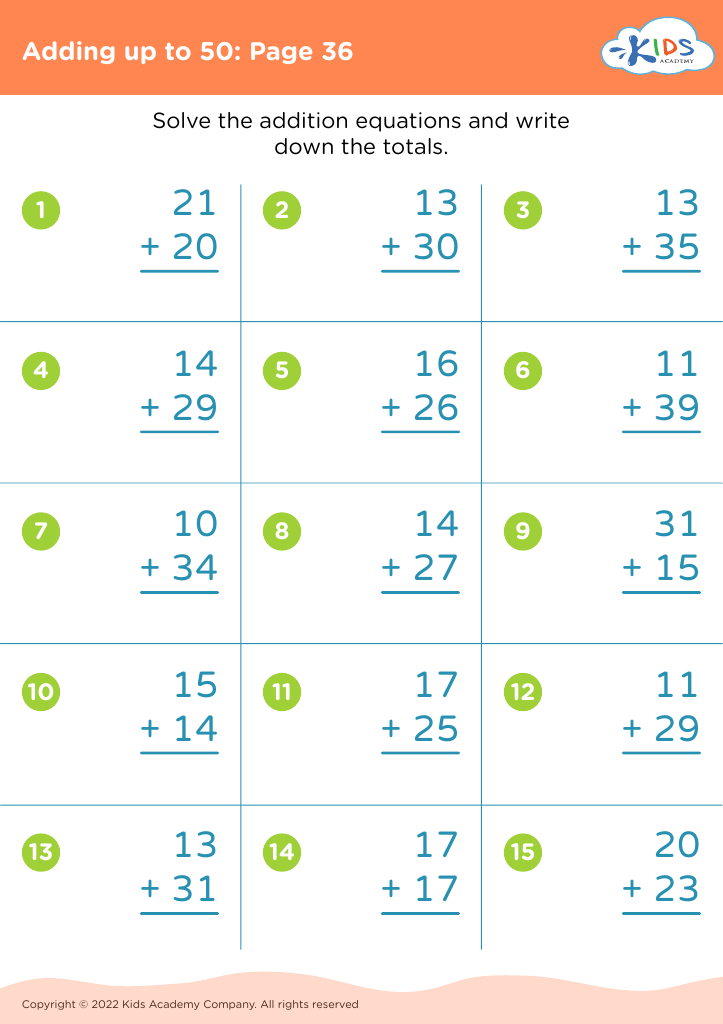
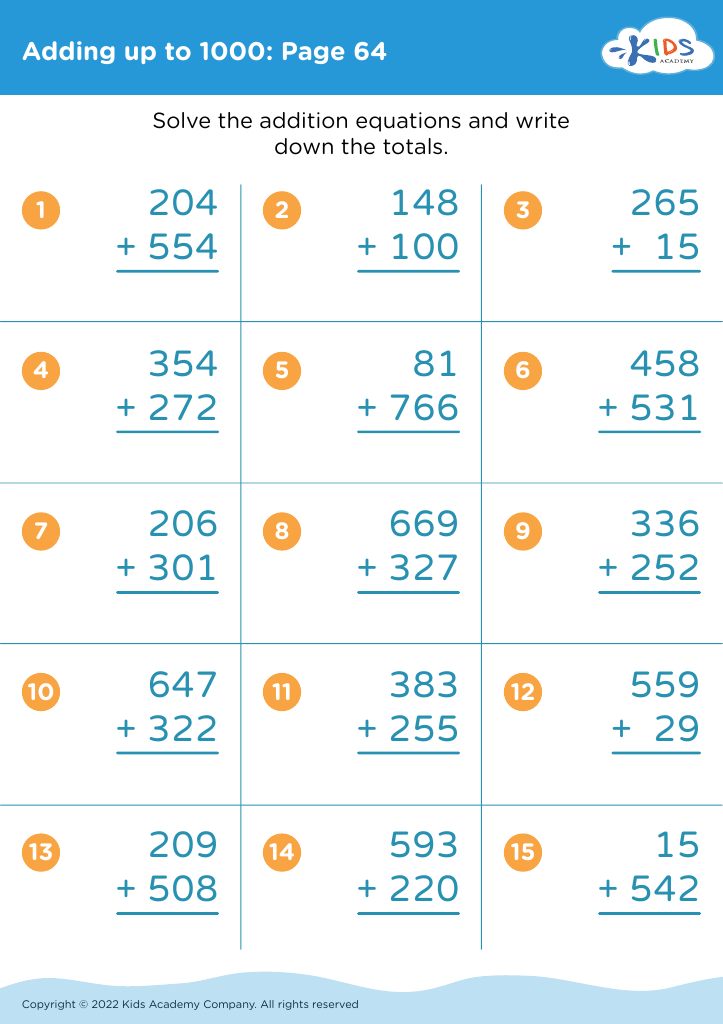
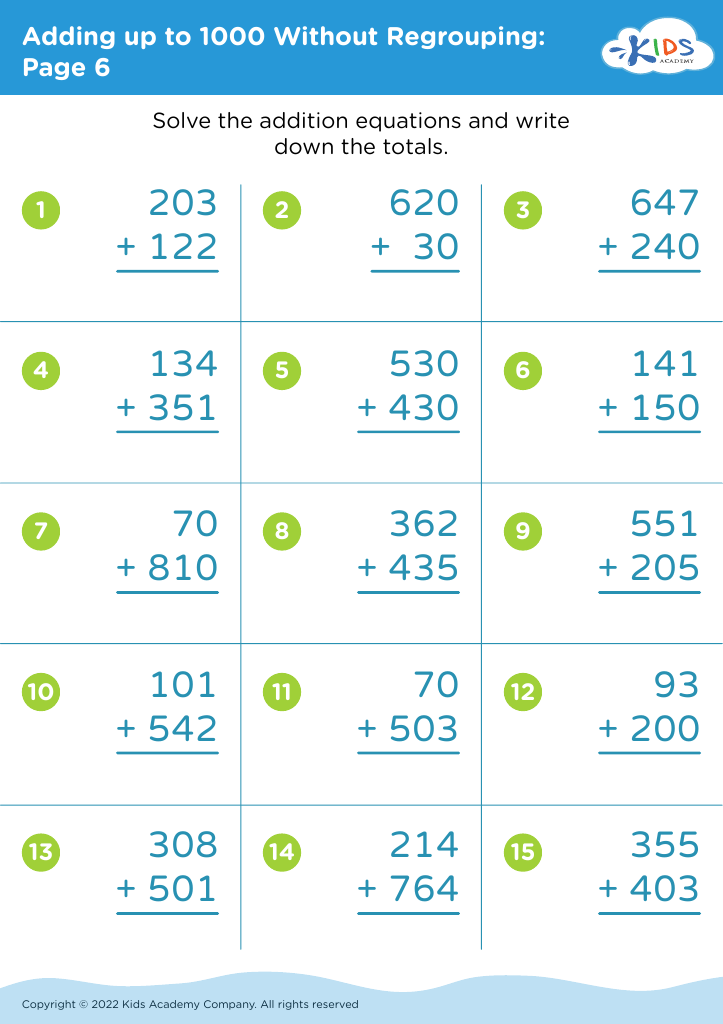
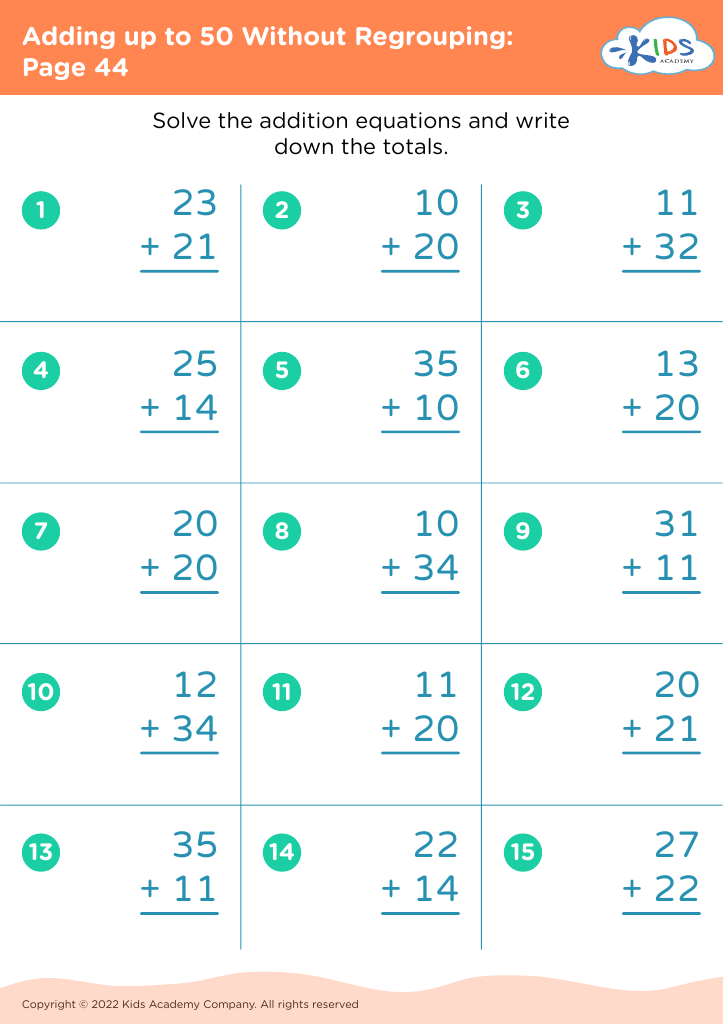
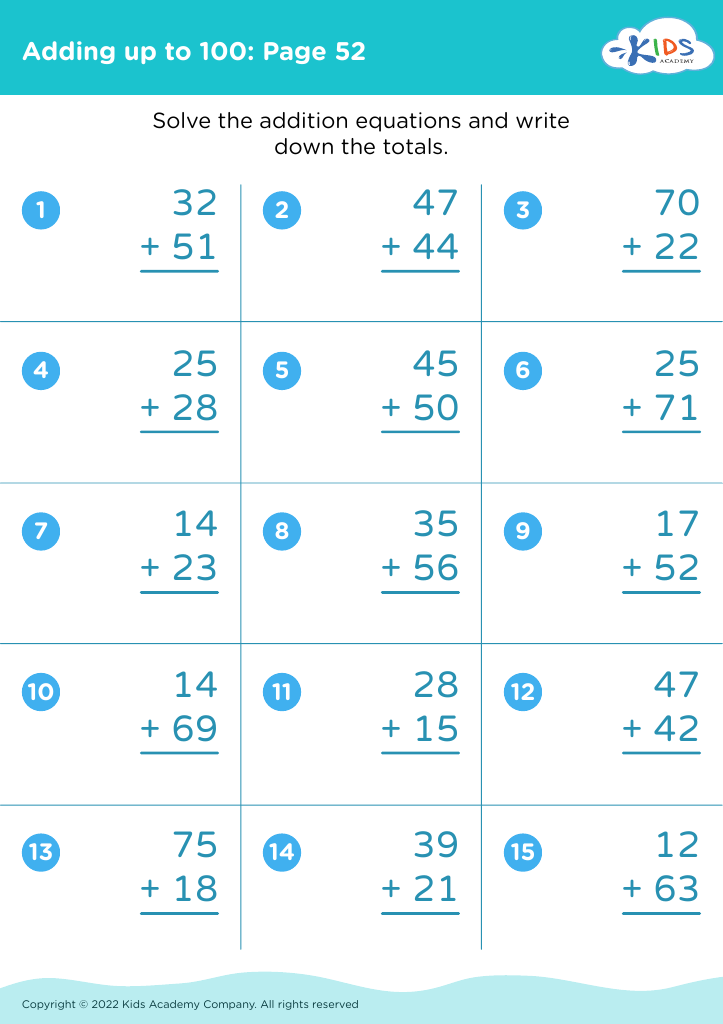
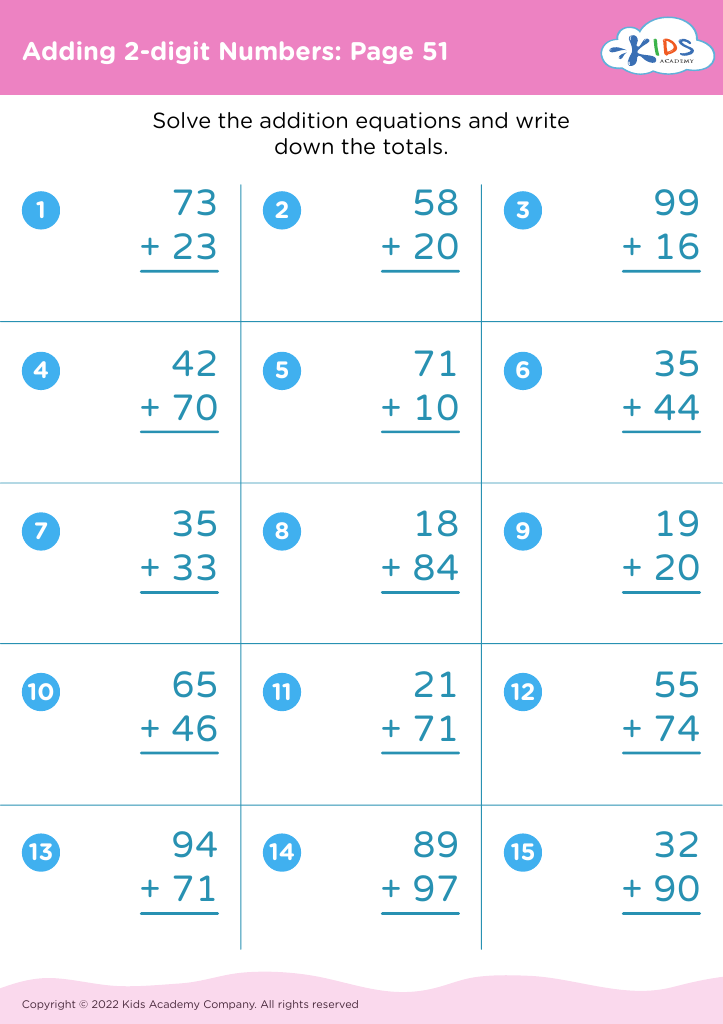
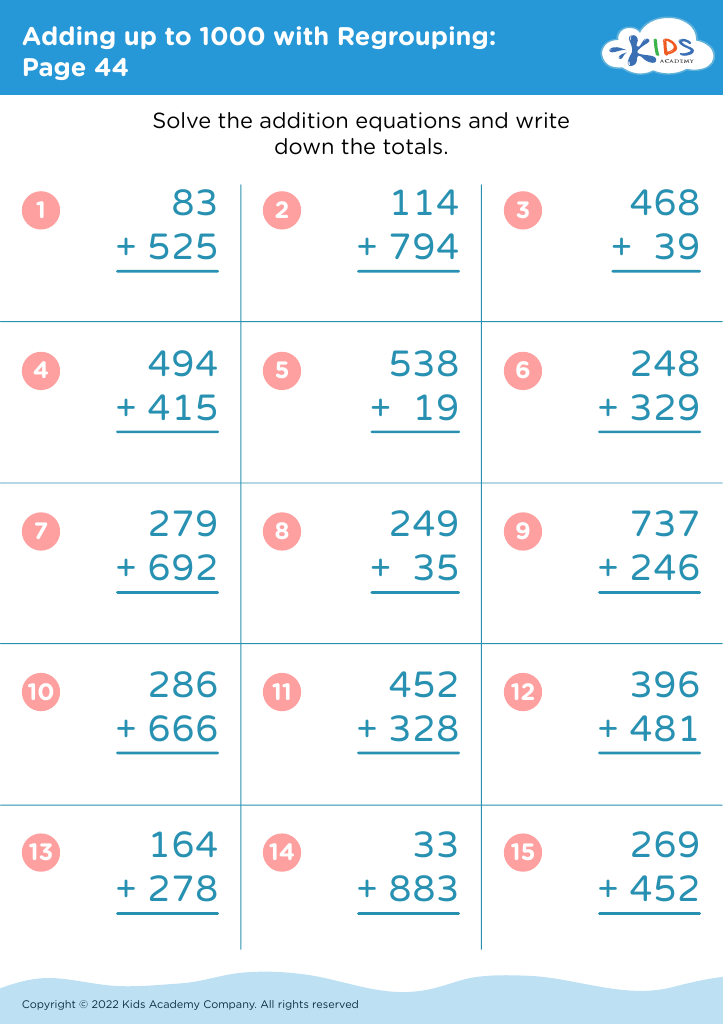








Understanding sequencing in addition and subtraction is crucial for children aged 6-7, as it serves as the foundation for all future mathematical learning. During this developmental stage, children begin to grasp not only numerical skills but also the concept of order—essential for problem-solving across subjects.
Sequencing helps children understand the steps necessary to reach an answer. It encourages logical thinking and fosters the ability to follow and construct multi-step processes in math problems. For instance, when adding or subtracting, children learn to recognize the importance of working with numbers in a specific order to achieve accurate results.
This understanding enhances mathematical fluency, making future topics like multiplication and division easier to grasp. Moreover, it promotes confidence, as children learn that math is not merely about the right or wrong answer, but about the process. Teachers and parents contribute to this learning by providing structured activities that emphasize sequencing through games, worksheets, and real-life scenarios.
Encouraging sequencing skills also develops critical thinking ability beyond math, impacting literacy and other subjects. In sum, nurturing these skills during ages 6-7 lays a solid groundwork for academic success and lifelong learning.








