
Basic subtraction Addition Worksheets for Ages 6-7
5 filtered results
Difficulty Level
Grade
Age
-
From - To
Subject
Activity
Standards
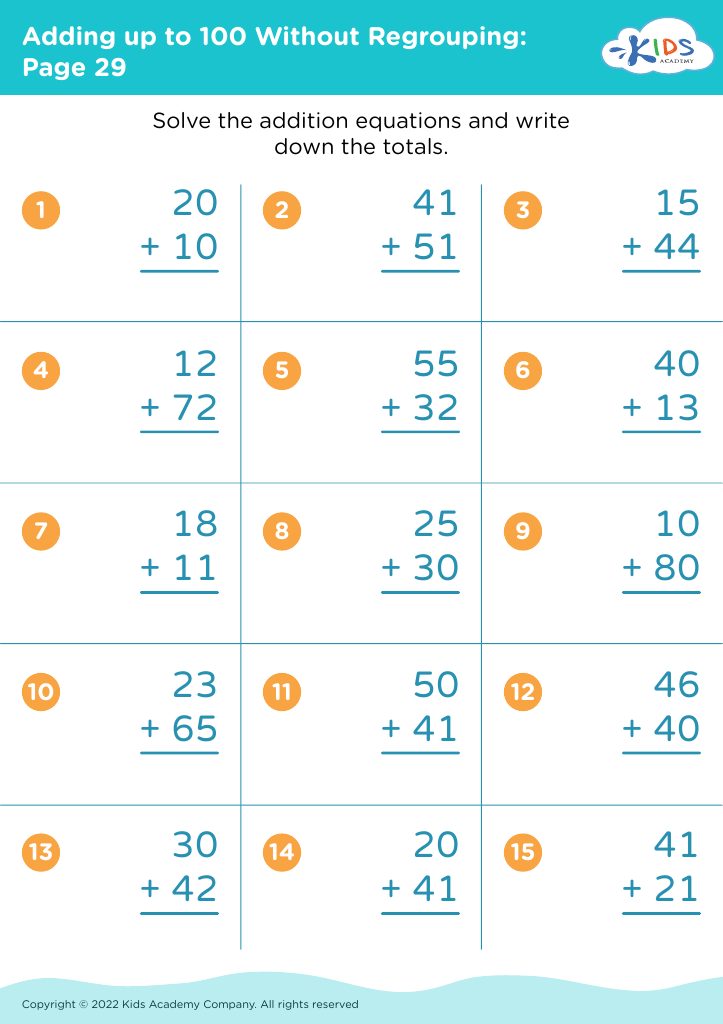
Welcome to our Basic Subtraction and Addition Worksheets for Ages 6-7! Designed specifically for young learners, these engaging and interactive worksheets help reinforce foundational math skills through fun exercises. Kids will enjoy practicing basic subtraction and addition, improving their number sense and problem-solving abilities. Each worksheet features colorful illustrations and easy-to-understand instructions, making math enjoyable and accessible. Perfect for classroom use or at-home learning, these resources offer varied challenges to cater to different skill levels. Empower your child with confidence in their math abilities and make learning a rewarding experience. Explore our collection now and watch them excel!
Favorites
With answer key
Interactive
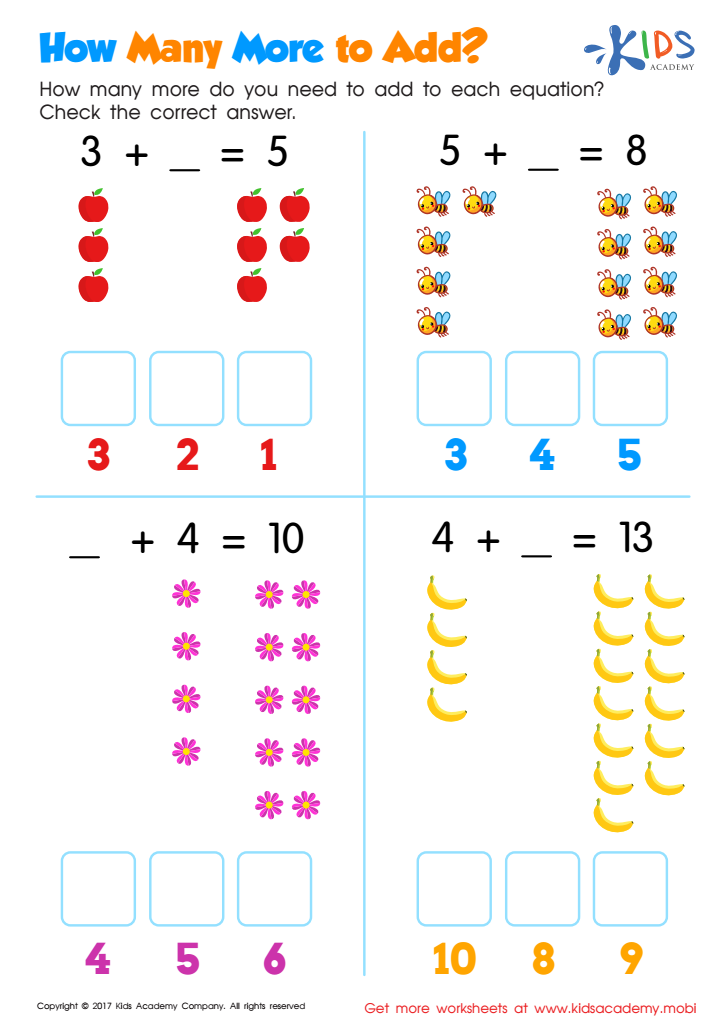
How Many More to Add Worksheet
Sharpen your child's math skills with this pdf worksheet. Help them figure out how many apples, bees, flowers and bananas are needed to reach the answer given. The possible answers are provided at the bottom of the boxes. Have some fun doing some addition and subtraction magic together and get those math skills sharpened!
 Assign to My Students
How Many More to Add Worksheet
Worksheet
Join Kids Academy for Free
Who is primarily going to use this learning content?








Parents and teachers should prioritize basic addition and subtraction for children aged 6-7 because these foundational math skills are crucial for cognitive development and everyday life. At this age, children are transitioning from learning numbers to applying mathematical concepts, which sets the stage for more complex problem-solving skills in the future.
Proficiency in addition and subtraction enhances a child’s ability to think critically and logically. These skills are not only integral to math classes but are also necessary for everyday activities, such as shopping or cooking. When children are comfortable with these operations, they build confidence, which further motivates them to engage with more challenging concepts.
Additionally, practicing these skills fosters a sense of achievement and competence. Supportive engagement from parents and teachers can create a positive learning environment, making math fun and enjoyable. This early positive reinforcement shapes attitudes towards math, reducing anxiety and the fear of failure later on.
Moreover, early mastery of basic operations helps prevent future learning gaps and sets a strong foundation for more advanced topics like multiplication and division. By promoting basic addition and subtraction, parents and teachers contribute to a child’s overall academic success and foster long-term engagement with math and learning.








