
Boost critical thinking Addition Worksheets for Ages 6-7
3 filtered results
Difficulty Level
Grade
Age
-
From - To
Subject
Activity
Standards
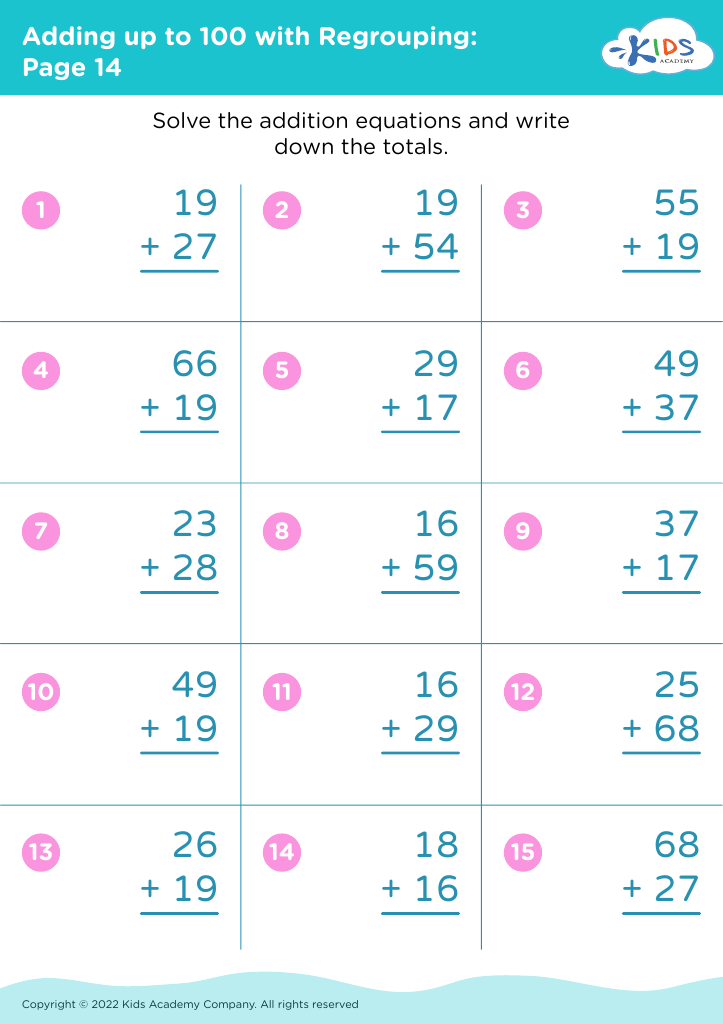
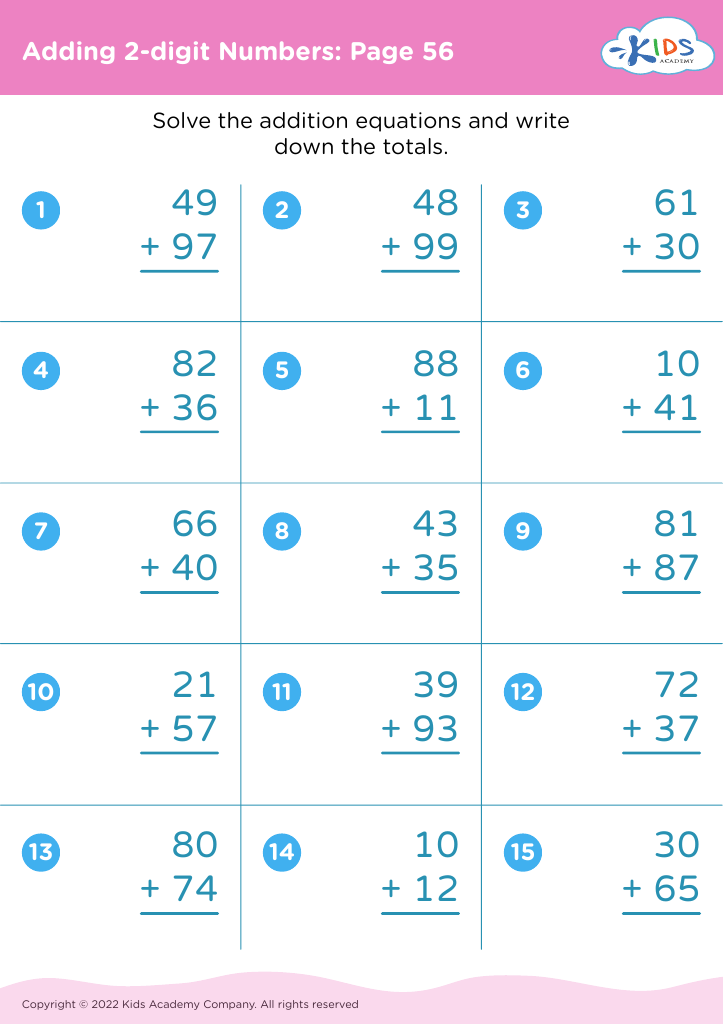
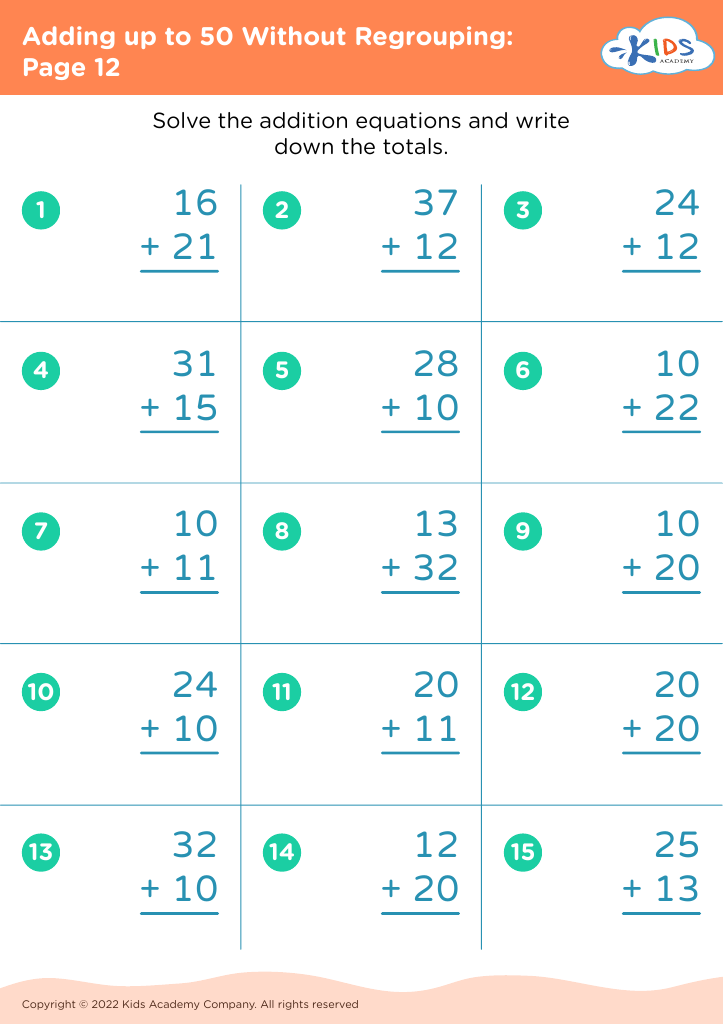
Enhance your child's mathematical skills with our "Boost Critical Thinking Addition Worksheets" designed for ages 6-7. These engaging worksheets go beyond simple addition, focusing on developing critical thinking and problem-solving abilities. Each activity is crafted to challenge young minds, promoting logical reasoning and analytical skills. Perfect for both classroom and home use, our worksheets provide a fun, educational experience that keeps kids motivated and eager to learn. Build a strong mathematical foundation while nurturing critical thinking skills essential for future academic success. Boost your child's learning journey today with our expertly designed addition worksheets!
Favorites
With answer key
Interactive
Join Kids Academy for Free
Who is primarily going to use this learning content?








Boosting critical thinking in addition for children ages 6-7 is crucial for a strong, foundational start in both mathematical understanding and overall cognitive development. At this formative age, students are not just learning to add numbers; they are learning how to think. Integrating critical thinking into math encourages children to understand the "why" and "how" behind addition, fostering deeper comprehension rather than rote memorization of facts.
Using critical thinking in problems requires kids to make connections, recognize patterns, and develop problem-solving strategies—skills that are transferable across all subjects and life scenarios. For example, when they encounter a word problem that involves addition, they not only learn to calculate sums but also learn to interpret information, assess what is needed, and plan out steps to arrive at a solution. This holistic approach helps solidify their quantitative skills and strengthens their capacity to tackle complex tasks.
Moreover, cultivating critical thinking early can boost a child's confidence, as they feel more capable of handling challenges independently. By prioritizing critical thinking in addition at ages 6-7, parents and teachers set the stage for academic success and develop lifelong learners who are inquisitive and resilient.








