Counting practice Addition Worksheets for Ages 6-7
59 filtered results
-
From - To
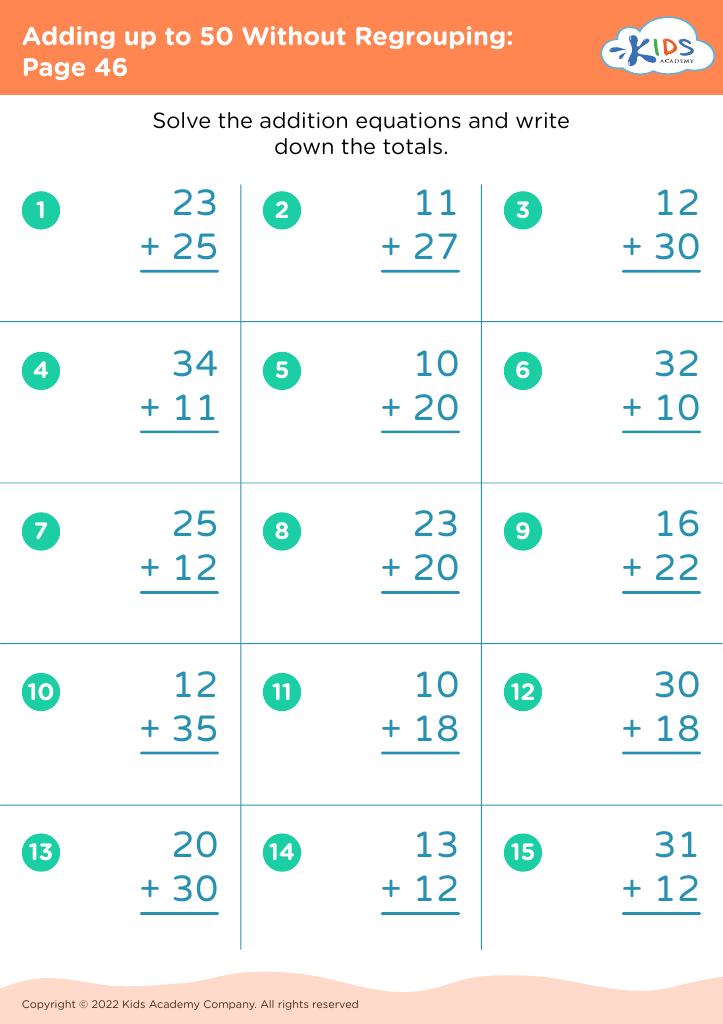
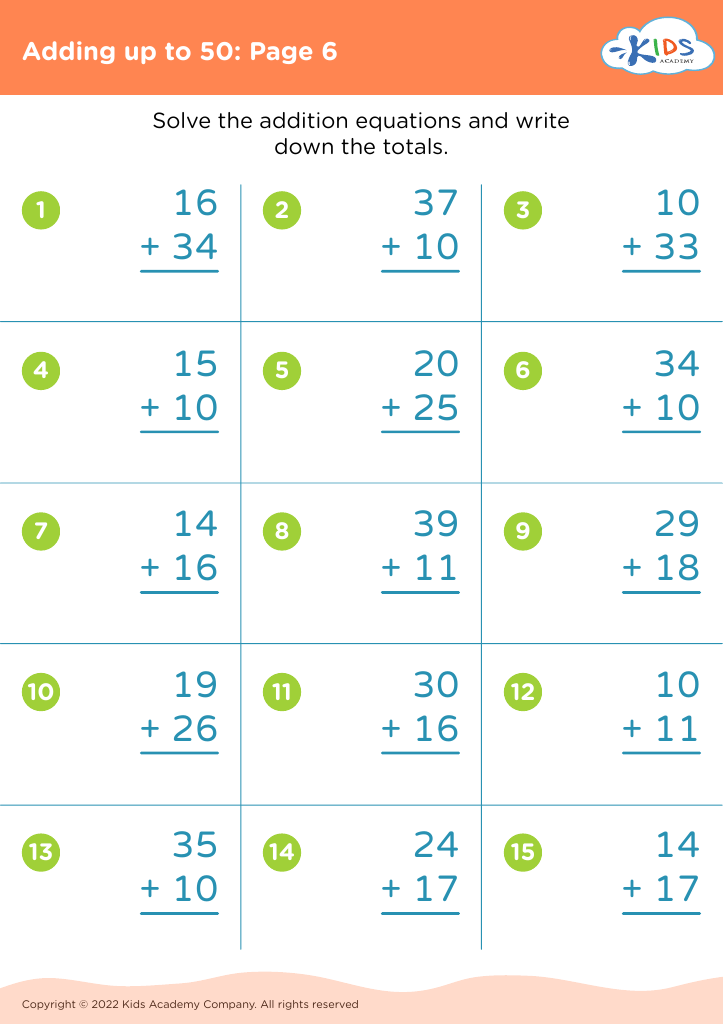
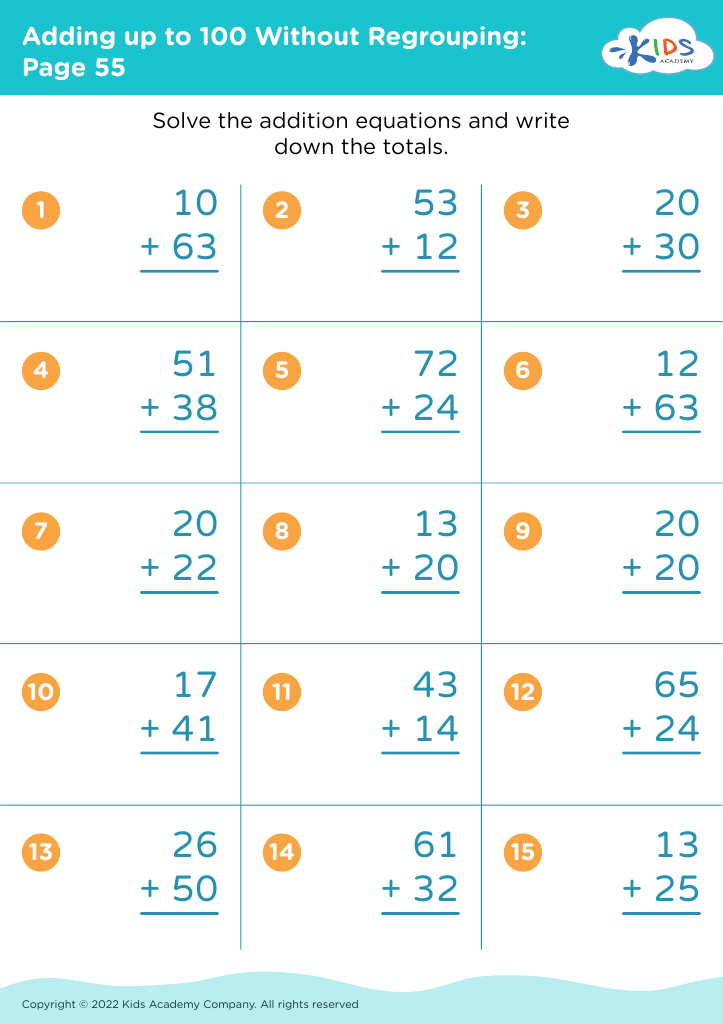
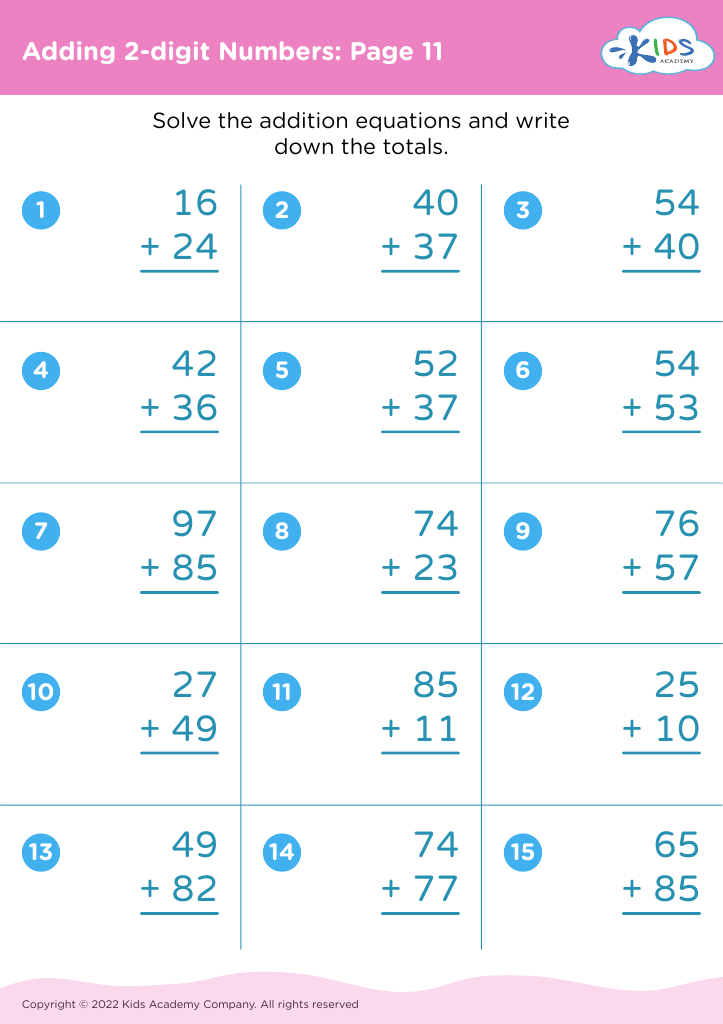
Enhance your child's math skills with our "Counting Practice Addition Worksheets" designed specifically for ages 6-7. These engaging, printable worksheets help young learners strengthen their counting abilities while mastering basic addition concepts. With a variety of fun and interactive exercises, children can practice adding numbers through visually appealing activities. Our resources aim to develop essential math skills, boost confidence, and foster a love for learning. Perfect for classroom use or homeschooling, these worksheets are a valuable tool for guiding your child on their educational journey. Start building a strong math foundation today and watch your child's mathematical abilities grow!
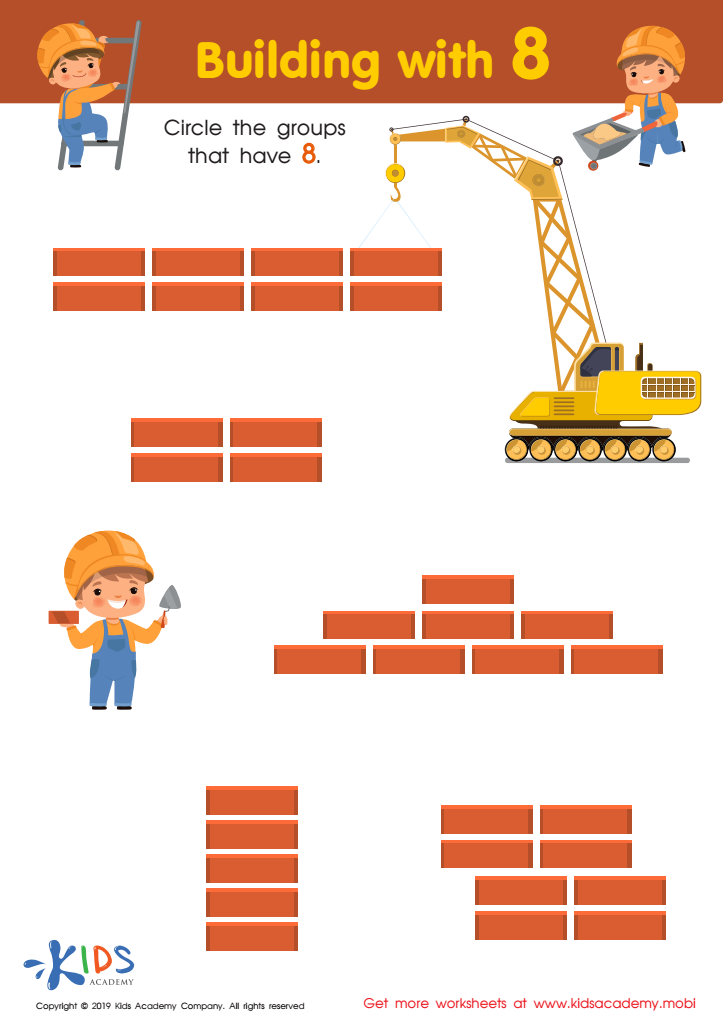
Building with 8 Worksheet
 Assign to My Students
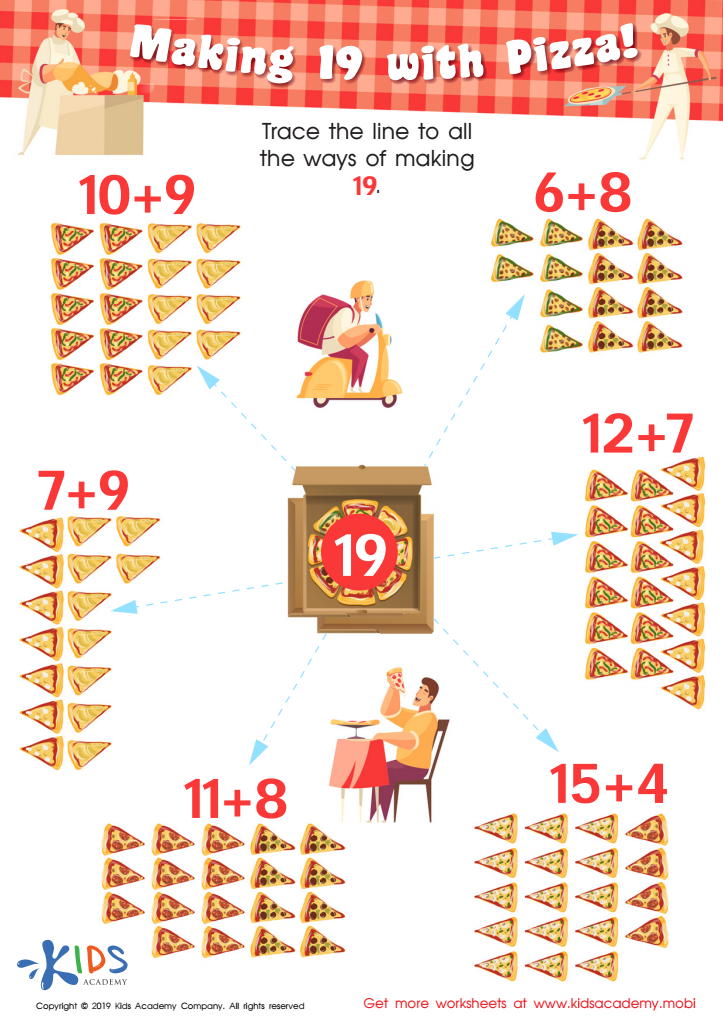
Making 19 with Pizza! Worksheet
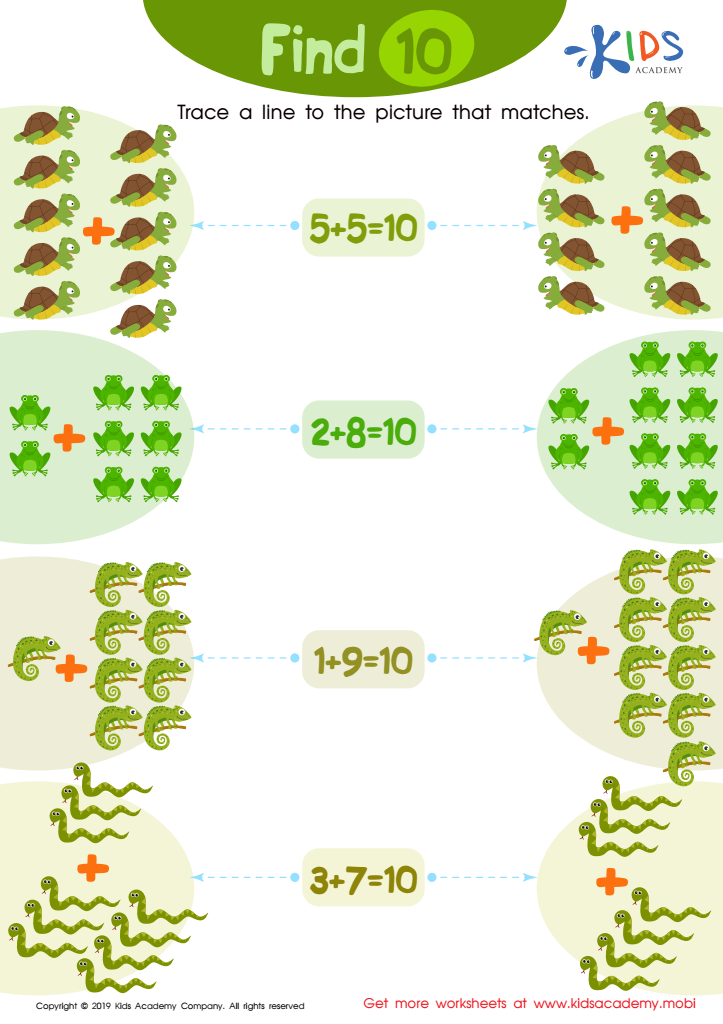
Find 10 Worksheet
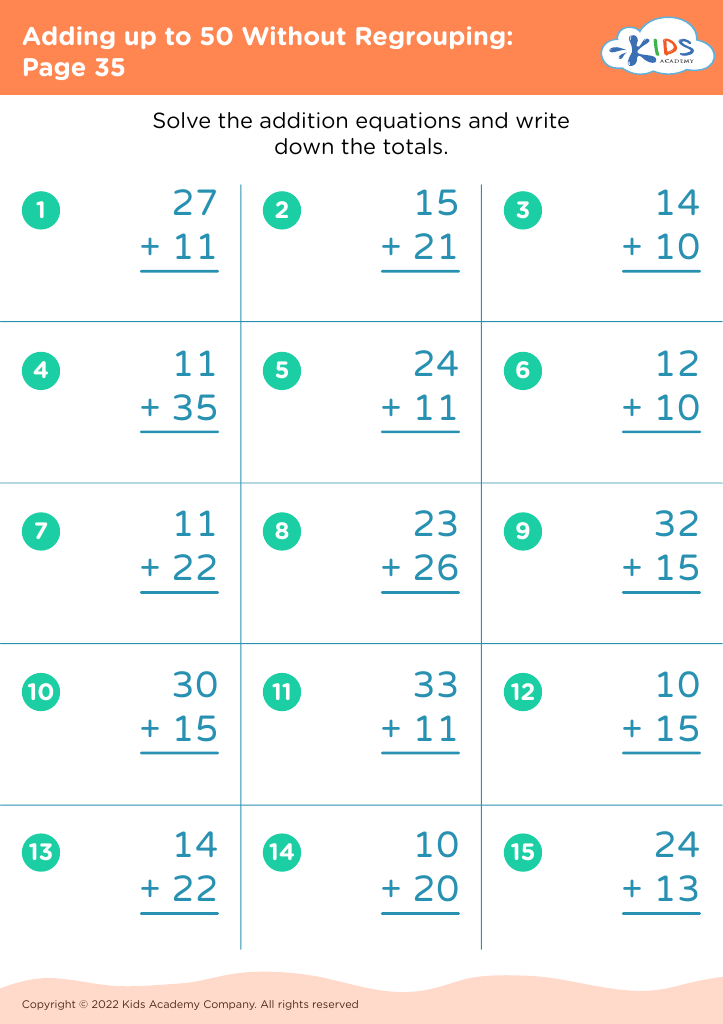
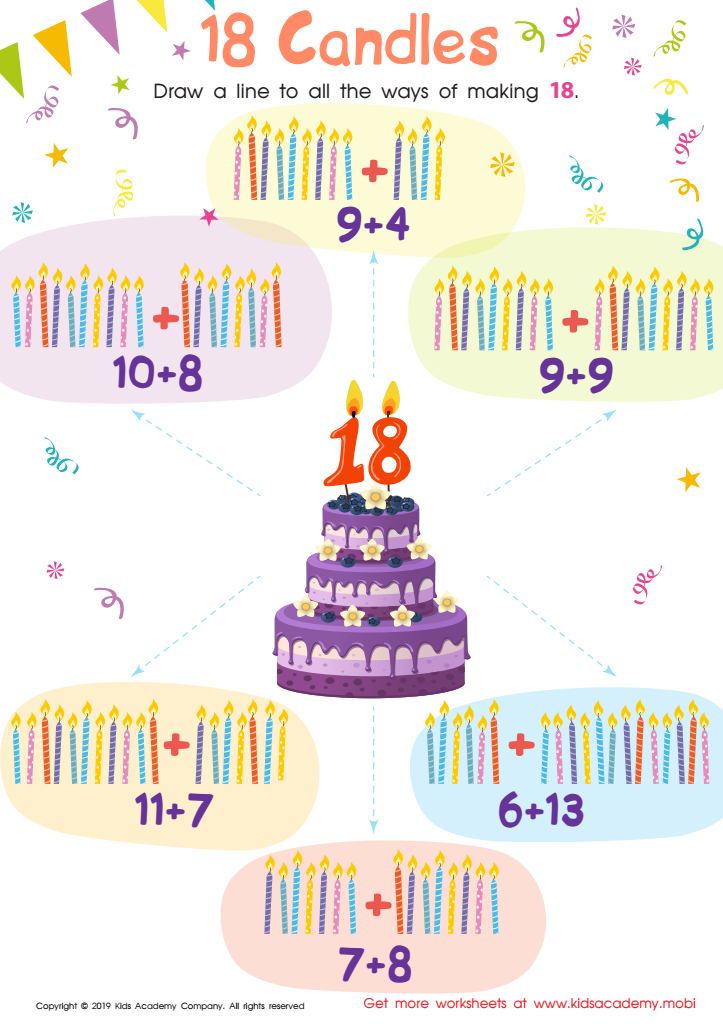
18 Candles Worksheet
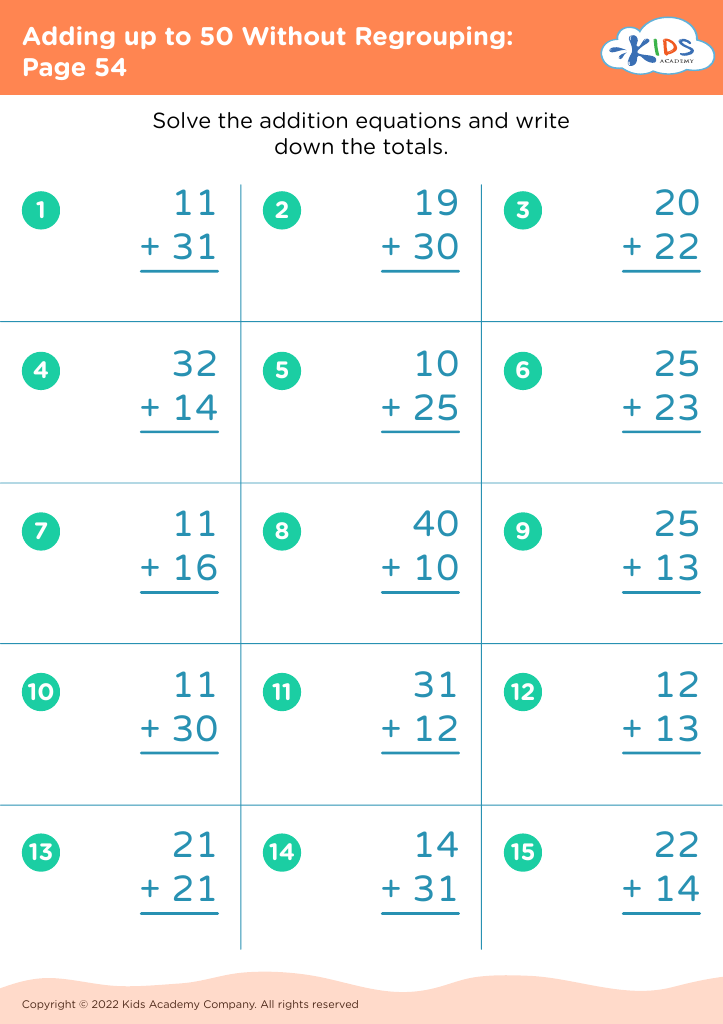
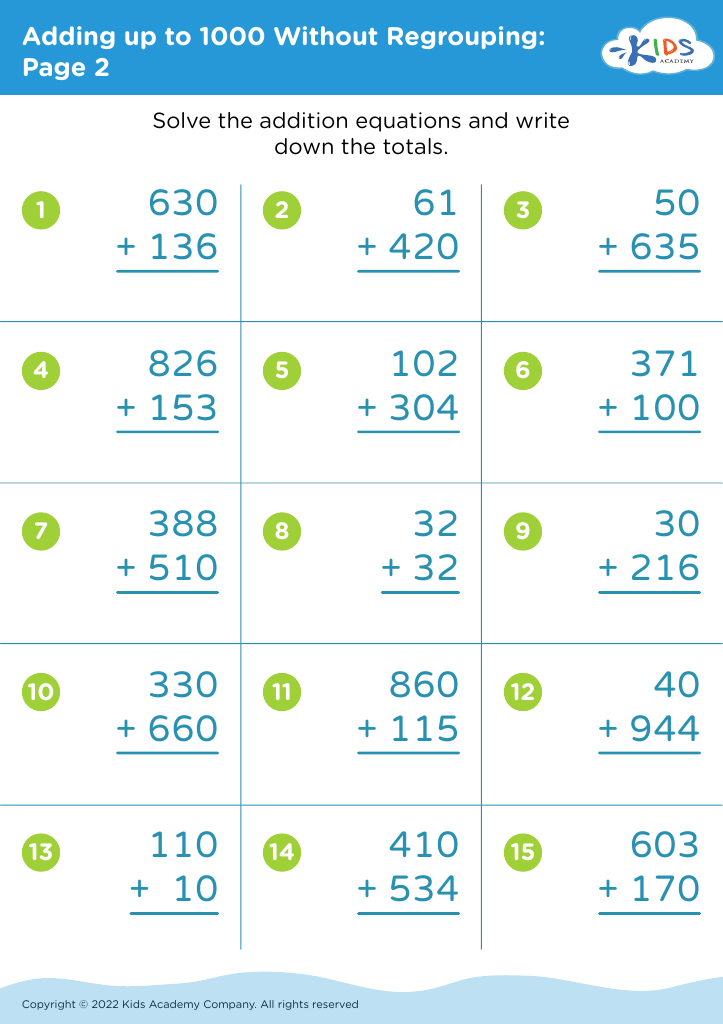
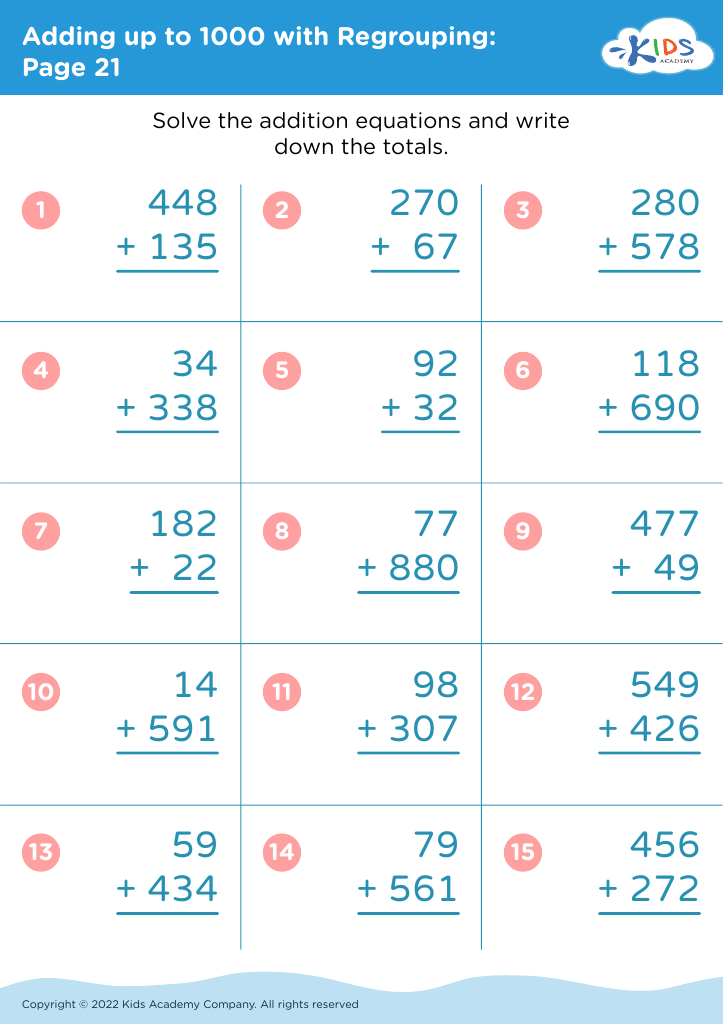
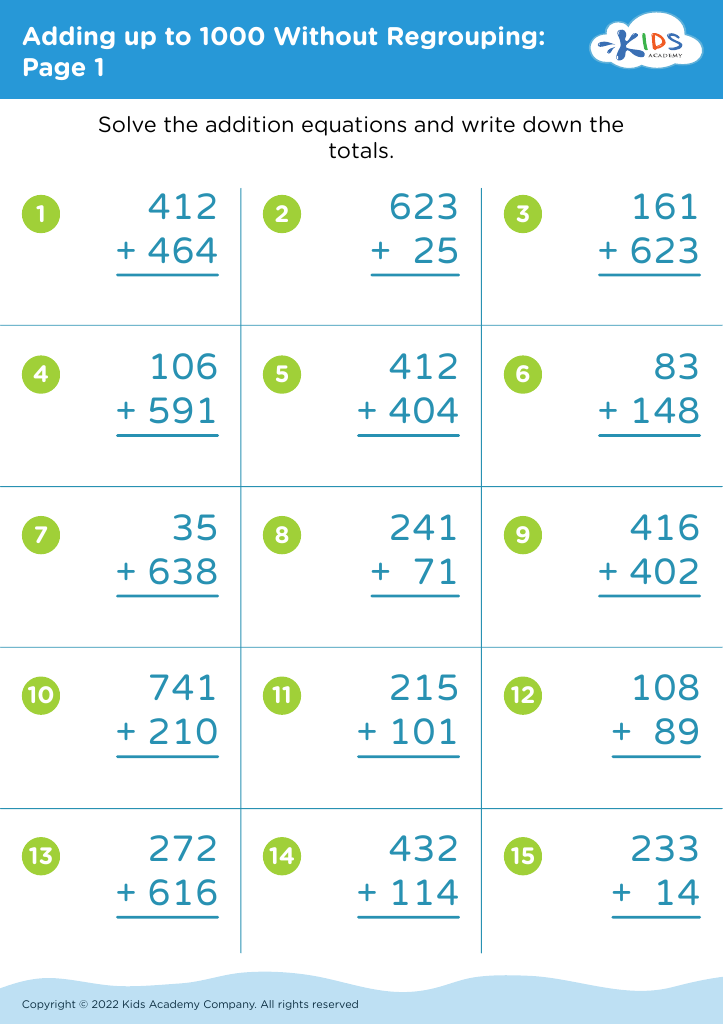
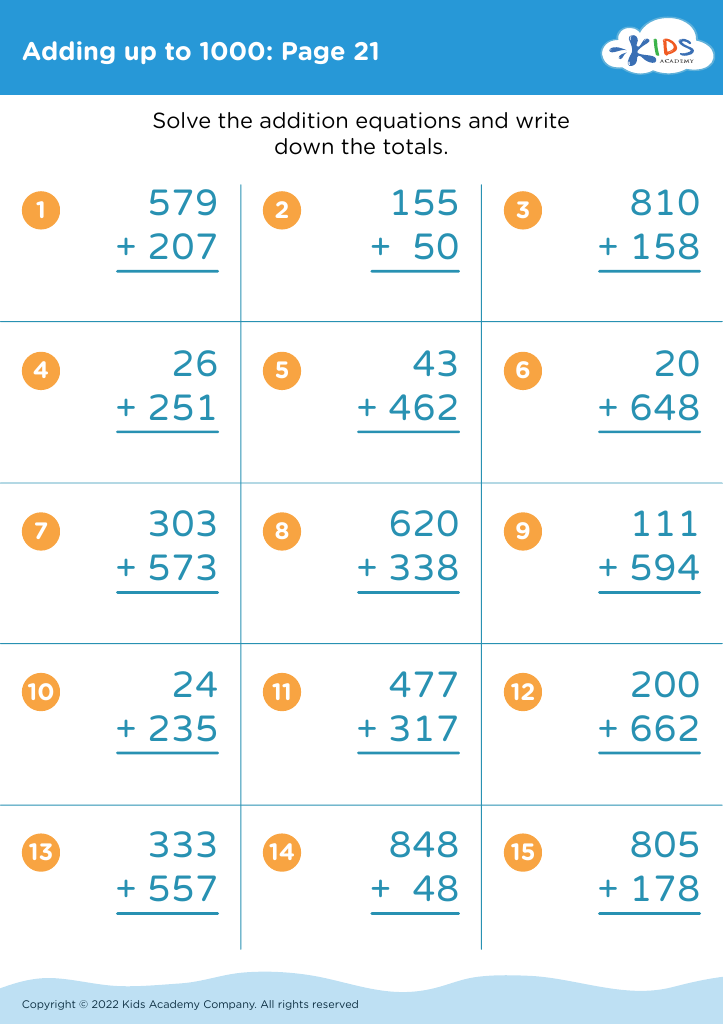
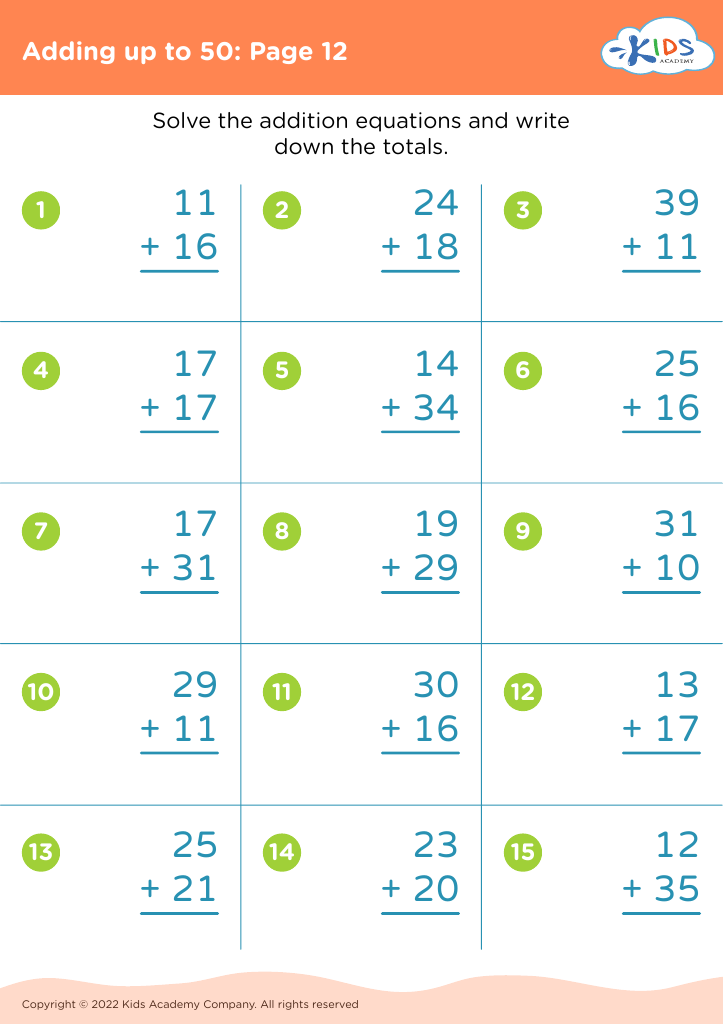
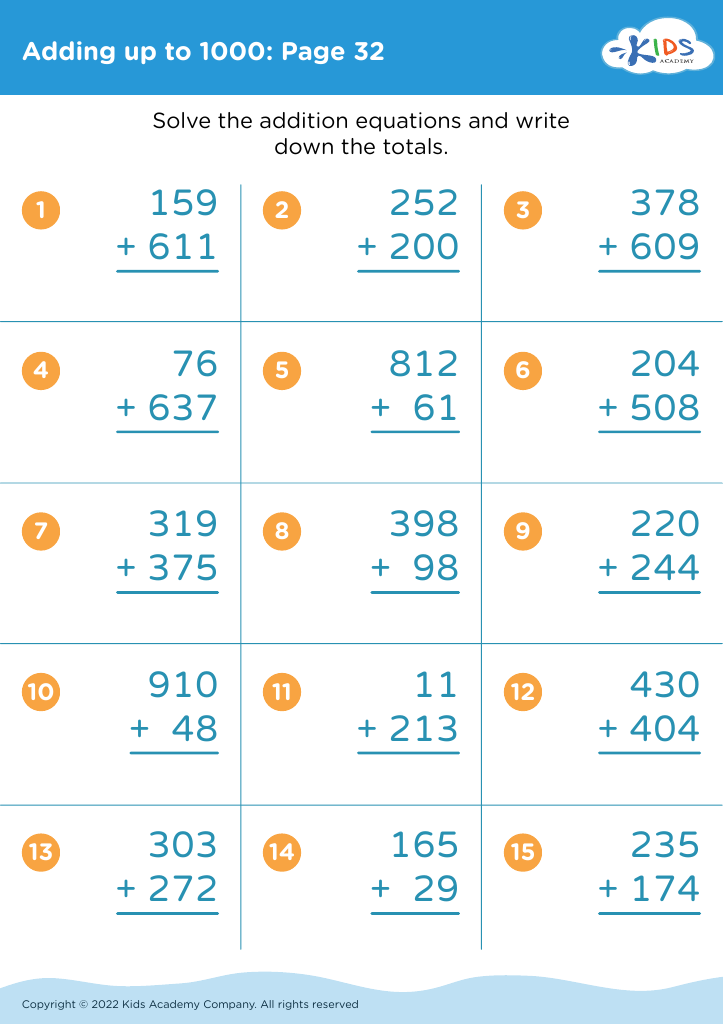
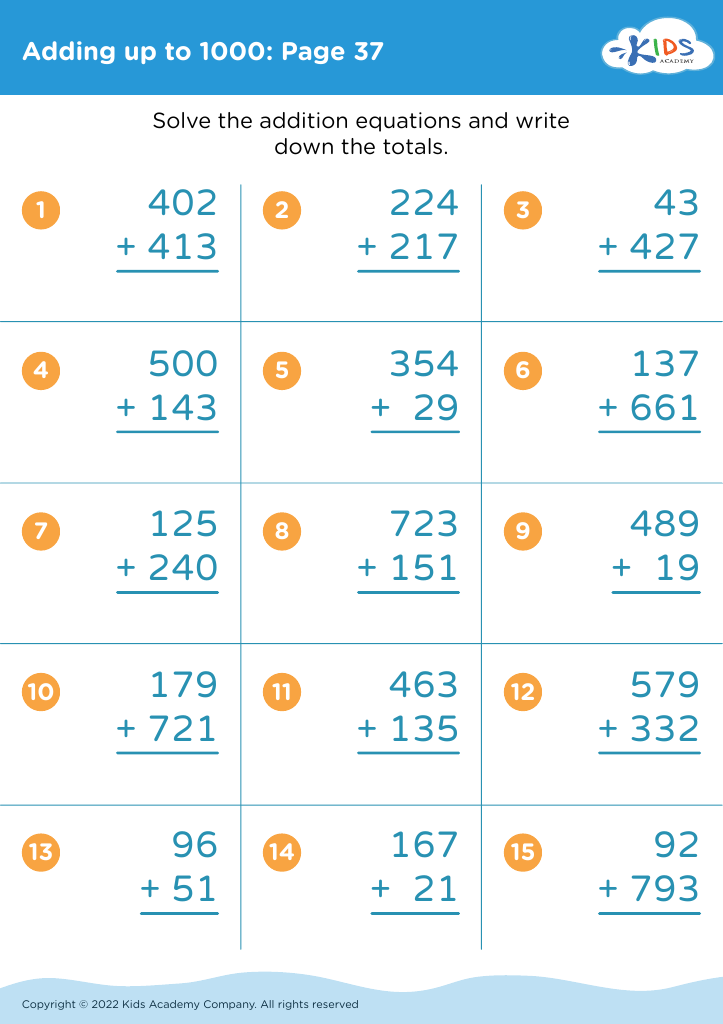
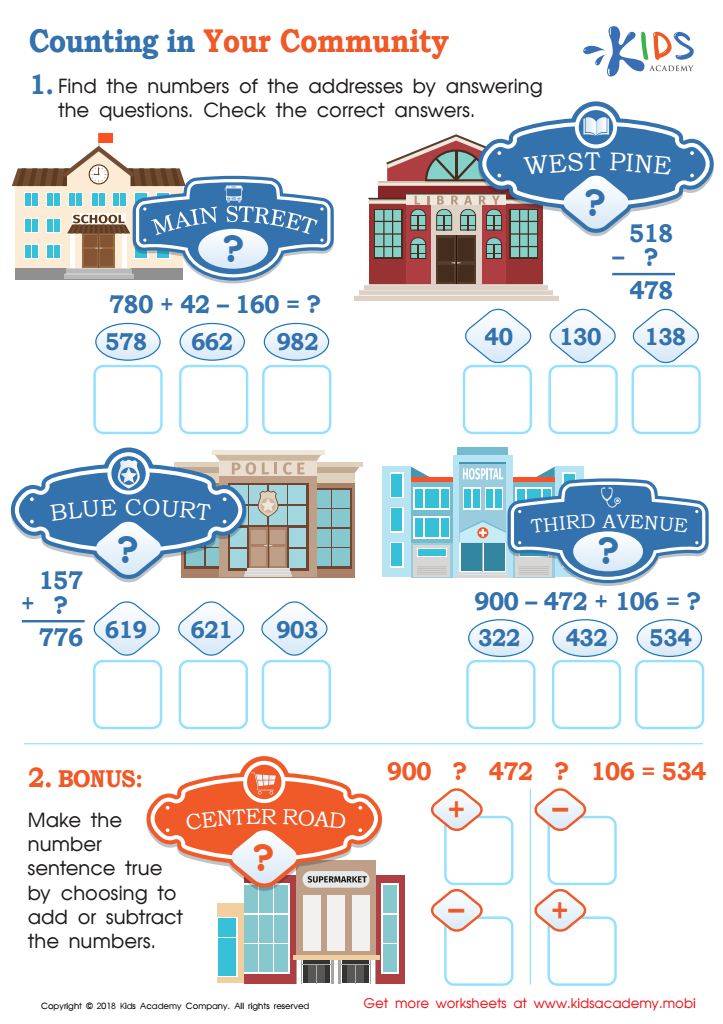
Counting in Your Community Worksheet
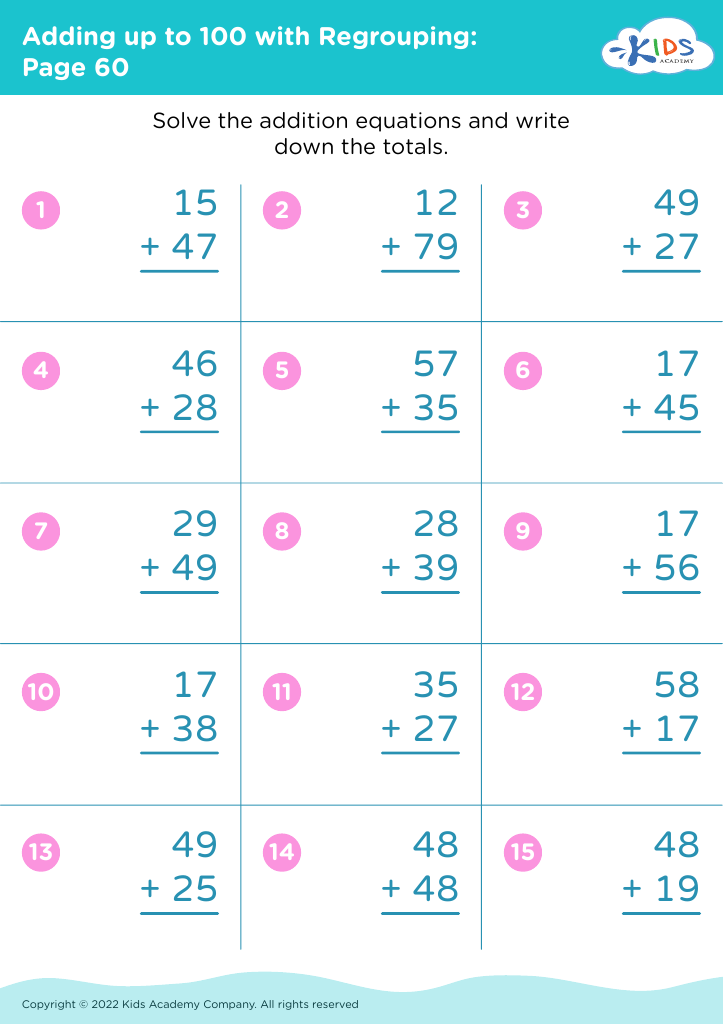








Counting practice and addition for children aged 6-7 are fundamental to their overall mathematical development. At this age, children are beginning to grasp the concept of numbers and are developing their mathematical reasoning. Engaging in regular counting practice not only builds a strong foundation for addition skills but also enhances their number sense—understanding relationships between numbers and quantities.
Parents and teachers should care because counting and addition are critical life skills. Mastery in these areas boosts confidence and fosters positive attitudes toward math, which can impact future academic success. Children who struggle with fundamental math concepts may face challenges as they progress to more complex topics, leading to frustration and a wariness of math.
Additionally, counting activities can promote cognitive development and improve fine motor skills when combined with manipulatives or other interactive tools. Counting alongside parents or teachers helps to encourage a collaborative learning environment, making math a fun and engaging topic rather than a chore.
Incorporating counting practice and addition into daily activities can lead to meaningful learning experiences that not only enrich children’s mathematical abilities but also inspire a lifelong love for learning. Establishing these skills early on sets the stage for future academic achievements and problem-solving capabilities.








