Filters

59 filtered results

Clear all filters
Favorites
With answer key
Interactive

59 filtered results

Difficulty Level

Grade


Check out this FREE Trial Lesson on Addition for age 6-7!

P

Favorites
With answer key
Interactive
  • 6-7
  • Counting practice
  • Addition
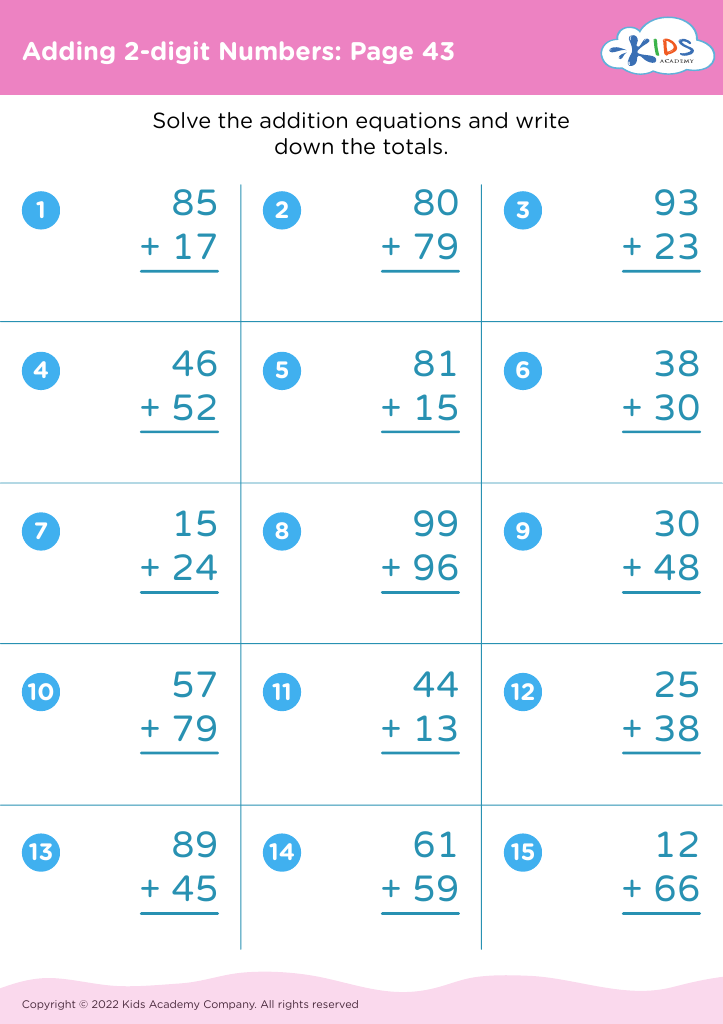
Adding 2-digit Numbers: Page 43

Adding 2-digit Numbers: Page 43

Adding 2-digit Numbers: Page 43
Worksheet
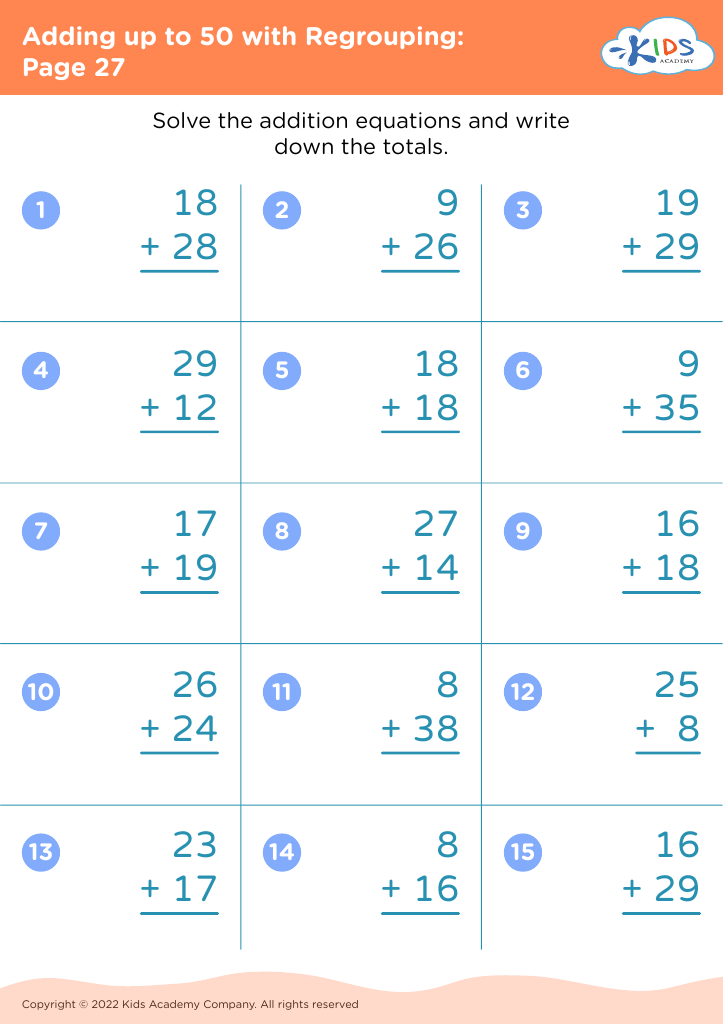
Adding up to 50 with Regrouping: Page 27
Worksheet
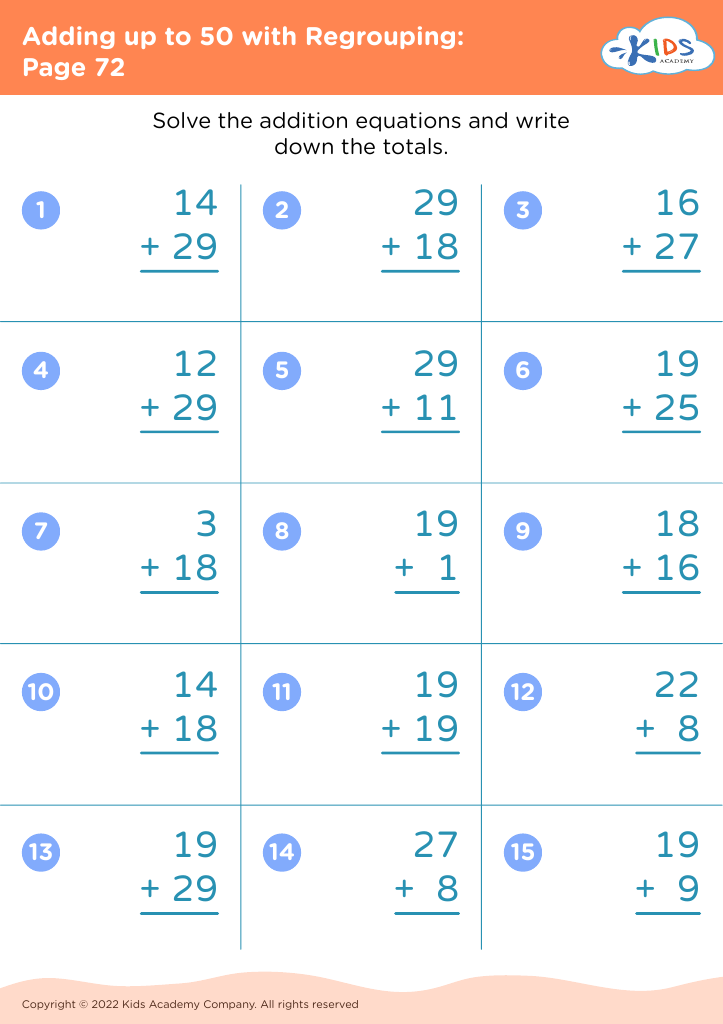
Adding up to 50 with Regrouping: Page 72
Worksheet
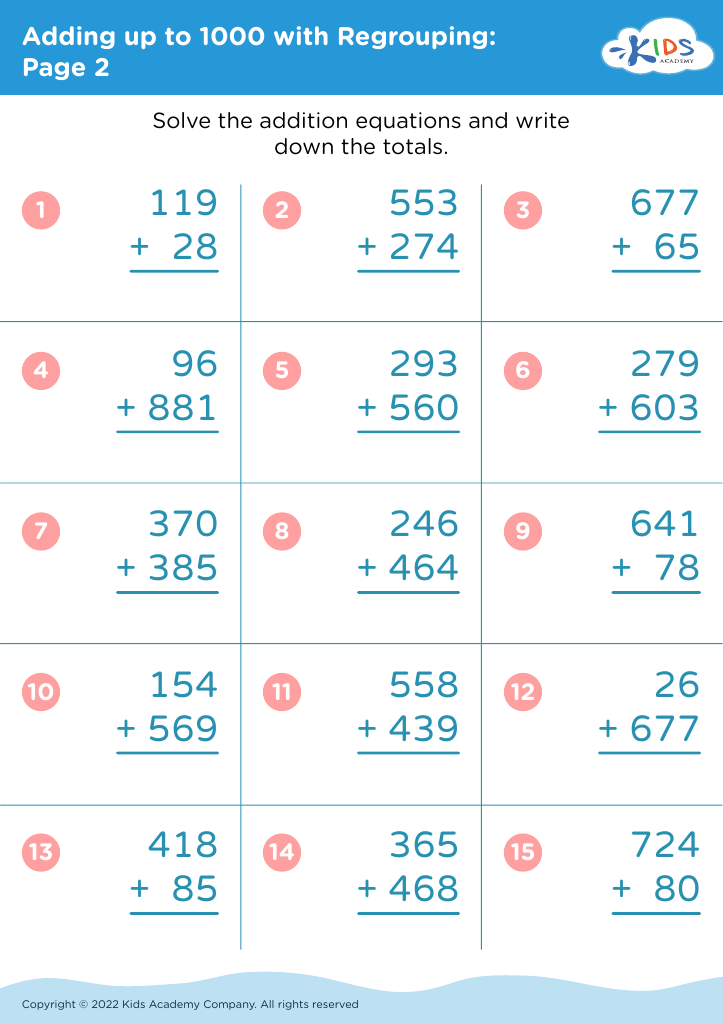
Adding up to 1000 with Regrouping: Page 2
Worksheet
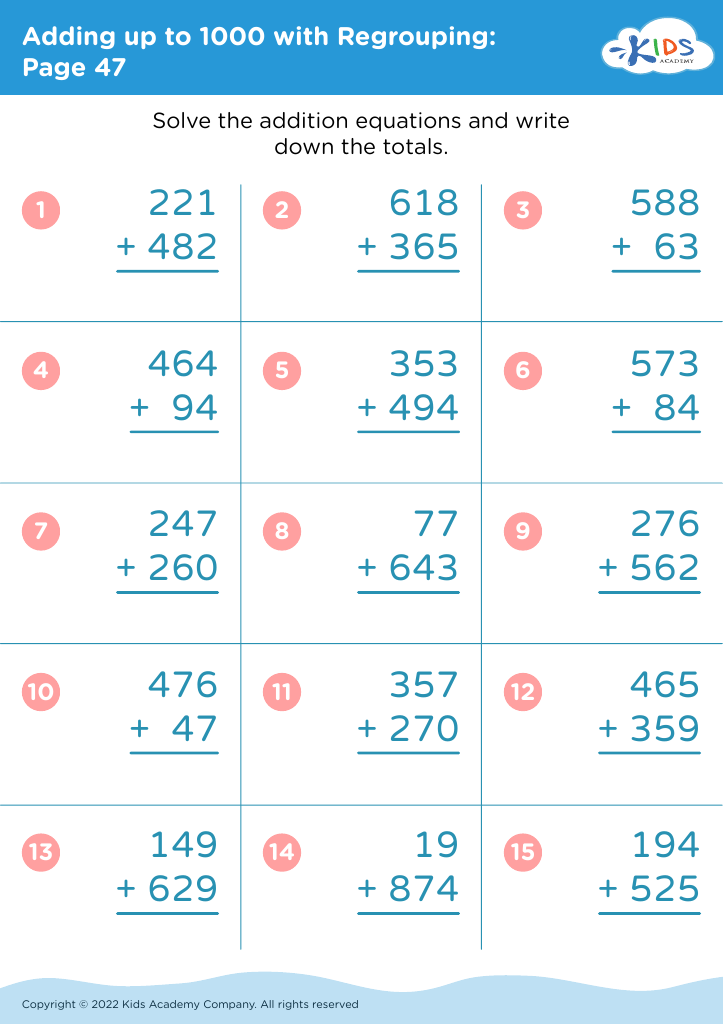
Adding up to 1000 with Regrouping: Page 47
Worksheet
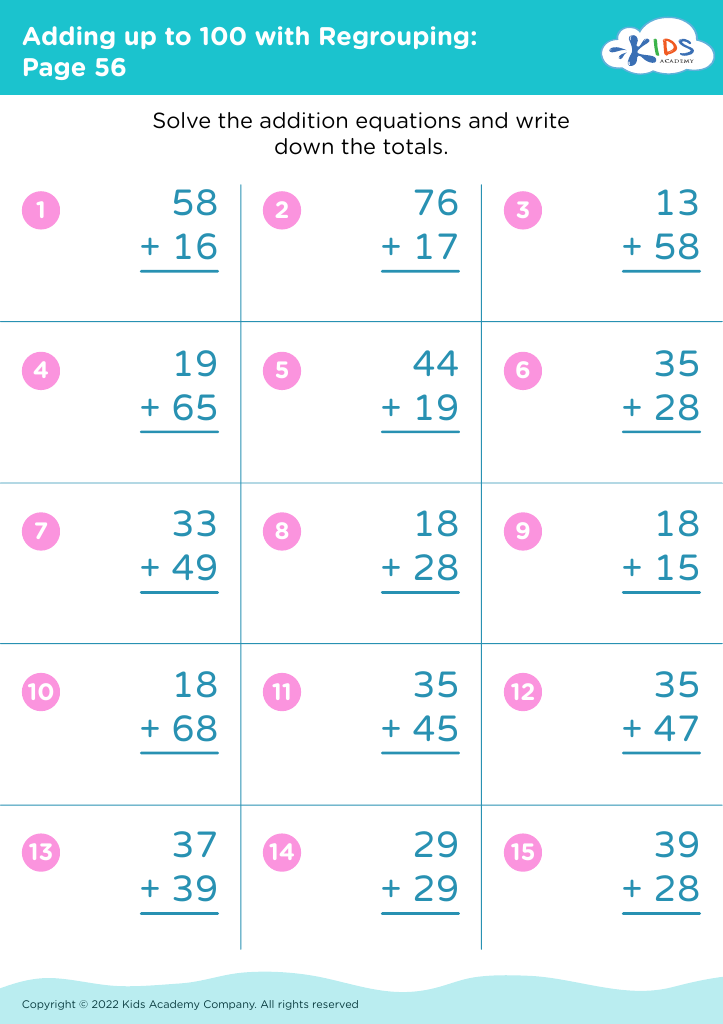
Adding up to 100 with Regrouping: Page 56
Worksheet
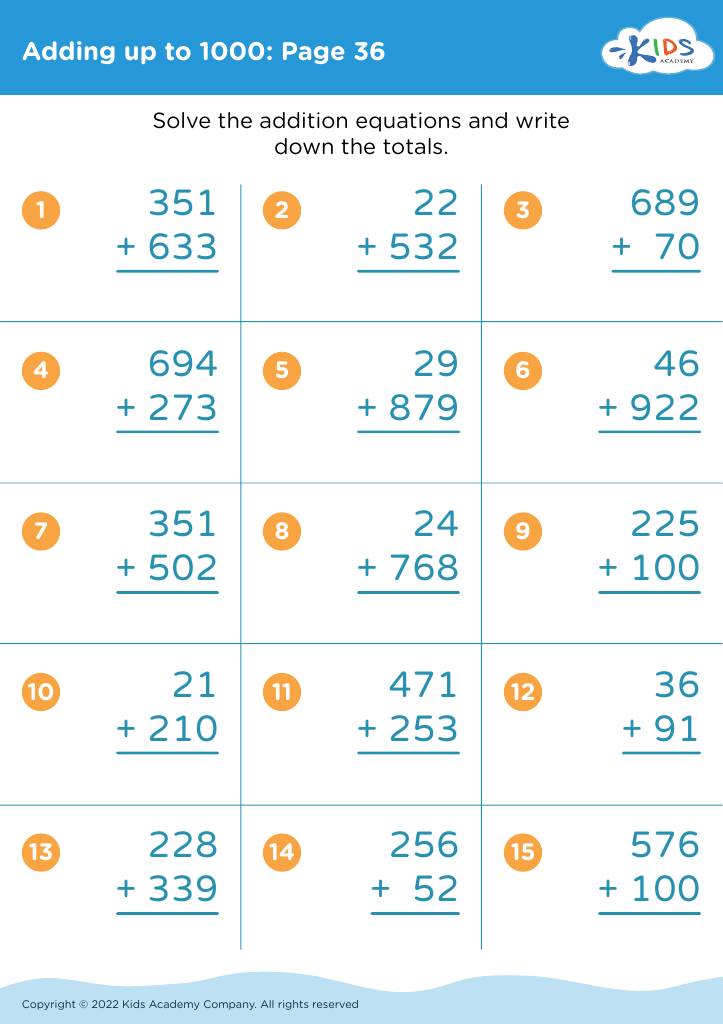
Adding up to 1000: Page 36

Adding up to 1000: Page 36

Adding up to 1000: Page 36
Worksheet
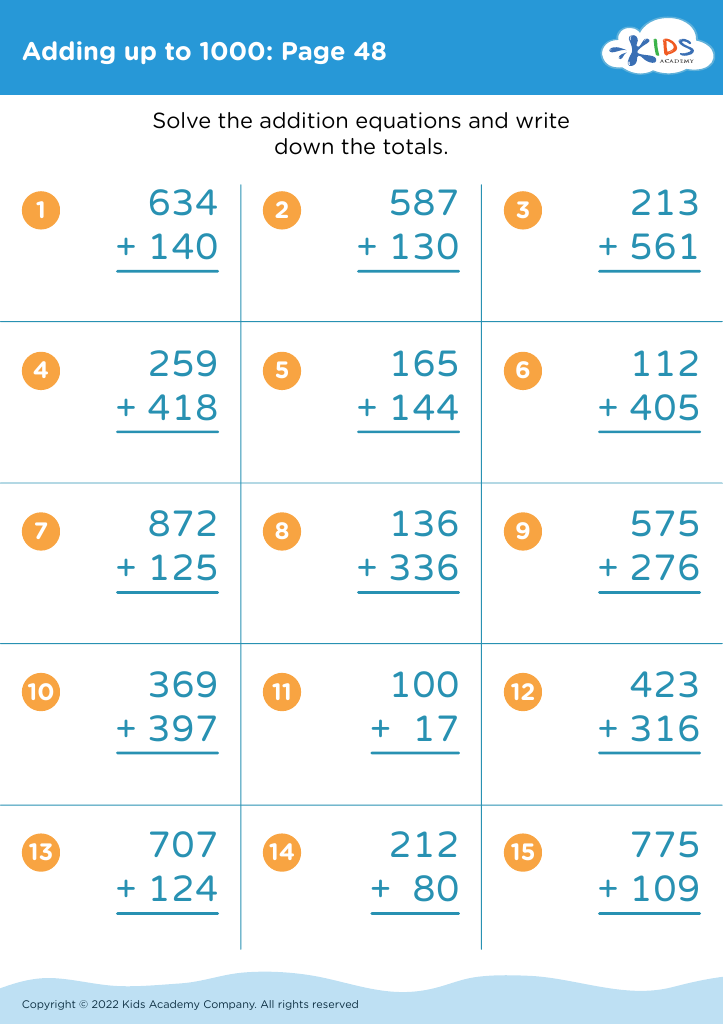
Adding up to 1000: Page 48

Adding up to 1000: Page 48

Adding up to 1000: Page 48
Worksheet
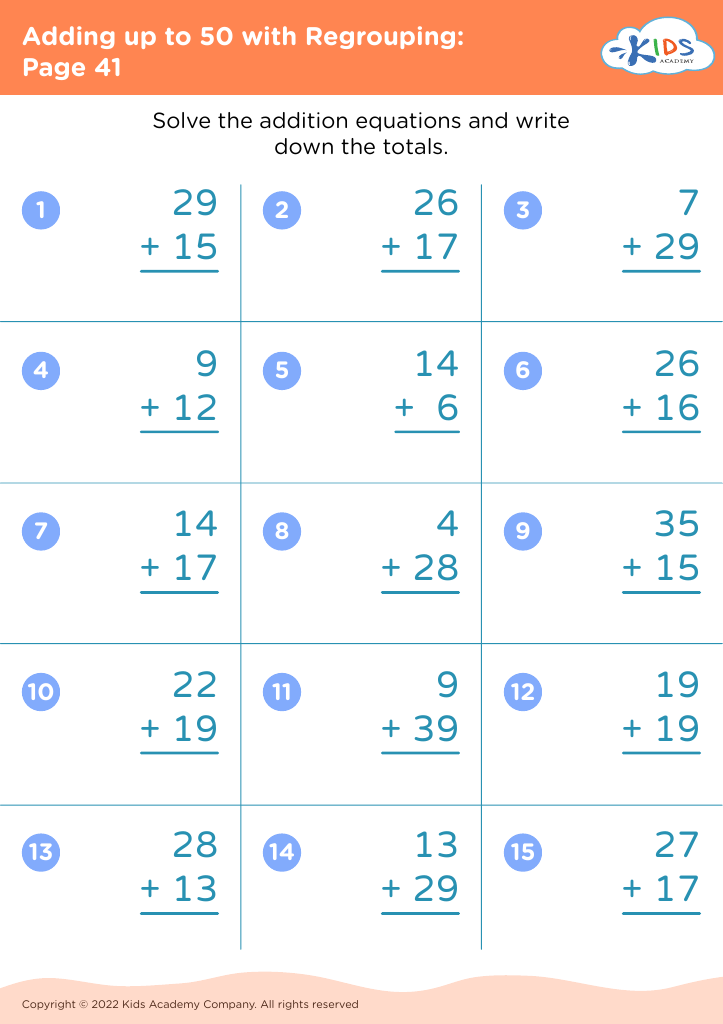
Adding up to 50 with Regrouping: Page 41
Worksheet
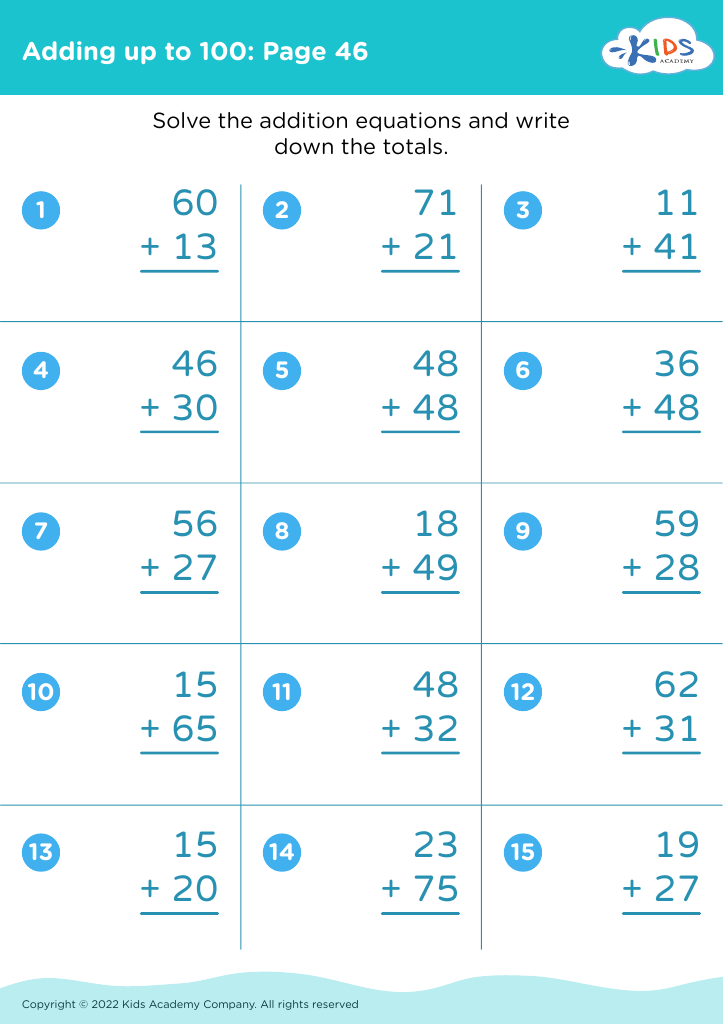
Adding up to 100: Page 46

Adding up to 100: Page 46

Adding up to 100: Page 46
Worksheet
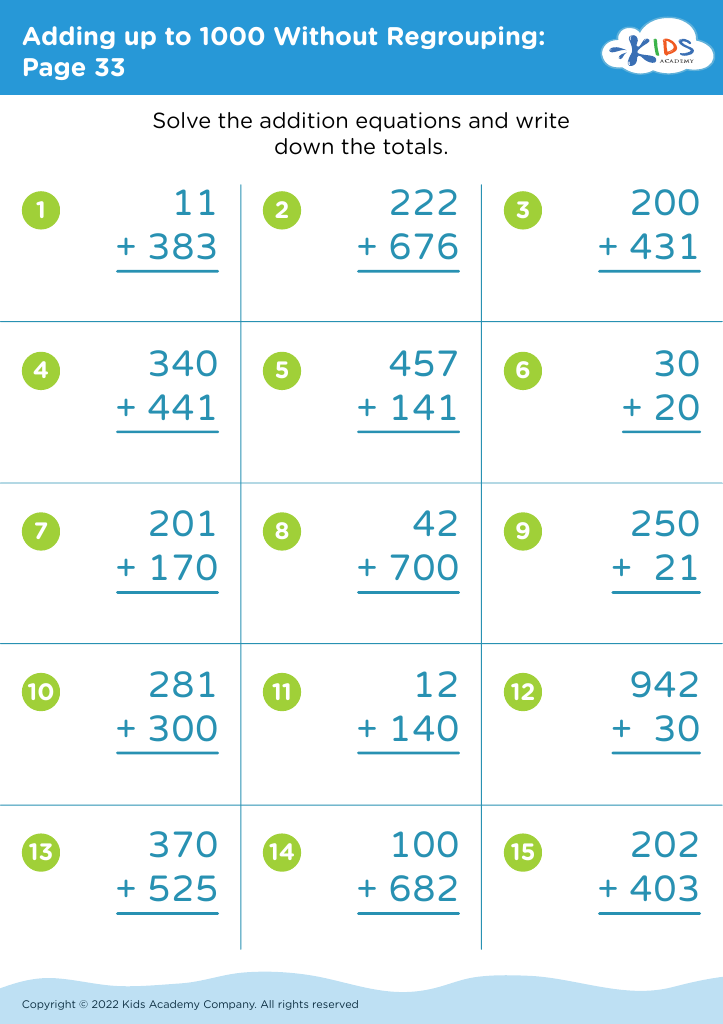
Adding up to 1000 Without Regrouping: Page 33
Worksheet


... 2 3

Counting practice and addition for children aged 6-7 are fundamental to their overall mathematical development. At this age, children are beginning to grasp the concept of numbers and are developing their mathematical reasoning. Engaging in regular counting practice not only builds a strong foundation for addition skills but also enhances their number sense—understanding relationships between numbers and quantities.

Parents and teachers should care because counting and addition are critical life skills. Mastery in these areas boosts confidence and fosters positive attitudes toward math, which can impact future academic success. Children who struggle with fundamental math concepts may face challenges as they progress to more complex topics, leading to frustration and a wariness of math.

Additionally, counting activities can promote cognitive development and improve fine motor skills when combined with manipulatives or other interactive tools. Counting alongside parents or teachers helps to encourage a collaborative learning environment, making math a fun and engaging topic rather than a chore.

Incorporating counting practice and addition into daily activities can lead to meaningful learning experiences that not only enrich children’s mathematical abilities but also inspire a lifelong love for learning. Establishing these skills early on sets the stage for future academic achievements and problem-solving capabilities.