Critical thinking development Addition Worksheets for Ages 6-7
3 filtered results
-
From - To
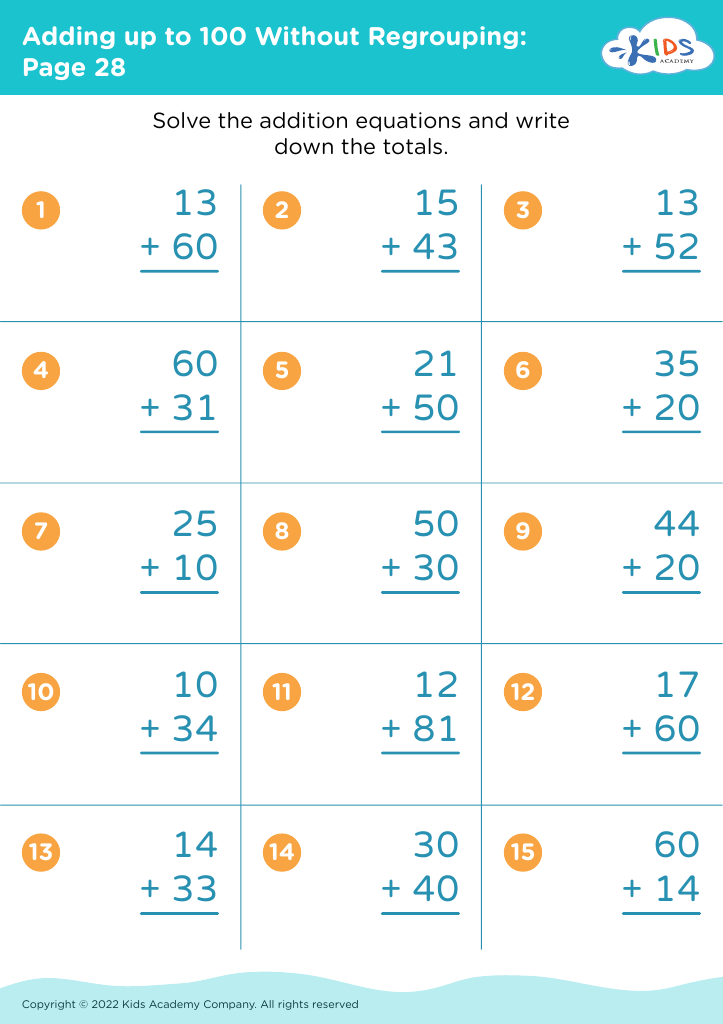
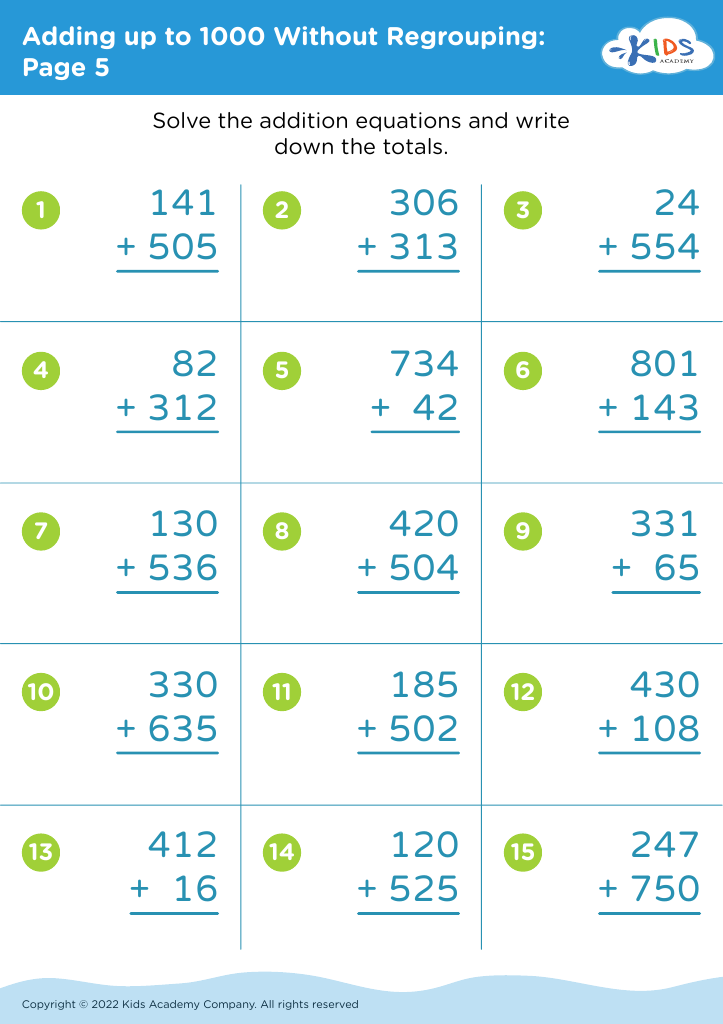
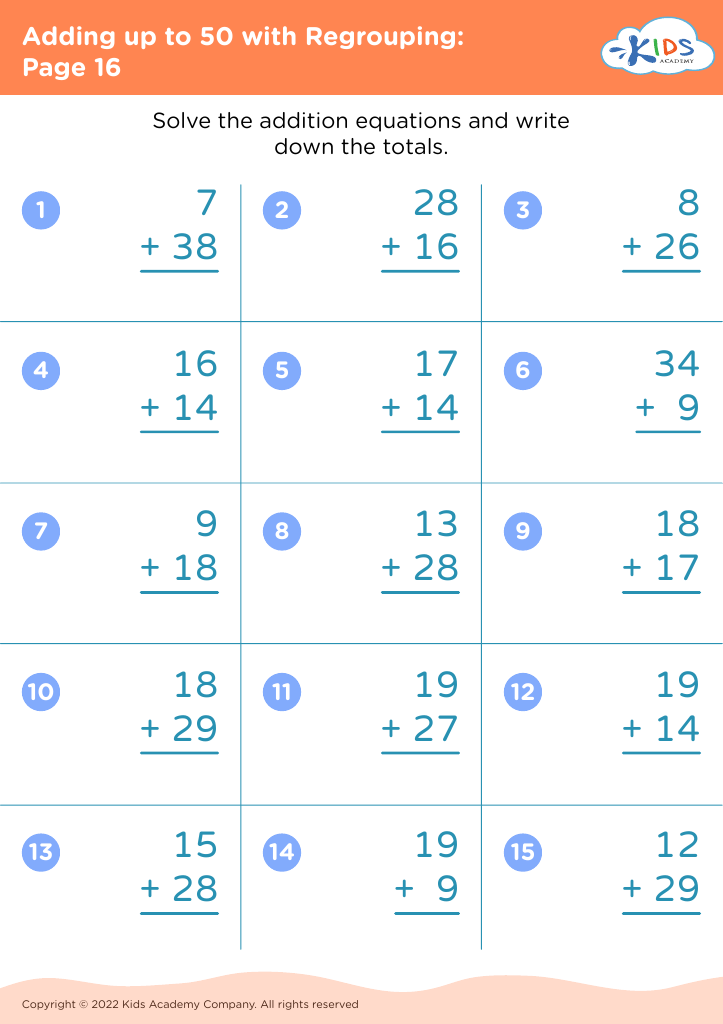
Enhance your child's critical thinking skills with our "Critical Thinking Development Addition Worksheets for Ages 6-7." These thoughtfully designed worksheets combine foundational math skills with engaging problems to stimulate young minds. Ideal for children in early grades, each worksheet encourages problem-solving, logical reasoning, and analytical thinking through age-appropriate addition exercises. Explore a diverse range of activities that make learning math fun and challenging, setting the perfect stage for your child’s academic growth. Elevate their learning experience and inspire a lifelong love for math with Kids Academy's expertly crafted addition worksheets.




.jpg)



Critical thinking development for children aged 6-7 is crucial as it forms the foundation for lifelong learning and problem-solving skills. At this stage, children are naturally curious and eager to explore, making it an ideal time to introduce and nurture critical thinking abilities.
Firstly, honing critical thinking helps children understand the world around them more deeply. They learn to question information, seek evidence, and distinguish between fact and opinion. These skills are essential not just for academic success, but also for making informed decisions and developing a sense of judgment.
Secondly, critical thinking encourages creativity and independence. When children learn to analyze situations and think things through, they become more confident in their abilities to solve problems on their own. This fosters a sense of responsibility and ownership of their actions, which is vital for their personal growth.
Moreover, critical thinking activities boost cognitive abilities, improving memory, attention, and processing speed. Engaging children in tasks like puzzles, open-ended questions, and imaginative play stimulates their brains and keeps them engaged in learning.
Lastly, developing critical thinking skills early can help with social interactions. It teaches children how to listen to others, consider different perspectives, and articulate their thoughts clearly. These skills are fundamental in building healthy relationships and effective communication.
Overall, investing time and effort into developing critical thinking at an early age sets children on a path to becoming thoughtful, self-reliant, and adaptable individuals.








