Develop fine motor skills Addition Worksheets for Ages 6-7
9 filtered results
-
From - To
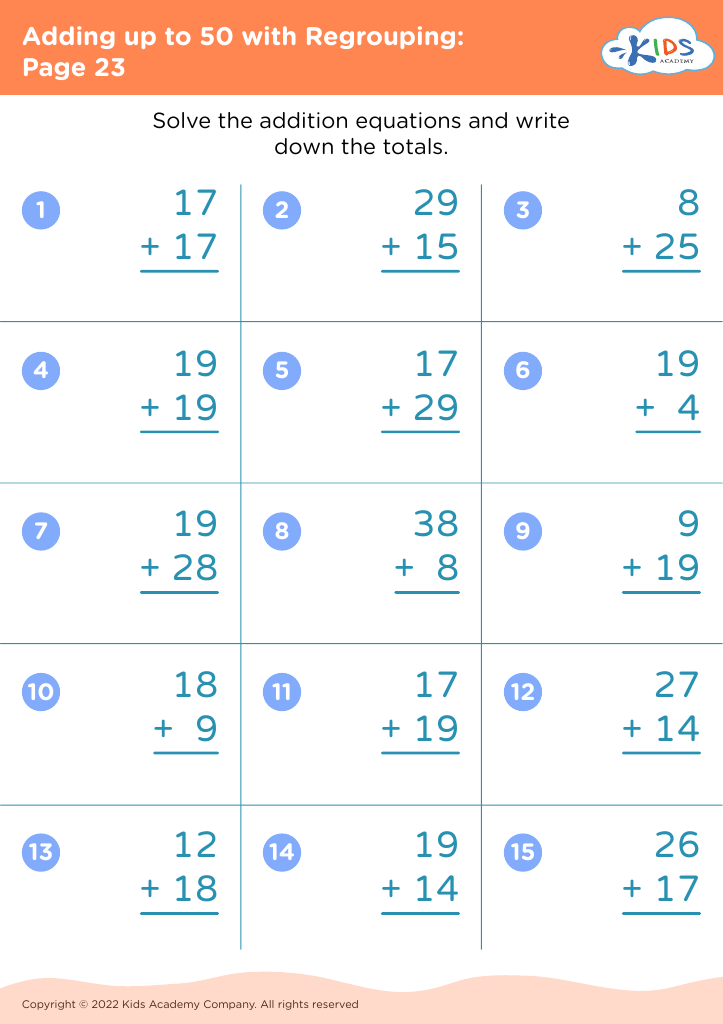
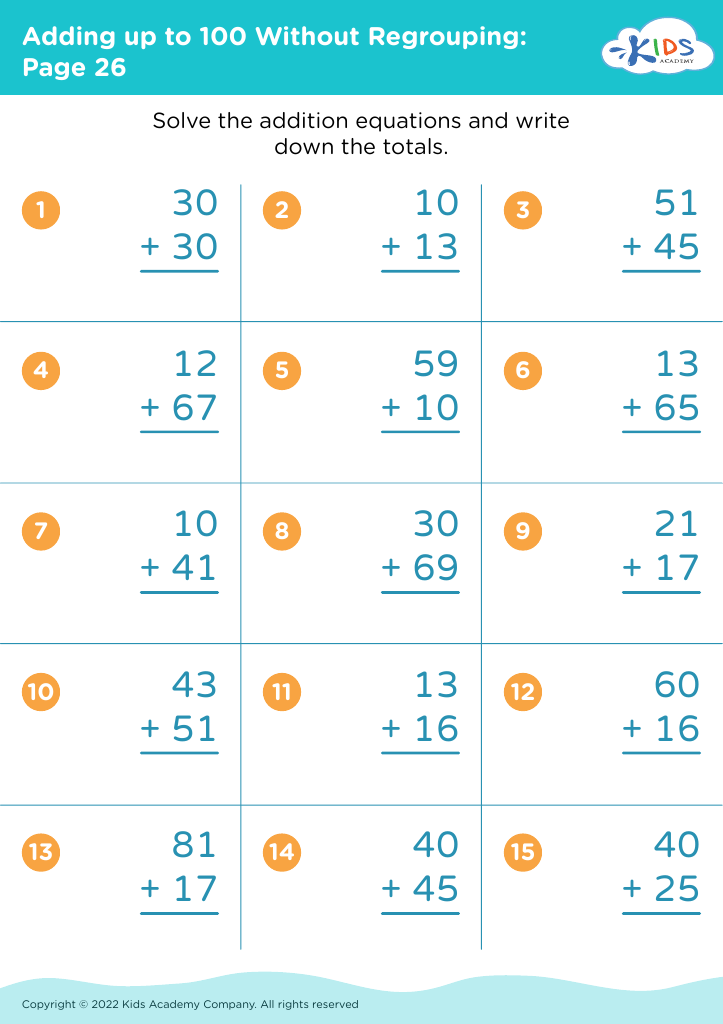
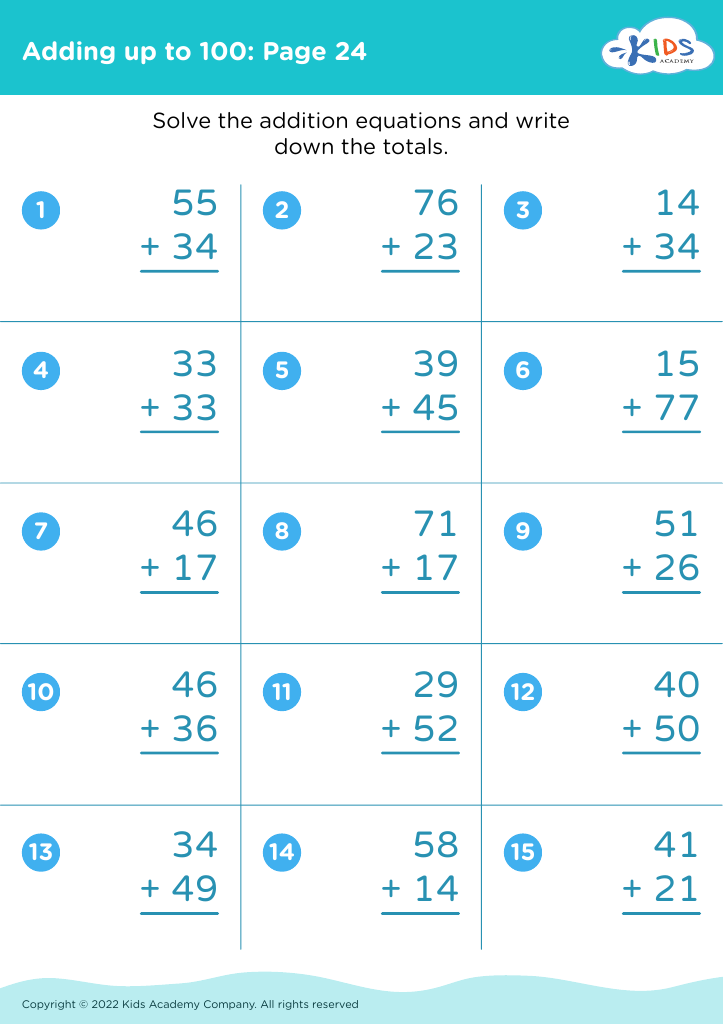
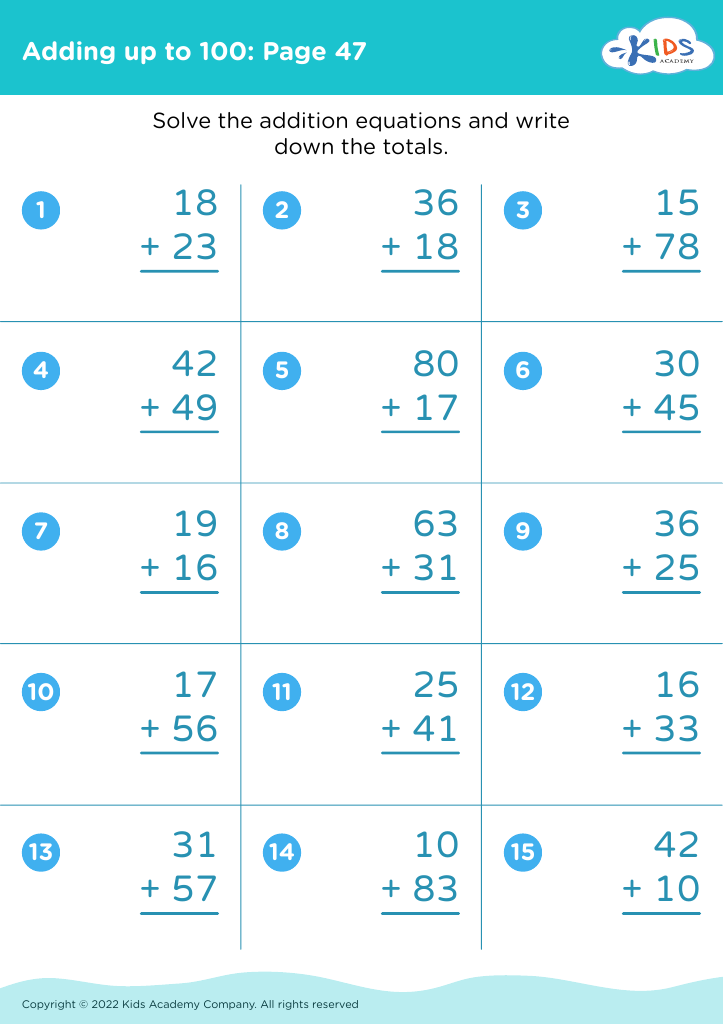
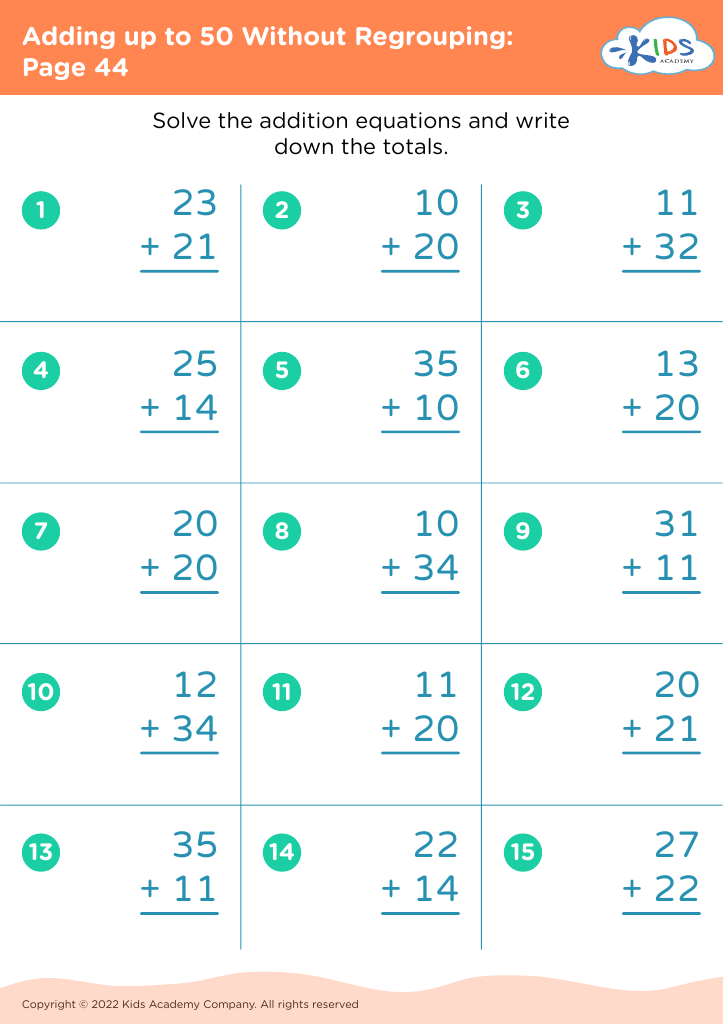
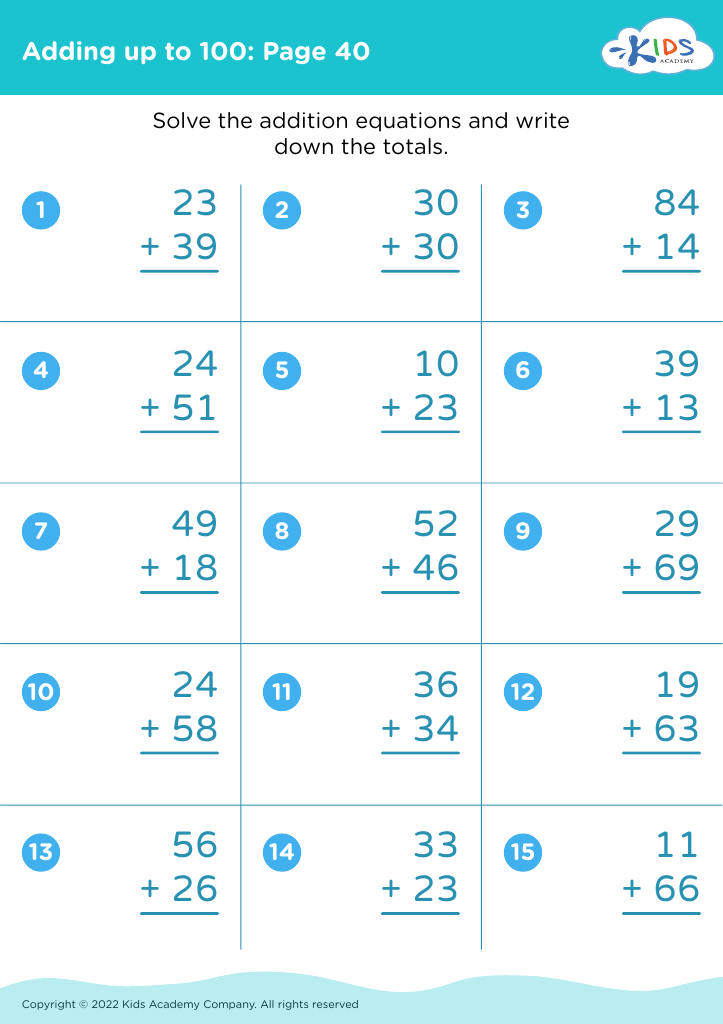
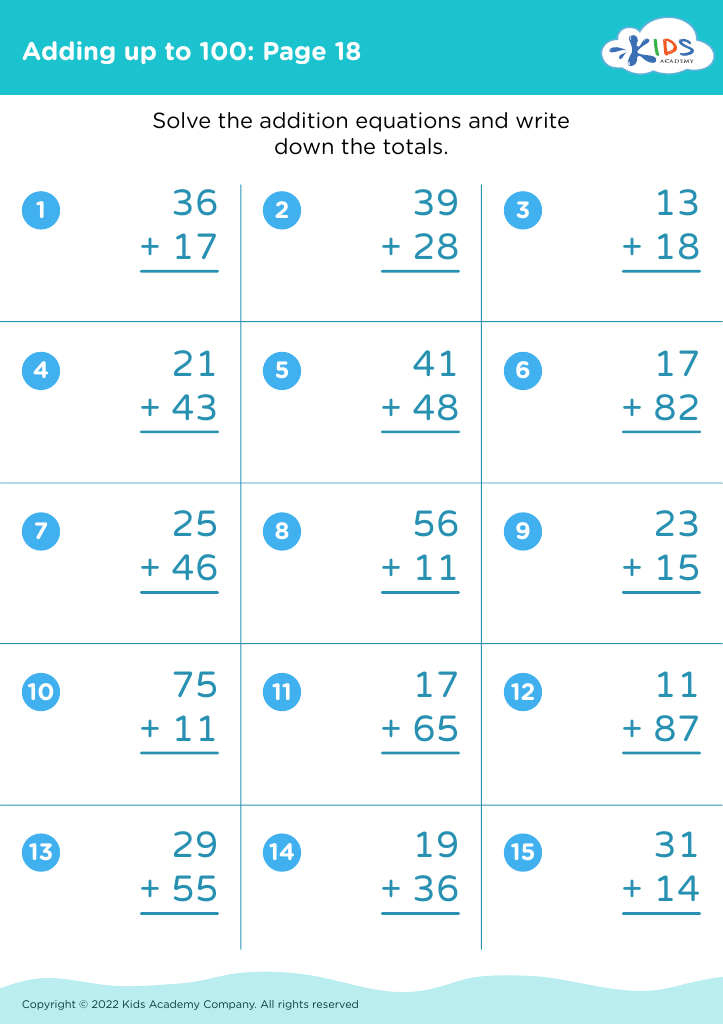
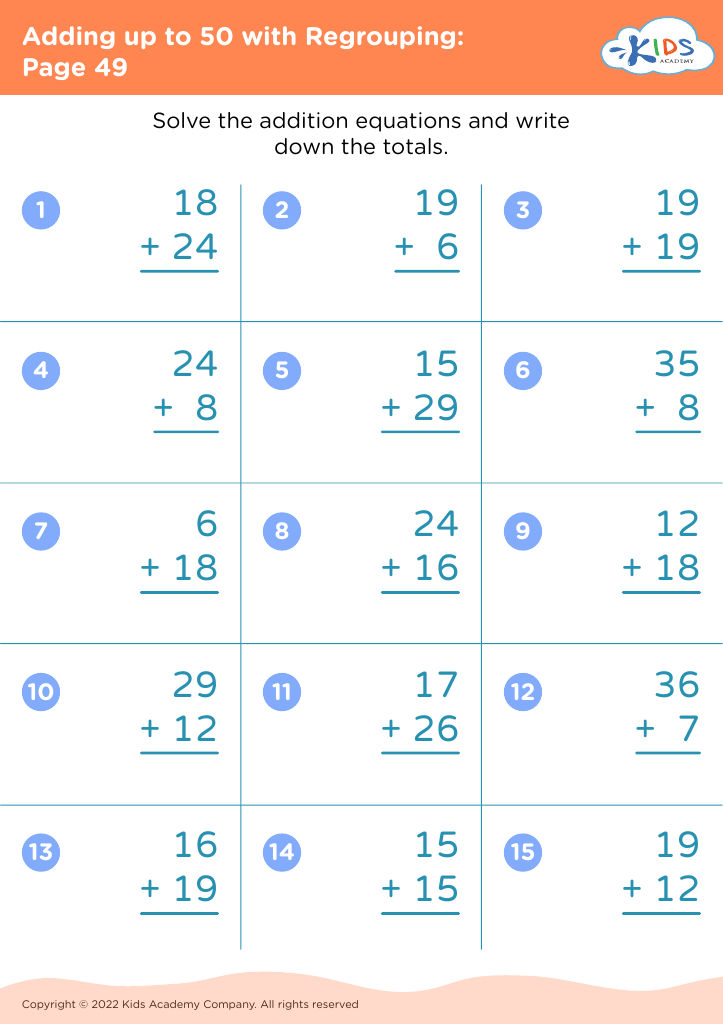
Enhance your child's fine motor skills with our engaging addition worksheets designed specifically for ages 6-7! These worksheets combine fun math problems with activities that promote dexterity and coordination, such as tracing numbers and manipulating colorful visuals. As children solve addition problems, they're not only reinforcing their math knowledge but also developing essential hand-eye coordination and grip strength. Each activity is crafted to keep young learners motivated and excited about math. Perfect for home, school, or as extra practice, our worksheets are a valuable resource in shaping confident and capable learners. Download today and watch them thrive!






.jpg)


Parents and teachers should prioritize the development of fine motor skills in children aged 6-7, as these skills are foundational for numerous aspects of a child’s growth, learning, and daily life. Fine motor skills involve the coordination of small muscles in the hands and fingers, which are essential for tasks such as writing, buttoning clothes, tying shoelaces, and using utensils. During this developmental stage, children are honing their dexterity and hand-eye coordination, which are crucial for academic success, particularly in writing and art projects.
Nurturing these skills also boosts a child’s confidence and independence. Children with well-developed fine motor skills are better equipped to complete tasks independently, fostering a sense of accomplishment and empowering them to face challenges with a positive mindset. Moreover, engaging in activities that enhance fine motor skills—like arts and crafts, building with blocks, or playing with small manipulatives—can support their cognitive development, encouraging concentration, problem-solving, and creativity.
In a digital age where technology often replaces hands-on activities, it’s vital for adults to ensure that children have ample opportunities for practice. By prioritizing fine motor skill development, parents and teachers are laying the groundwork for children’s future success and self-sufficiency.








