Enhance counting skills Addition Worksheets for Ages 6-7
13 filtered results
-
From - To
Unlock your child's potential with our "Enhance Counting Skills Addition Worksheets" designed specifically for ages 6-7. These engaging, interactive worksheets help young learners build a solid foundation in counting and addition through fun and diverse activities. Children will enjoy practicing essential math skills, such as recognizing numbers, counting objects, and solving simple addition problems, all while developing critical thinking and problem-solving abilities. Tailored to meet the learning needs of early primary students, our worksheets ensure that counting becomes a joyful experience. Download now to empower your child’s confidence in math and make learning an enjoyable adventure!
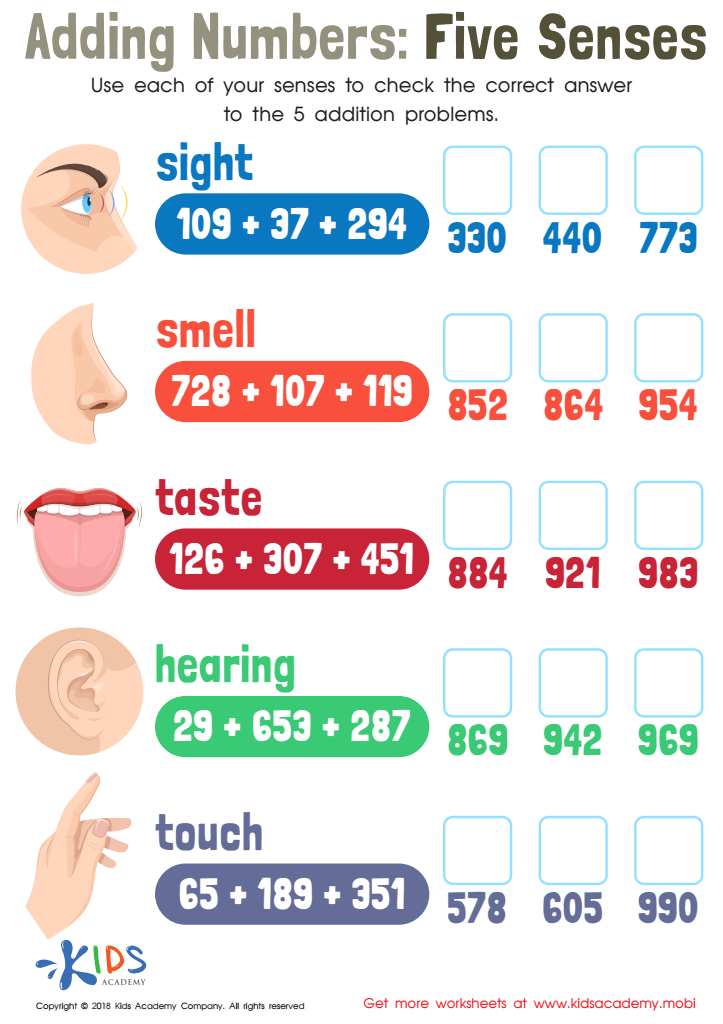
Adding Numbers: Five Senses Worksheet
 Assign to My Students
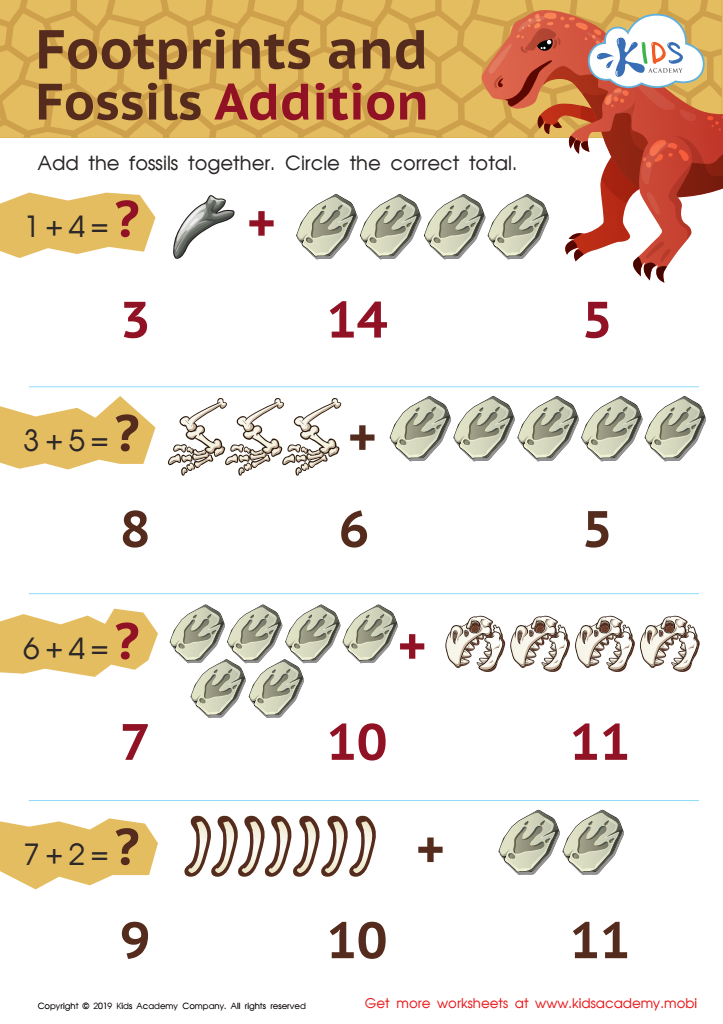
Footprints and Fossils Addition Worksheet
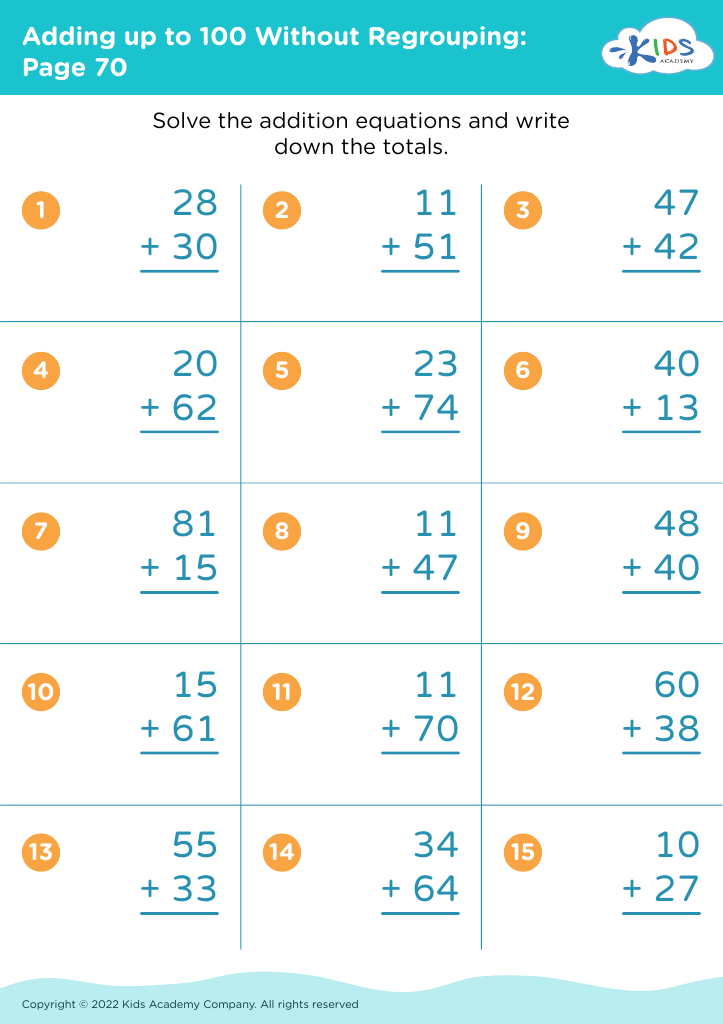








Enhancing counting skills and addition for children aged 6-7 is crucial for several reasons. At this developmental stage, children are forming the foundation for more complex mathematical concepts; thus, mastering basic counting and addition is essential for their future academic success. Strong counting skills promote number sense, helping children recognize quantities and understand the value of numbers in everyday life.
Moreover, these skills play a pivotal role in critical thinking and problem-solving abilities, enabling children to approach challenges with confidence. Engaging in addition activities not only improves mathematical proficiency but also boosts cognitive development, enhancing their ability to reason, visualize, and assess information.
Parents and teachers should also consider the emotional and social aspects of learning. Mastering counting and addition empowers children, fostering a sense of achievement and independence. Collaborative activities, like math games, encourage teamwork and communication, strengthening social skills. When both practices are emphasized in school and at home, children are more likely to develop a positive attitude towards math.
Additionally, enhanced counting and addition serve as vital life skills, supporting tasks ranges from basic budgeting to cooking. By supporting children in mastering these skills, adults are equipping them for real-world scenarios and long-term academic growth.








