Fraction simplification Addition Worksheets for Ages 6-7 - Page 3
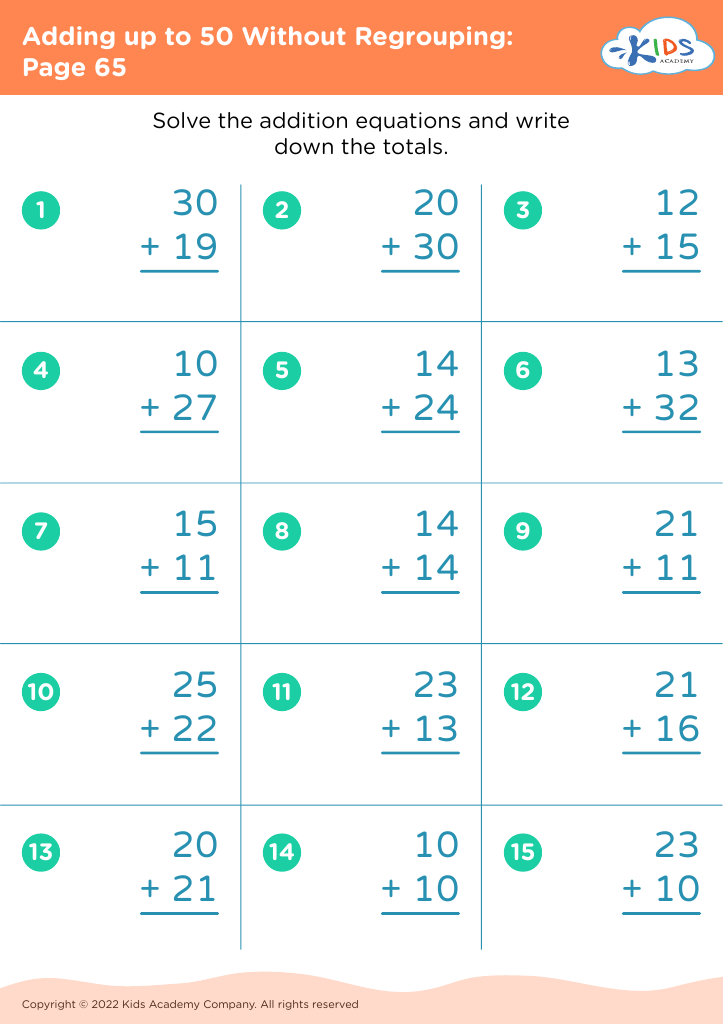
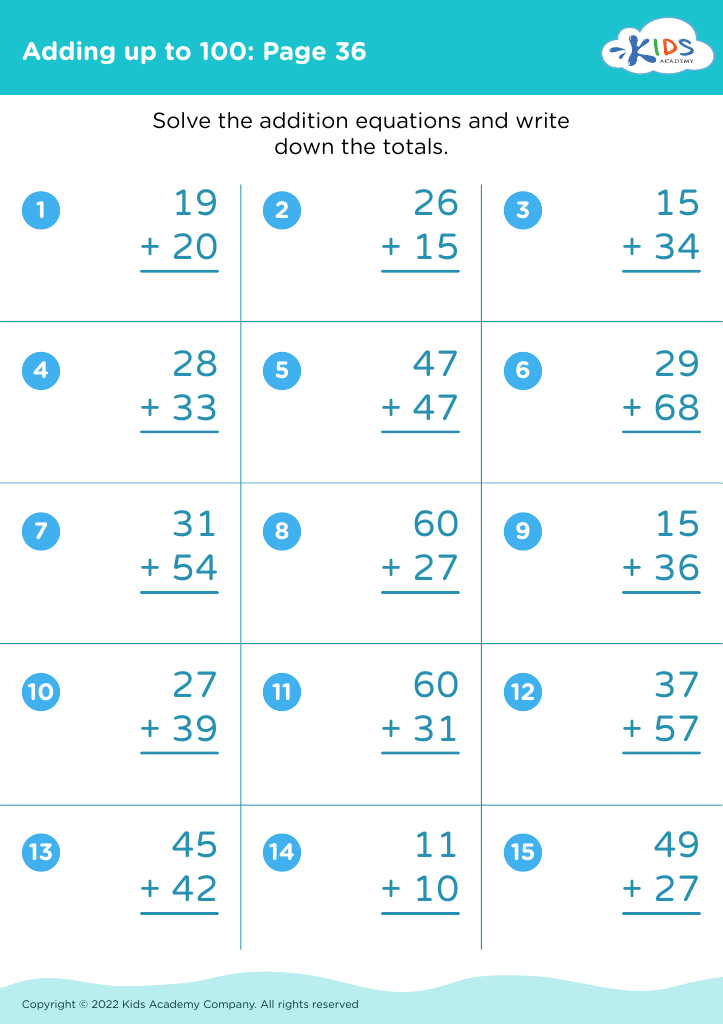
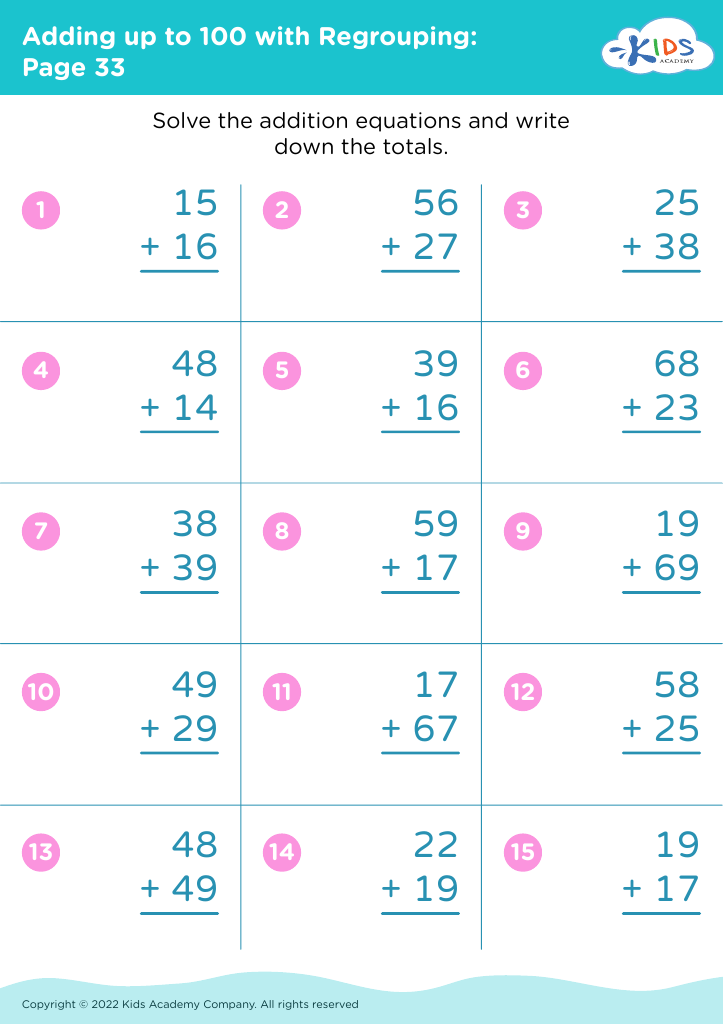
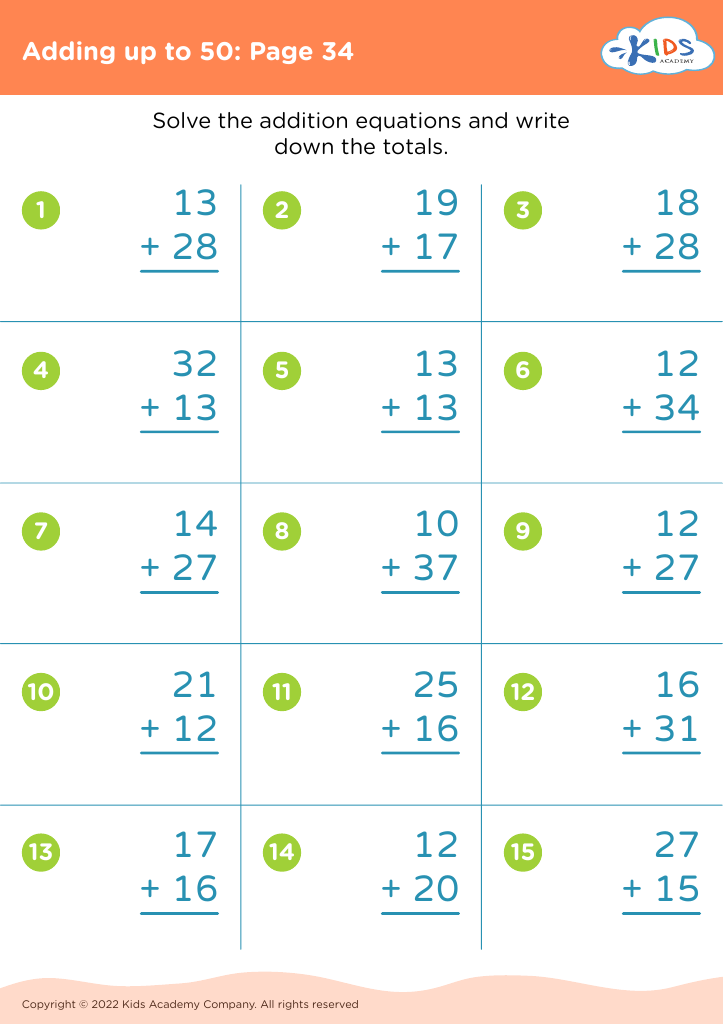








Introducing fraction simplification and addition at ages 6-7 is crucial for several reasons. Early exposure to these concepts fosters number sense, which is foundational to understanding more advanced math topics. Younger students are in a critical period for cognitive development, where they are naturally curious and more adaptable to learning new concepts like fractions.
At this age, children are beginning to grasp the idea of parts and wholes, essential for understanding fractions. Simplifying fractions encourages logical thinking as children learn to recognize equivalent fractions and the importance of "making things simpler." It's a skill that will aid them tremendously in practical situations, such as measuring ingredients in a recipe or dividing a piece of cake among friends, making math applicable and relatable.
Adding fractions can initially be challenging, but mastering this gives students confidence and a sense of achievement, boosting their overall attitude towards math. It also develops essential problem-solving skills and perseverance. Parents and teachers caring about these concepts can create a supportive learning environment, fostering inquisitiveness and resilience in young learners. Building this foundation early ensures children are well-prepared for future math concepts, such as algebra, geometry, and beyond, making their educational journey smoother and more successful.








