Improves counting skills Addition Worksheets for Ages 6-7
4 filtered results
-
From - To
Boost your child's counting skills with our engaging Addition Worksheets designed for ages 6-7! These printable activities seamlessly blend fun and education, helping young learners develop their foundational math skills. By exploring various addition problems, children will enhance their counting abilities while gaining confidence in their math expertise. Our worksheets feature colorful visuals and interactive exercises that make learning enjoyable and effective. Perfect for both classroom settings and at-home practice, these resources cater to early grade students, ensuring they grasp key mathematical concepts. Spark your child's love for numbers and set them on a path to success with these effective learning tools!
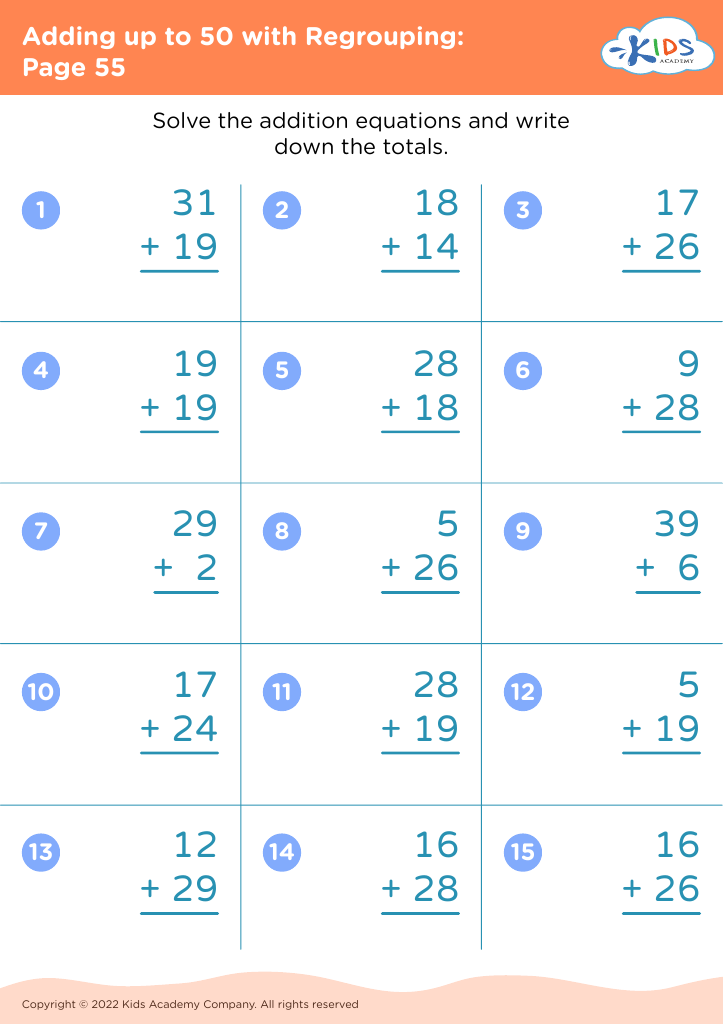
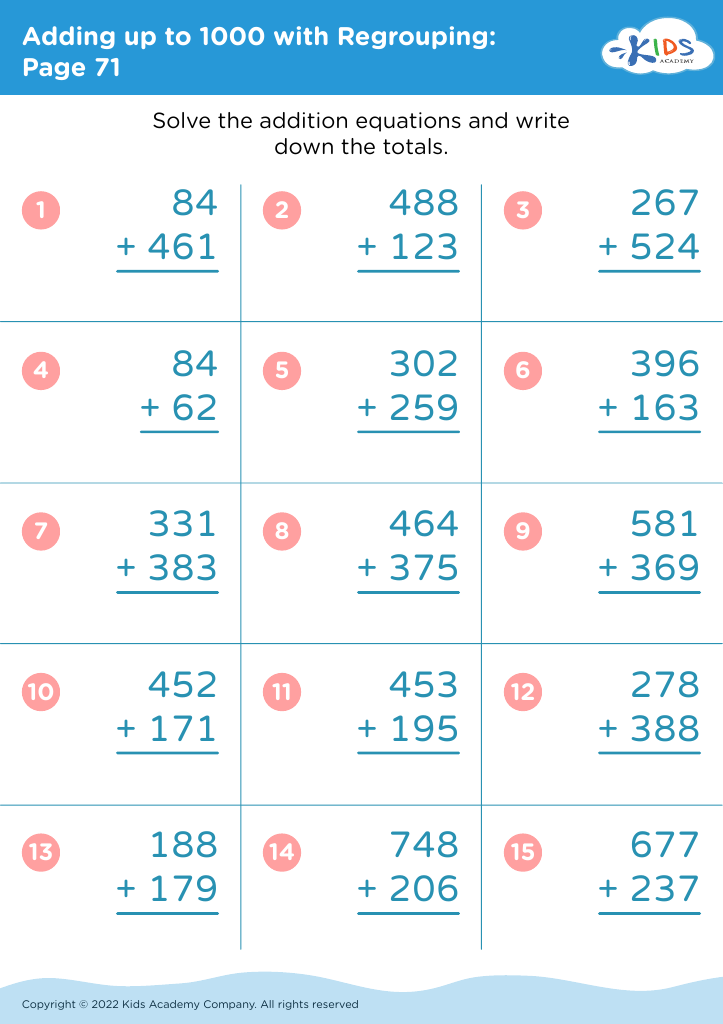
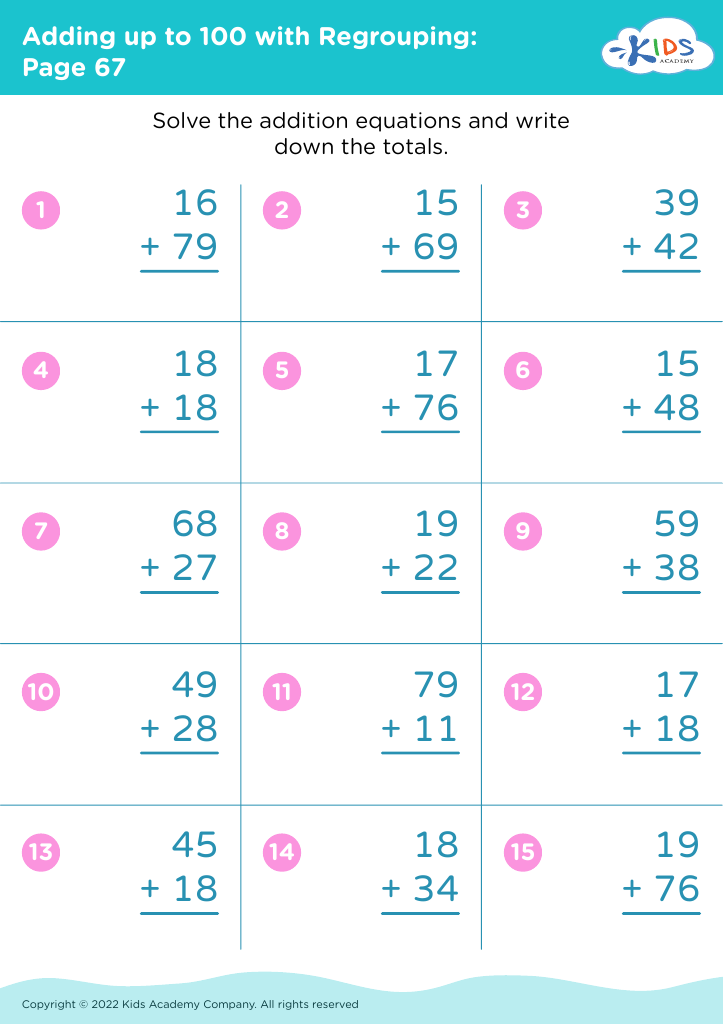
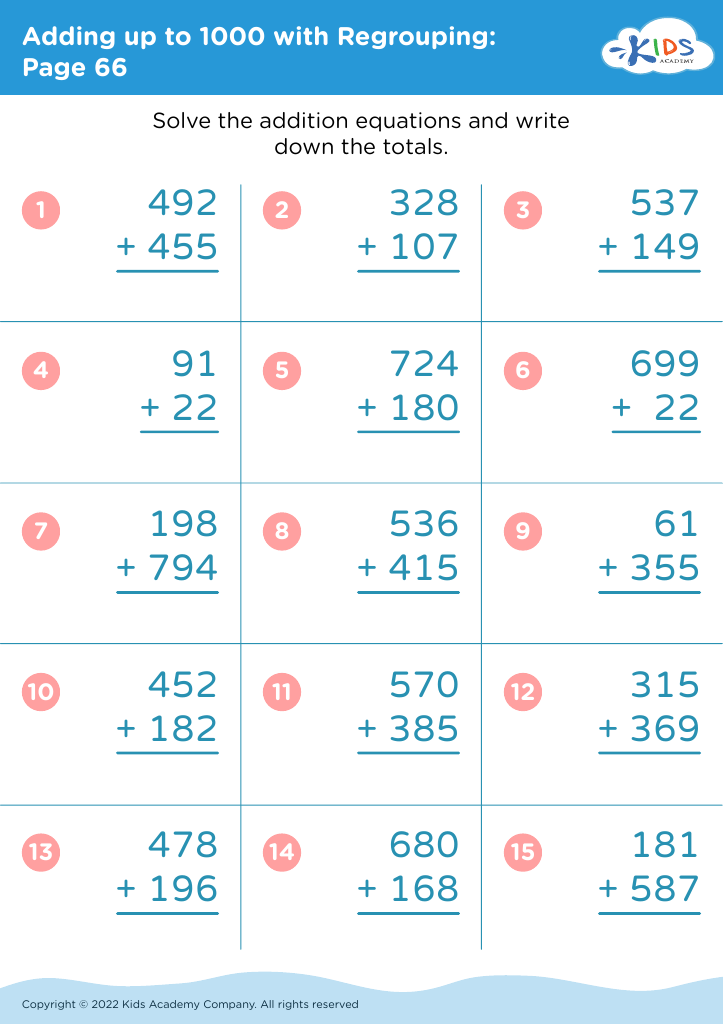








Parents and teachers should prioritize improving counting skills and addition for children aged 6-7 because these foundational skills are crucial for their overall mathematical development. At this age, children are transitioning from understanding simple numbers to performing more complex calculations, making early mastery vital. Proficient counting skills aid in recognizing number patterns, which are essential for understanding addition and subtraction.
Strong addition skills empower children to tackle everyday mathematical problems. They gain confidence in their abilities, fostering a positive attitude towards math. This foundation is not just important for academic success; it also enhances critical thinking and problem-solving skills useful in daily life.
Moreover, a solid grasp of counting and addition supports learning in other subject areas. For instance, it can improve skills in science and economics, where numerical data and analysis are required.
Engaging in activities that improve counting and addition can be interactive and fun, encouraging a love for learning. Thus, providing children with resources, games, and consistent practice helps build confidence and competence, essential qualities for lifelong learning. Ultimately, investing time and effort into these skills will lead to greater success in their current education and future academic endeavors.








