Learning number patterns Addition Worksheets for Ages 6-7
3 filtered results
-
From - To
Explore our engaging Learning Number Patterns Addition Worksheets for ages 6-7, designed to boost young learners' math skills! These worksheets introduce children to the concept of number patterns while integrating addition exercises. Through a variety of fun activities, kids will develop their ability to recognize sequences and apply addition strategies effectively. Perfect for classroom use or at-home learning, these worksheets support essential math concepts while keeping students motivated. With clear instructions and eye-catching visuals, your child will enjoy mastering number patterns and building confidence in their addition skills. Start their mathematical journey today with our comprehensive and enjoyable resources!
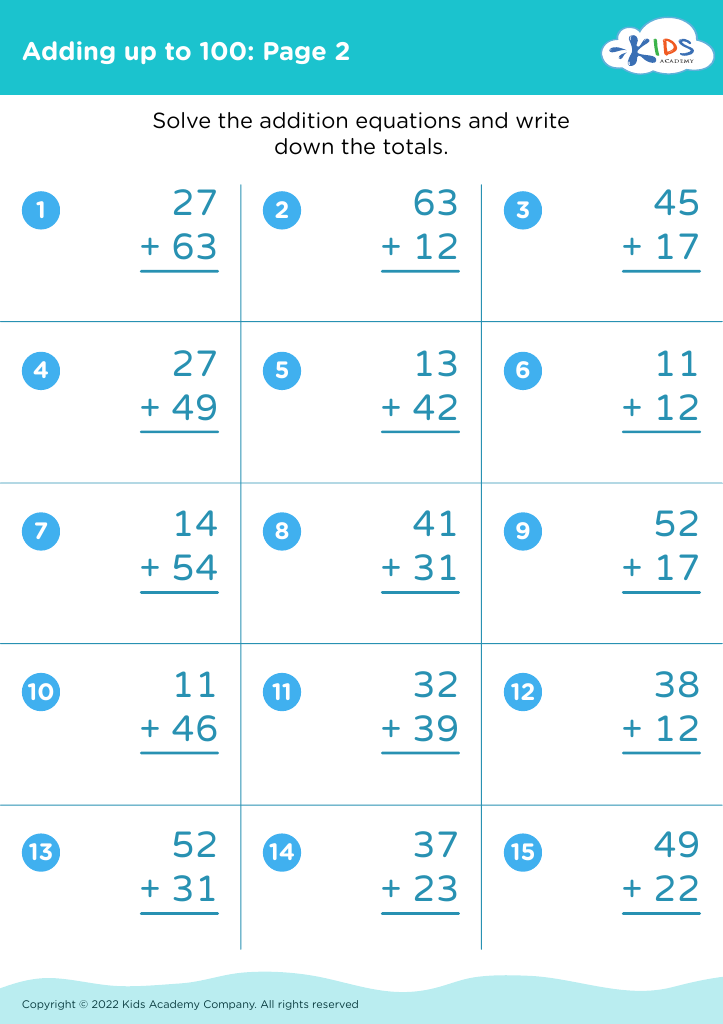
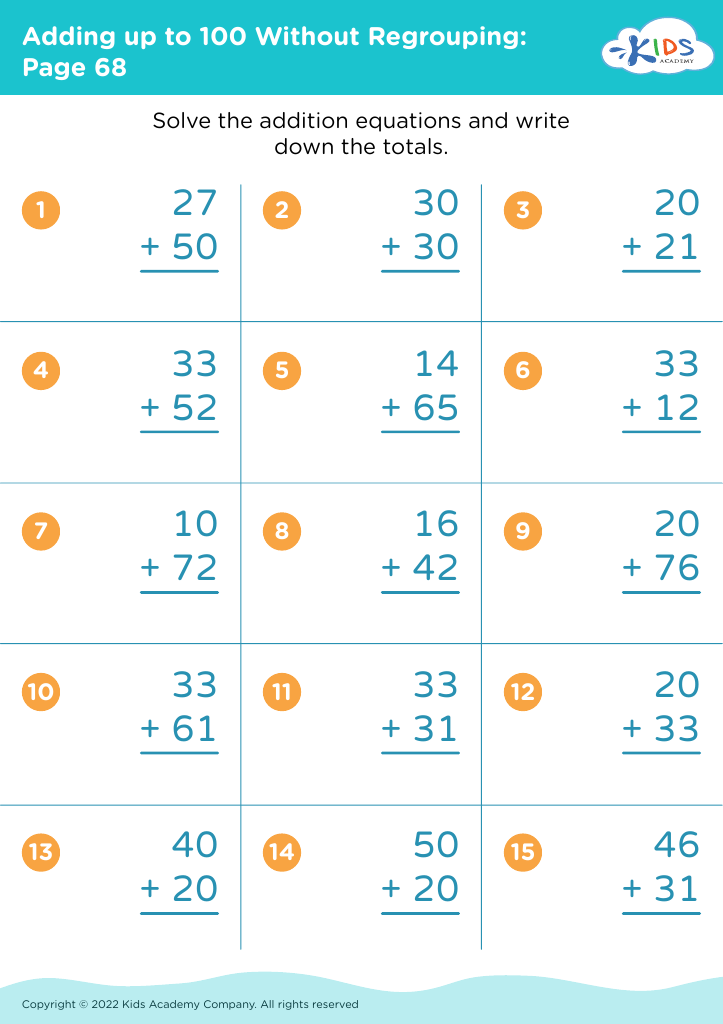
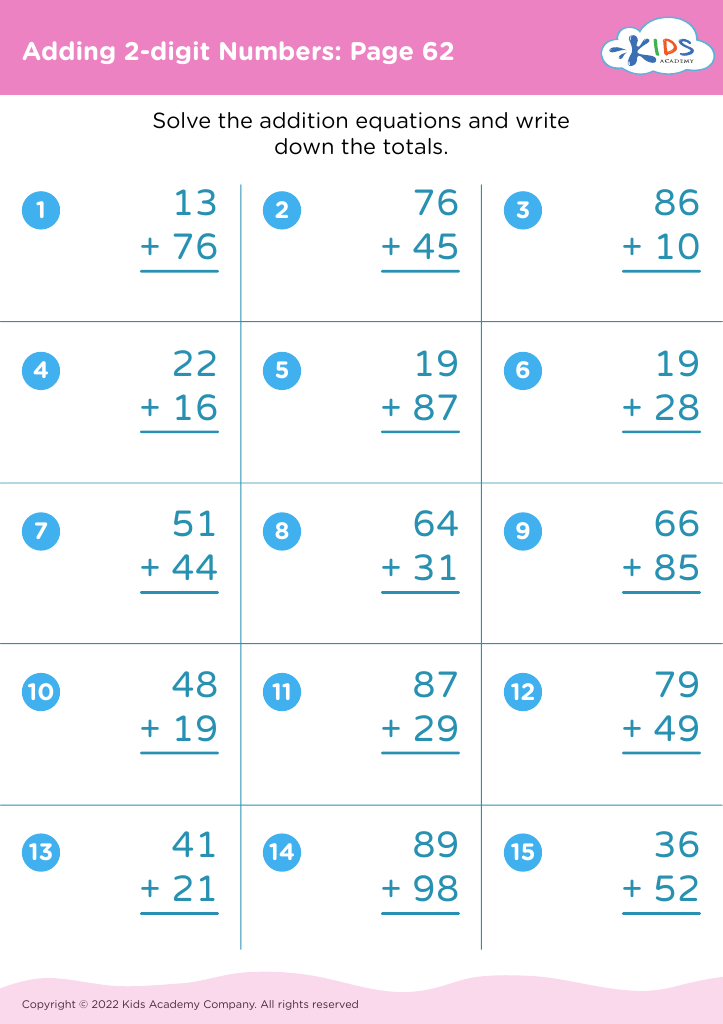








Learning number patterns, especially in the context of addition, is essential for children aged 6-7 as it lays the foundation for more advanced mathematical concepts. At this stage, children begin to develop critical thinking and problem-solving skills that will serve them throughout their education and beyond. Recognizing patterns helps them understand the principles of addition, enabling them to make connections between numbers more intuitively.
When parents and teachers emphasize number patterns, they foster a deeper conceptual understanding. Children can predict outcomes, enhance their computational skills, and generate strategies for solving problems more effectively. For instance, noticing that adding 2 repeatedly creates a sequence helps them anticipate the results of larger additions.
Moreover, the ability to identify and understand patterns encourages mathematical reasoning, boosts confidence, and nurtures a love for mathematics. Engaging with patterns also supports other subjects, including science and art, reinforcing the interconnected nature of knowledge.
Ultimately, when parents and teachers prioritize learning number patterns in addition, they are equipping children with valuable tools not only for their present studies but also for their future academic experiences, contributing significantly to their overall cognitive development and life skills.








