Filters

36 filtered results

Clear all filters
Favorites
With answer key
Interactive

36 filtered results

Difficulty Level

Grade


Subject

    Enhance your child's reading and math skills with our engaging Reading Comprehension Addition Worksheets designed for ages 6-7! These interactive worksheets combine the fundamentals of addition with exciting reading comprehension exercises, helping kids grasp mathematical concepts in context. Each worksheet features age-appropriate problems that challenge young learners to read carefully, follow instructions, and apply their math knowledge effectively. Perfect for teachers and parents alike, our resources foster critical thinking and improve literacy while making learning fun. Download our printable worksheets today and see your child's confidence and skills grow in both reading and addition!
    Check out this FREE Trial Lesson on Addition for age 6-7!

    Match Exactly the Same

    Favorites
    With answer key
    Interactive
    • 6-7
    • Reading comprehension
    • Addition
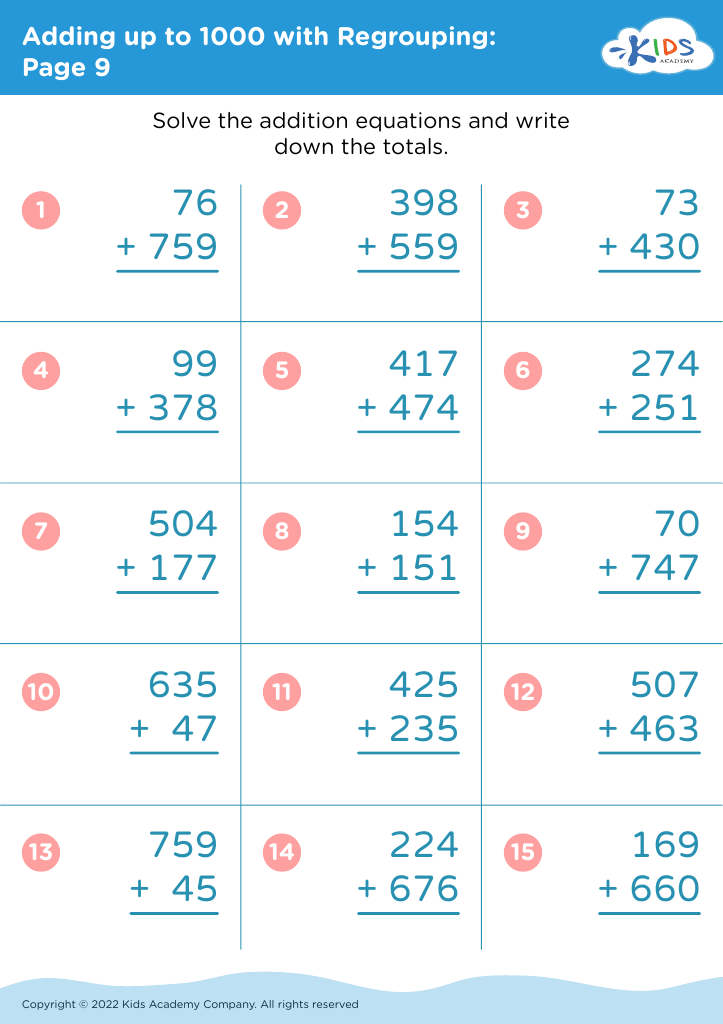
    Adding up to 1000 with Regrouping: Page 9
    Adding up to 1000 with Regrouping: Page 9
    Adding up to 1000 with Regrouping: Page 9
    Worksheet
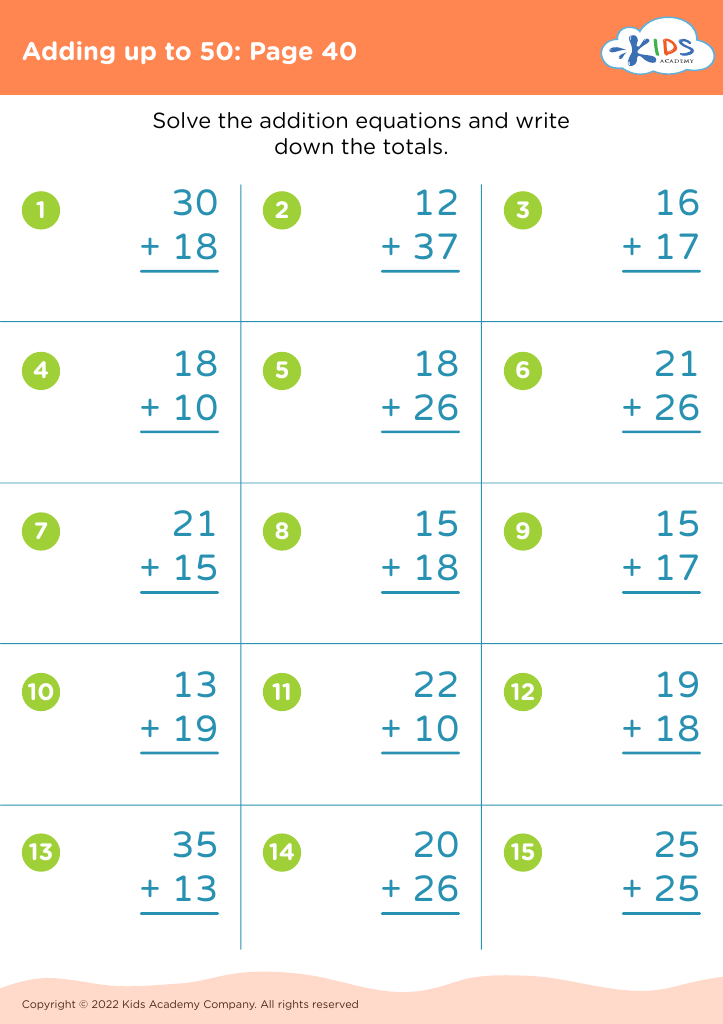
    Adding up to 50: Page 40
    Adding up to 50: Page 40

    Adding up to 50: Page 40

    Adding up to 50: Page 40
    Worksheet
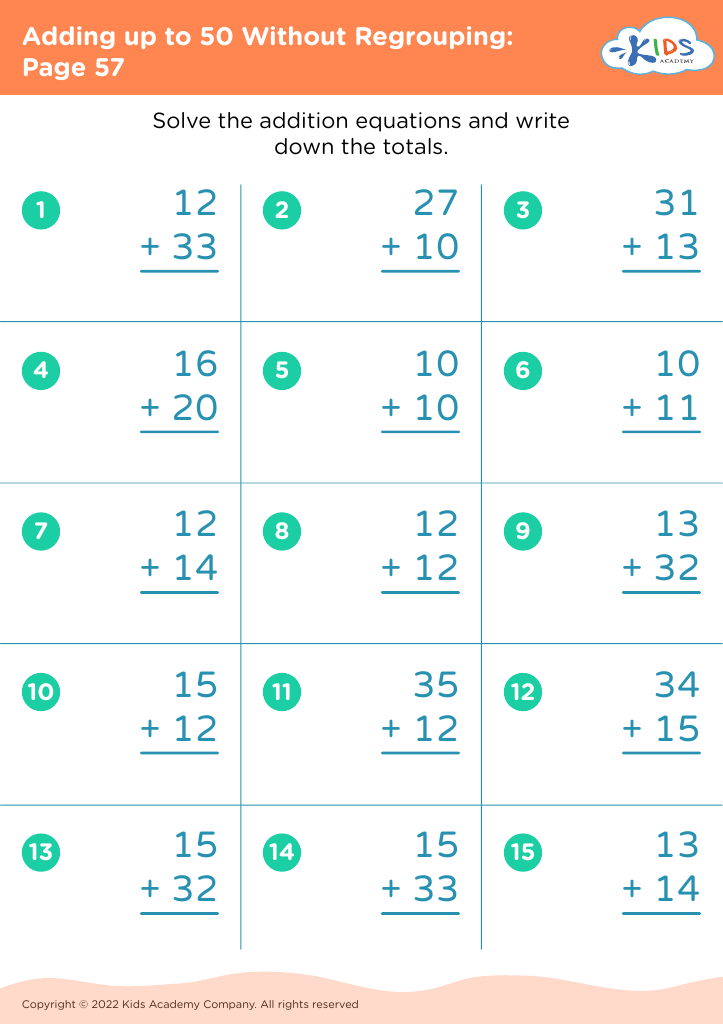
    Adding up to 50 Without Regrouping: Page 57
    Adding up to 50 Without Regrouping: Page 57
    Adding up to 50 Without Regrouping: Page 57
    Worksheet
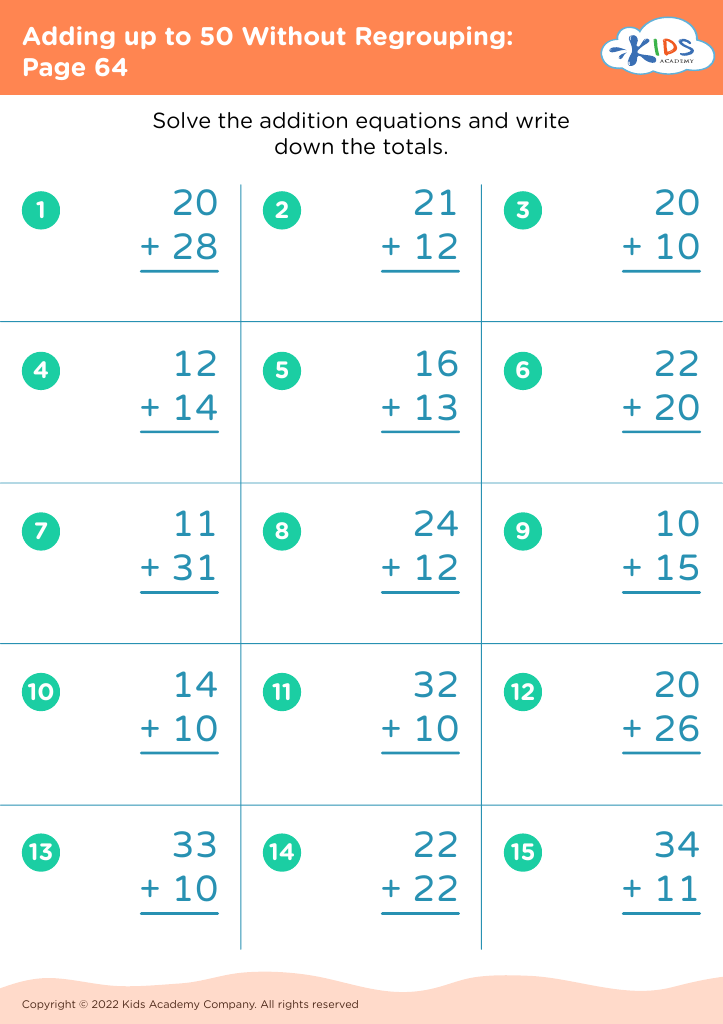
    Adding up to 50 Without Regrouping: Page 64
    Adding up to 50 Without Regrouping: Page 64
    Adding up to 50 Without Regrouping: Page 64
    Worksheet
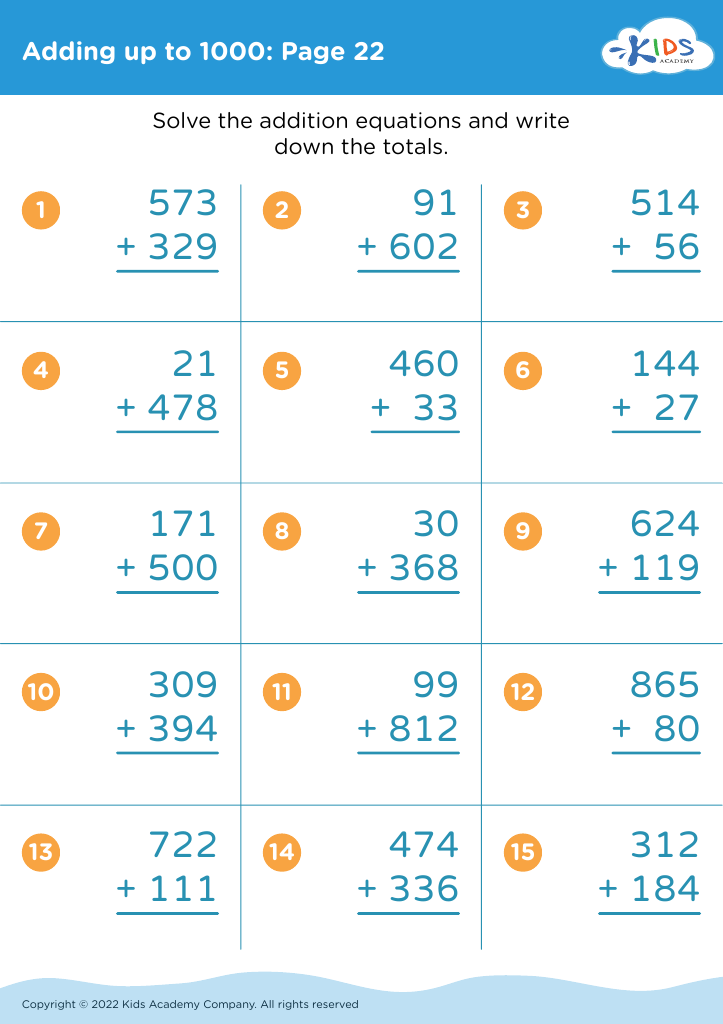
    Adding up to 1000: Page 22
    Adding up to 1000: Page 22

    Adding up to 1000: Page 22

    Adding up to 1000: Page 22
    Worksheet
    Rainy Day 17 Worksheet
    Rainy Day 17 Worksheet

    Rainy Day 17 Worksheet

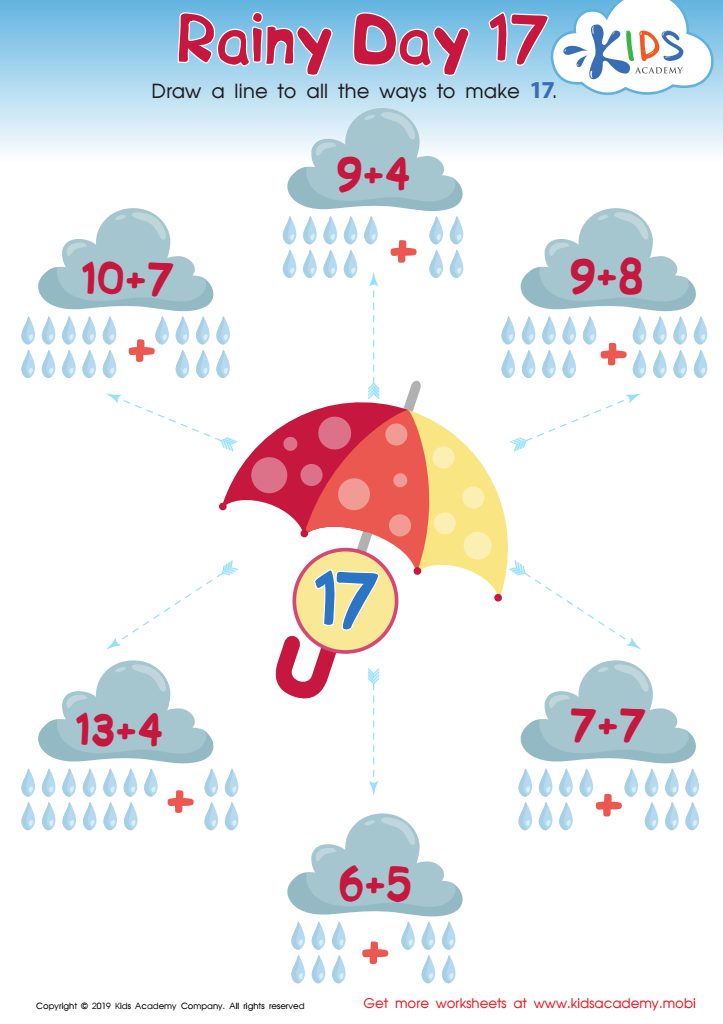
    Assist your kids with the 6 equations given. Each cloud displays the sum of two numbers, some of which make 17. Guide them to figure out the total of both numbers when added and draw a line to the umbrella in the center to illustrate the different ways to make 17. This activity will sharpen their addition skills.
    Rainy Day 17 Worksheet
    Worksheet
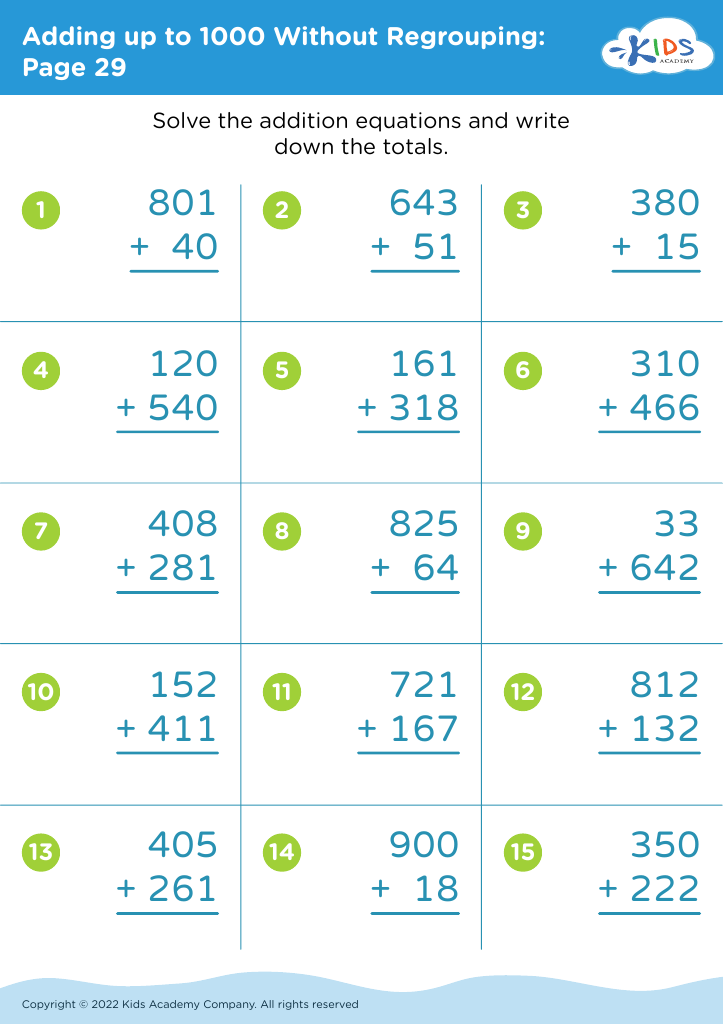
    Adding up to 1000 Without Regrouping: Page 29
    Adding up to 1000 Without Regrouping: Page 29
    Adding up to 1000 Without Regrouping: Page 29
    Worksheet
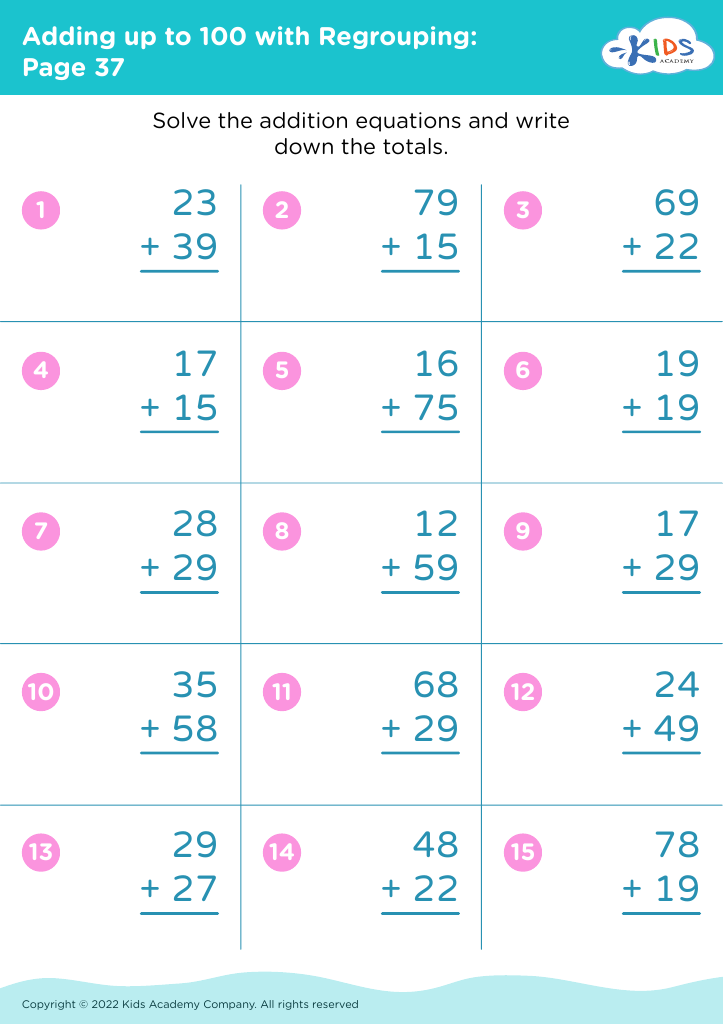
    Adding up to 100 with Regrouping: Page 37
    Adding up to 100 with Regrouping: Page 37
    Adding up to 100 with Regrouping: Page 37
    Worksheet
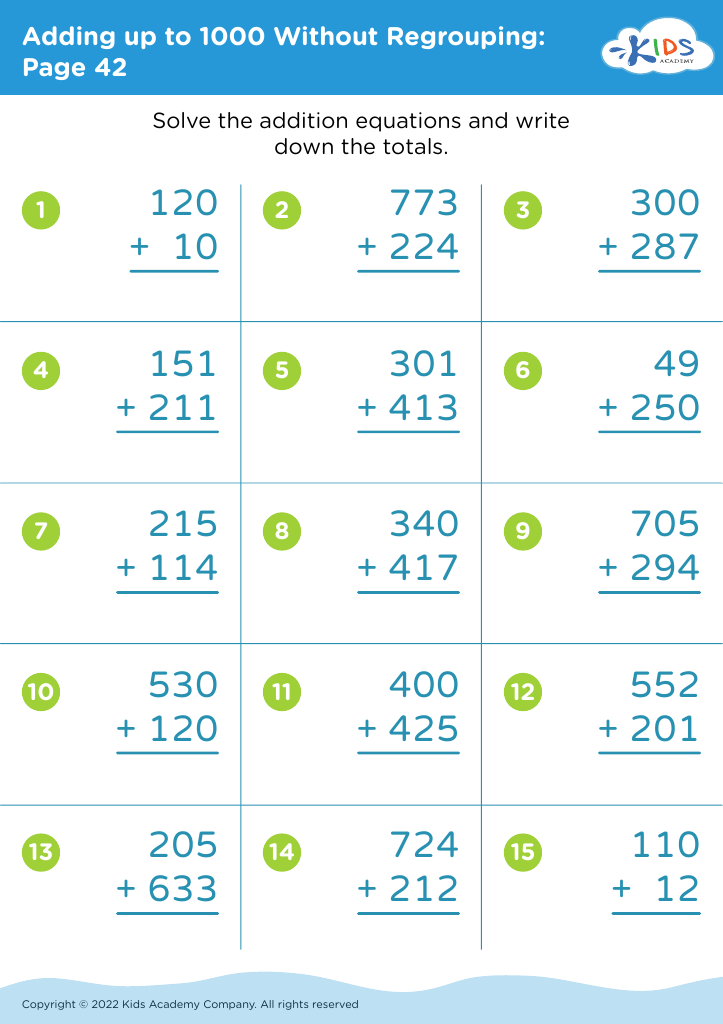
    Adding up to 1000 Without Regrouping: Page 42
    Adding up to 1000 Without Regrouping: Page 42
    Adding up to 1000 Without Regrouping: Page 42
    Worksheet
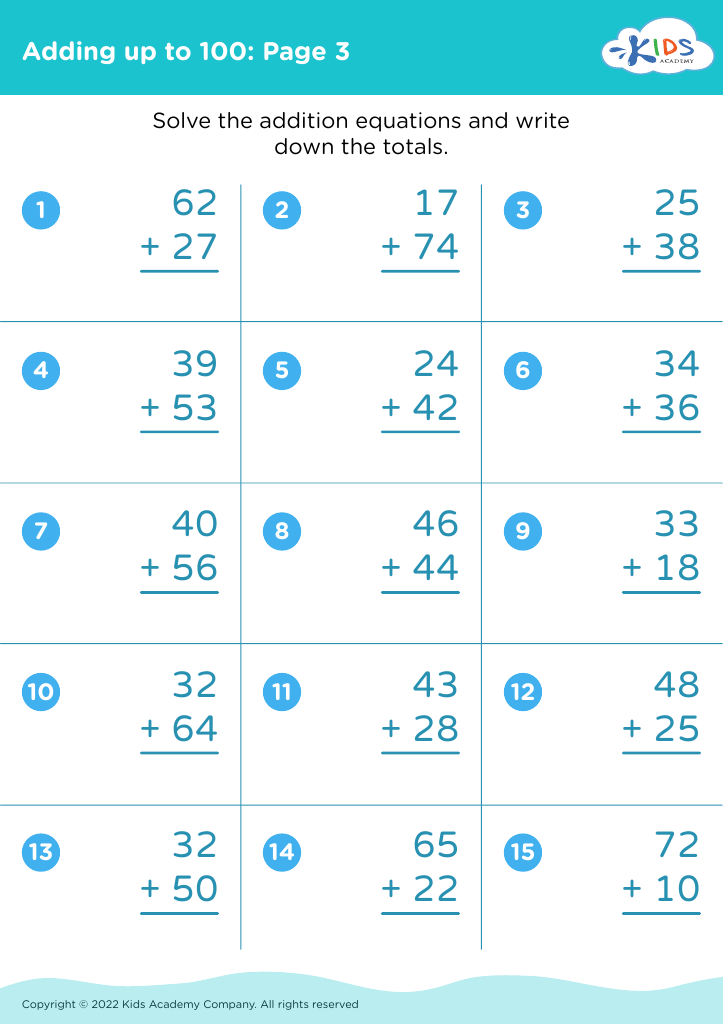
    Adding up to 100: Page 3
    Adding up to 100: Page 3

    Adding up to 100: Page 3

    Adding up to 100: Page 3
    Worksheet
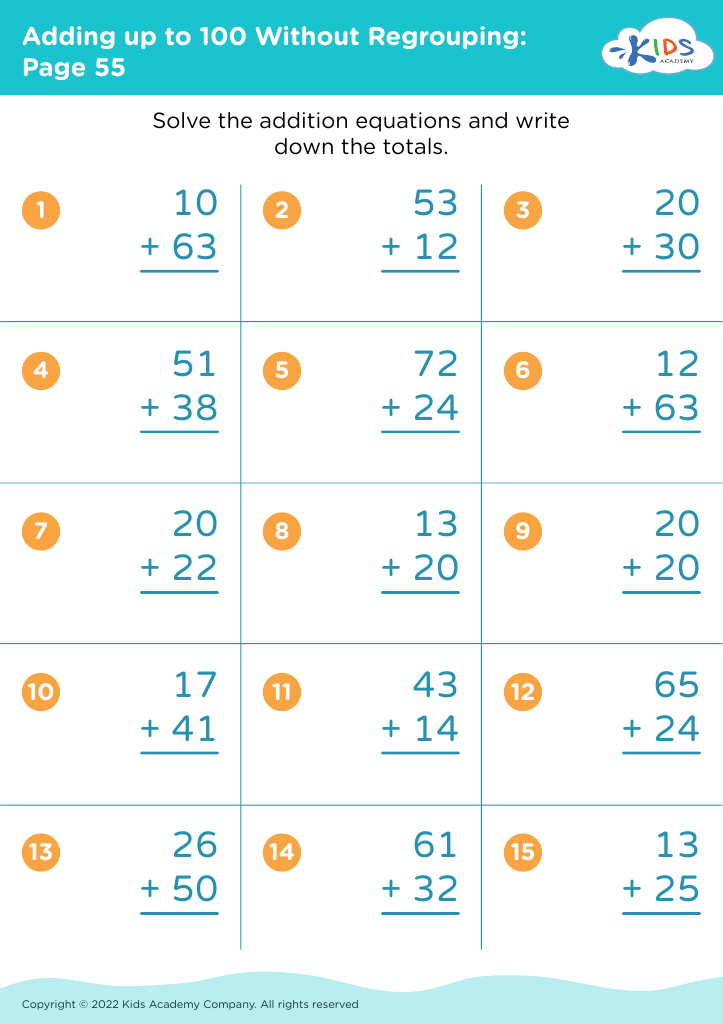
    Adding up to 100 Without Regrouping: Page 55
    Adding up to 100 Without Regrouping: Page 55
    Adding up to 100 Without Regrouping: Page 55
    Worksheet
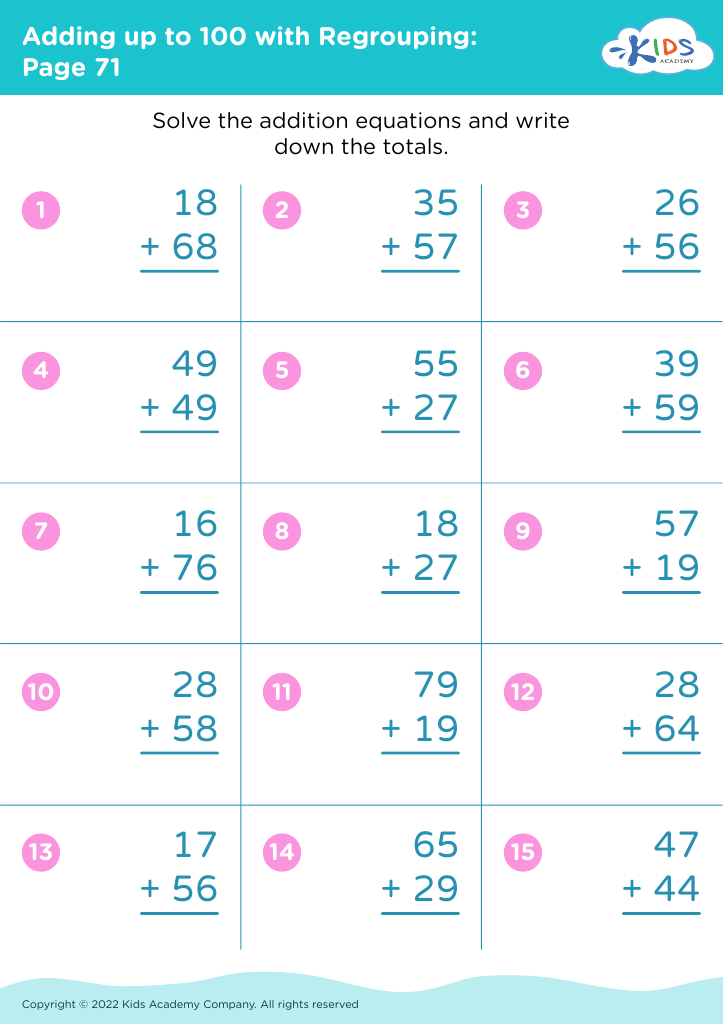
    Adding up to 100 with Regrouping: Page 71
    Adding up to 100 with Regrouping: Page 71
    Adding up to 100 with Regrouping: Page 71
    Worksheet
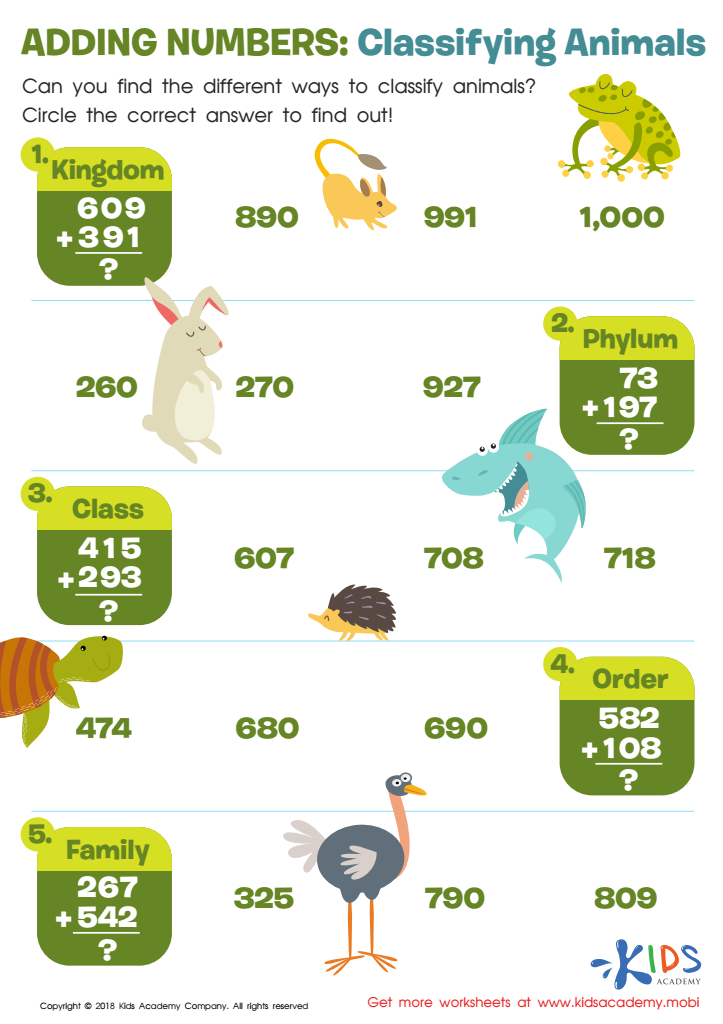
    Adding Numbers: Classifying Animals Worksheet
    Adding Numbers: Classifying Animals Worksheet
    Adding Numbers: Classifying Animals Worksheet
    Your kids can learn to classify animals in Biology. This worksheet helps them do this by solving 5 equations. Circle the right answer to complete the task.
    Adding Numbers: Classifying Animals Worksheet
    Worksheet
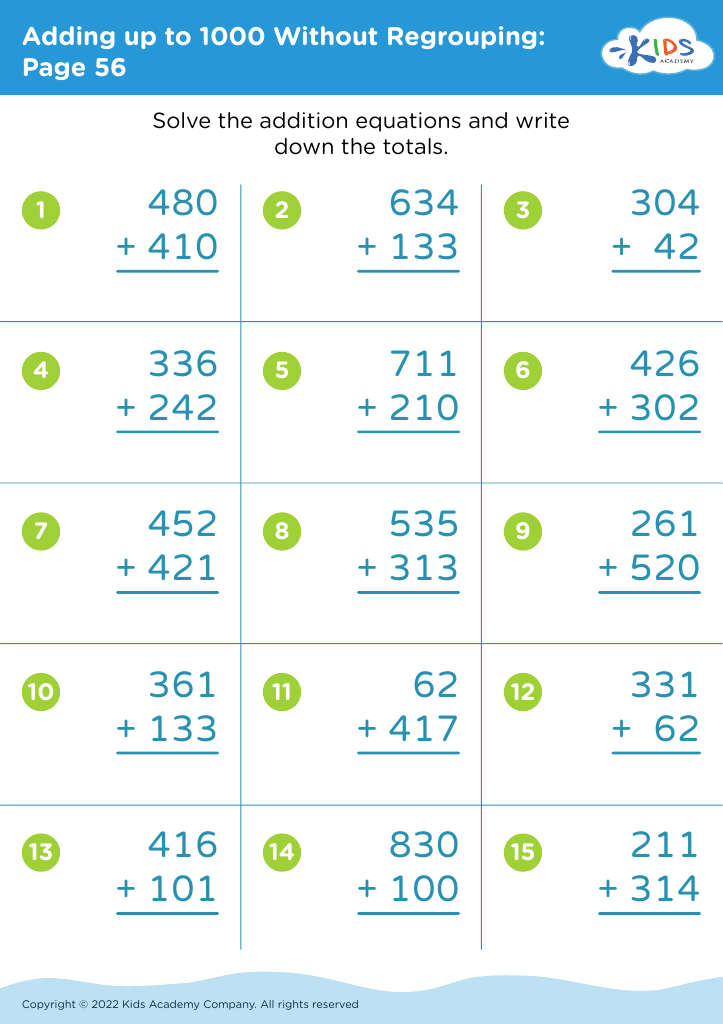
    Adding up to 1000 Without Regrouping: Page 56
    Adding up to 1000 Without Regrouping: Page 56
    Adding up to 1000 Without Regrouping: Page 56
    Worksheet
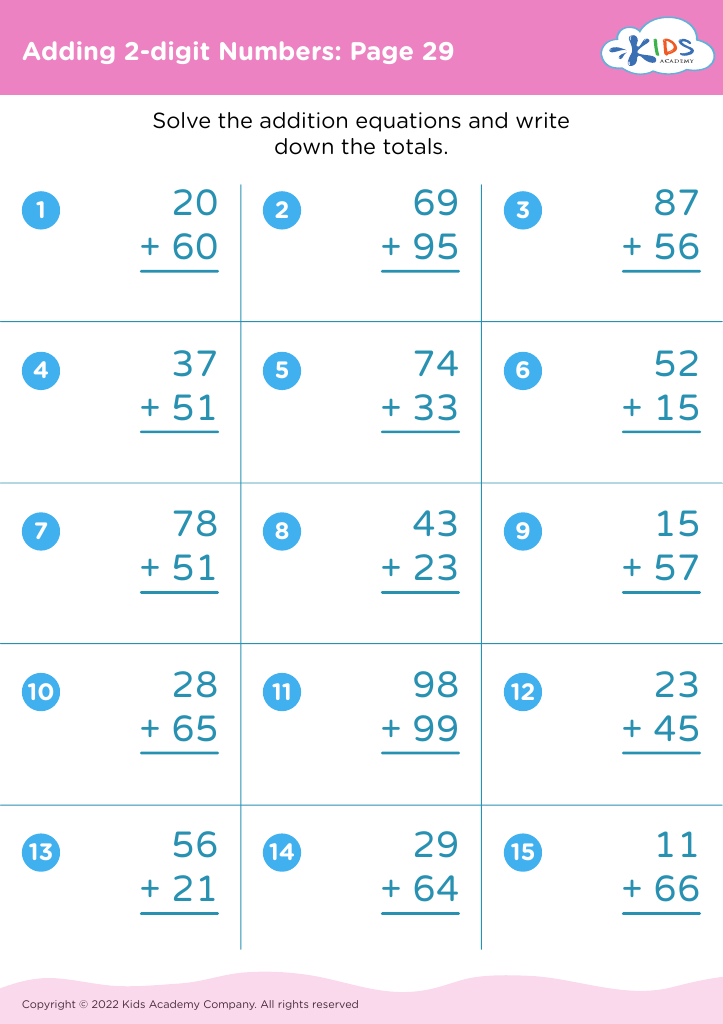
    Adding 2-digit Numbers: Page 29
    Adding 2-digit Numbers: Page 29

    Adding 2-digit Numbers: Page 29

    Adding 2-digit Numbers: Page 29
    Worksheet
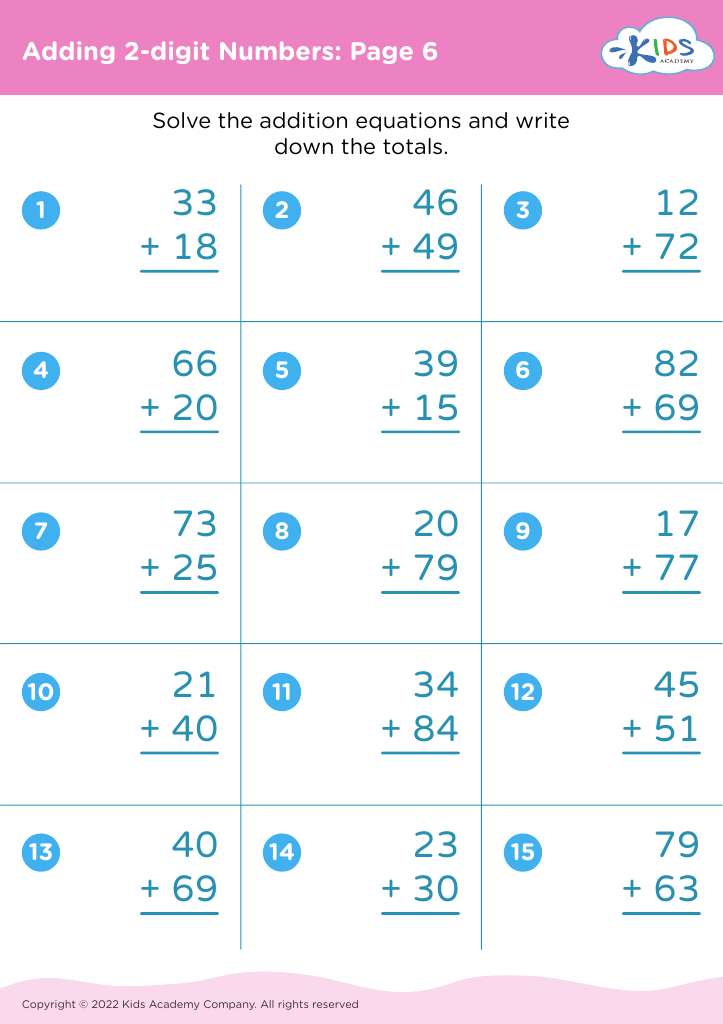
    Adding 2-digit Numbers: Page 6
    Adding 2-digit Numbers: Page 6

    Adding 2-digit Numbers: Page 6

    Adding 2-digit Numbers: Page 6
    Worksheet
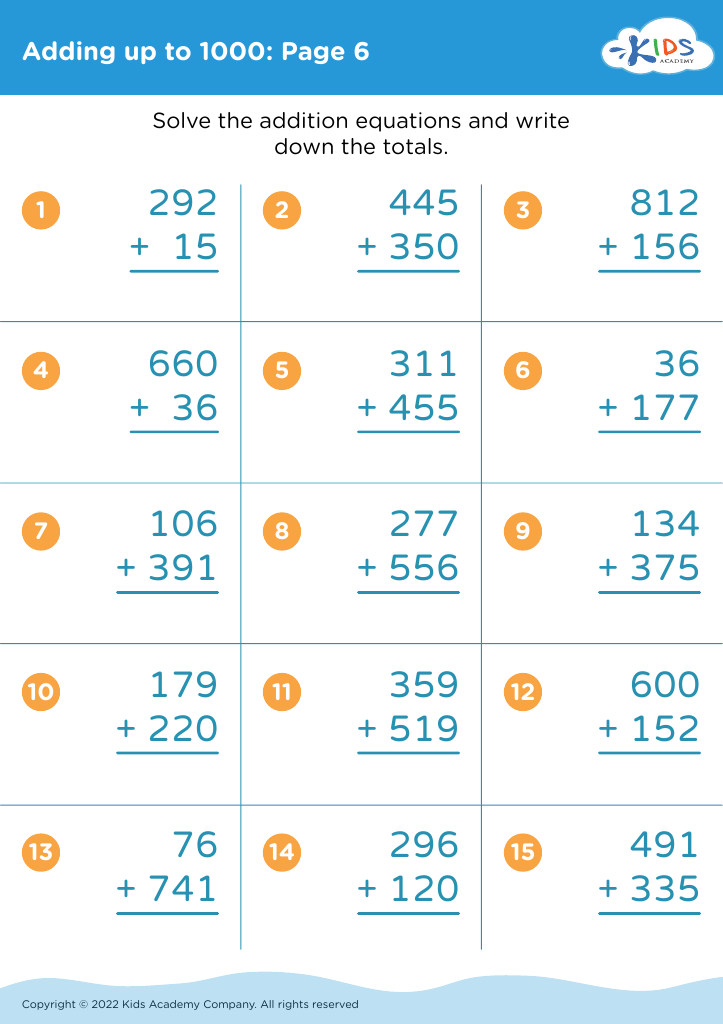
    Adding up to 1000: Page 6
    Adding up to 1000: Page 6

    Adding up to 1000: Page 6

    Adding up to 1000: Page 6
    Worksheet
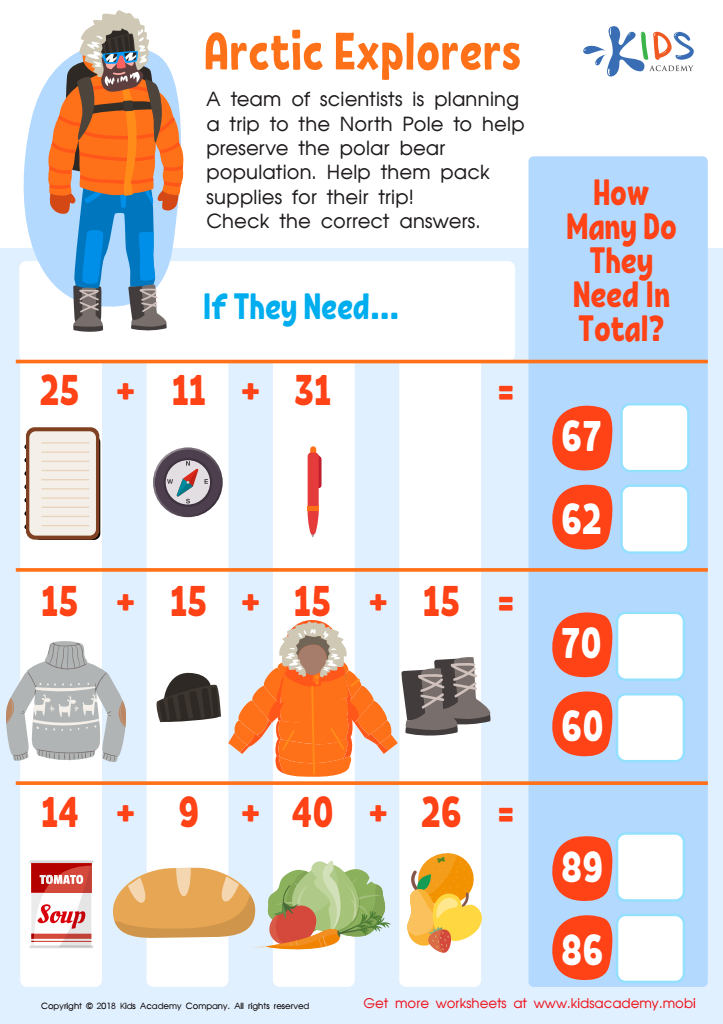
    Arctic Explorers Worksheet
    Arctic Explorers Worksheet
    Arctic Explorers Worksheet
    Help your child pack supplies for a team of scientists' trip to the North Pole! Before beginning, explain how efforts are needed to protect endangered animals like polar bears. Encourage them to check the correct clothing needed for the extremely cold region. For example, warm and protective clothing is essential.
    Arctic Explorers Worksheet
    Worksheet
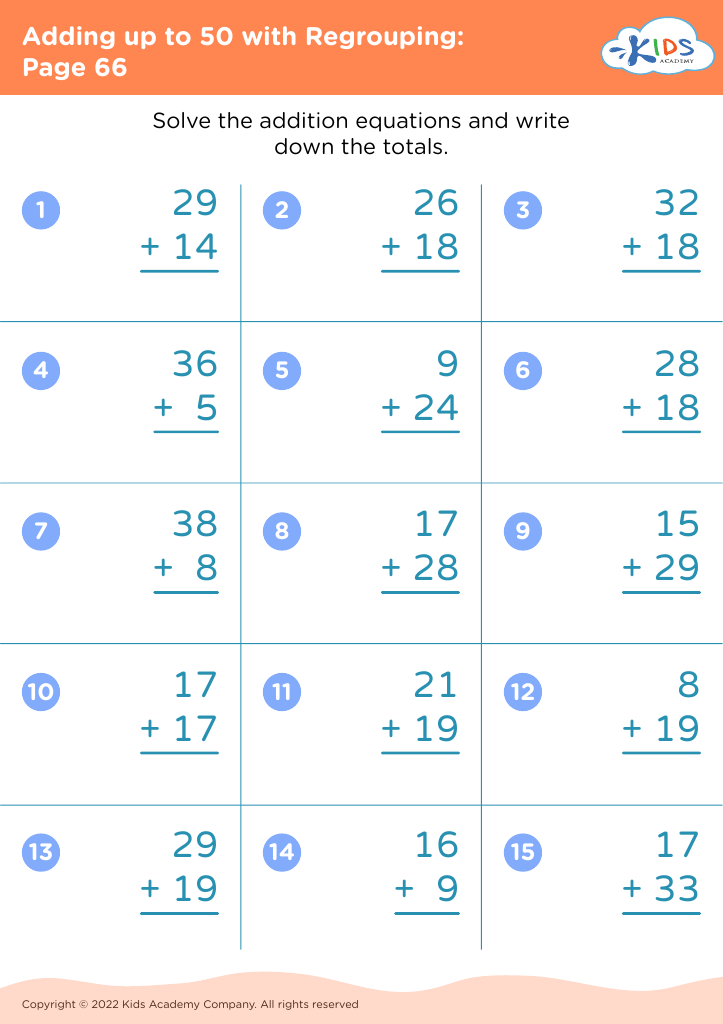
    Adding up to 50 with Regrouping: Page 66
    Adding up to 50 with Regrouping: Page 66
    Adding up to 50 with Regrouping: Page 66
    Worksheet
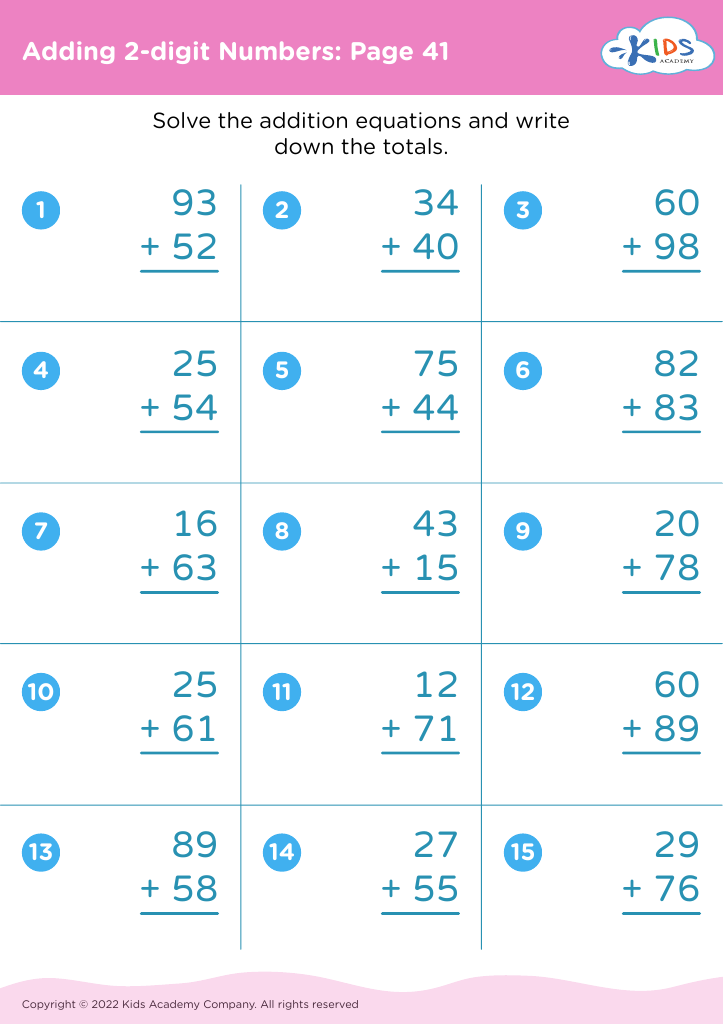
    Adding 2-digit Numbers: Page 41
    Adding 2-digit Numbers: Page 41

    Adding 2-digit Numbers: Page 41

    Adding 2-digit Numbers: Page 41
    Worksheet
    Fairytale Addition Worksheet
    Fairytale Addition Worksheet
    Fairytale Addition Worksheet
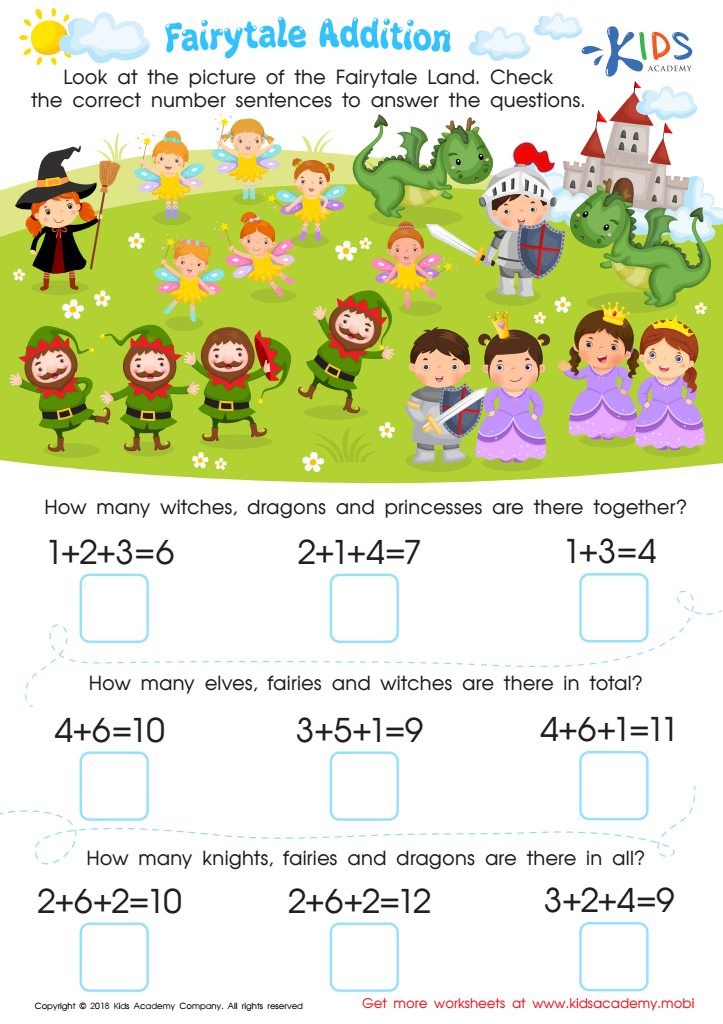
    Take your kids to Fairytale Land! They'll meet witches, dragons, fairies, elves, knights, and princesses. This free worksheet adds up the fun, letting kids use three addends to solve addition equations and find the right answers. With friends like these, math won't even seem like math!
    Fairytale Addition Worksheet

    Worksheet
    Adding up to 100 Without Regrouping: Page 71
    Adding up to 100 Without Regrouping: Page 71
    Adding up to 100 Without Regrouping: Page 71
    Worksheet
    Adding up to 100: Page 30
    Adding up to 100: Page 30

    Adding up to 100: Page 30

    Adding up to 100: Page 30
    Worksheet
    Adding up to 50 Without Regrouping: Page 20
    Adding up to 50 Without Regrouping: Page 20
    Adding up to 50 Without Regrouping: Page 20
    Worksheet


    Reading comprehension is essential for children aged 6-7 as it lays the foundation for their future learning and academic success. At this age, children transition from learning to read to reading to learn, making comprehension skills crucial. Parents and teachers should care about fostering these skills because they impact children's ability to understand and engage with various subjects, from science to art, shaping their overall educational experience.

    Developing strong reading comprehension helps children become critical thinkers and problem solvers. They learn to interpret texts, infer meaning, and summarize information, crucial skills for academic performance. Furthermore, good readers tend to have broader vocabularies and improved writing abilities, enhancing their communication skills.

    Additionally, fostering a love for reading at this stage can instill lifelong learning habits. Engaging children in discussions about stories not only improves comprehension but also builds confidence, encourages curiosity, and enhances social skills as they talk about their thoughts and feelings regarding texts.

    In summary, supporting reading comprehension in early education promotes cognitive development and equips children with tools vital for ongoing learning, making it a worthwhile priority for both parents and teachers.