Recognize shapes Addition Worksheets for Ages 6-7
9 filtered results
-
From - To
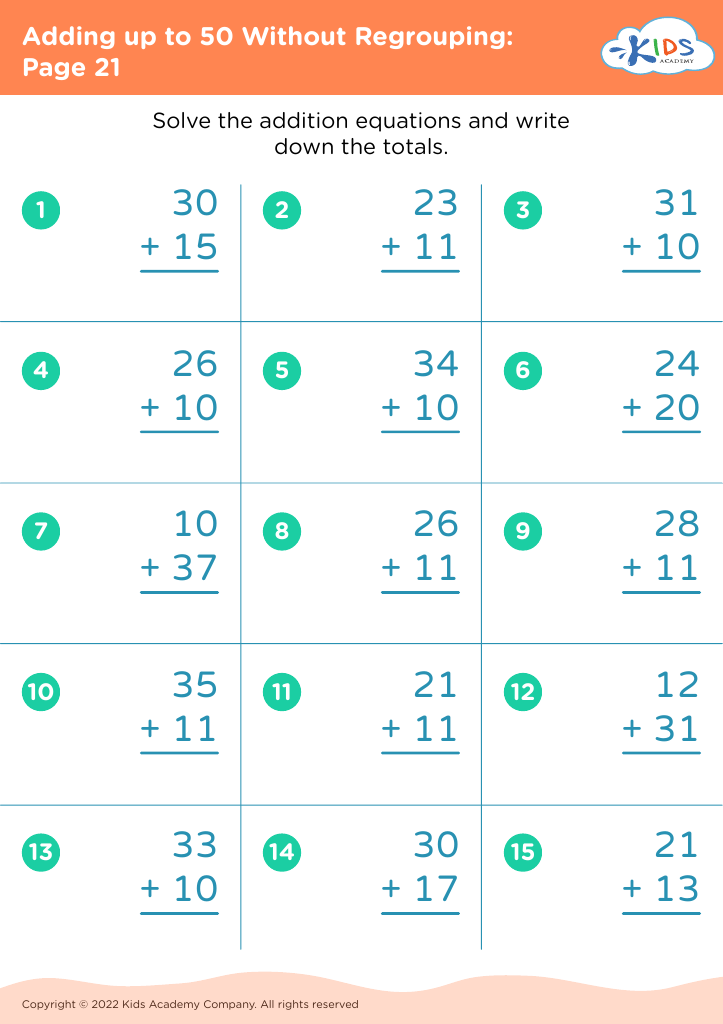
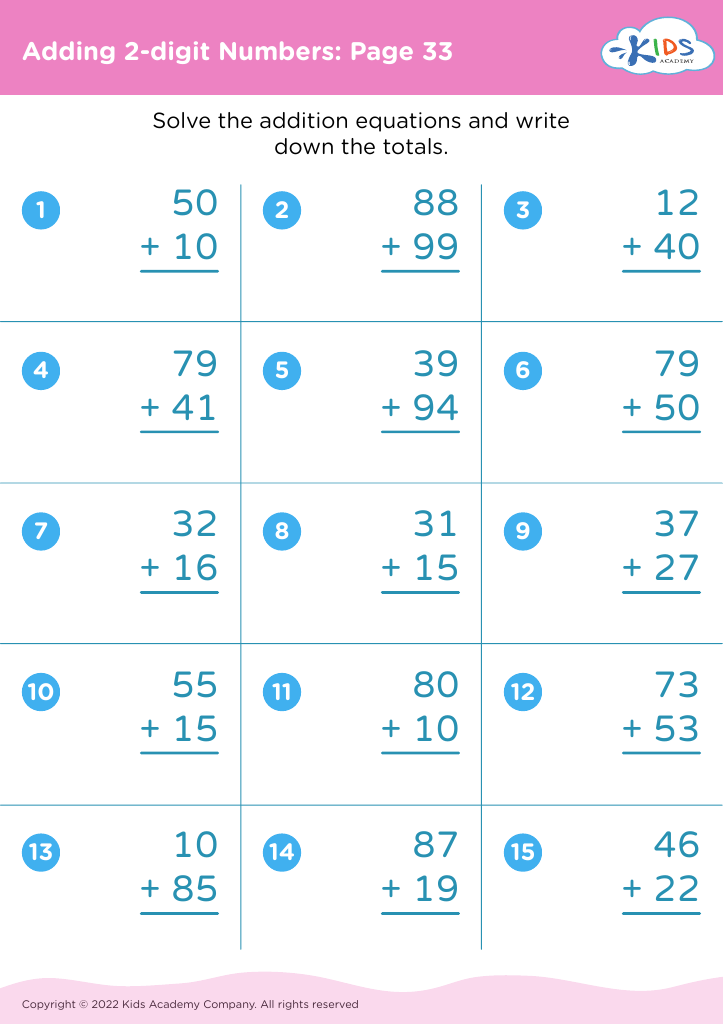
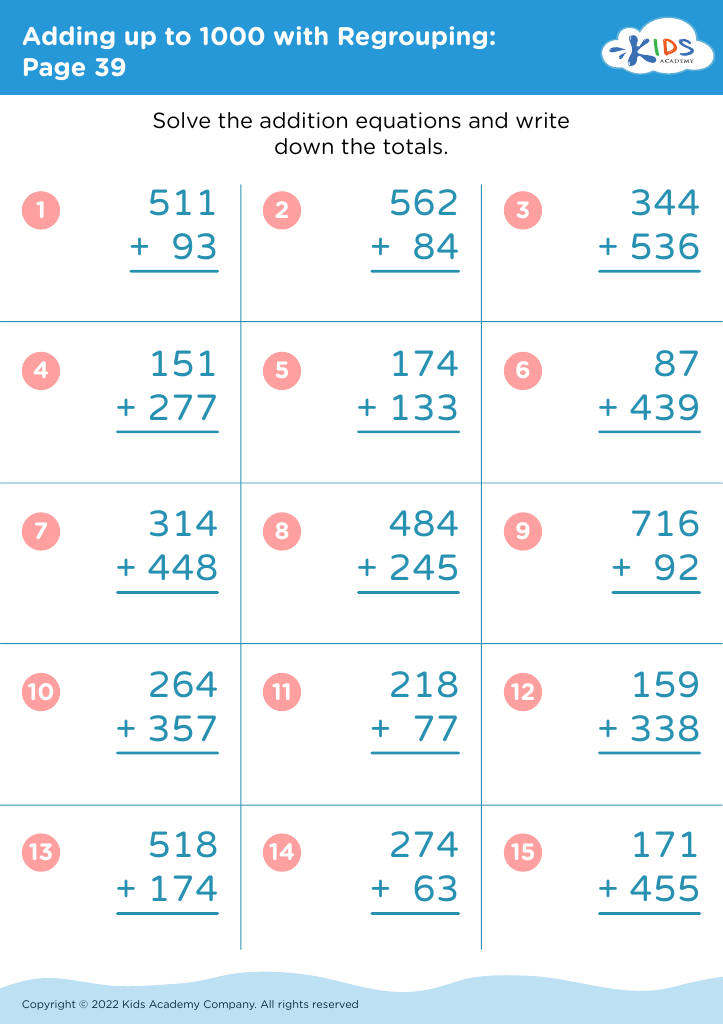
Enhance your child's math skills with our "Recognize Shapes Addition Worksheets" designed specifically for ages 6-7. These engaging worksheets combine shape recognition with basic addition, making learning fun and interactive. Children will explore various shapes while practicing their addition skills, fostering a deep understanding of both concepts. Our worksheets are perfect for reinforcing essential skills at home or in the classroom, ensuring that young learners gain confidence in their abilities. With colorful visuals and age-appropriate activities, these printable resources cater to different learning styles, making math an exciting adventure. Start your child's journey to math mastery today!
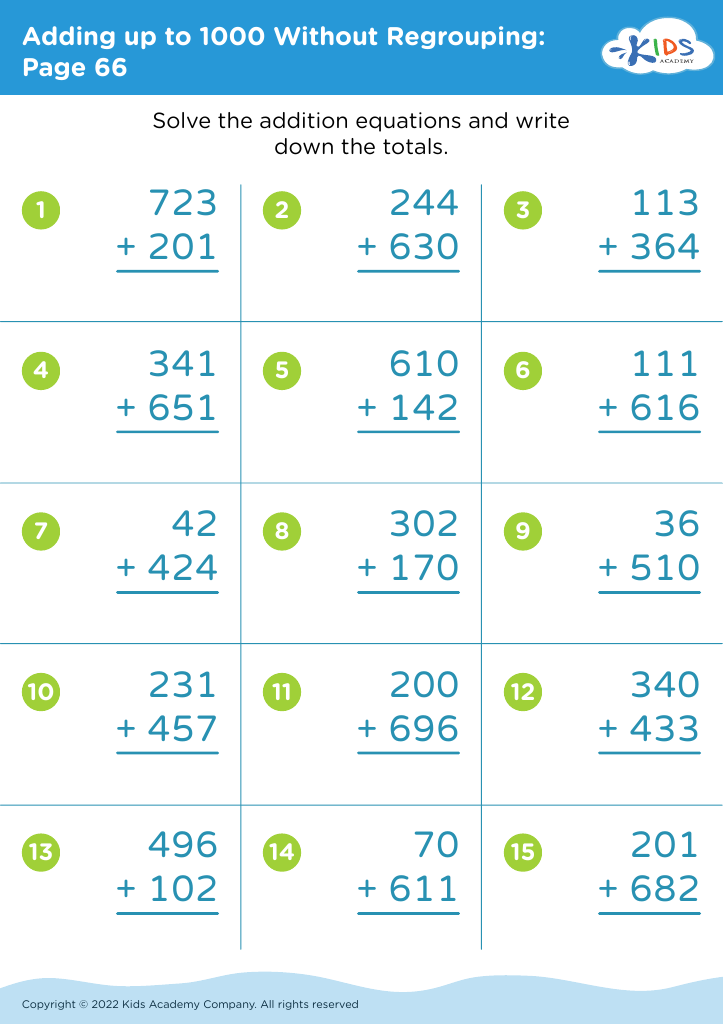
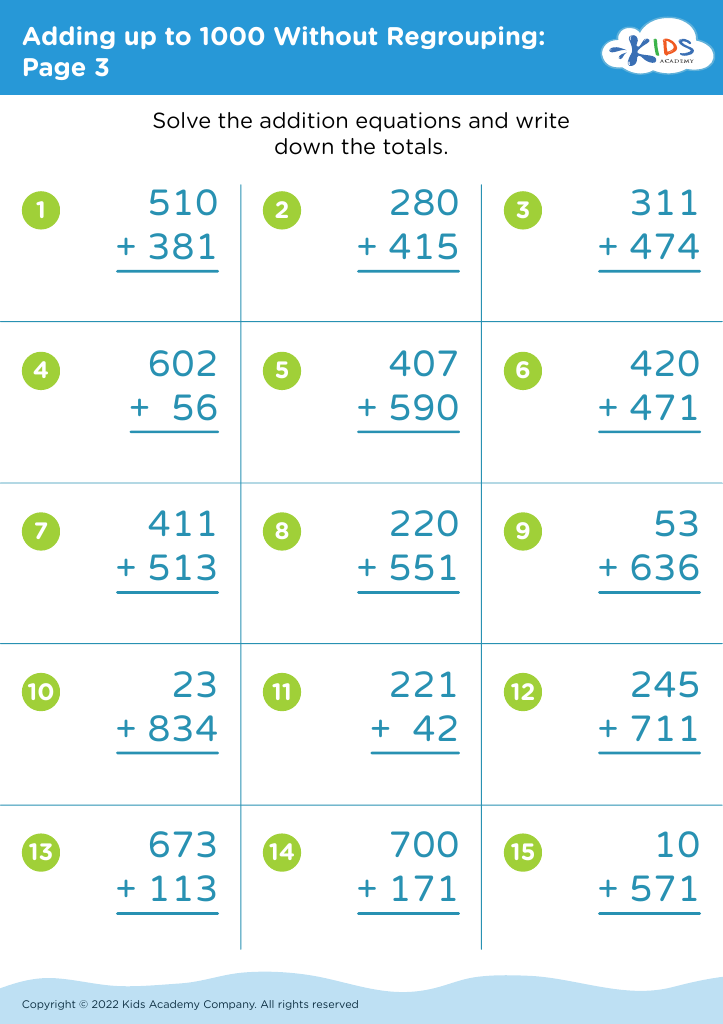
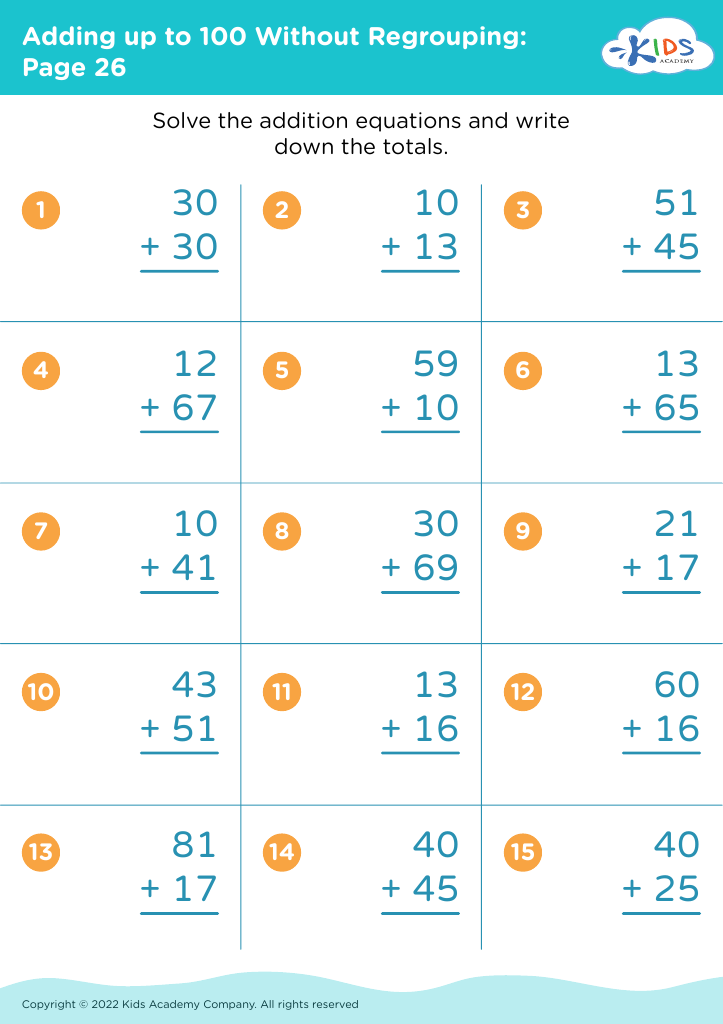
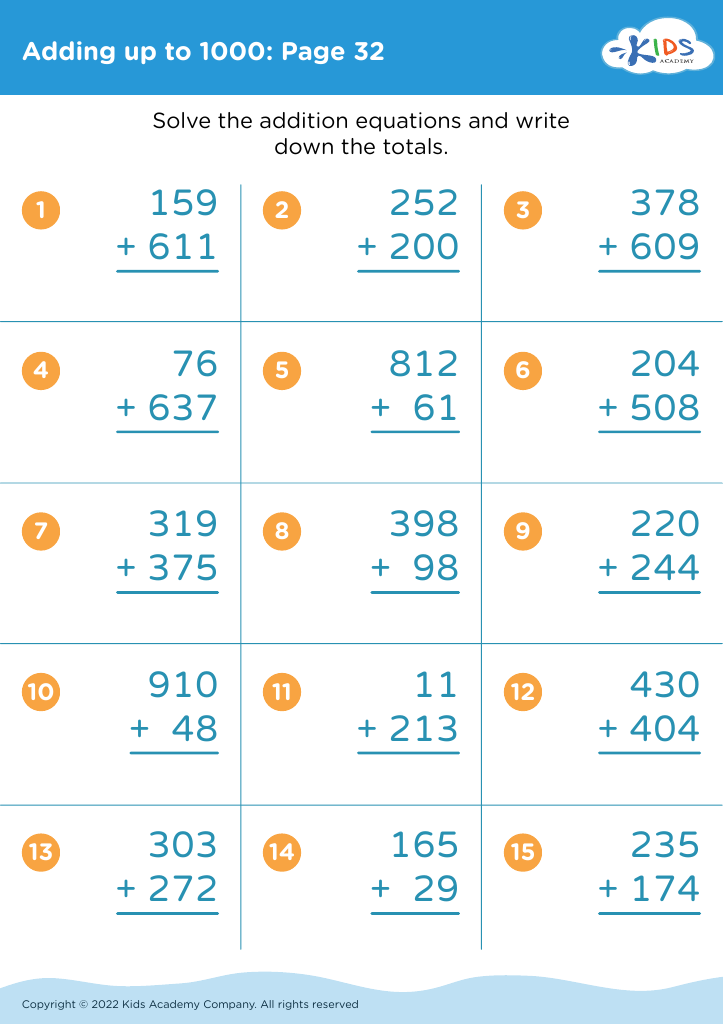
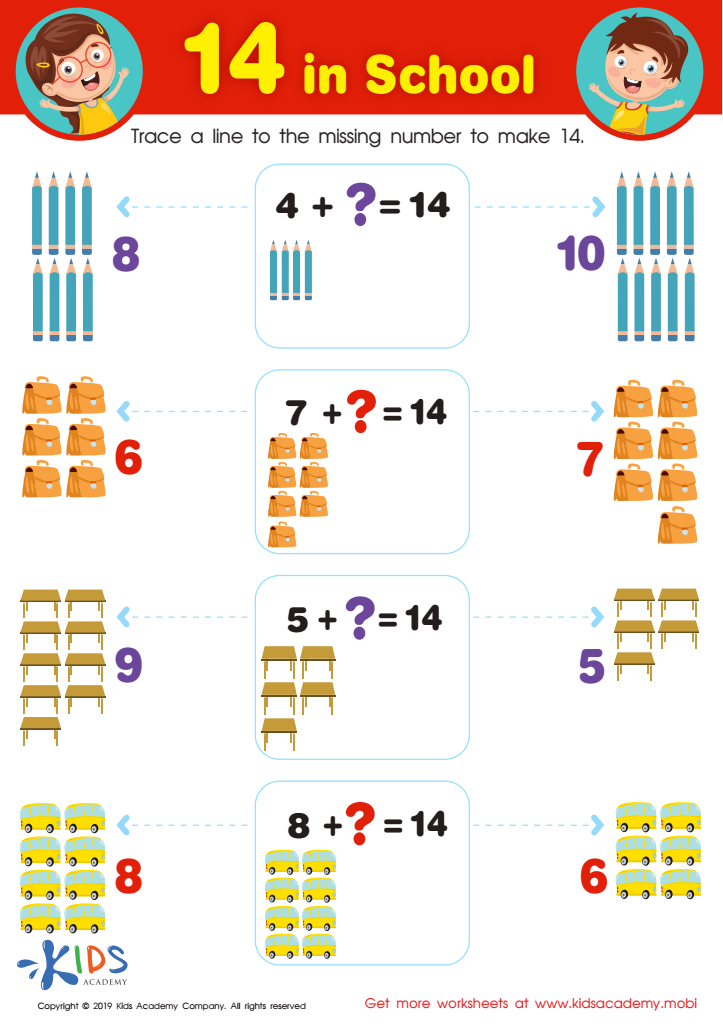
14 in School Worksheet
 Assign to My Students
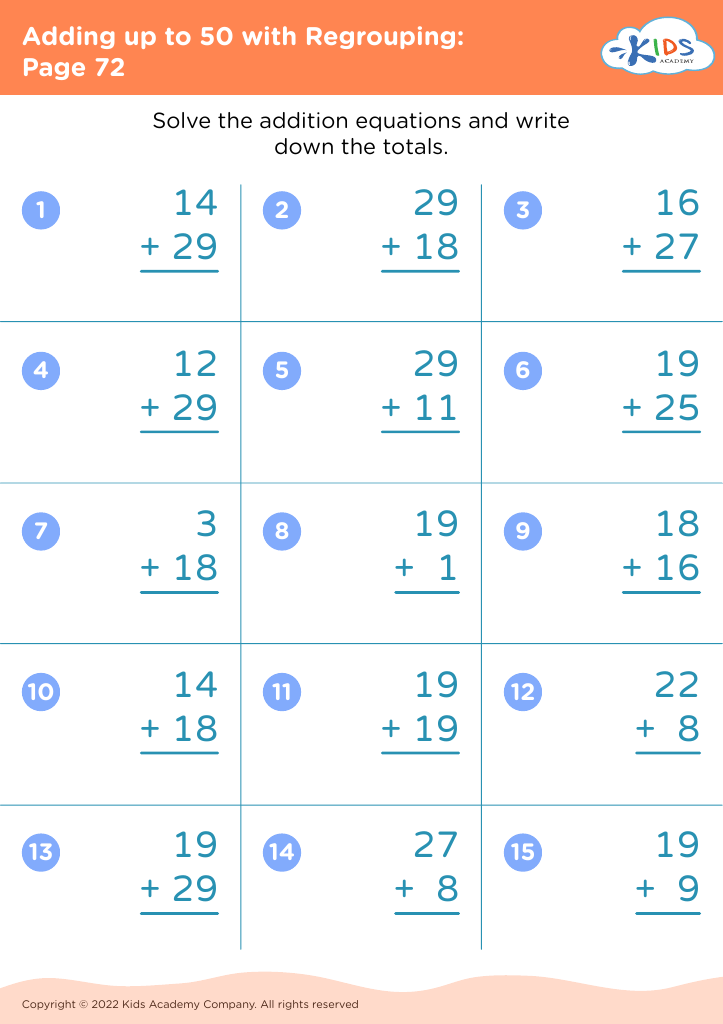








Recognizing shapes and understanding addition are crucial skills for children aged 6-7. At this developmental stage, students are beginning to make connections between visual representations and numerical concepts, which are foundational for later mathematical understanding.
Recognizing shapes allows children to understand spatial relationships, pivotal in geometry and everyday life situations, such as identifying objects, navigating environments, or solving problems. Additionally, this foundation fosters creativity, encouraging kids to explore and manipulate three-dimensional objects.
Addition is equally essential as it serves as the basis for all arithmetic operations. Mastering addition helps students develop strong numerical fluency that builds confidence in more complex mathematical principles later on. Integrating shape recognition with addition activities can enhance cognitive processing and encourage critical thinking skills.
Parents and teachers who prioritize these areas create a comprehensive learning experience that facilitates cognitive development and problem-solving abilities. Engaging in interactive practices, such as games or real-life applications involving shapes and addition, nurtures a child's curiosity and enthusiasm for learning, ensuring they see math not just as a subject but as a relatable part of their world. In fostering these skills, adults play a vital role in setting the stage for future academic success.








