Subtraction skills Addition Worksheets for Ages 6-7
12 filtered results
-
From - To
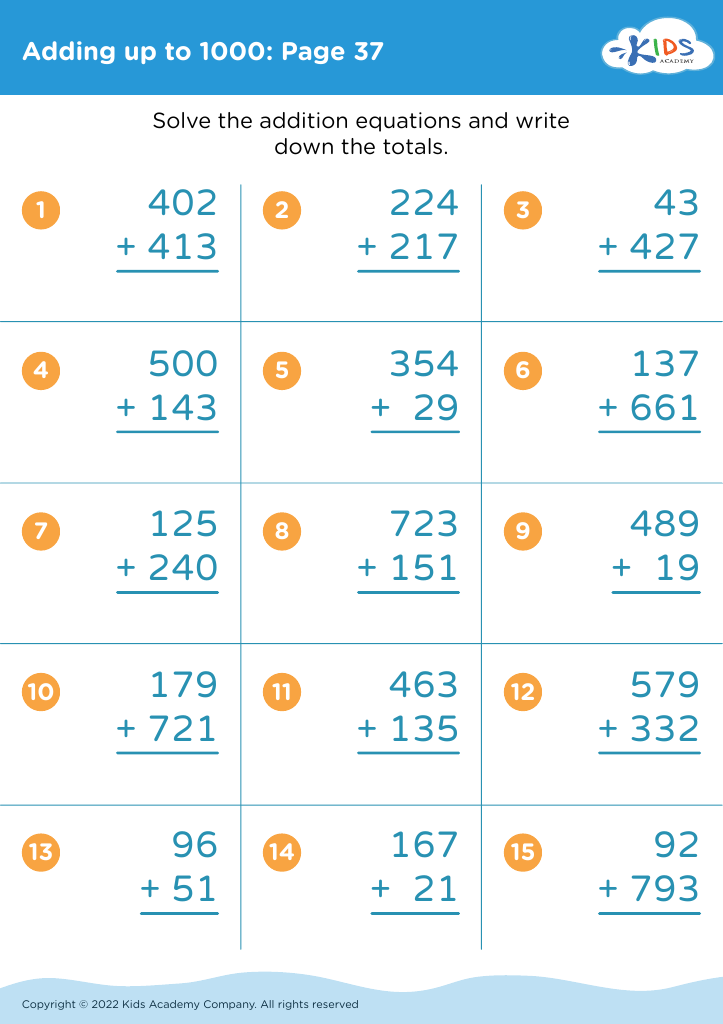
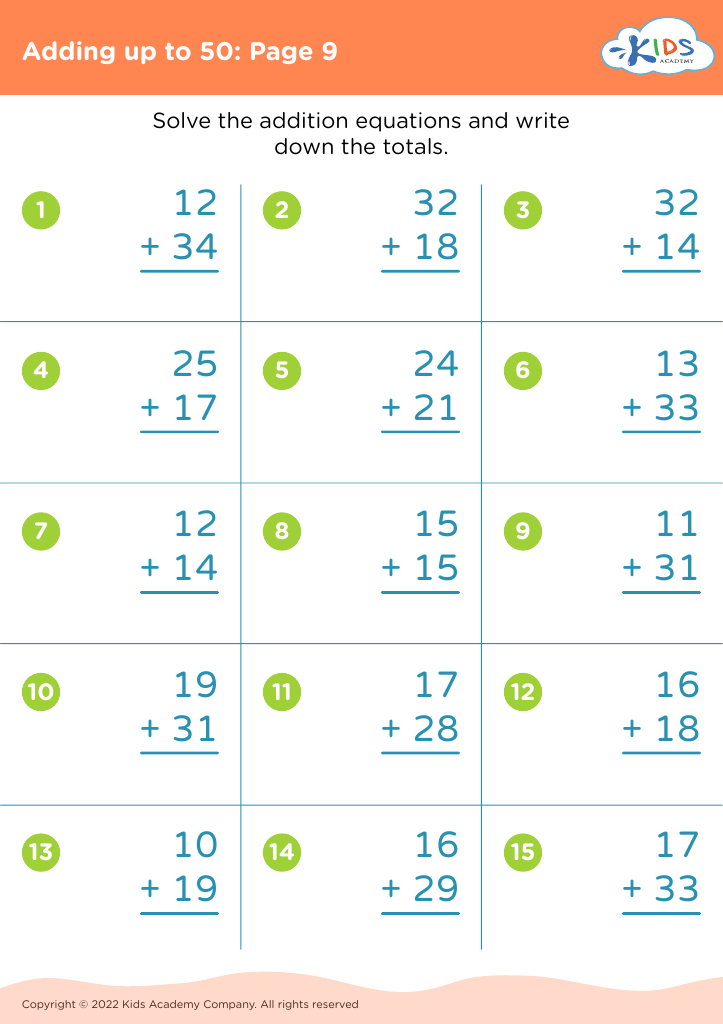
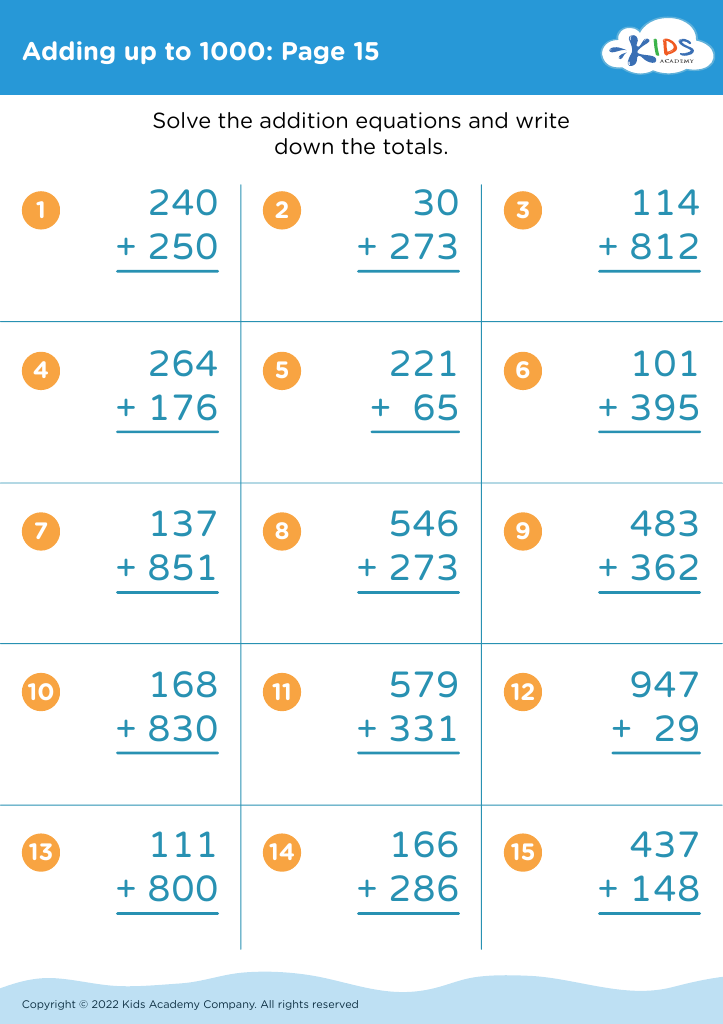
Enhance your child's math proficiency with our Subtraction Skills Addition Worksheets, specifically designed for ages 6-7. These engaging worksheets offer a fun and interactive way for young learners to strengthen their subtraction skills while also reinforcing addition concepts. Each activity targets essential math fundamentals, helping children gain confidence in their abilities. With colorful visuals, step-by-step instructions, and a variety of exercises, your child will enjoy practicing subtraction and building a solid foundation for future learning. Visit our site to access a wealth of worksheets that cater to this crucial developmental stage in your child's education!
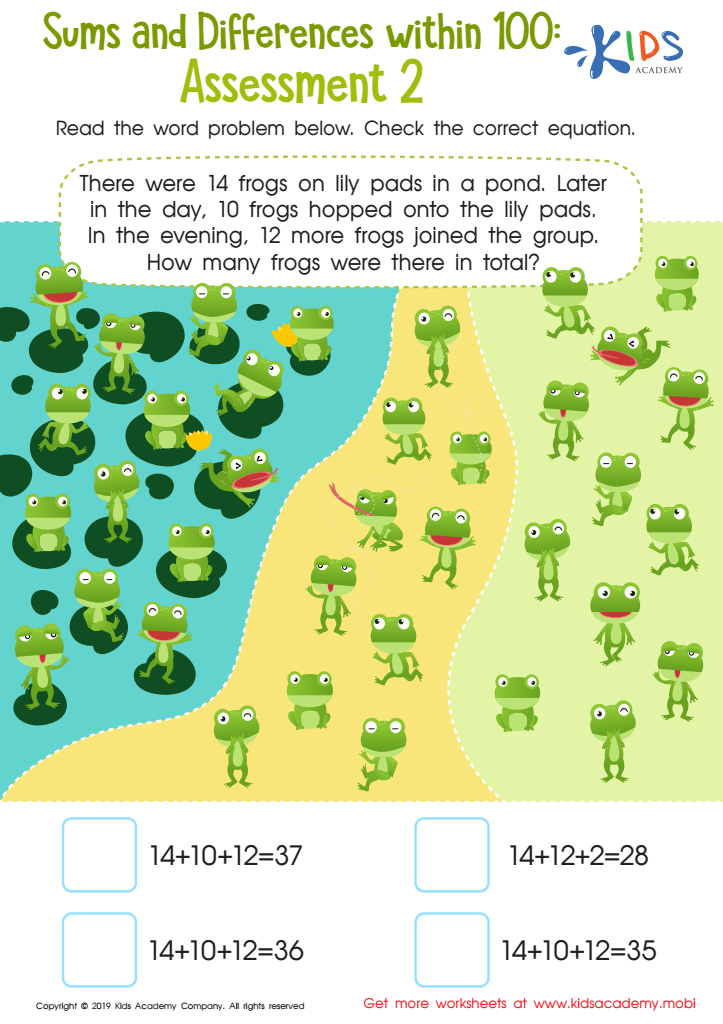
Sums and Differences Within 1 - Assessment 2 Worksheet
 Assign to My Students
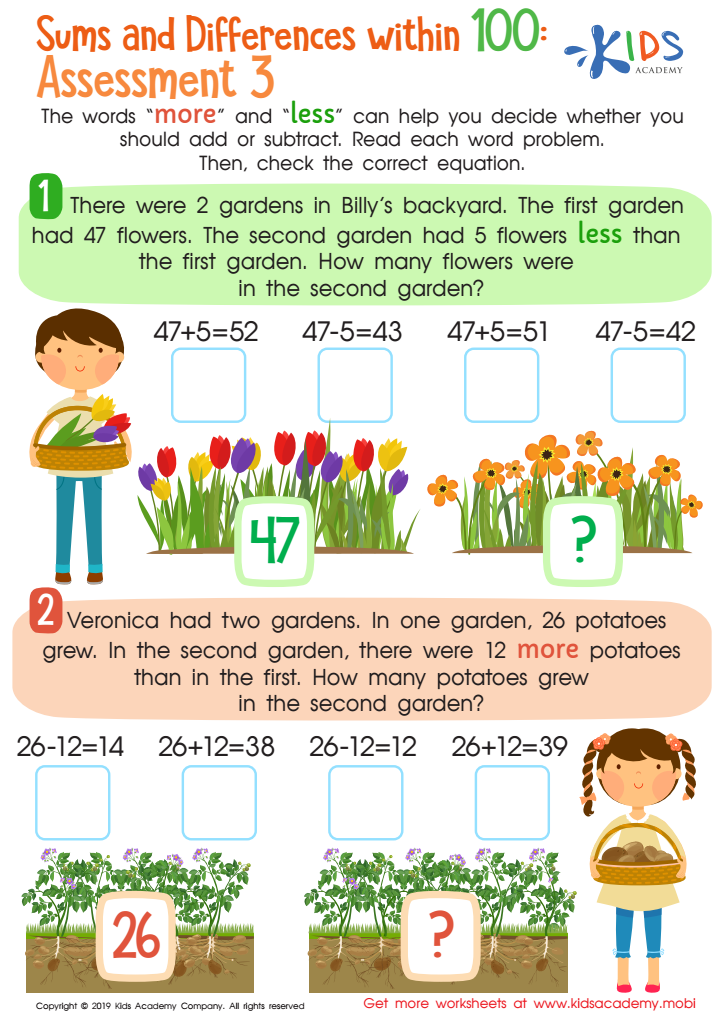
Sums and Differences Within 1 - Assessment 3 Worksheet
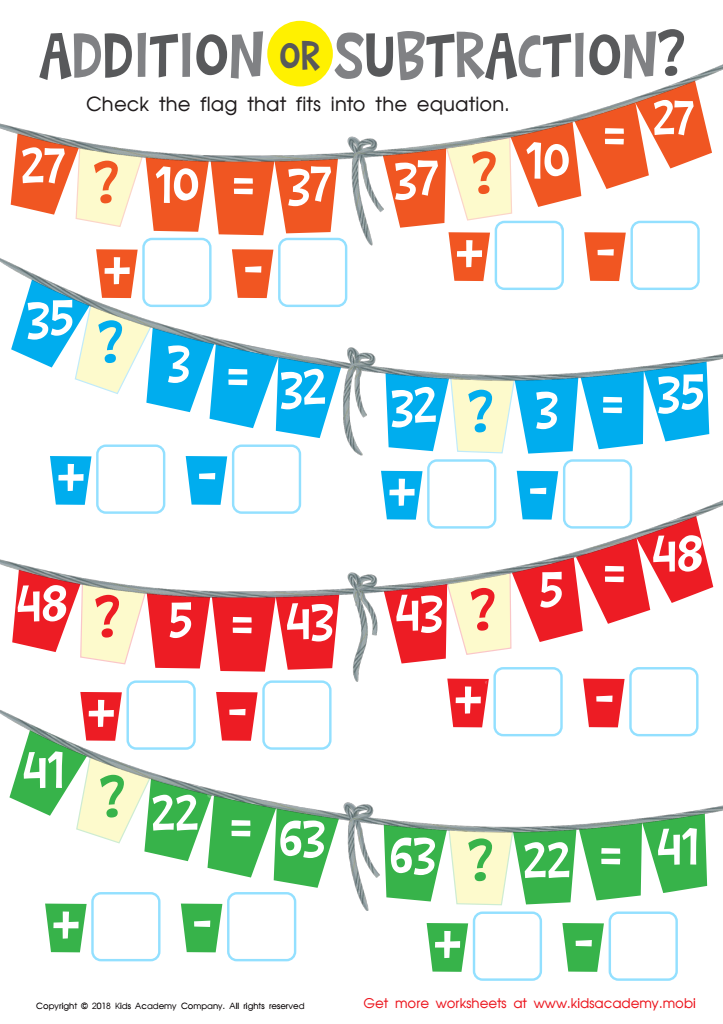
Addition or Subtraction? Worksheet








Parents and teachers should prioritize subtraction skills, especially for children aged 6-7, as this foundational math concept significantly impacts a child's overall academic success. Mastering subtraction not only enhances numerical fluency but also builds confidence in mathematical problem-solving. At this age, children are transitioning from basic counting to more complex arithmetic, making it crucial for them to understand the relationship between addition and subtraction, as these operations are fundamentally interconnected.
Fostering subtraction skills early on lays the groundwork for more advanced mathematical concepts, such as algebra and geometry, which they will encounter later in their education. Furthermore, strong subtraction abilities help children develop critical thinking and analytical skills. They learn to approach problems methodically, an approach that benefits them beyond math.
Moreover, subtraction concepts overlap with real-world situations, such as sharing items or budgeting, offering parents an opportunity to apply math in everyday life. When parents and teachers collaborate in reinforcing subtractive skills through fun activities and practice, they create a positive learning environment that recognizes individual progress and nurtures a love for learning. Overall, investing in solid subtraction skills at this stage is essential for fostering a lifelong proficiency in mathematics and problem-solving.








