Understanding addition Addition Worksheets for Ages 6-7
7 filtered results
-
From - To
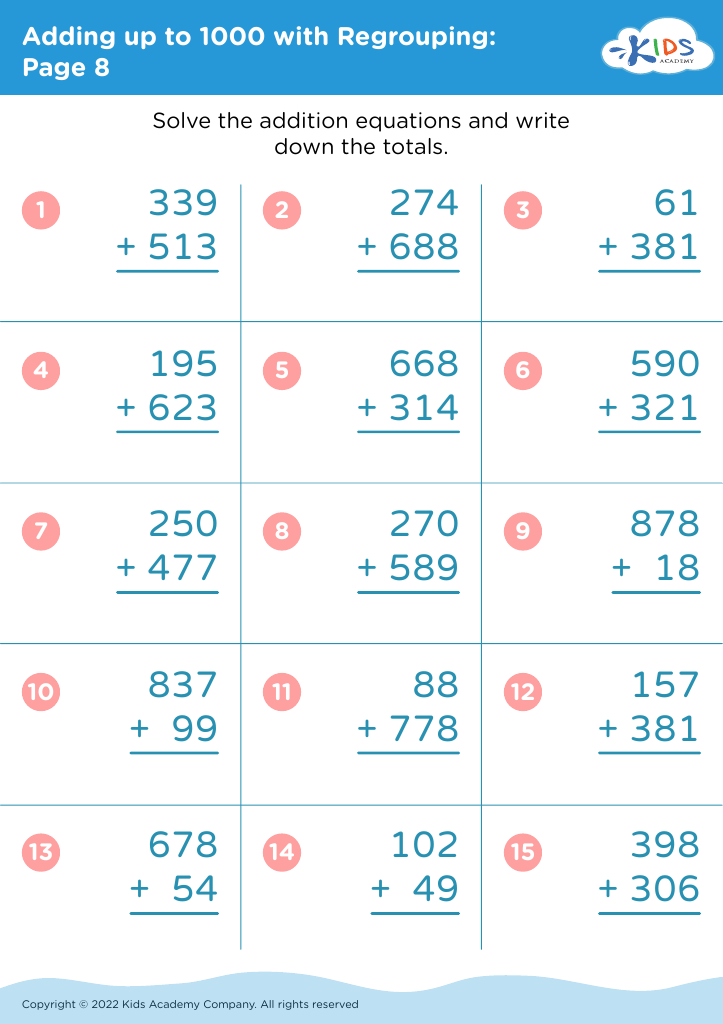
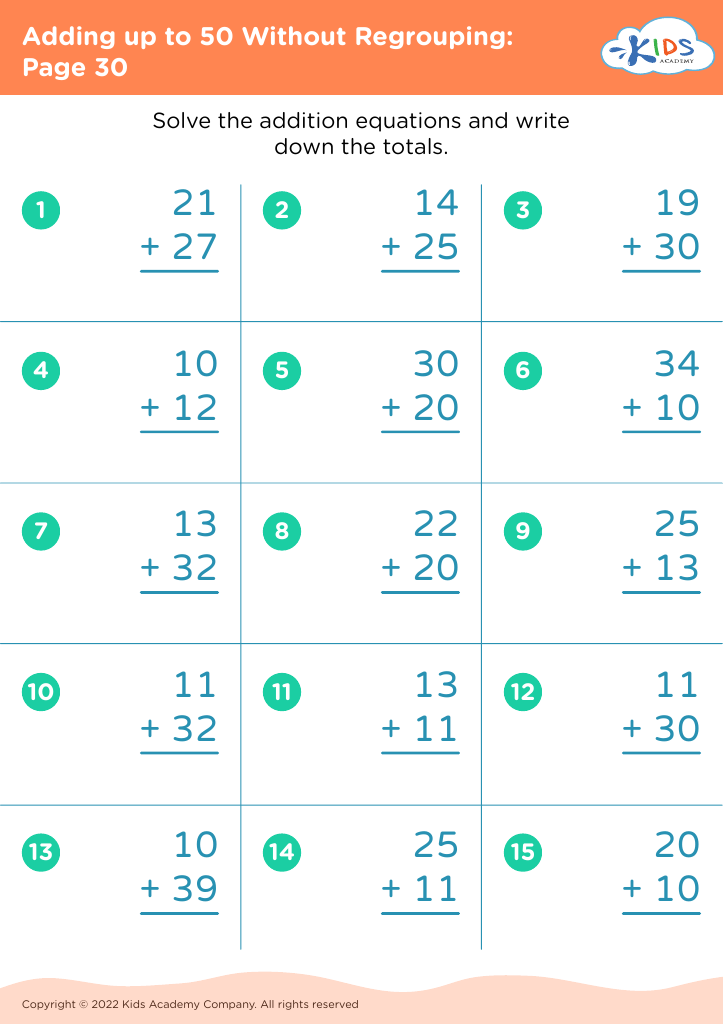
Welcome to our "Understanding Addition" worksheets for ages 6-7! These engaging and interactive resources are designed to help young learners grasp the fundamentals of addition. Our worksheets introduce key concepts through fun activities, visual aids, and hands-on exercises, making math enjoyable and approachable. Perfect for at-home practice or classroom use, these worksheets cater to different learning styles and encourage critical thinking. Build a strong mathematical foundation while boosting your child’s confidence in their math abilities. Explore our collection to help your child master addition skills and prepare for future challenges with enthusiasm! Start their journey to becoming math whizzes today!
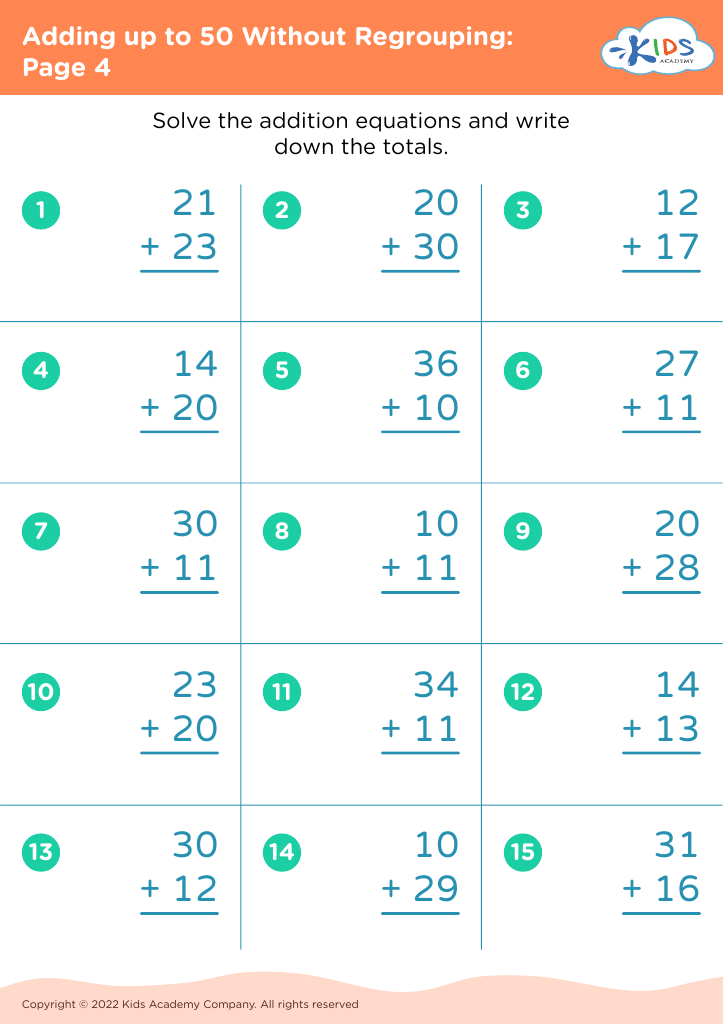
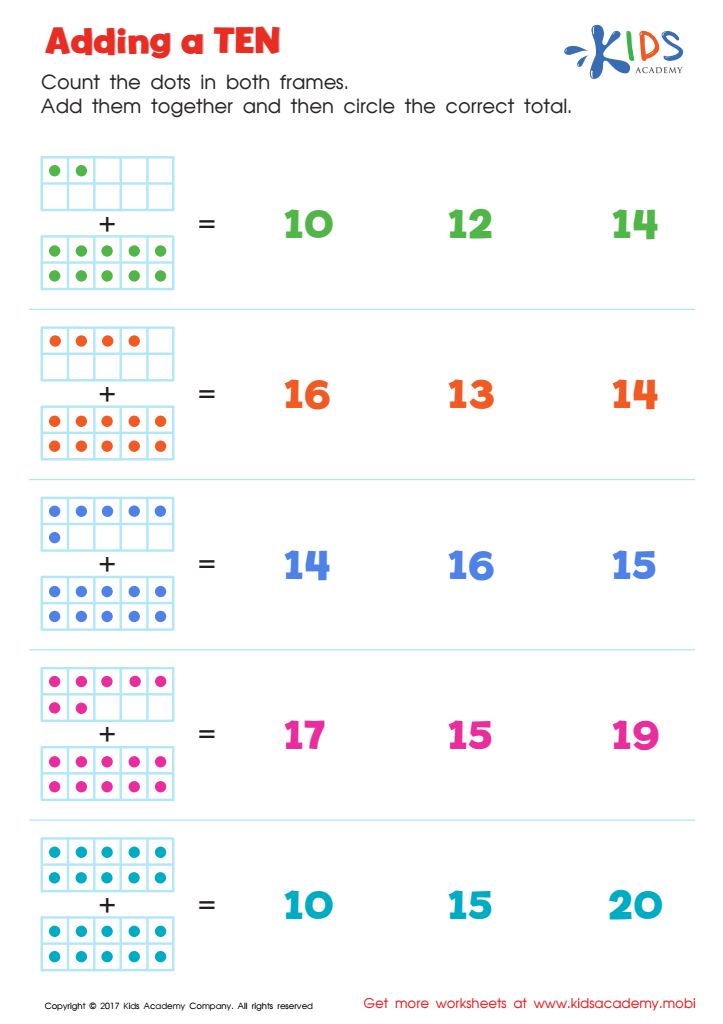
Adding a Ten Worksheet
 Assign to My Students
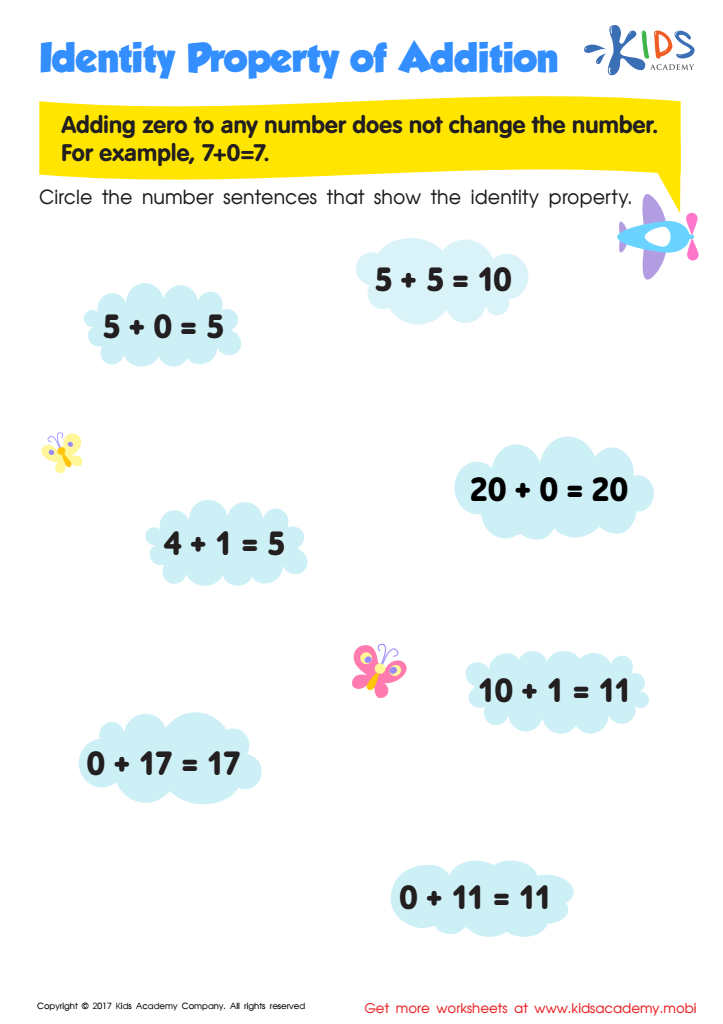
Identity Property of Addition Worksheet
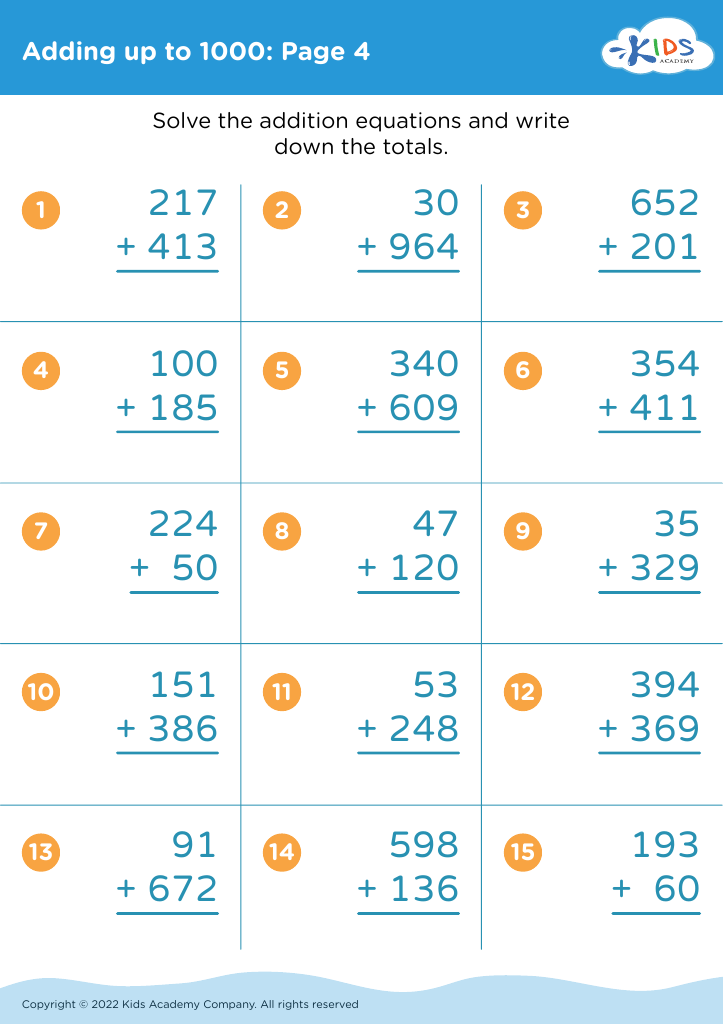
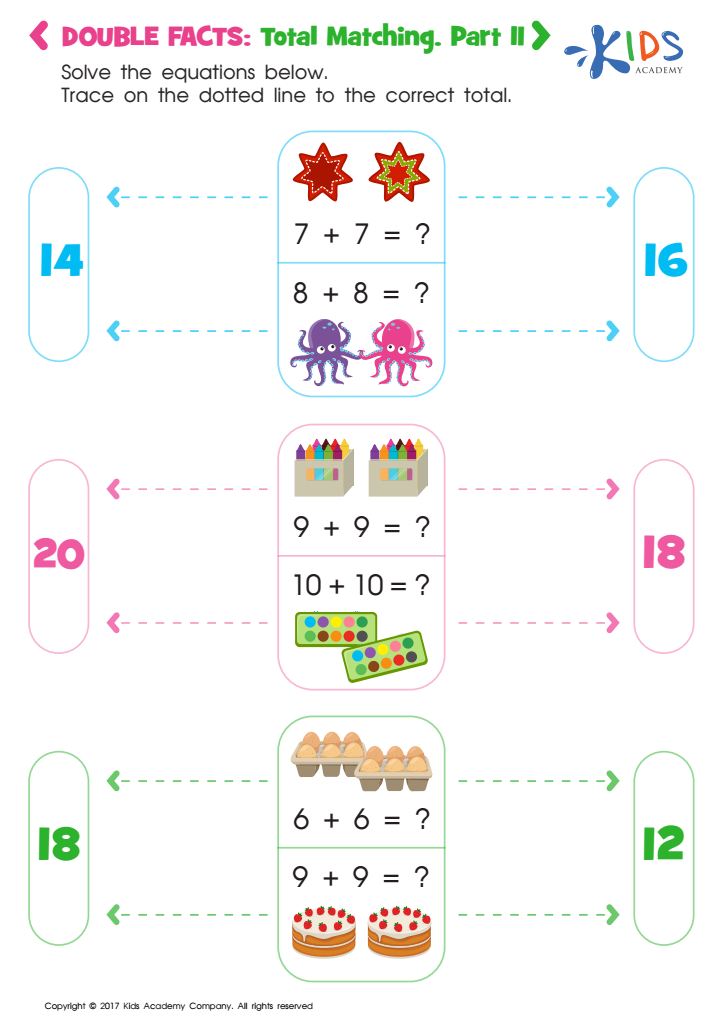
Double Facts: Total Matching 2 Worksheet








Understanding addition is crucial for children aged 6-7 as it serves as the foundation for their entire mathematical development. At this age, children are typically in first or second grade, where they begin to encounter more complex math concepts. A solid grasp of addition not only helps them understand numbers and calculations but also enhances their problem-solving skills and logical thinking.
Moreover, mastering addition helps build confidence in children. When they feel competent in their mathematical abilities, they are more likely to engage actively in learning. Additionally, addition is a skill that continuously recurs in daily life, from budgeting allowances to measuring ingredients in cooking. Ensuring that children understand addition can lead to greater success in these practical applications, thereby reinforcing the relevance of mathematics in everyday situations.
For parents and teachers, fostering a strong understanding of addition means setting children up for success in later mathematical concepts, such as subtraction, multiplication, and even division. It creates a supportive learning environment where children can ask questions and explore, ultimately nurturing a lifelong interest in mathematics. By caring about this foundational skill, adults can support children in developing both proficiency and a positive attitude towards learning math.








