Understanding division Addition Worksheets for Ages 6-7
5 filtered results
-
From - To
Dive into the world of math with our "Understanding Division Addition Worksheets for Ages 6-7." Crafted to build foundational skills, these worksheets help young learners grasp key concepts by integrating fun and engaging addition exercises. Designed to suit the cognitive abilities of children aged 6-7, these printable resources transform traditional division lessons into interactive experiences, ensuring kids develop a solid understanding of how division relates to addition. Perfect for both classroom and home use, our worksheets motivate students to explore mathematics confidently. Unlock your child's potential in math with our straightforward, creative, and educational tools today.
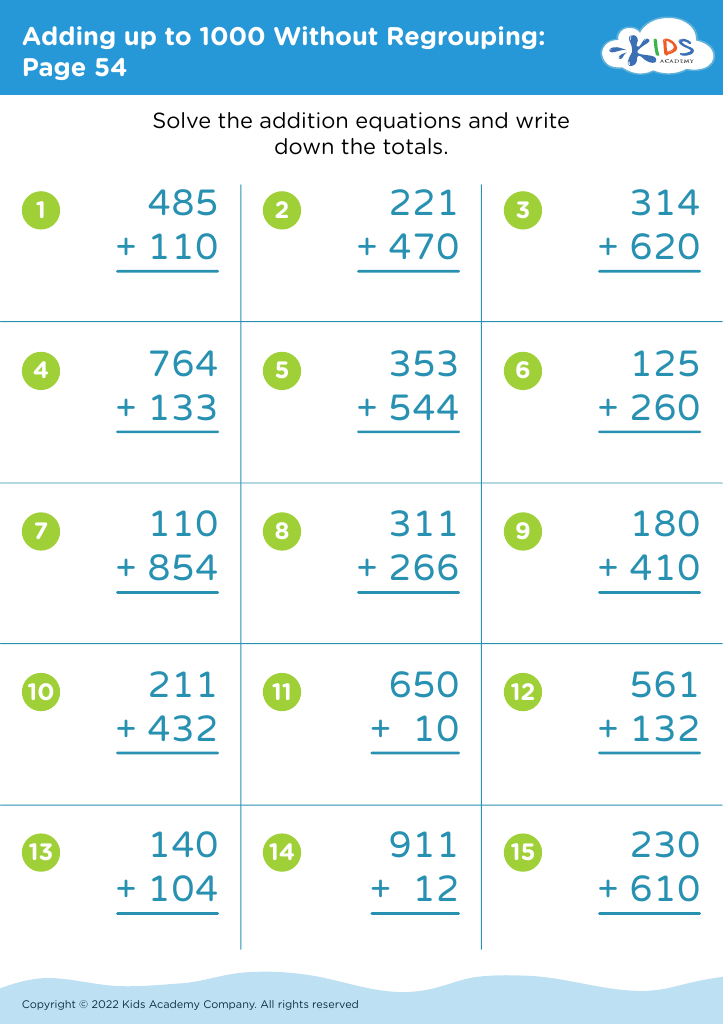
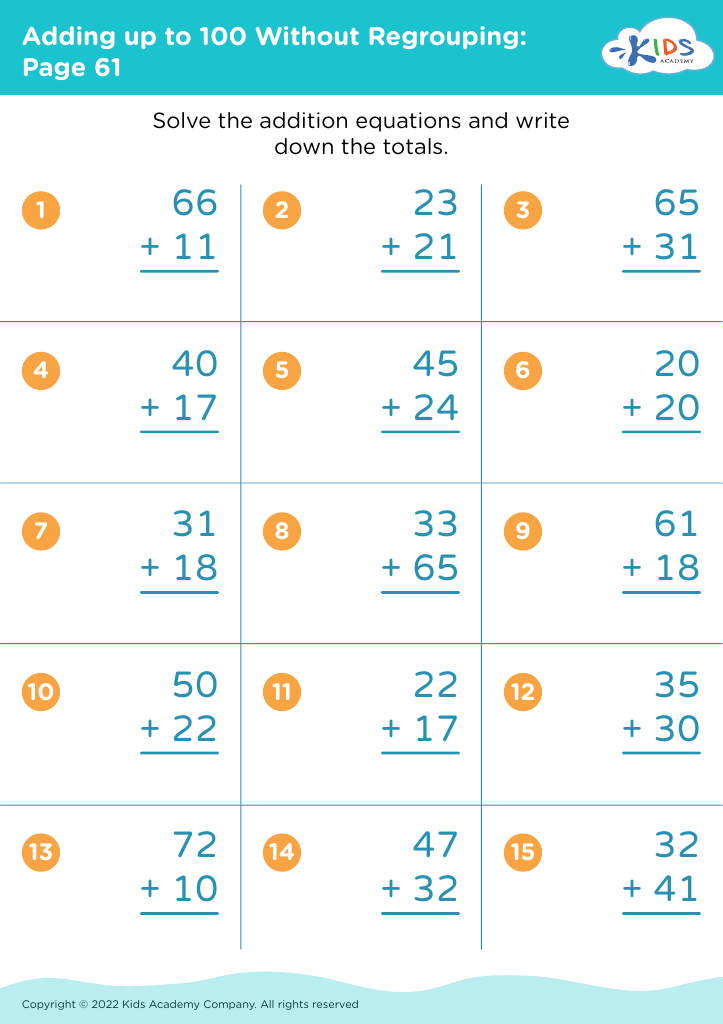
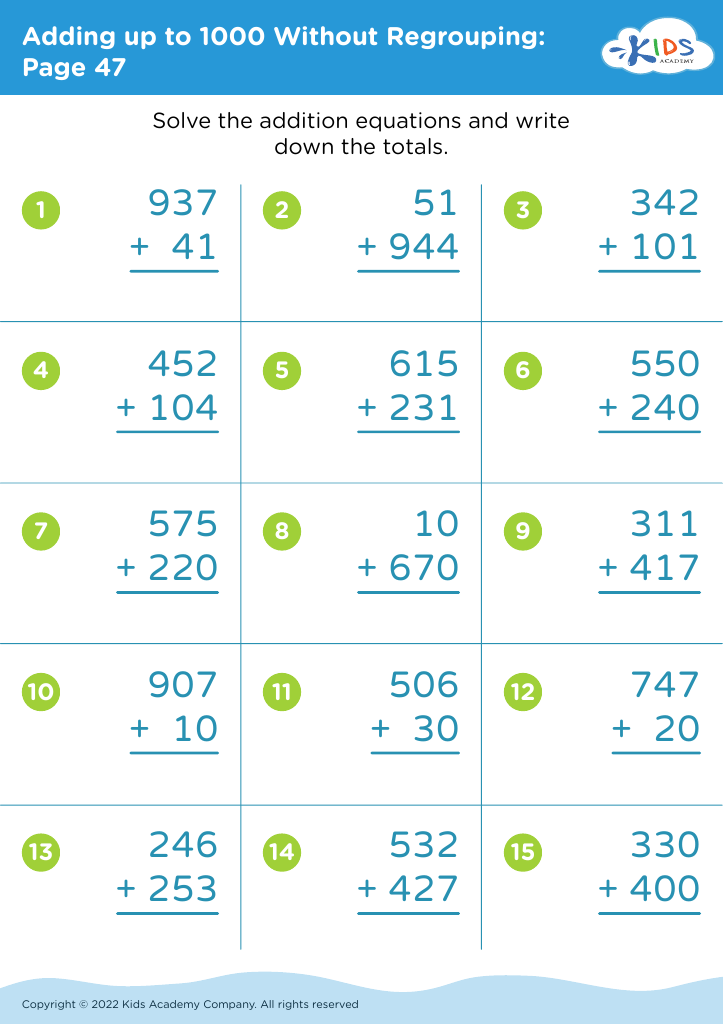
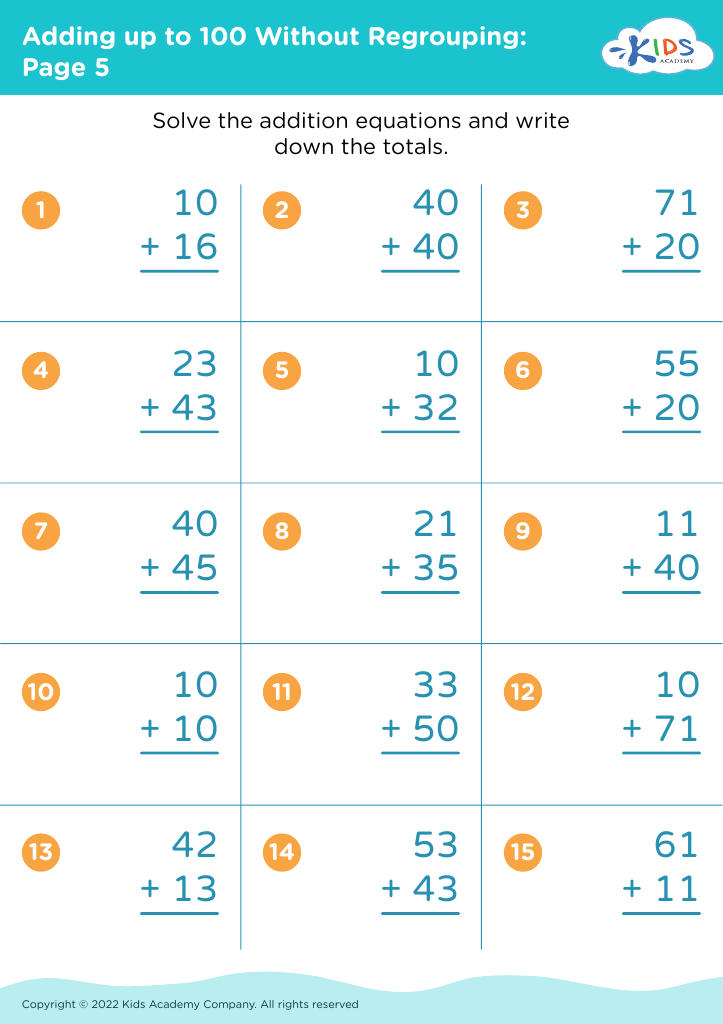
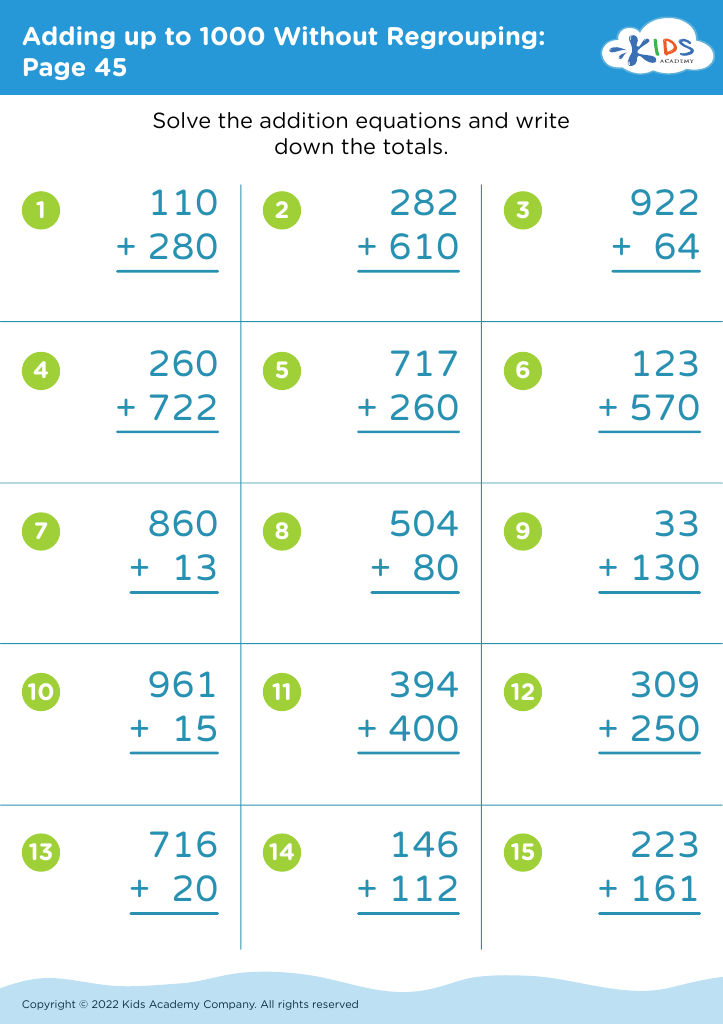








Understanding division at an early age, especially ages 6-7, serves as a cornerstone for children's future math skills. Parents and teachers should care about teaching division early on because it helps build a strong mathematical foundation. When children grasp the concept of division, they begin to understand how numbers can be broken down and related to each other, which is crucial for more complex mathematical operations they will encounter later.
Early introduction to division not only helps in recognizing patterns but also aids in problem-solving and critical thinking skills. For example, when kids understand that 8 can be divided into 4 groups of 2, they're not just memorizing facts—they're learning to think analytically and reason logically.
Additionally, early exposure to division builds confidence. If children struggle with new concepts later without this foundation, they might develop math anxiety, making them hesitant to tackle more challenging topics. On the social-emotional front, a solid grasp of basic math skills like division enhances their ability to engage in practical activities such as sharing and fair play during interactive activities or group work, promoting cooperative and harmonious interactions.
Therefore, understanding division at ages 6-7 empowers children with essential math skills while fostering confidence and problem-solving abilities, integral to their academic and personal growth.








