Filters

29 filtered results

Clear all filters
Favorites
With answer key
Interactive

29 filtered results

Difficulty Level

Grade


"Understanding Patterns Addition Worksheets for Ages 6-7" from Kids Academy are designed to reinforce foundational math skills in young learners. These engaging, printable worksheets focus on recognizing and predicting simple patterns involving addition. Ideal for first graders, each activity combines fun illustrations with age-appropriate problems to boost critical thinking and improve addition fluency. Children will enjoy the interactive format, making repetitive practice enjoyable. Whether used in the classroom or at home, these worksheets support the development of essential math skills while fostering a love for learning and problem-solving. Explore our collection and help your child master math's building blocks with confidence!
Check out this FREE Trial Lesson on Addition for age 6-7!

A

Favorites
With answer key
Interactive
  • 6-7
  • Understanding patterns
  • Addition
Adding 2-digit Numbers: Page 28

Adding 2-digit Numbers: Page 28

Adding 2-digit Numbers: Page 28
Worksheet
Adding up to 1000 Without Regrouping: Page 48
Worksheet
Adding up to 50 Without Regrouping: Page 11
Worksheet
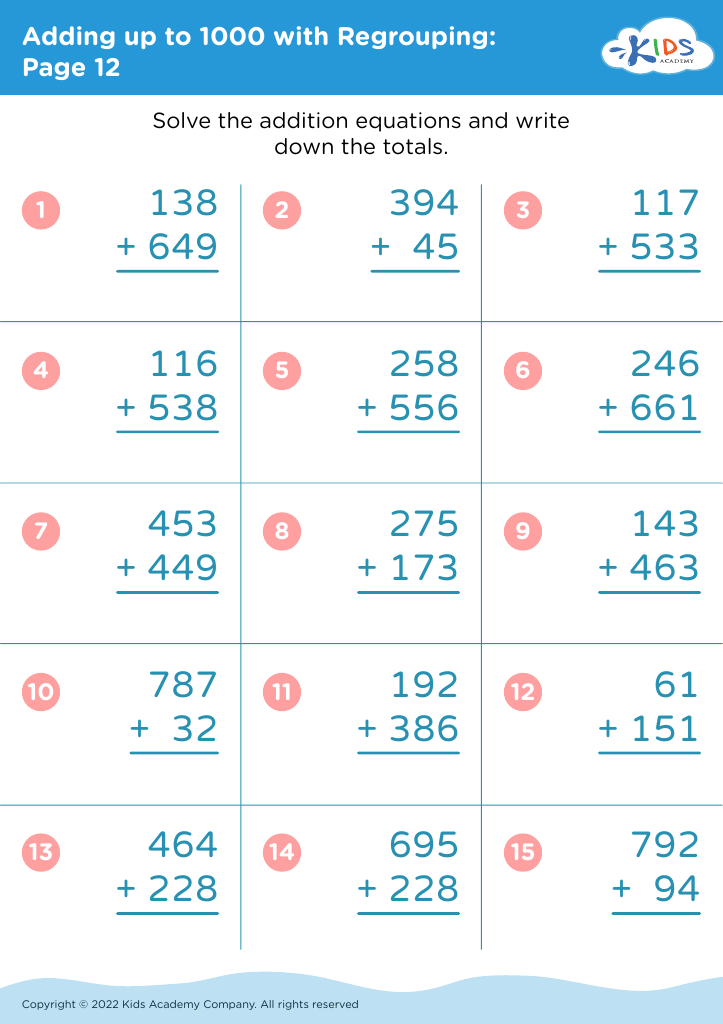
Adding up to 1000 with Regrouping: Page 12
Worksheet
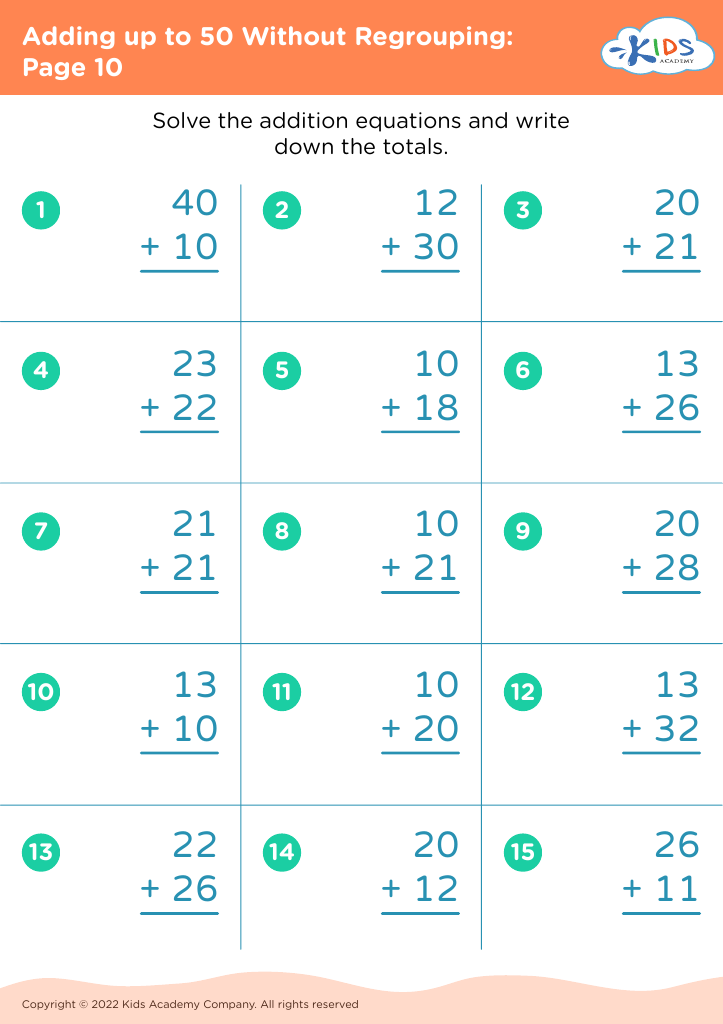
Adding up to 50 Without Regrouping: Page 10
Worksheet
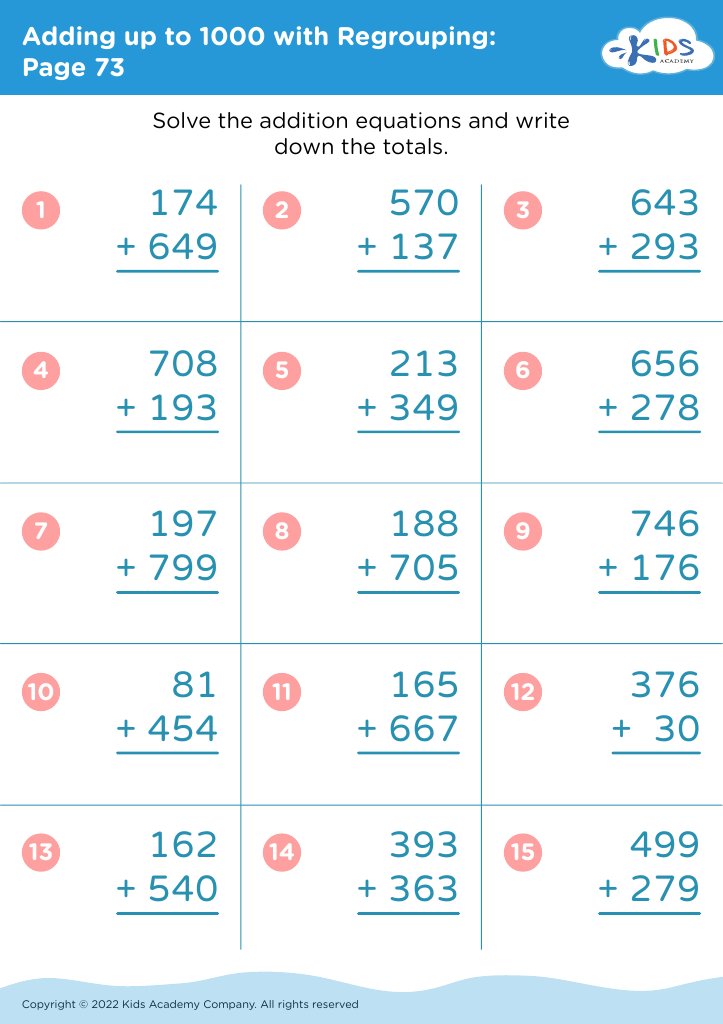
Adding up to 1000 with Regrouping: Page 73
Worksheet
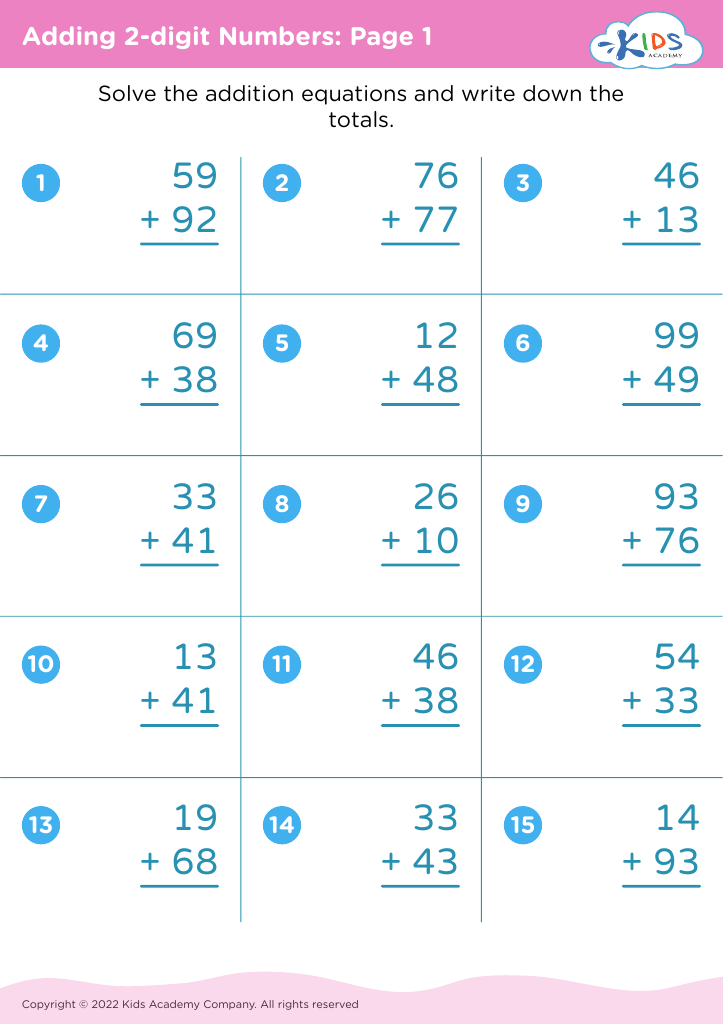
Adding 2-digit Numbers: Page 1

Adding 2-digit Numbers: Page 1

Adding 2-digit Numbers: Page 1
Worksheet
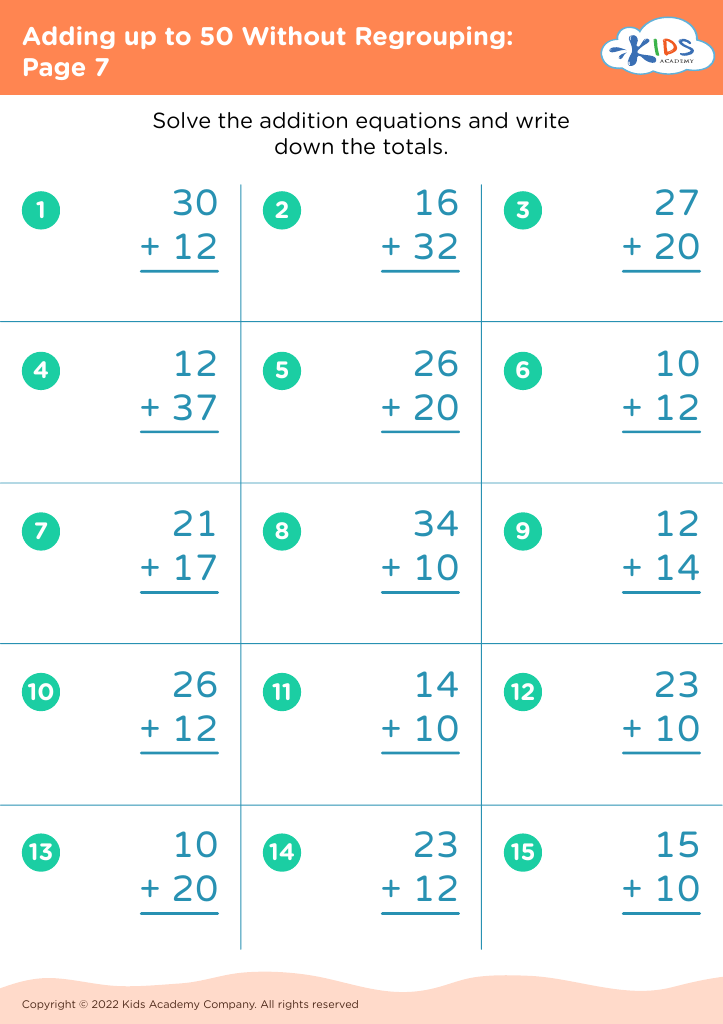
Adding up to 50 Without Regrouping: Page 7
Worksheet
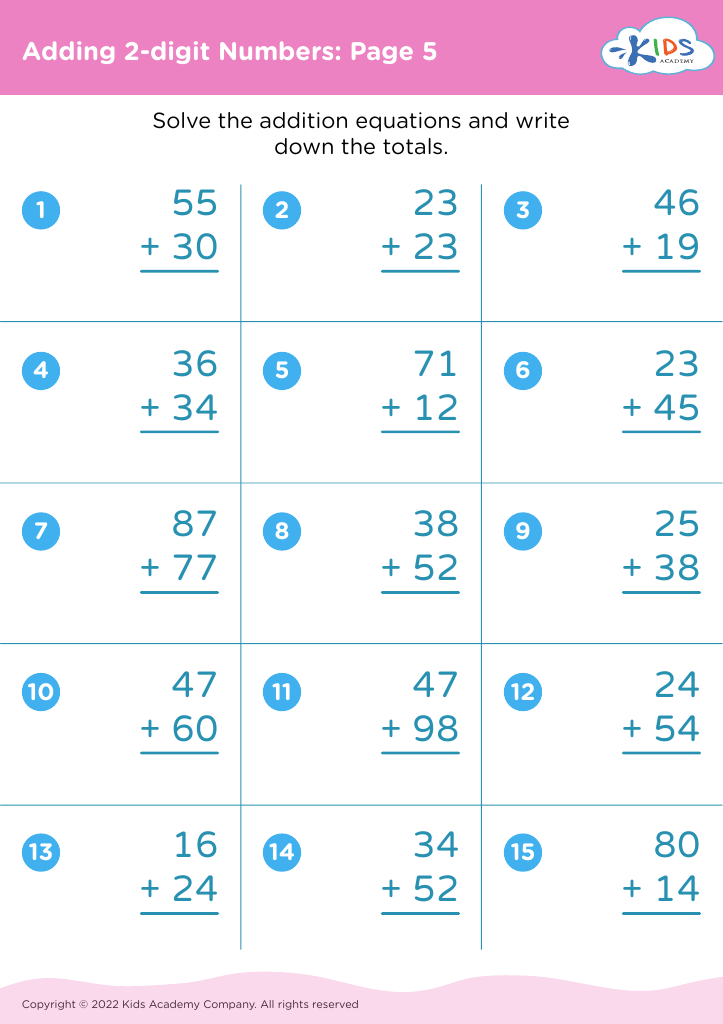
Adding 2-digit Numbers: Page 5

Adding 2-digit Numbers: Page 5

Adding 2-digit Numbers: Page 5
Worksheet
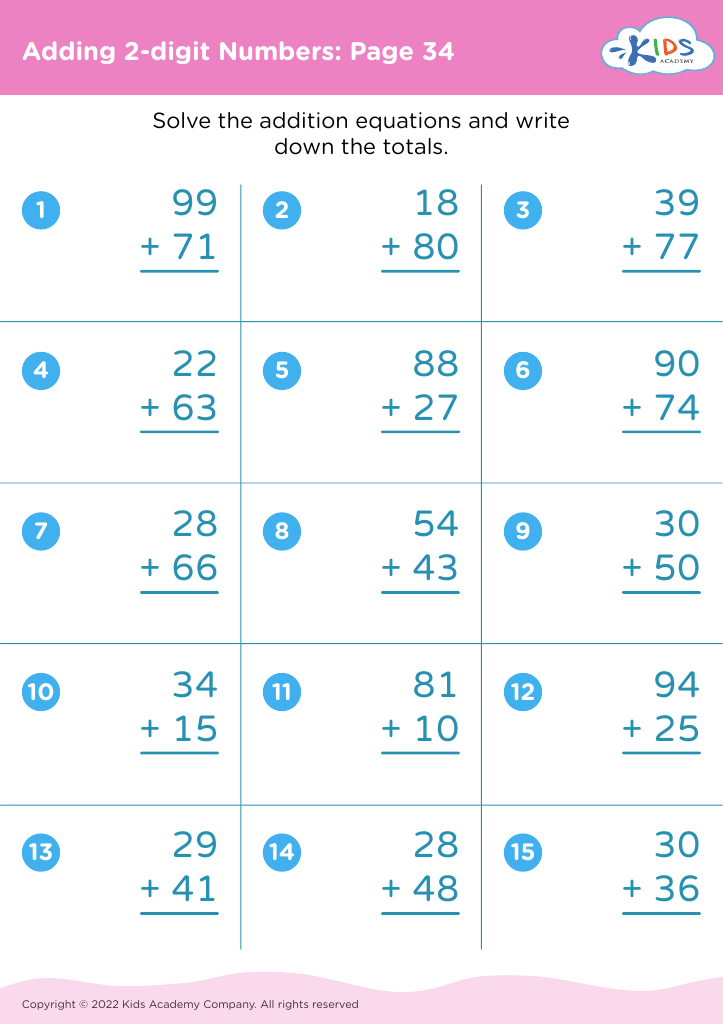
Adding 2-digit Numbers: Page 34

Adding 2-digit Numbers: Page 34

Adding 2-digit Numbers: Page 34
Worksheet
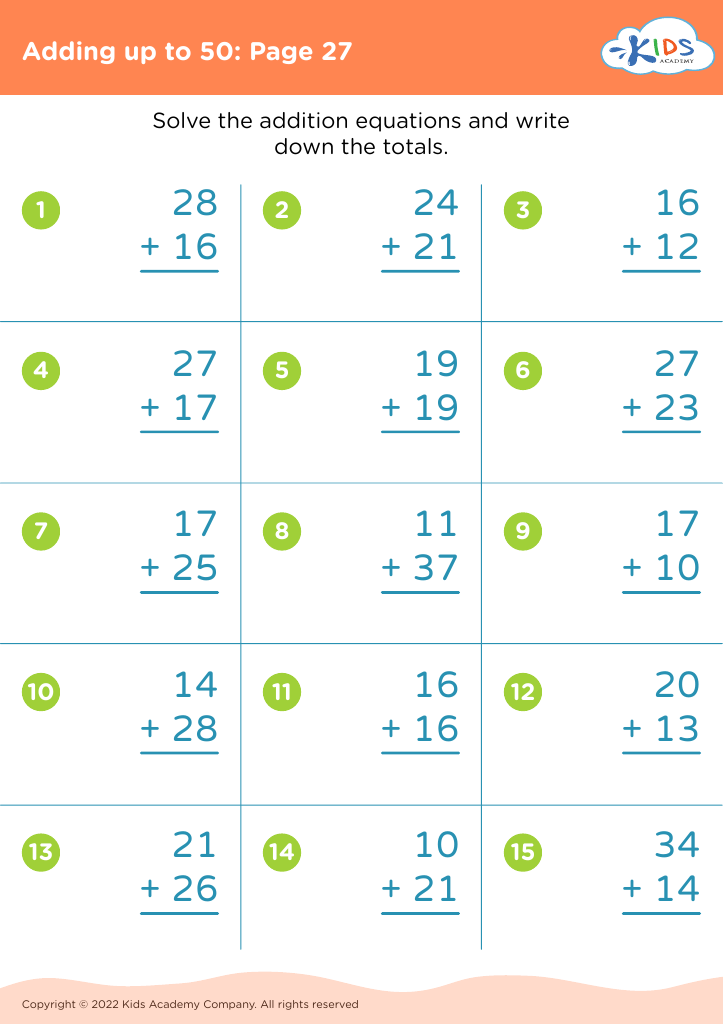
Adding up to 50: Page 27

Adding up to 50: Page 27

Adding up to 50: Page 27
Worksheet
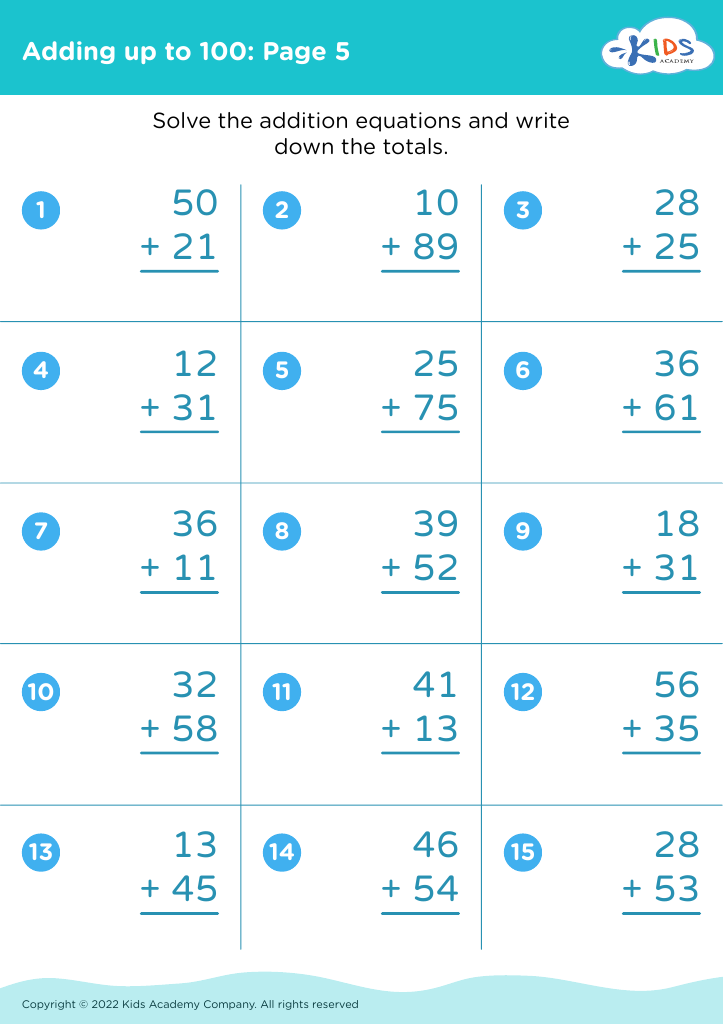
Adding up to 100: Page 5

Adding up to 100: Page 5

Adding up to 100: Page 5
Worksheet
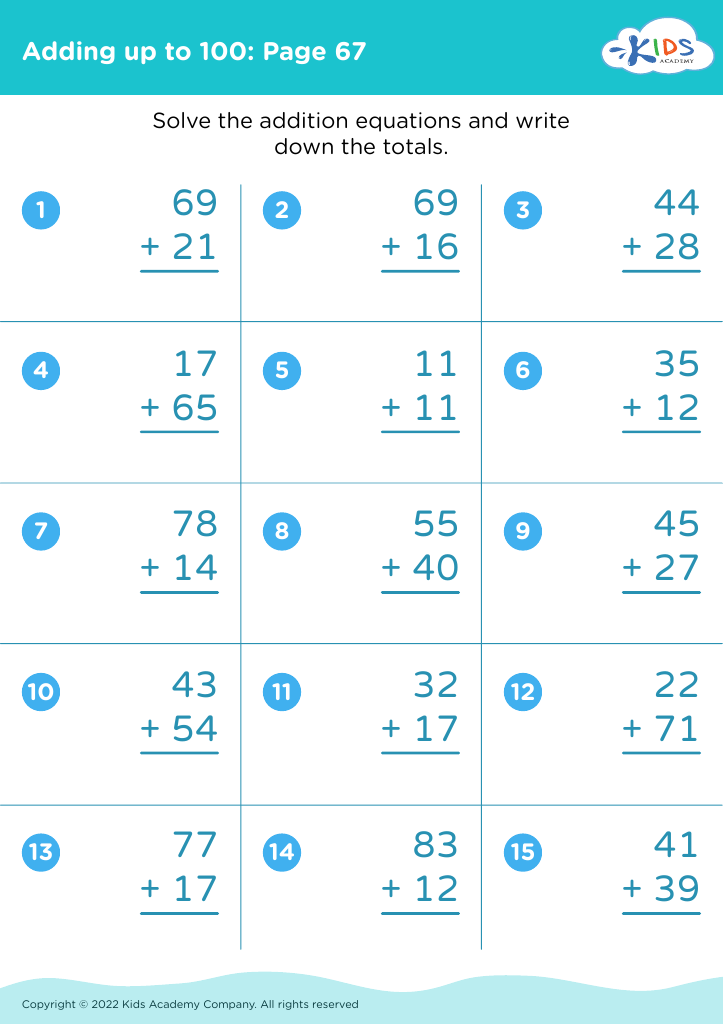
Adding up to 100: Page 67

Adding up to 100: Page 67

Adding up to 100: Page 67
Worksheet
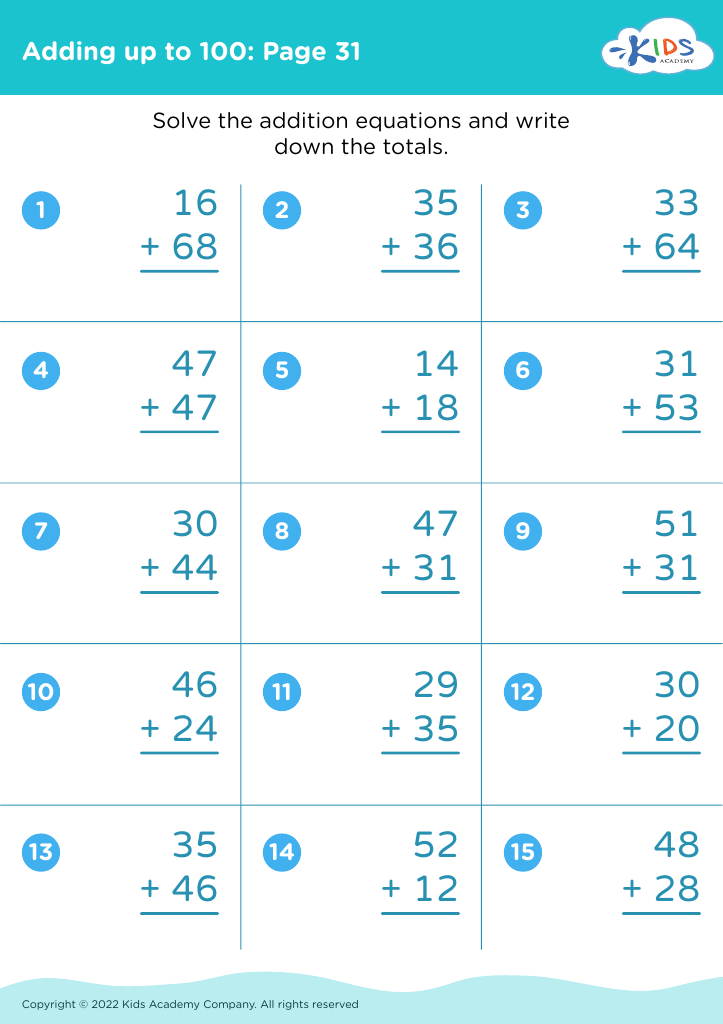
Adding up to 100: Page 31

Adding up to 100: Page 31

Adding up to 100: Page 31
Worksheet
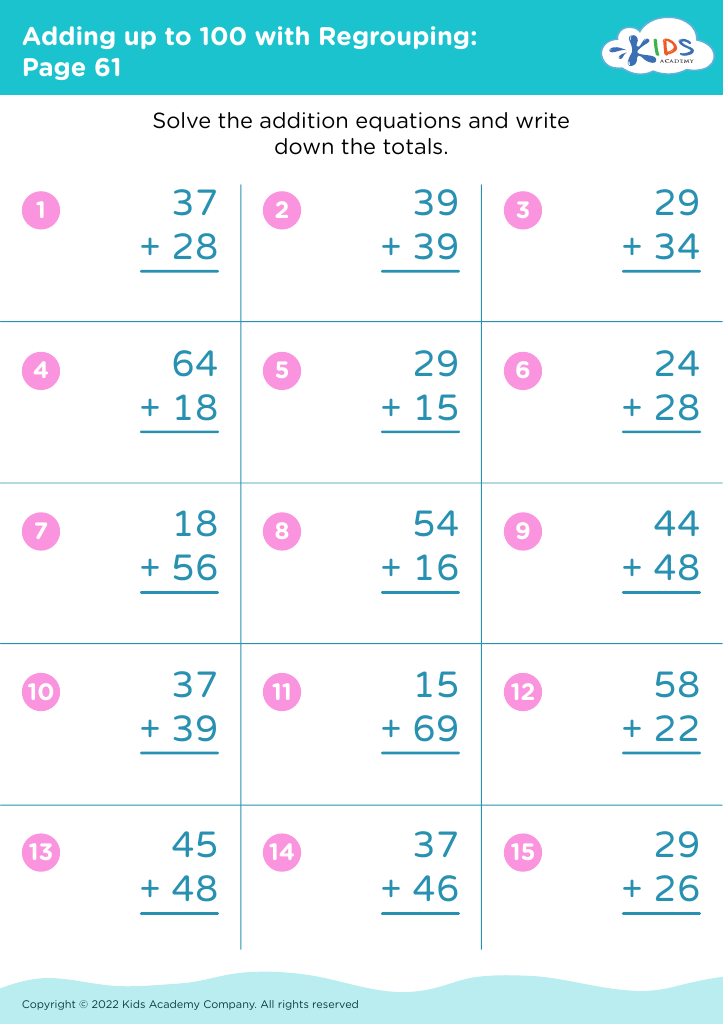
Adding up to 100 with Regrouping: Page 61
Worksheet
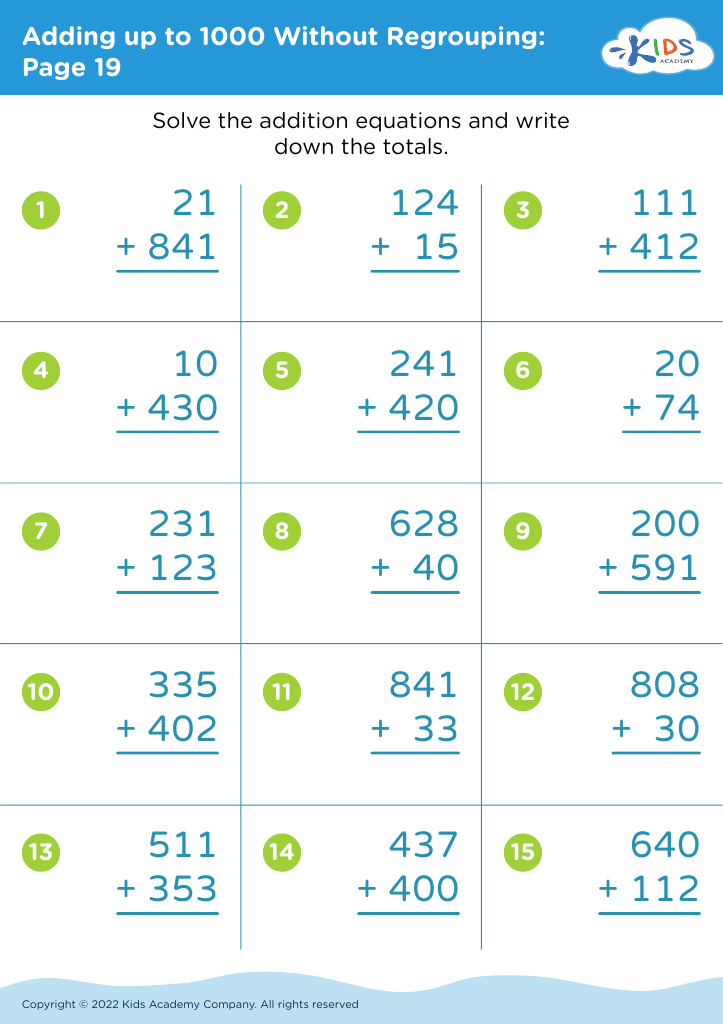
Adding up to 1000 Without Regrouping: Page 19
Worksheet
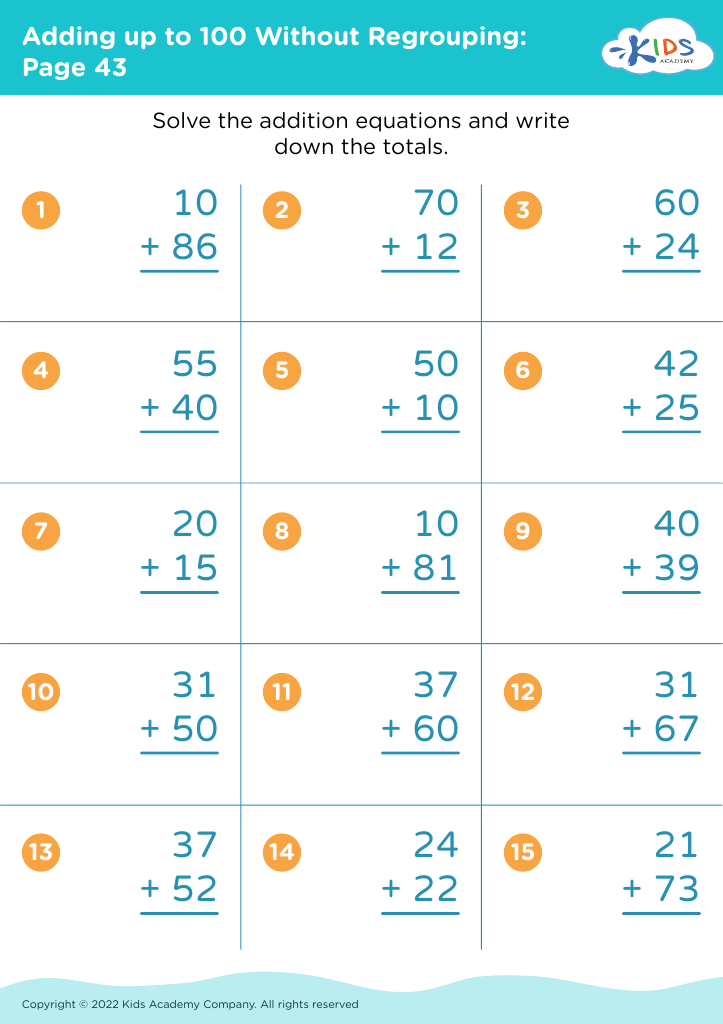
Adding up to 100 Without Regrouping: Page 43
Worksheet
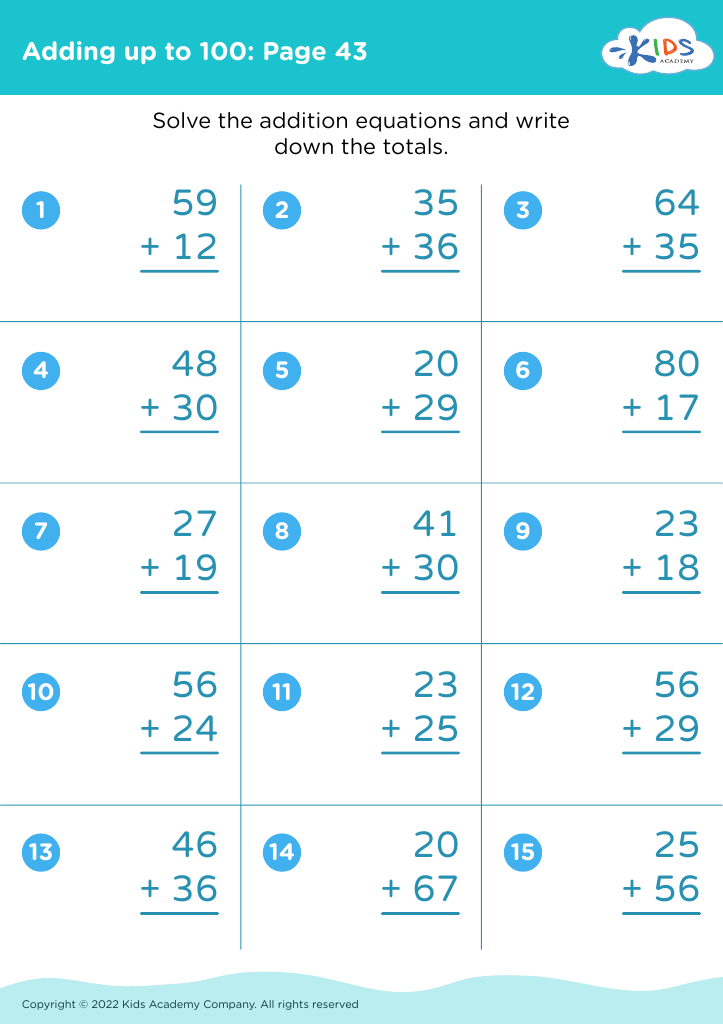
Adding up to 100: Page 43

Adding up to 100: Page 43

Adding up to 100: Page 43
Worksheet
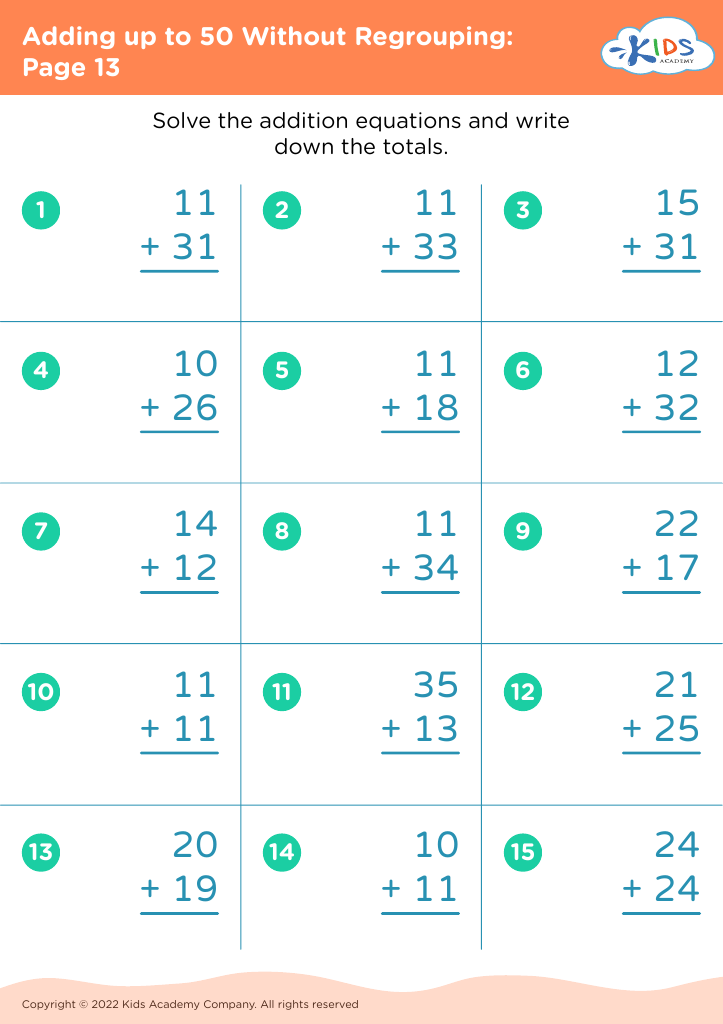
Adding up to 50 Without Regrouping: Page 13
Worksheet
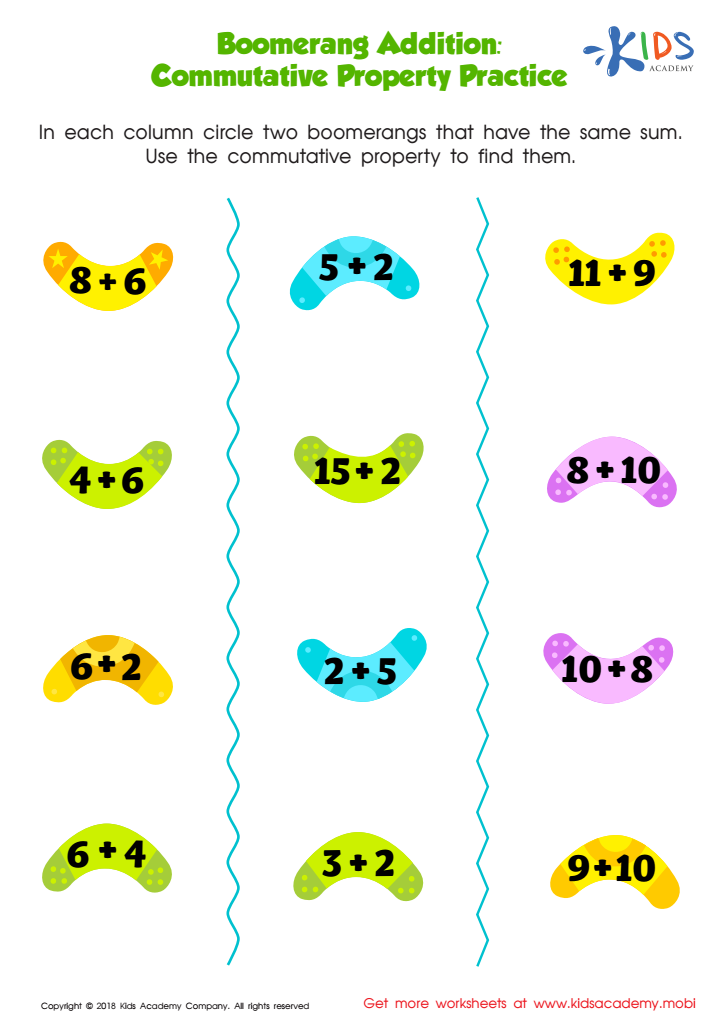
Boomerang Addition Worksheet

Boomerang Addition Worksheet

Kids know that when a boomerang is thrown, it reverses its path back. The same goes for addition: numbers can be rearranged and the sum will remain the same. Use this worksheet to find matching pairs of colorful boomerangs and equations. Look through each column and use the commutative property to find the pairs with the same sum.
Boomerang Addition Worksheet
Worksheet
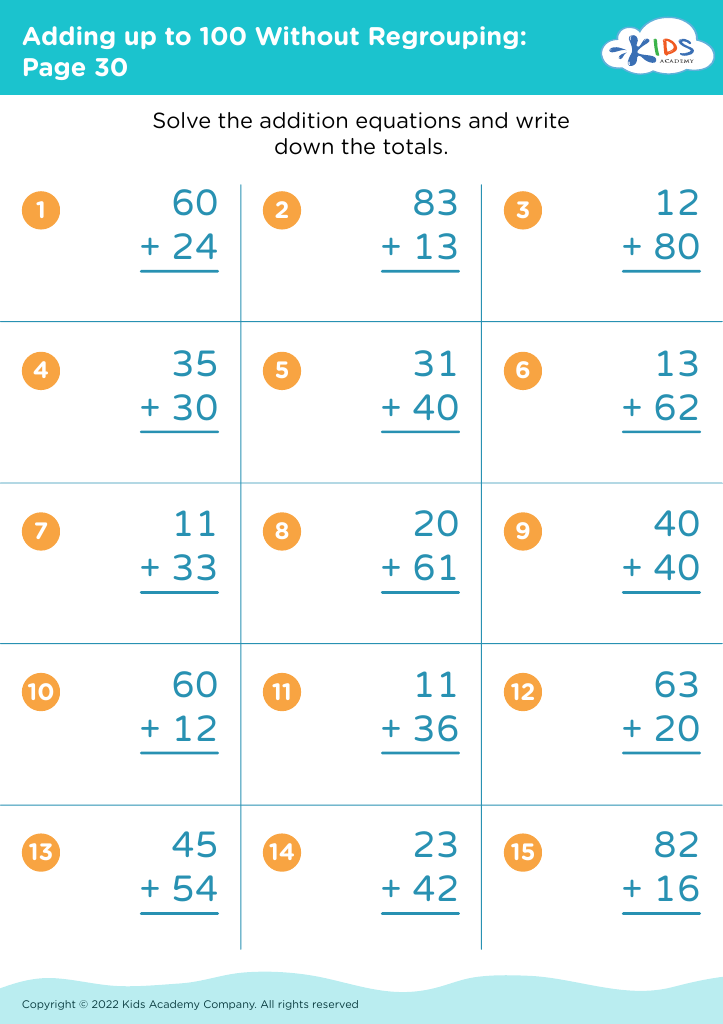
Adding up to 100 Without Regrouping: Page 30
Worksheet
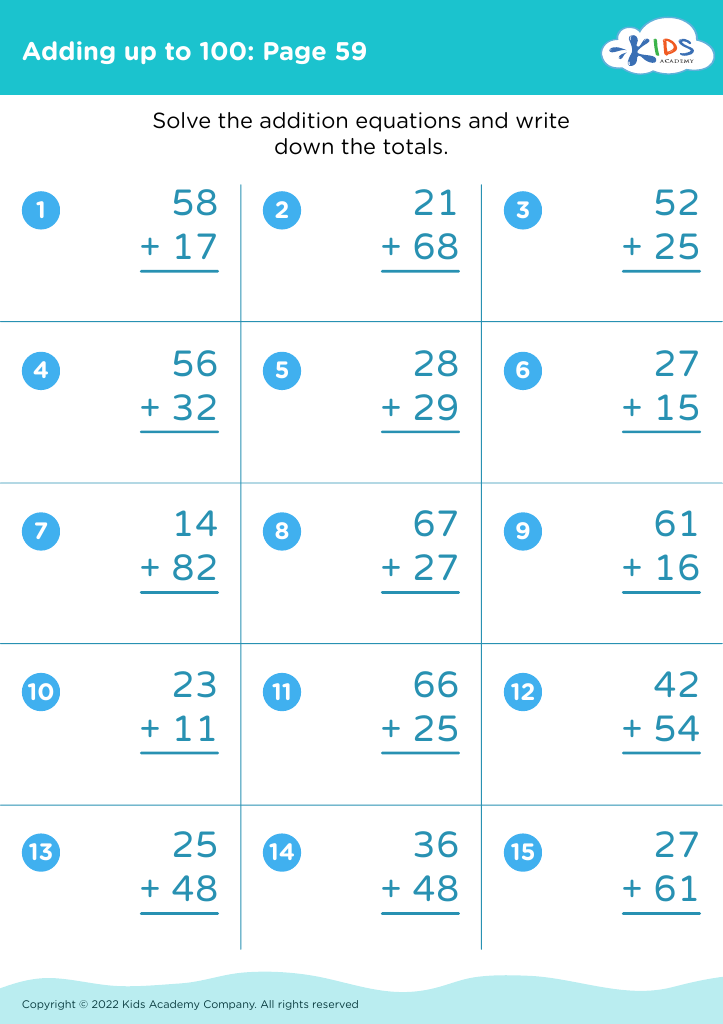
Adding up to 100: Page 59

Adding up to 100: Page 59

Adding up to 100: Page 59
Worksheet
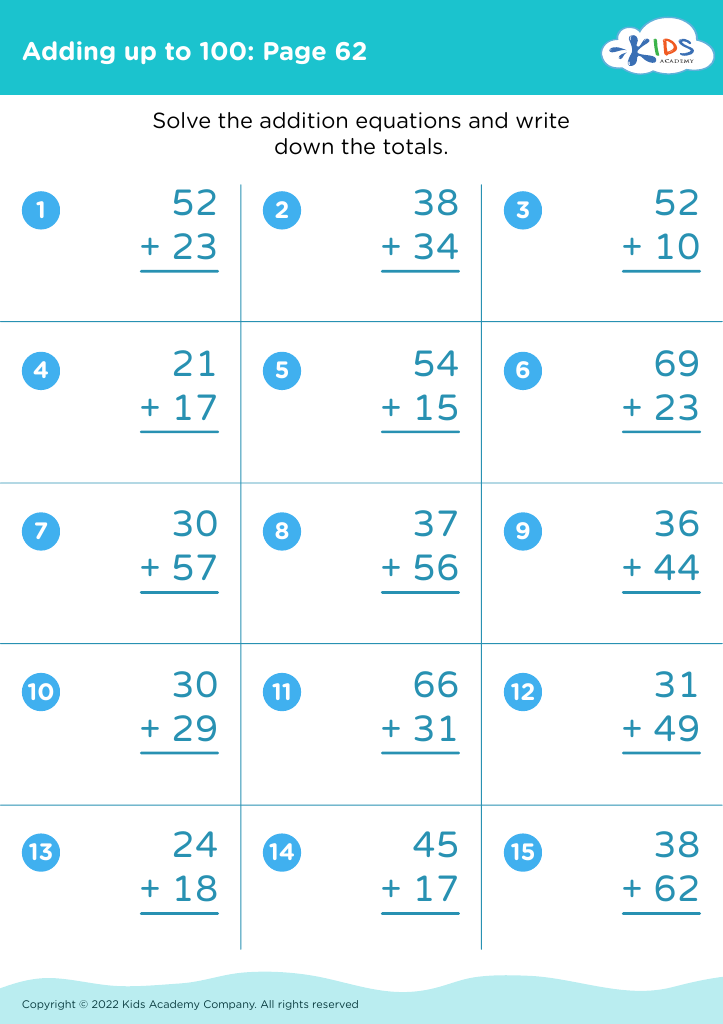
Adding up to 100: Page 62

Adding up to 100: Page 62

Adding up to 100: Page 62
Worksheet
Adding up to 50: Page 7

Adding up to 50: Page 7

Adding up to 50: Page 7
Worksheet


Understanding patterns in addition is a crucial skill for children aged 6-7 because it lays a strong foundation for their future mathematical learning and overall cognitive development. At this young age, children are developing critical thinking and problem-solving skills, and recognizing patterns helps them see relationships and connections between numbers, which is key to mastering basic arithmetic.

When children grasp the idea that numbers follow a specific sequence and that addition results in predictable outcomes, they start to develop number sense, an intuitive understanding of how numbers work. This forms the bedrock for more advanced mathematical concepts they'll encounter later, such as multiplication, division, and even algebra.

Moreover, identifying addition patterns helps children develop their memory and cognitive efficiency. For instance, knowing that adding two to a number always yields the number four places away in the number sequence (e.g., 2 + 2 = 4, 3 + 2 = 5) allows children to solve problems more quickly and with greater confidence.

For parents and teachers, fostering an understanding of addition patterns not only supports academic achievement but also boosts children's self-esteem and their enthusiasm for learning. Engaging students with pattern activities can make math fun and interactive, setting a positive tone for future educational experiences. By emphasizing pattern recognition in addition, adults can significantly enhance a child's early mathematical growth and analytical abilities.