Understanding patterns Addition Worksheets for Ages 6-7 - Page 2
29 filtered results
-
From - To
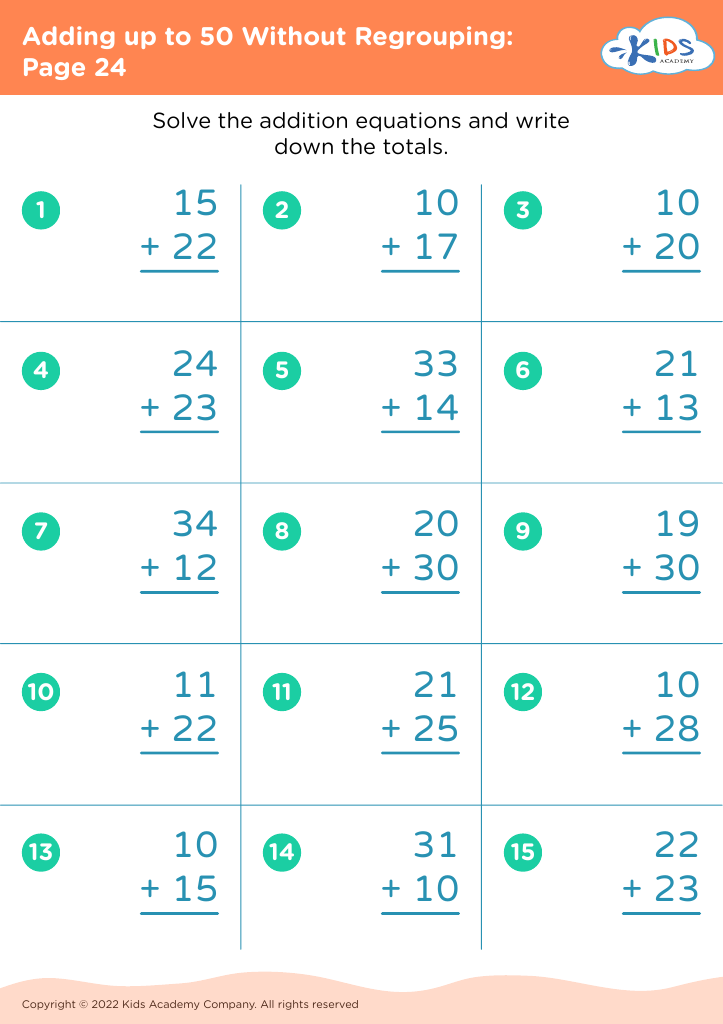
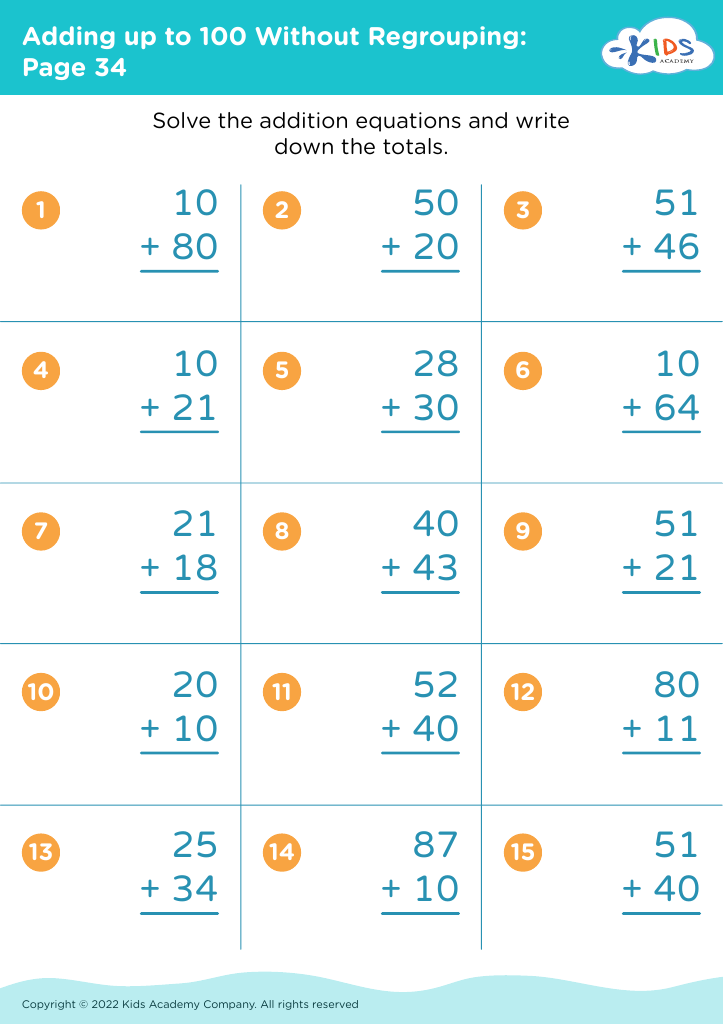
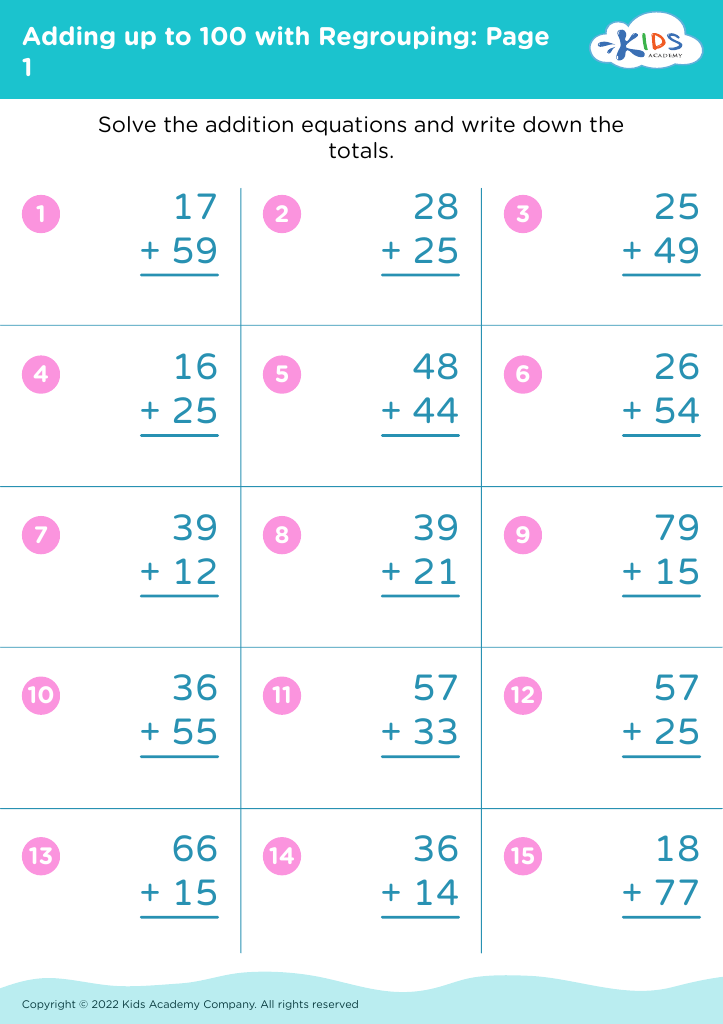
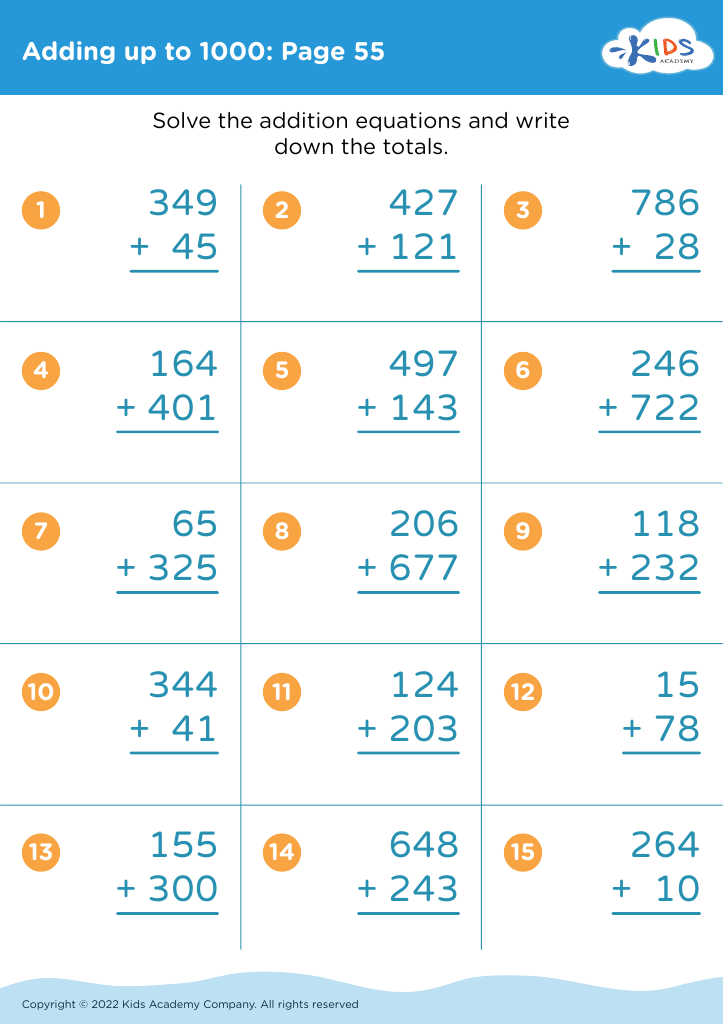
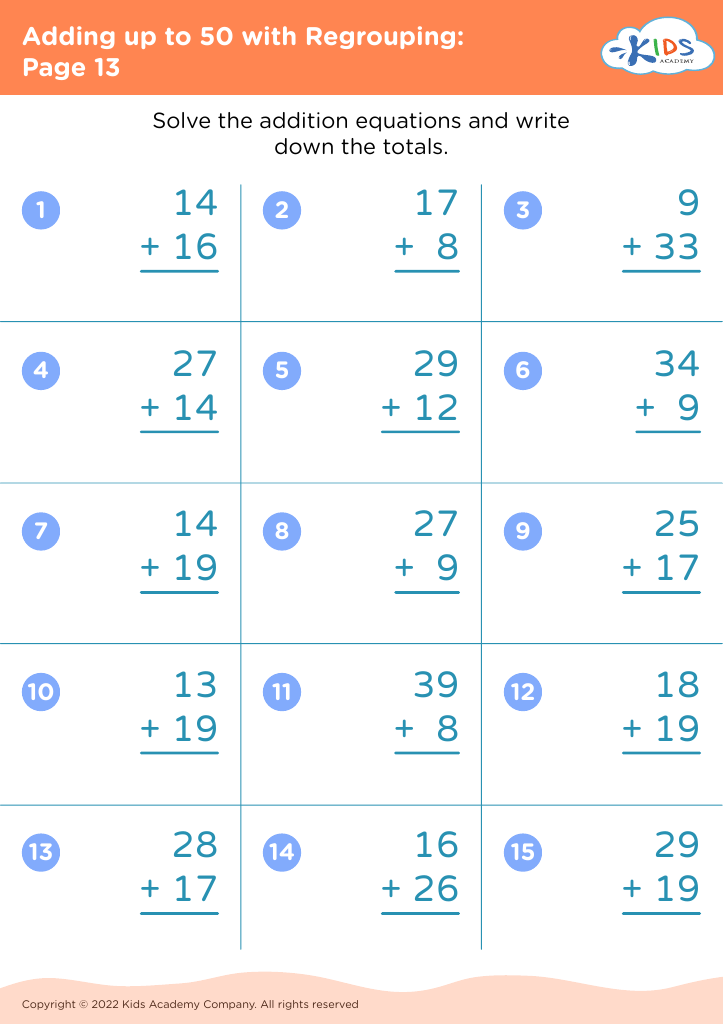








Understanding patterns in addition is a crucial skill for children aged 6-7 because it lays a strong foundation for their future mathematical learning and overall cognitive development. At this young age, children are developing critical thinking and problem-solving skills, and recognizing patterns helps them see relationships and connections between numbers, which is key to mastering basic arithmetic.
When children grasp the idea that numbers follow a specific sequence and that addition results in predictable outcomes, they start to develop number sense, an intuitive understanding of how numbers work. This forms the bedrock for more advanced mathematical concepts they'll encounter later, such as multiplication, division, and even algebra.
Moreover, identifying addition patterns helps children develop their memory and cognitive efficiency. For instance, knowing that adding two to a number always yields the number four places away in the number sequence (e.g., 2 + 2 = 4, 3 + 2 = 5) allows children to solve problems more quickly and with greater confidence.
For parents and teachers, fostering an understanding of addition patterns not only supports academic achievement but also boosts children's self-esteem and their enthusiasm for learning. Engaging students with pattern activities can make math fun and interactive, setting a positive tone for future educational experiences. By emphasizing pattern recognition in addition, adults can significantly enhance a child's early mathematical growth and analytical abilities.








