Filters

15 filtered results

Clear all filters
Favorites
With answer key
Interactive

15 filtered results

Difficulty Level

Grade


Discover our "Understanding Sequences Addition Worksheets for Ages 6-7" to help young learners master the fundamentals of sequence addition. Perfectly designed for first-graders, these worksheets offer a fun, engaging way to enhance math skills and sequential thinking. Each worksheet provides colorful, step-by-step problems that progressively build confidence in adding numbers sequentially. Our practice sheets not only reinforce essential addition concepts but also cater to various learning styles, ensuring every child can succeed. Empower your child to tackle math challenges effortlessly with these interactive and educational resources. Download today and watch their math skills soar!
Check out this FREE Trial Lesson on Addition for age 6-7!

Short and Long Vowel Sort

Favorites
With answer key
Interactive
  • 6-7
  • Understanding Sequences
  • Addition
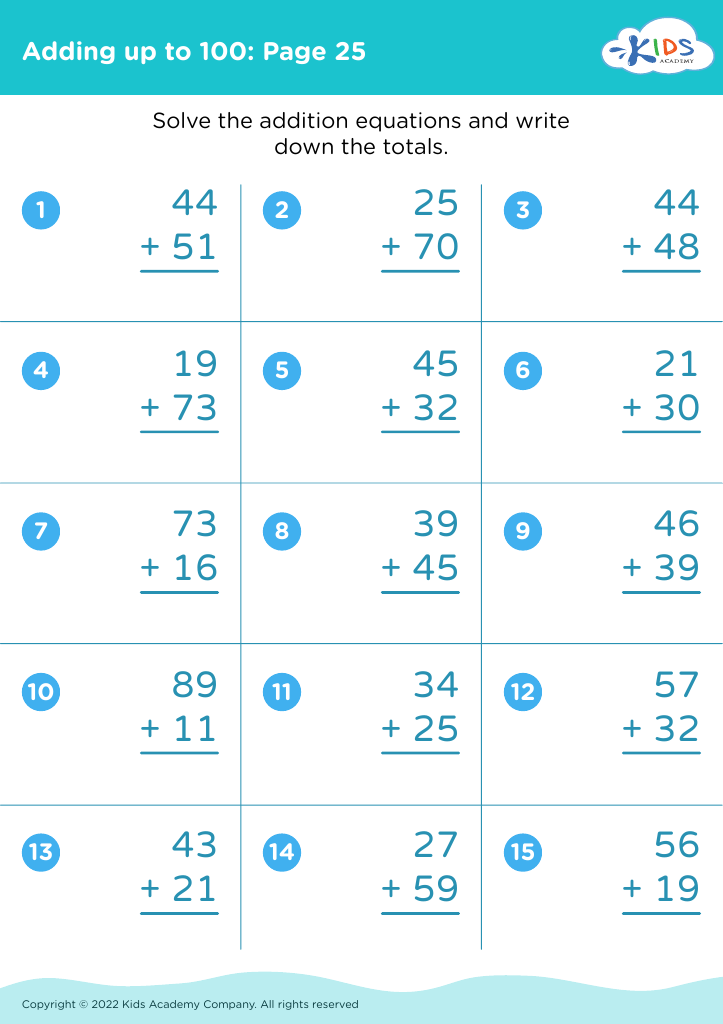
Adding up to 100: Page 25

Adding up to 100: Page 25

Adding up to 100: Page 25
Worksheet
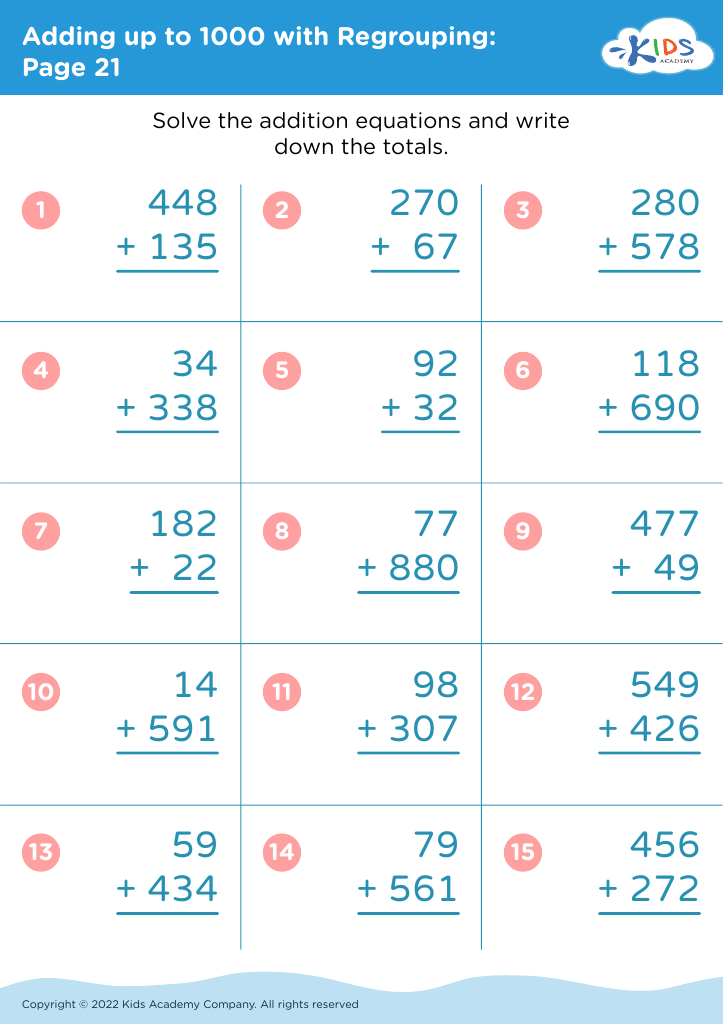
Adding up to 1000 with Regrouping: Page 21
Worksheet
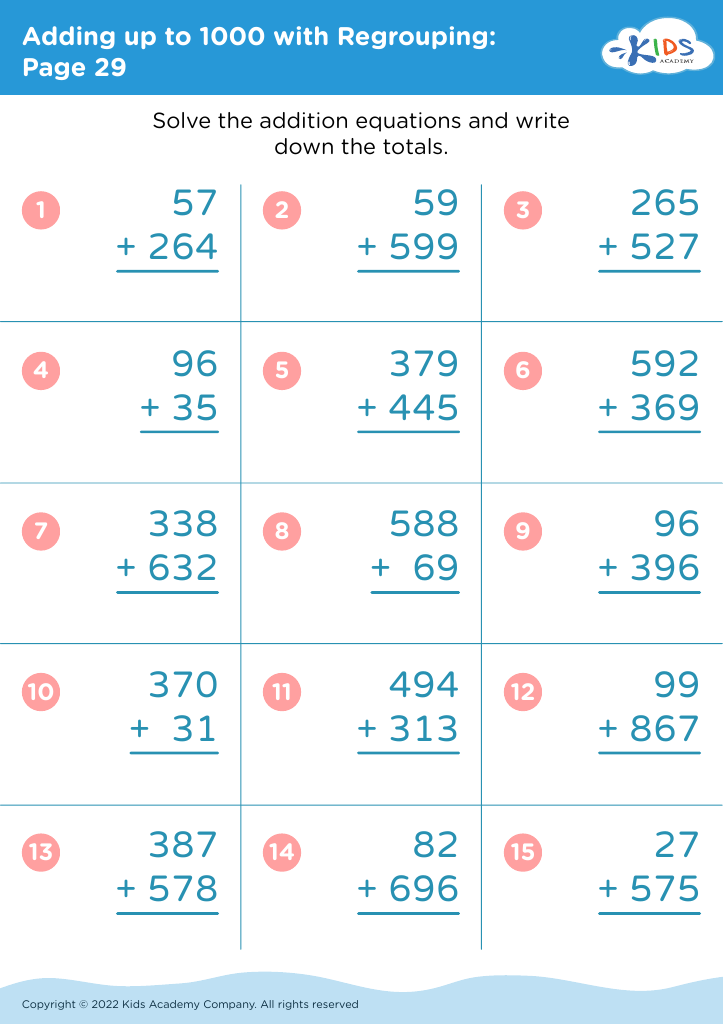
Adding up to 1000 with Regrouping: Page 29
Worksheet
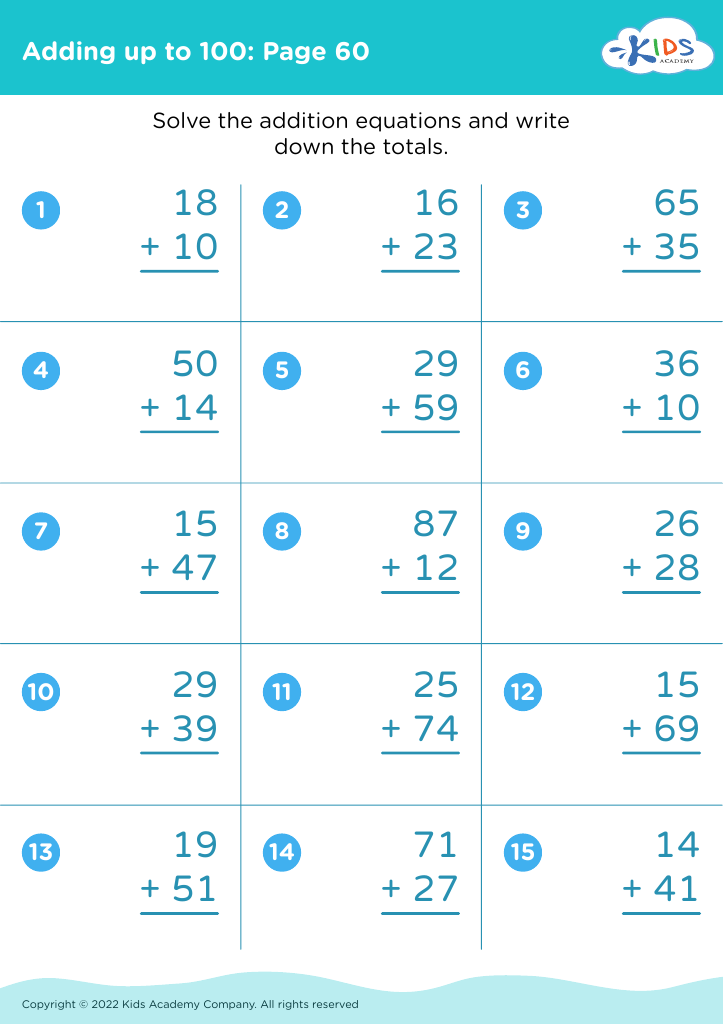
Adding up to 100: Page 60

Adding up to 100: Page 60

Adding up to 100: Page 60
Worksheet
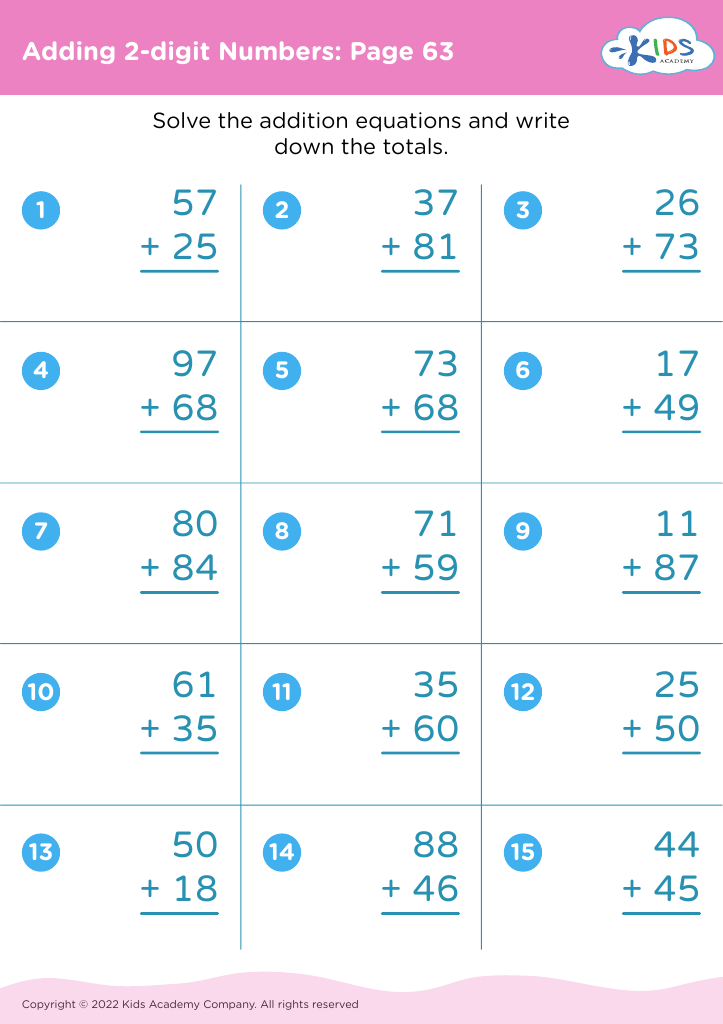
Adding 2-digit Numbers: Page 63

Adding 2-digit Numbers: Page 63

Adding 2-digit Numbers: Page 63
Worksheet
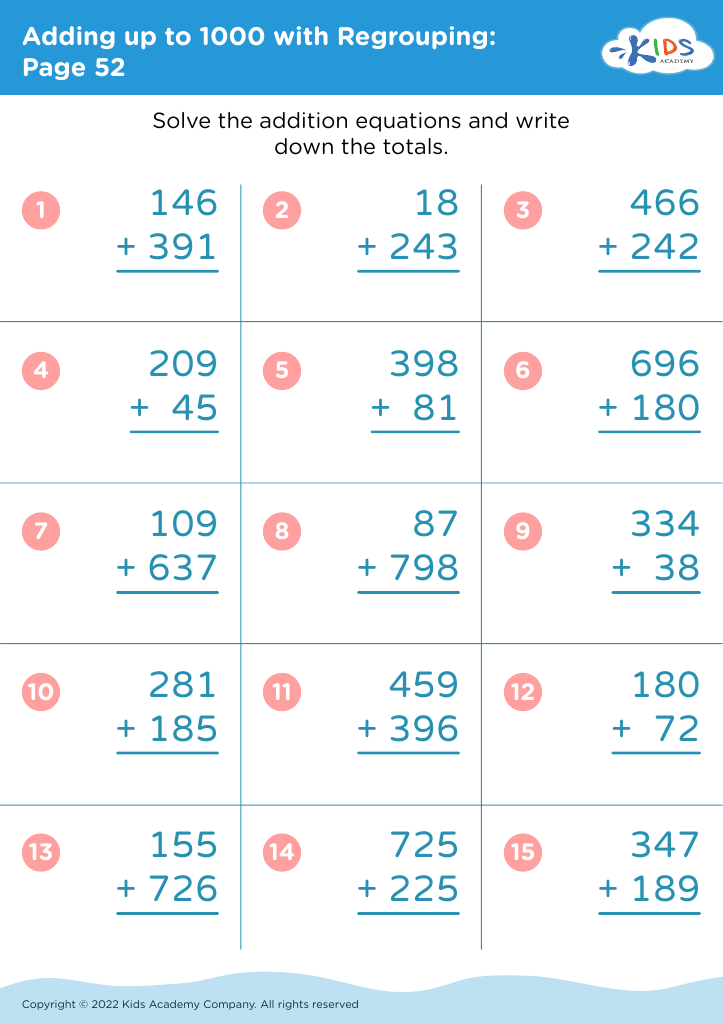
Adding up to 1000 with Regrouping: Page 52
Worksheet
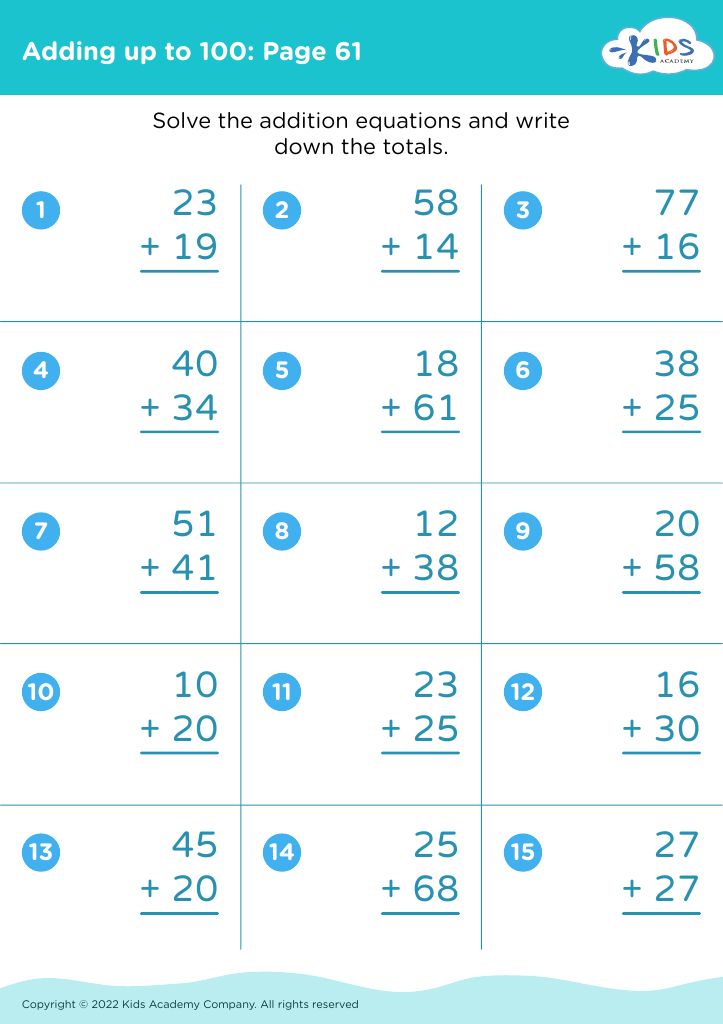
Adding up to 100: Page 61

Adding up to 100: Page 61

Adding up to 100: Page 61
Worksheet
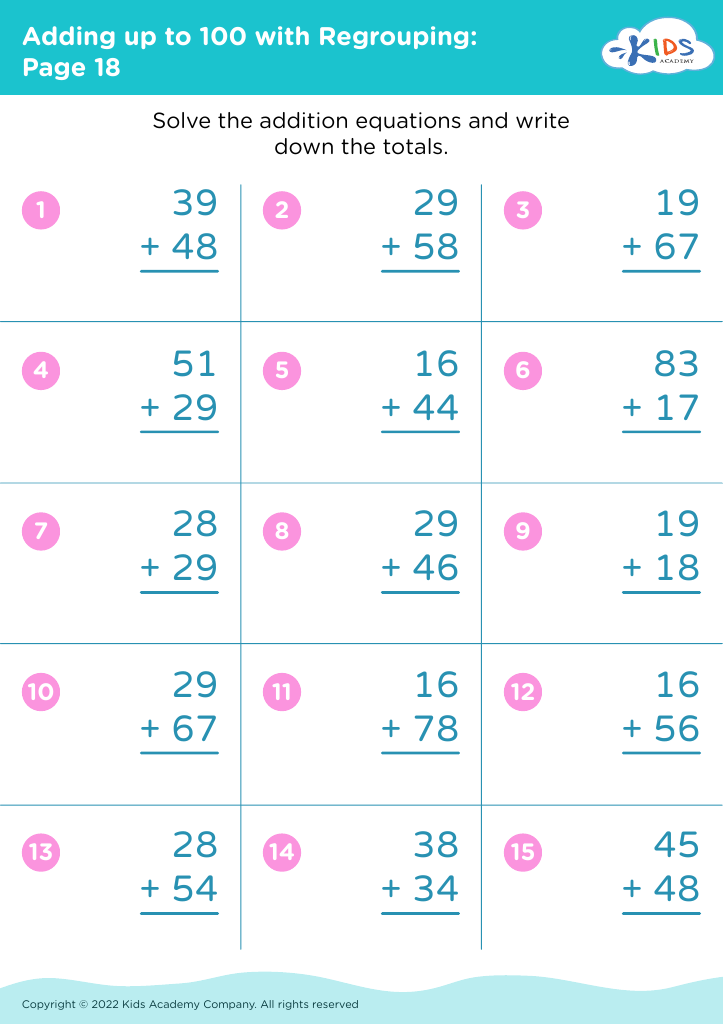
Adding up to 100 with Regrouping: Page 18
Worksheet
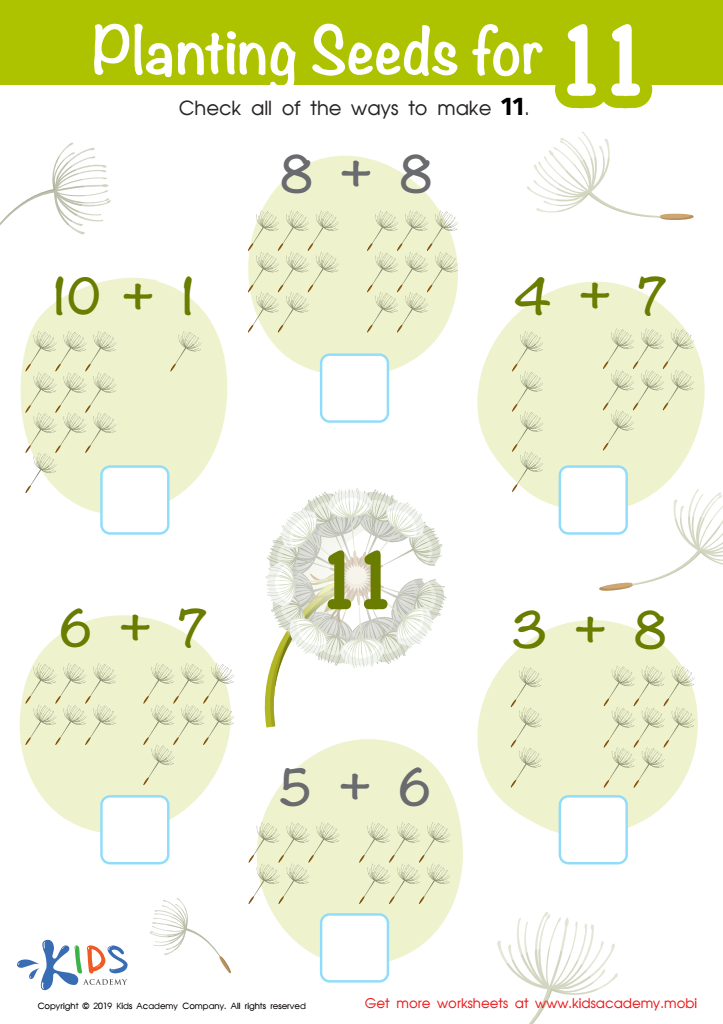
Planting Seeds for 11 Worksheet

Planting Seeds for 11 Worksheet

Before starting, ask your students to count as high as they can. Explain that different numbers can add up to the same total. Give examples like 2+2 =4 and 3+1 =4. Ask if they can think of other examples. Then have them work through the equations in the printout and circle all that add up to 11.
Planting Seeds for 11 Worksheet
Worksheet
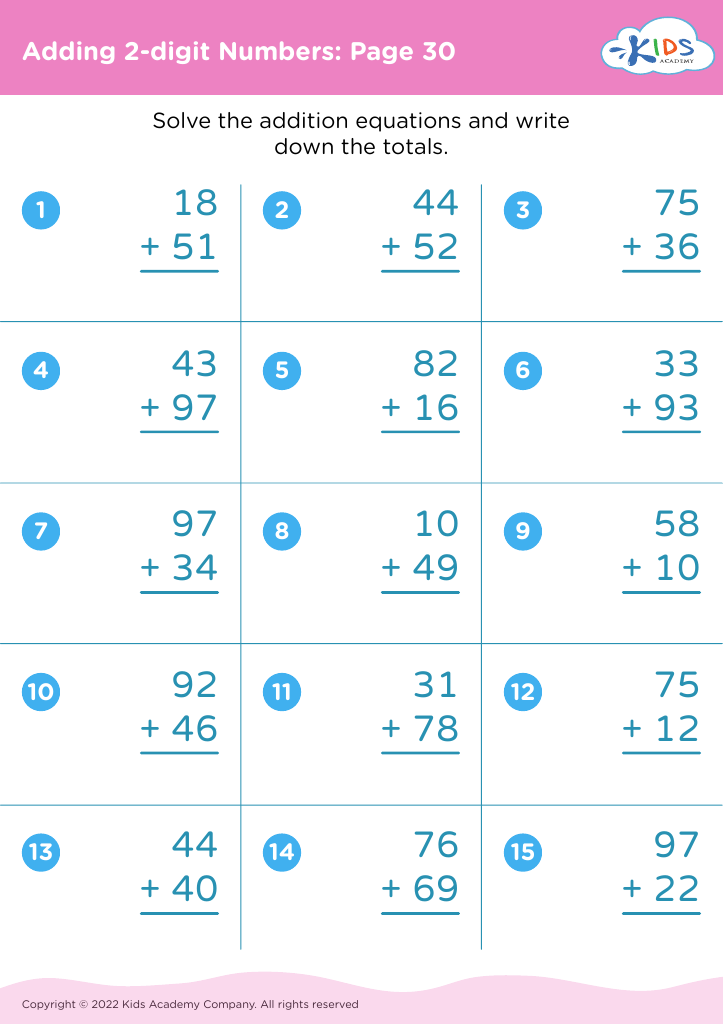
Adding 2-digit Numbers: Page 30

Adding 2-digit Numbers: Page 30

Adding 2-digit Numbers: Page 30
Worksheet
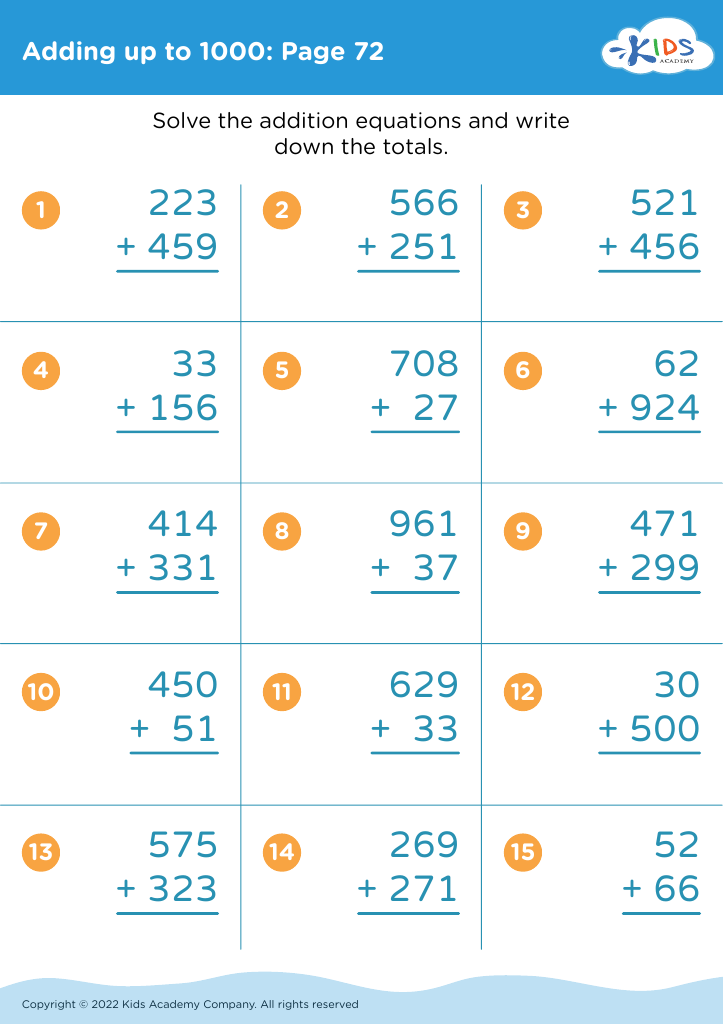
Adding up to 1000: Page 72

Adding up to 1000: Page 72

Adding up to 1000: Page 72
Worksheet
Haystack Steps Worksheet

Haystack Steps Worksheet

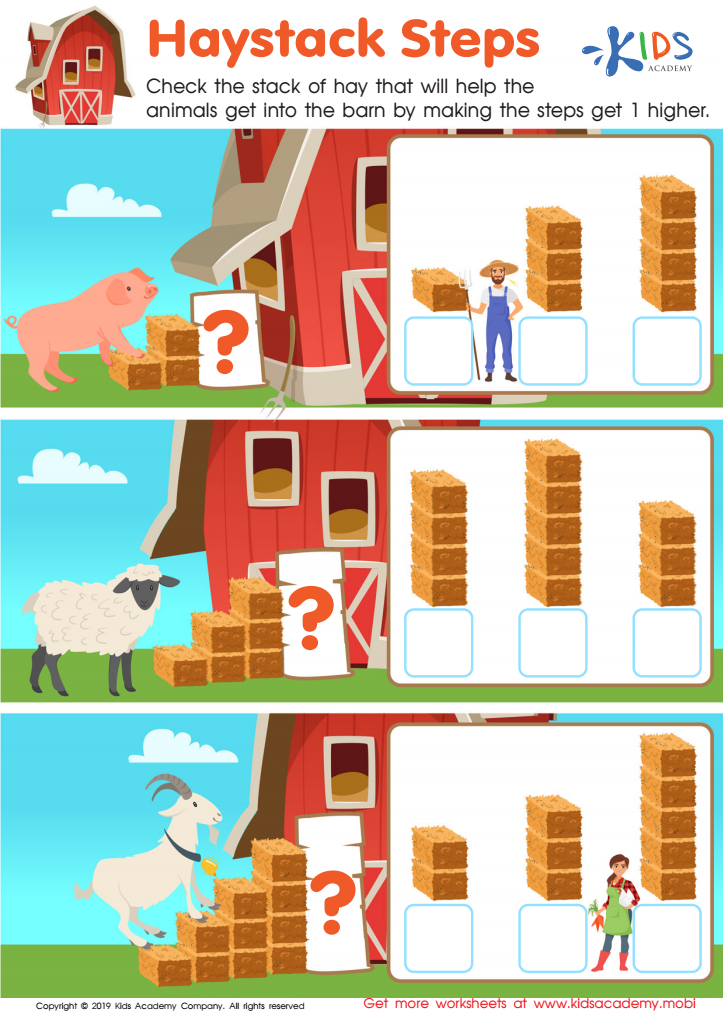
Have your kids ever visited a farm? What activities and sights did they enjoy? Farmers are essential to our lives, growing food and providing us with dairy and eggs. In this worksheet, a farmer has made a haystack for his animals to climb into the barn. Ask your kids to add an extra layer to the stack to make the climb easier.
Haystack Steps Worksheet
Worksheet
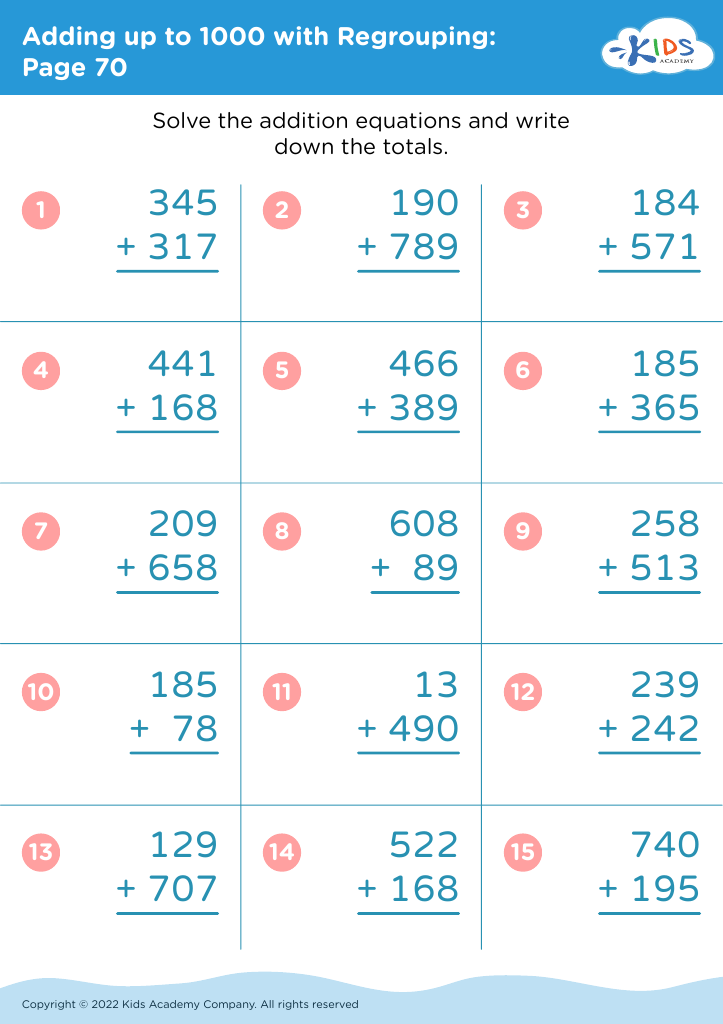
Adding up to 1000 with Regrouping: Page 70
Worksheet
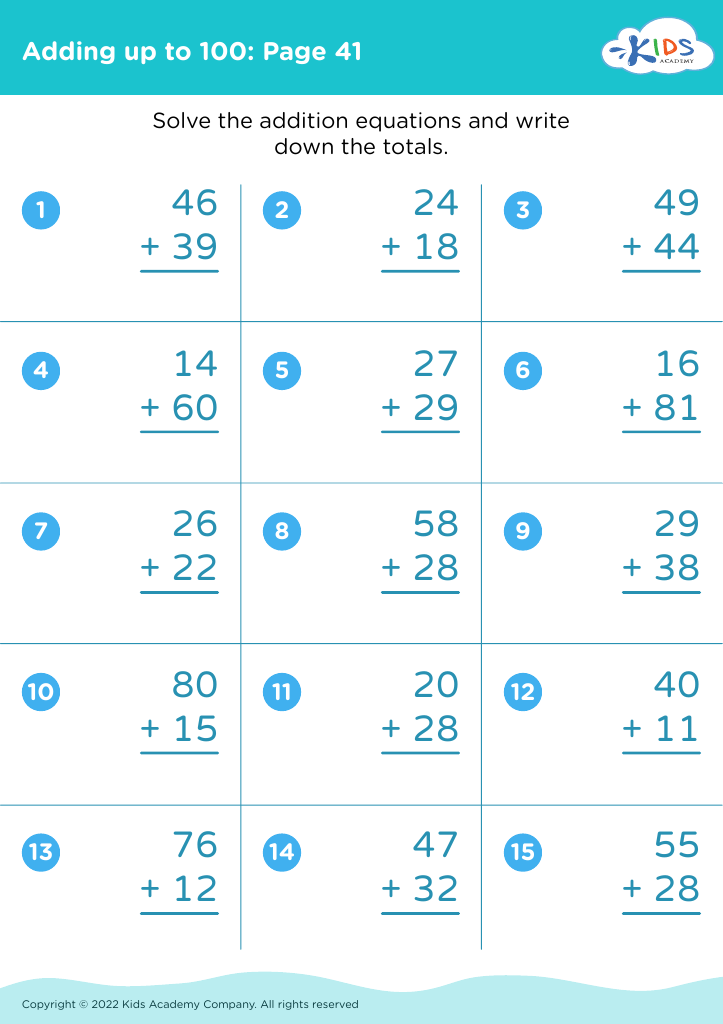
Adding up to 100: Page 41

Adding up to 100: Page 41

Adding up to 100: Page 41
Worksheet
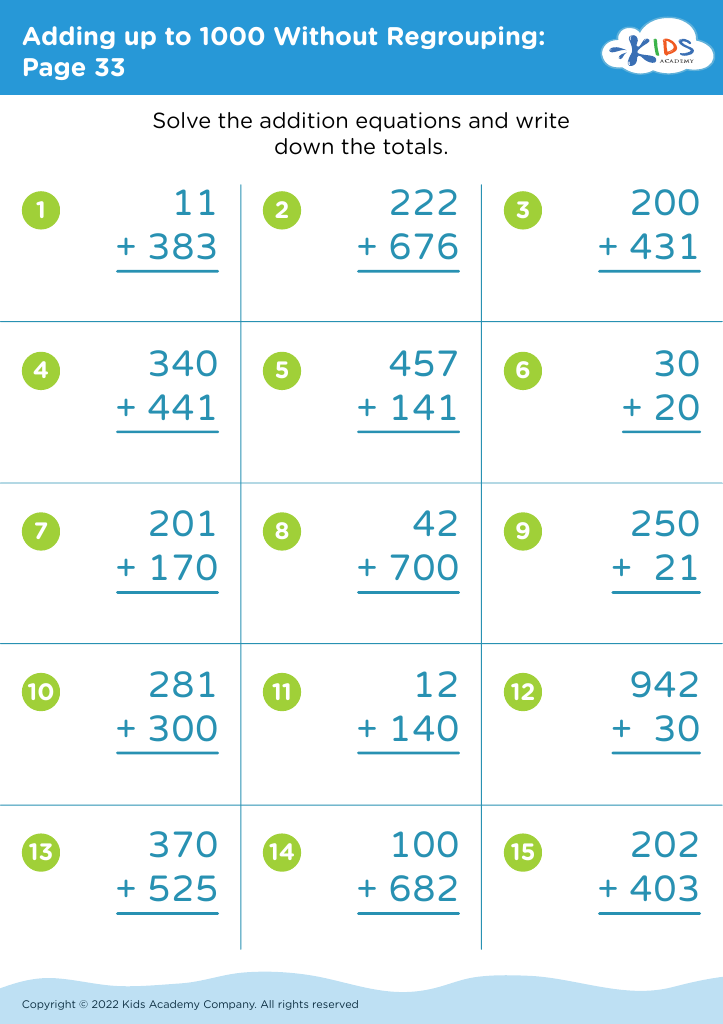
Adding up to 1000 Without Regrouping: Page 33
Worksheet


Parents and teachers should care about teaching sequences and addition to children aged 6-7 because it forms a foundational skill crucial for later mathematical learning and critical thinking. Understanding sequences helps kids recognize patterns, which is essential not just in math, but in everyday problem-solving situations. For instance, this early grasp of patterns helps children predict outcomes and understand progression, a skill that can easily translate into reading comprehension, science, and more.

Addition, a fundamental component of early arithmetic, gives kids the essential building blocks for more complex mathematics, such as subtraction, multiplication, and division. At this developmental stage, children are quick to absorb and understand the concept of 'adding up' numbers to arrive at a sum, an action they frequently perform in real-life scenarios (e.g., tallying scores in a game or combining items). This technique ingrains the practical importance of mathematics in their minds.

Moreover, teaching sequences and addition can boost a child’s confidence in their mathematical abilities, encouraging a positive attitude toward learning. It's during these formative years that children either develop a love or aversion to math. Ensuring they have clear, simple entry points can make math seem less intimidating and more fun, laying the groundwork for success in their educational journey.