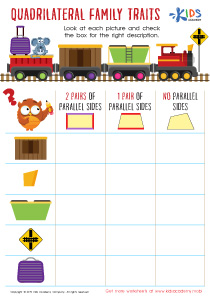
Fine Motor Skills Fractions of Shapes Worksheets for Ages 6-7
7 filtered results
-
From - To
Enhance your child's fine motor skills while mastering fractions of shapes with our specially designed worksheets for ages 6-7! These engaging printables provide a fun and interactive way for young learners to explore mathematical concepts. Each worksheet encourages kids to cut, color, and manipulate shapes, promoting hand-eye coordination and dexterity alongside their understanding of fractions. With colorful visuals and age-appropriate challenges, these activities keep your child motivated and excited to learn. Perfect for parents and educators seeking to reinforce math skills through hands-on practice, our fine motor skills worksheets transform learning into a creative journey! Download them today for endless learning fun!
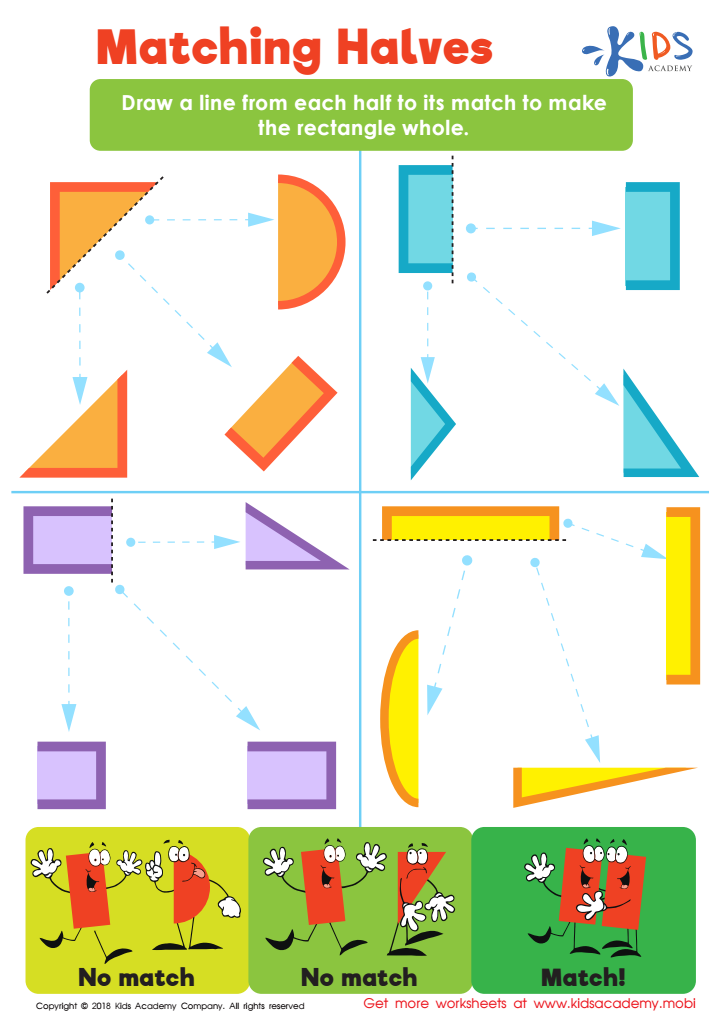
Matching Halves Worksheet
 Assign to My Students
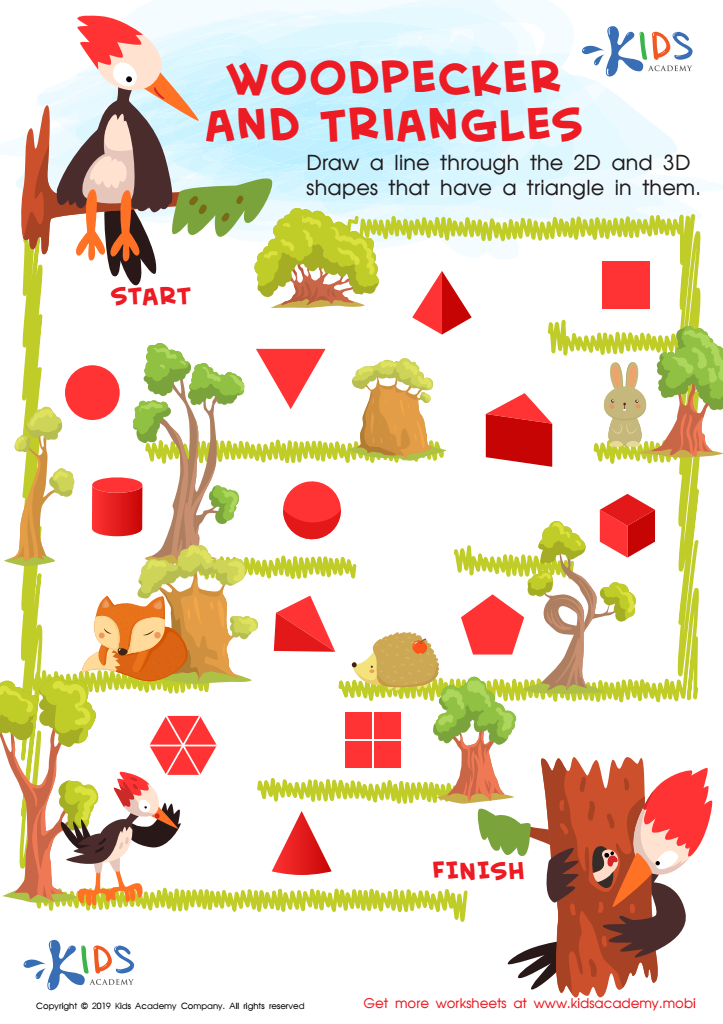
Woodpecker and Triangles Worksheet
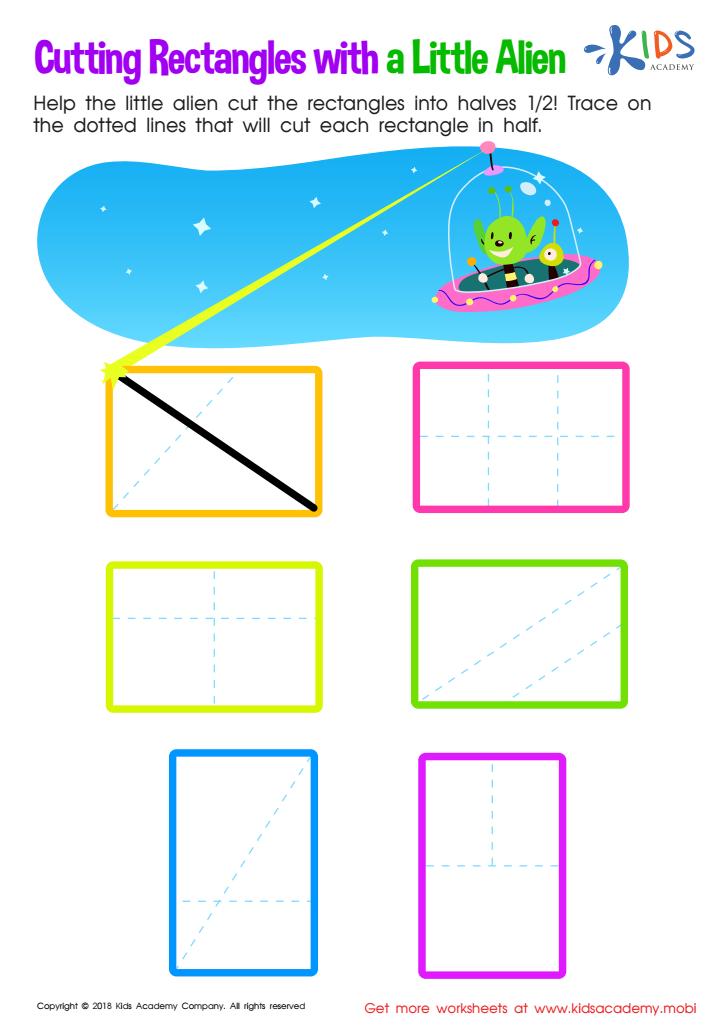
Cutting Rectangles with Alien Worksheet
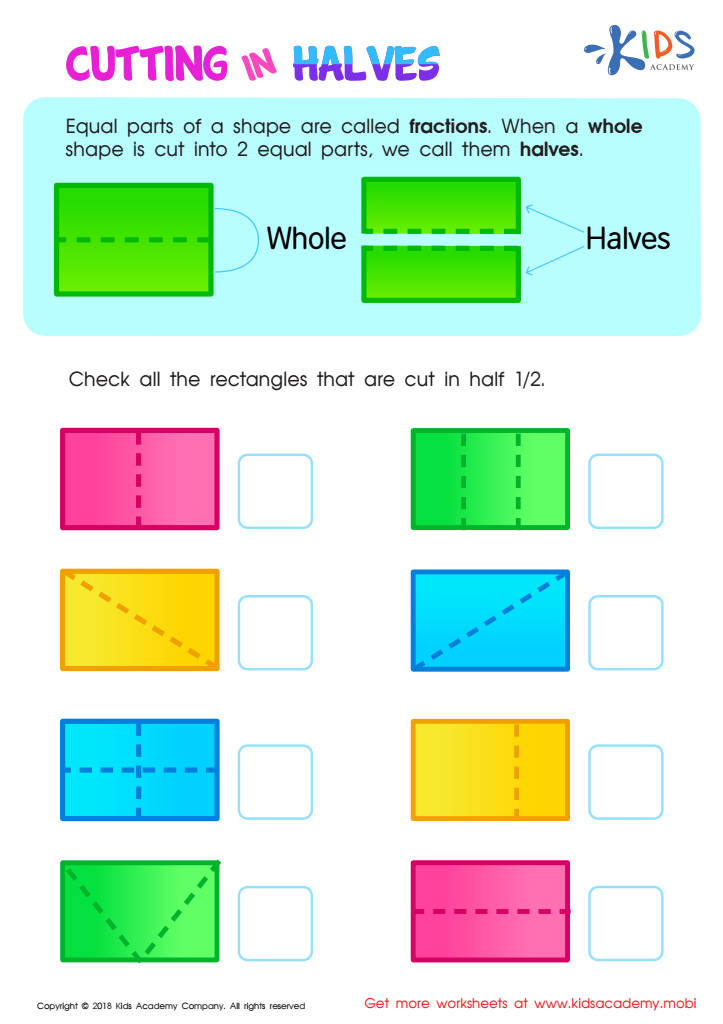
Cutting in Halves Worksheet
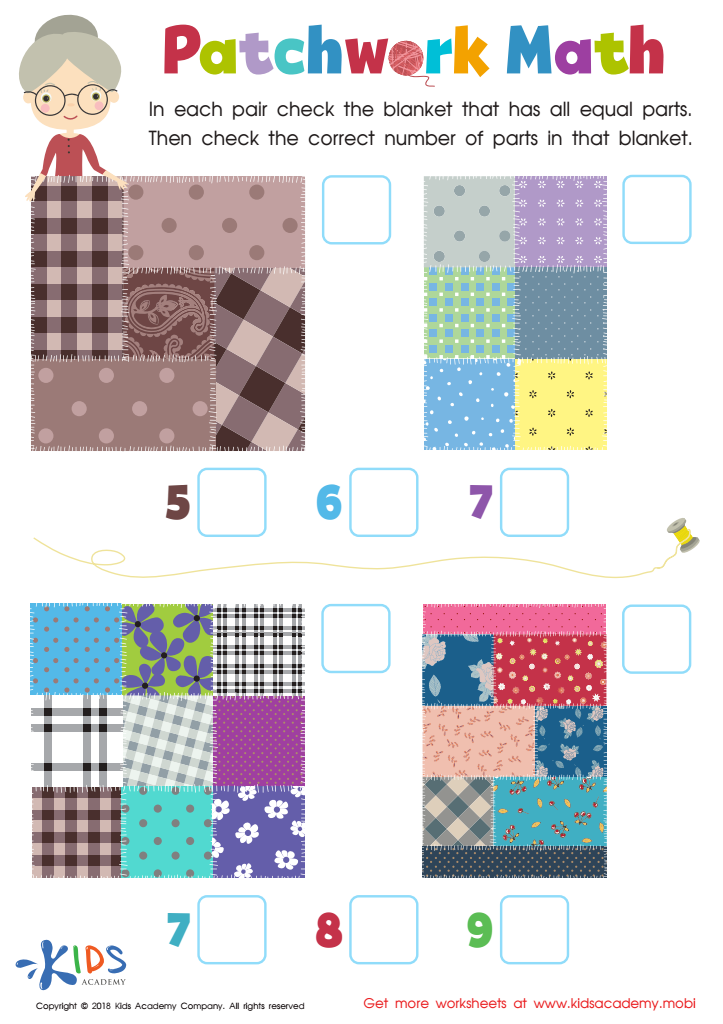
Patchwork Math Worksheet
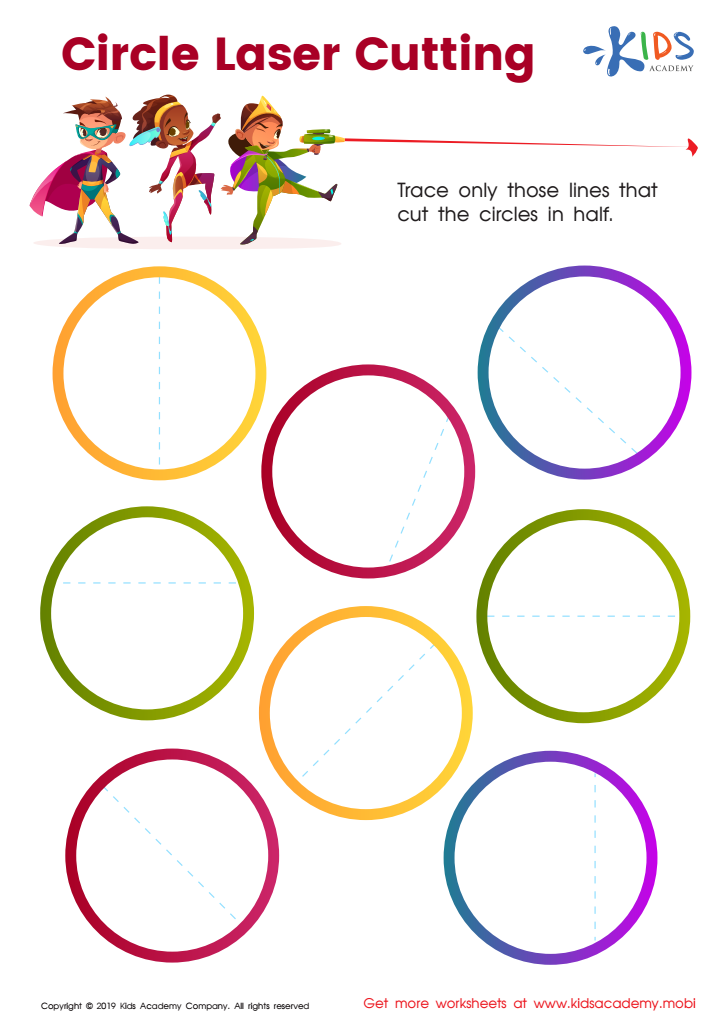
Circle Laser Cutting Worksheet
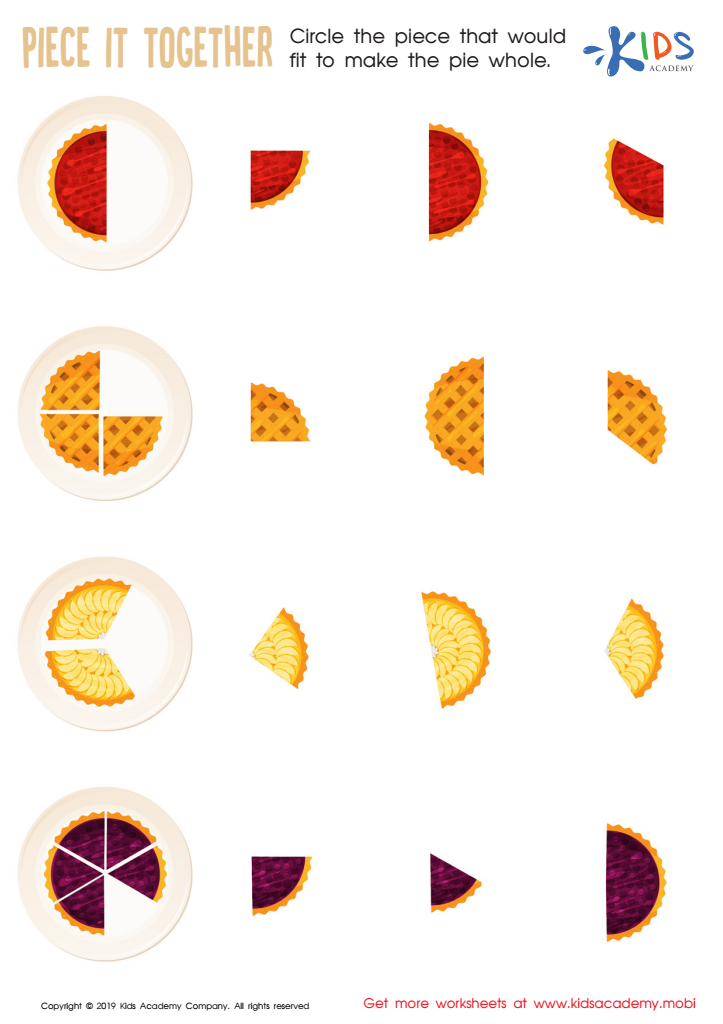
Piece it together Worksheet








Parents and teachers should prioritize Fine Motor Skills and Fractions of Shapes for children ages 6-7 because these skills are foundational for future academic success and everyday activities. Fine motor skills involve the coordination of small muscle movements, critical for tasks such as writing, drawing, and manipulating objects. At this age, children are developing hand-eye coordination and dexterity, which are essential for their ability to express themselves creatively and perform academically.
Simultaneously, introducing fractions of shapes at this developmental stage helps children understand basic mathematical concepts. Fractions enable young learners to grasp the idea of parts and whole, foundational for future mathematics. Through hands-on activities, like cutting paper shapes or using manipulatives, children can visually and physically engage with the concept, reinforcing their understanding.
Moreover, mastering these skills promotes problem-solving abilities and boosts confidence as children see their progress. By engaging in activities that develop both Fine Motor Skills and an understanding of Fractions, educators and parents cultivate critical thinking, creativity, and mathematical reasoning. This comprehensive approach not only prepares them for more advanced learning but also contributes to their overall cognitive and physical development crucial for lifelong learning.