Shape Recognition Fractions of Shapes Worksheets for Ages 6-7
9 filtered results
-
From - To
Explore our engaging Shape Recognition Fractions of Shapes Worksheets designed specifically for children aged 6-7. These interactive and visually captivating worksheets help young learners grasp the essential concepts of shape recognition and fractions. Students will enhance their understanding of how shapes can be divided into equal parts, fostering both math skills and spatial awareness. With a variety of exercises, children will identify, color, and manipulate shapes to reinforce their learning. Perfect for homeschooling or classroom use, our worksheets offer a fun, hands-on approach to math, making learning fractions an enjoyable adventure. Unlock your child’s potential in mathematics today!
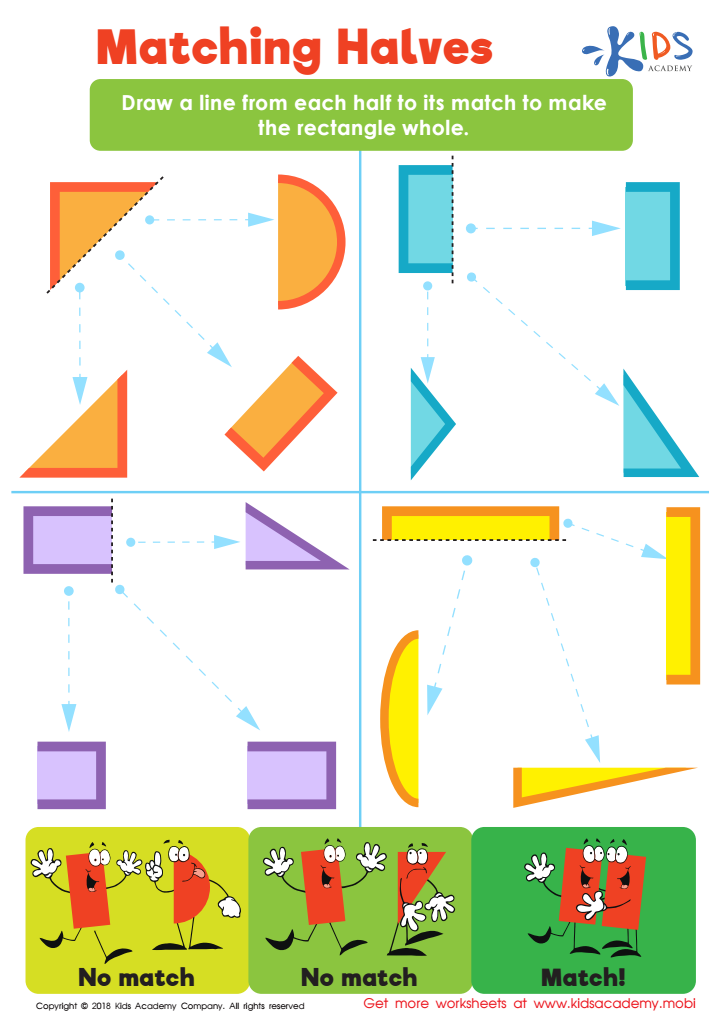
Matching Halves Worksheet
 Assign to My Students
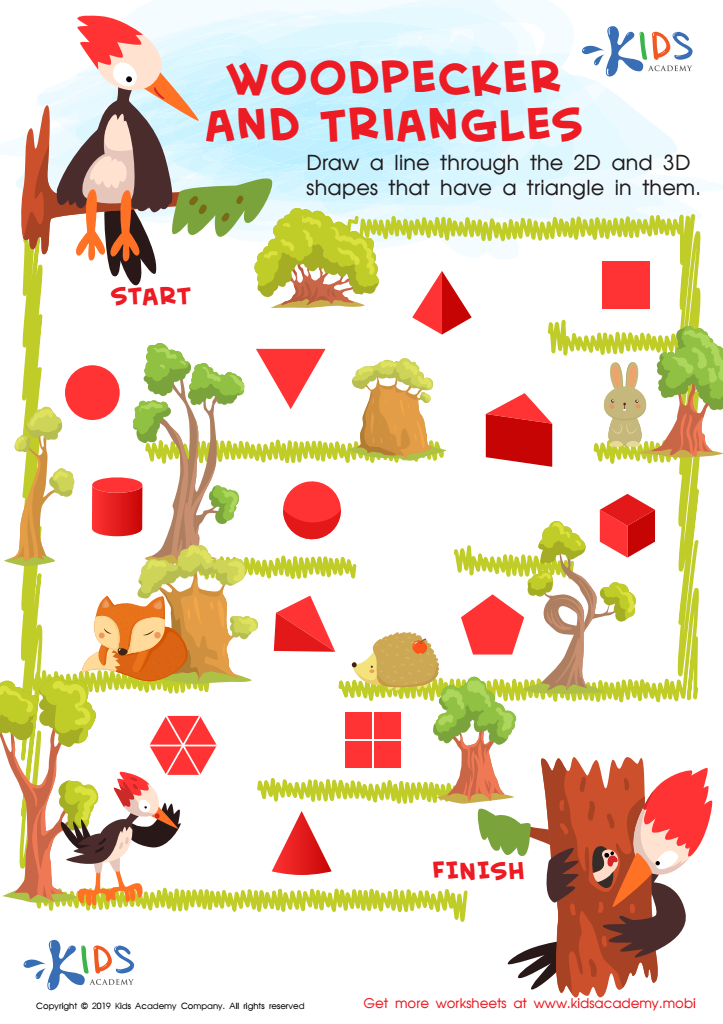
Woodpecker and Triangles Worksheet
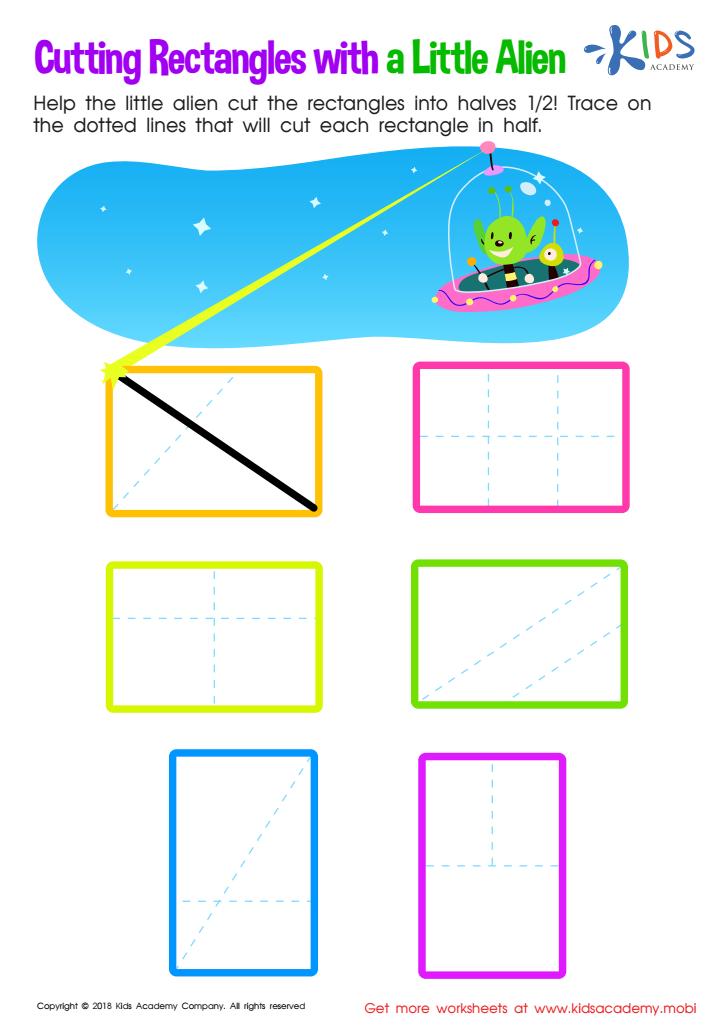
Cutting Rectangles with Alien Worksheet
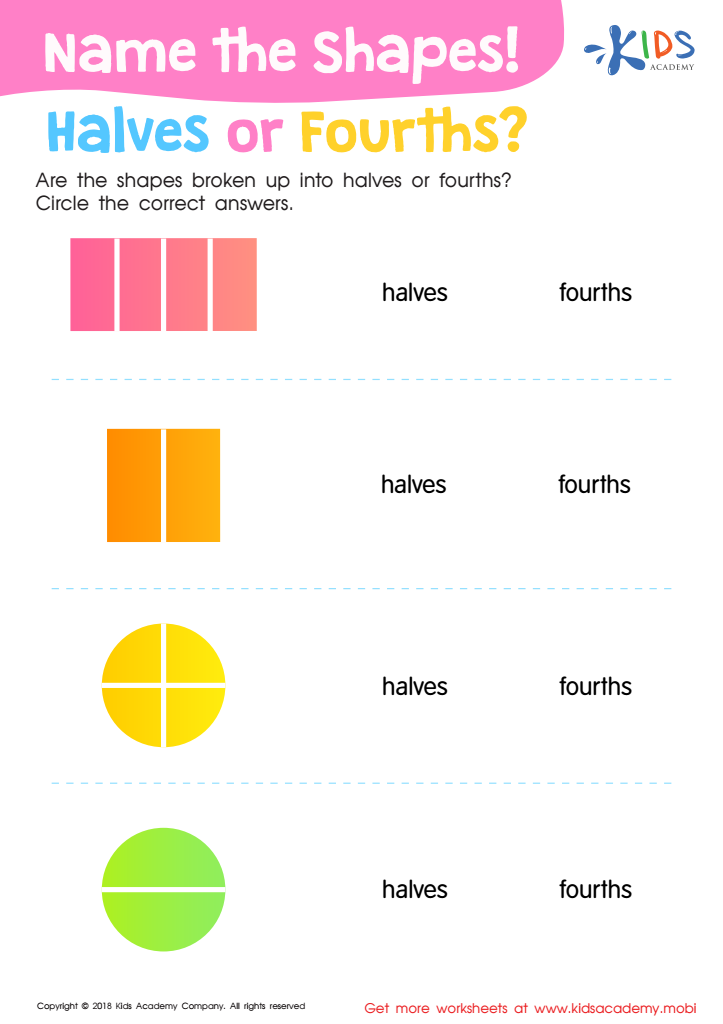
Name the Shapes Halves or Fourths? Worksheet
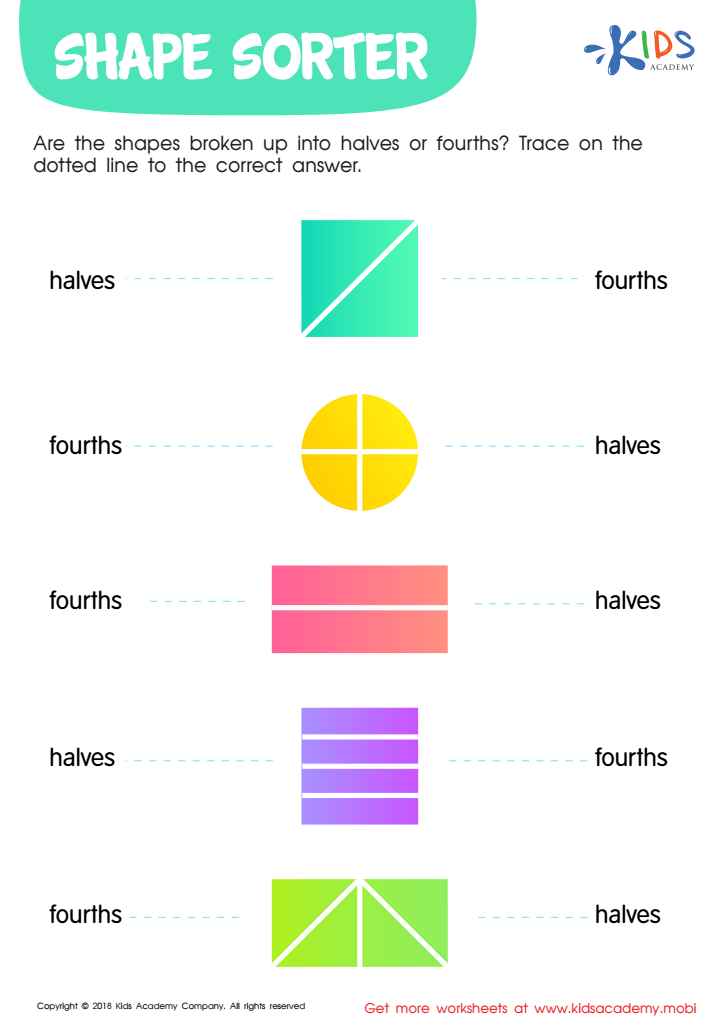
Shape Sorter Worksheet
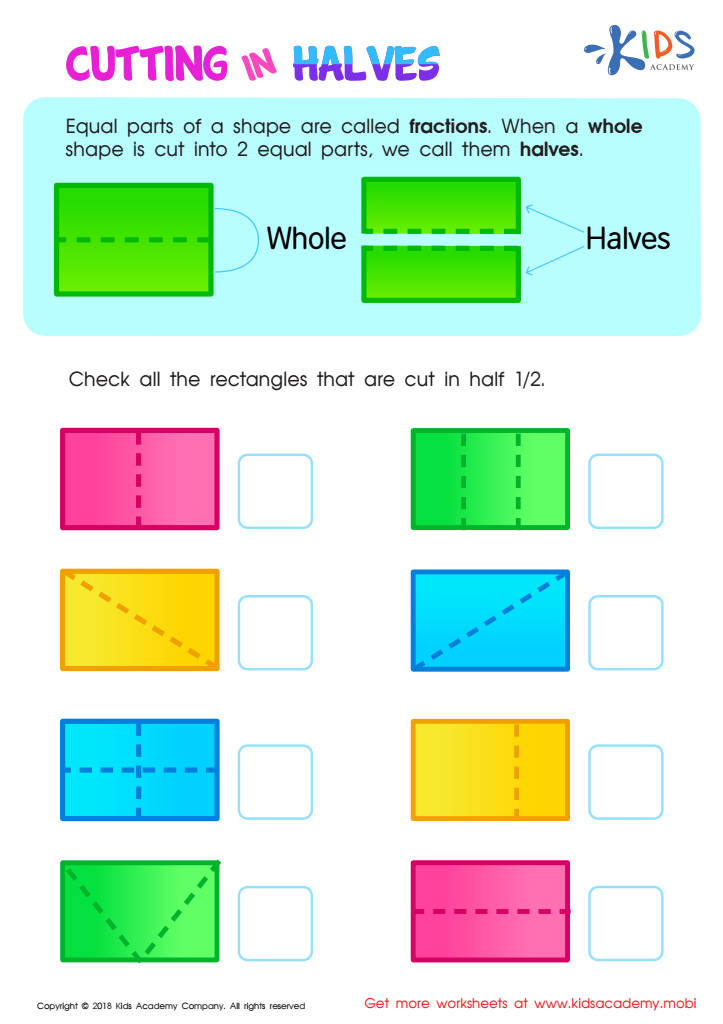
Cutting in Halves Worksheet
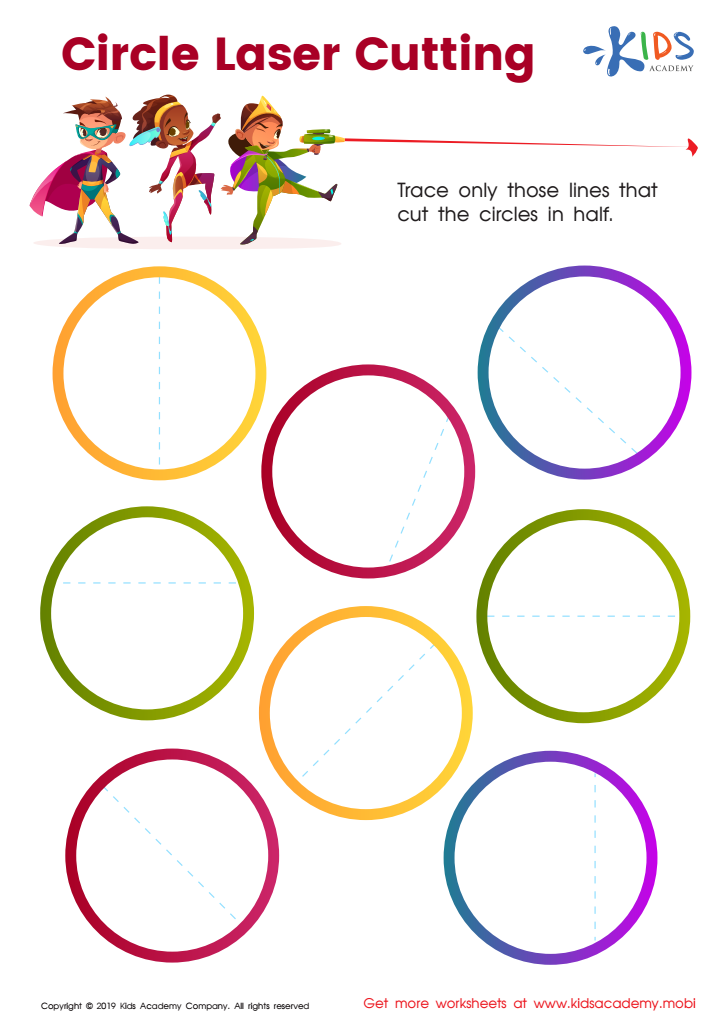
Circle Laser Cutting Worksheet
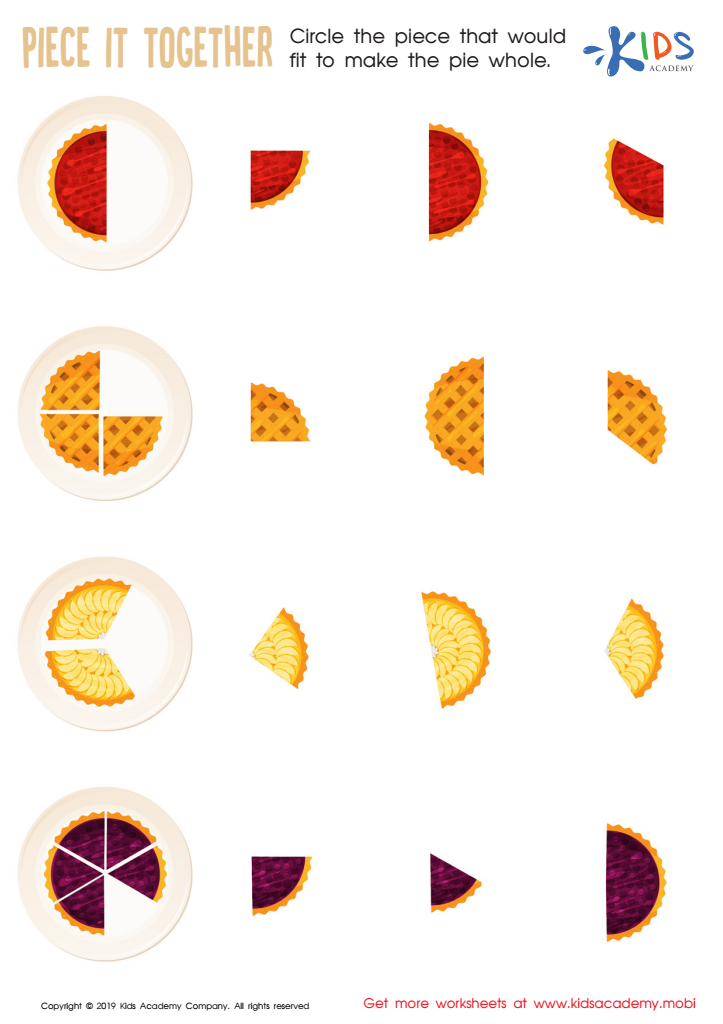
Piece it together Worksheet
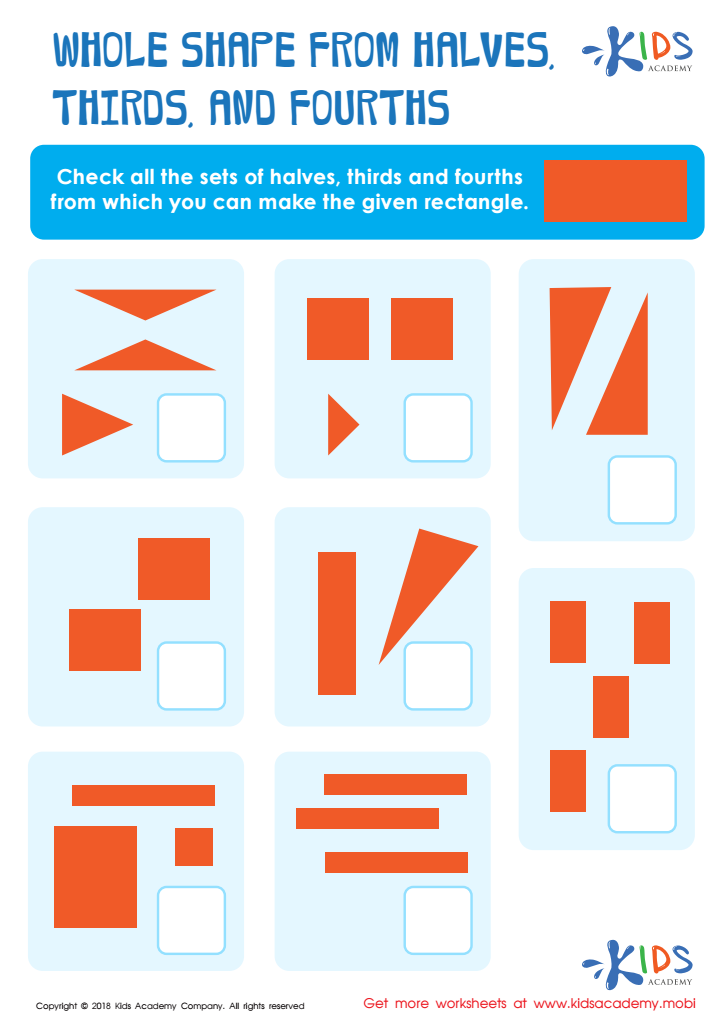
Whole Shape from Halves, Thirds and Fourths Worksheet








Shape recognition and understanding fractions of shapes are foundational skills in early mathematics education, typically introduced to children aged 6-7. These concepts are crucial for several reasons.
Firstly, recognizing shapes develops spatial awareness, which helps children understand the world around them. Identifying different shapes lays the groundwork for more advanced geometry and increases comprehension in fields like art, design, and science.
Secondly, understanding fractions encourages critical thinking and problem-solving skills. When children identify and work with fractions of shapes, they learn to analyze parts of a whole, which is essential for grasping more complex mathematical concepts later on, such as addition, subtraction, and proportion.
Moreover, these skills foster cognitive development. As children categorize and sort shapes, they enhance their logical reasoning abilities. Fractions of shapes challenge students to think abstractly, cultivating a deeper understanding of division and relationships between numbers.
Lastly, early shape and fraction recognition promotes confidence in mathematics. A strong foundation in these areas can lead to a positive attitude towards math, reducing anxiety in later years. Parents and teachers play a crucial role in supporting these skills, helping children build both the knowledge and enthusiasm needed for future academic success.