Basic geometry knowledge Geometry Worksheets for Ages 6-7
3 filtered results
-
From - To
Enhance your child’s foundational skills with our "Basic Geometry Knowledge Geometry Worksheets for Ages 6-7." These printable worksheets, developed by education experts at Kids Academy, are perfect for young learners embarking on their math journey. Designed to be engaging and developmentally appropriate, our worksheets facilitate understanding of basic shapes, spatial relationships, and geometric properties. Foster your child's confidence as they identify, classify, and compare shapes while building a strong geometric foundation. Ideal for homeschooling or supplemental classroom activities, these worksheets make learning geometry fun and accessible for kids aged 6-7. Download today and watch your child succeed in math!
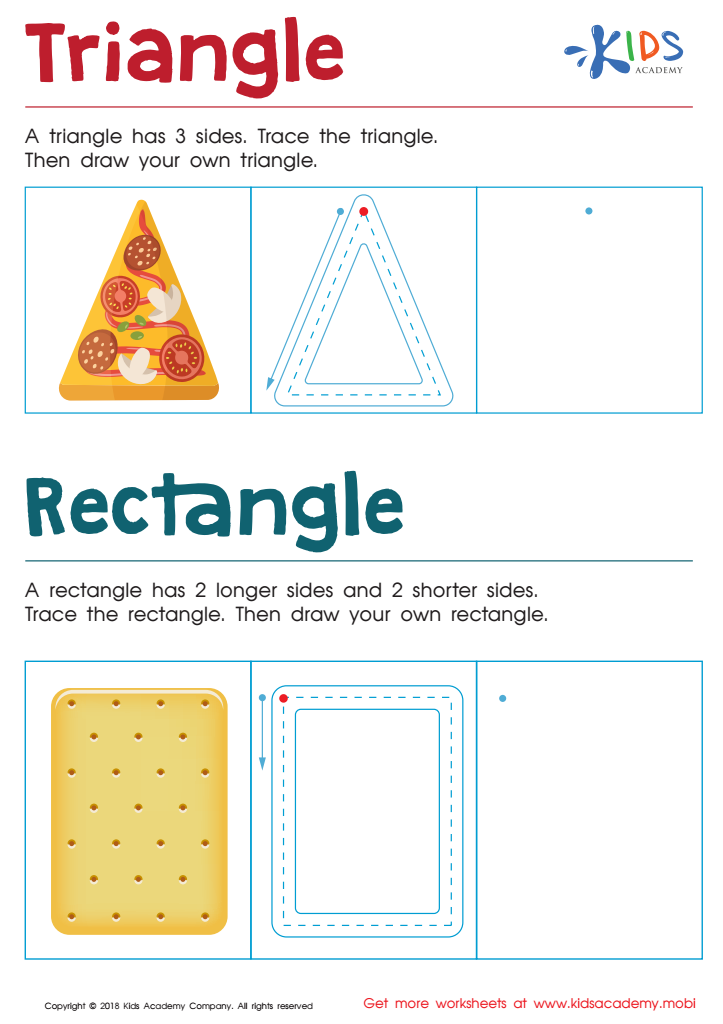
Triangle Rectangle Worksheet
 Assign to My Students











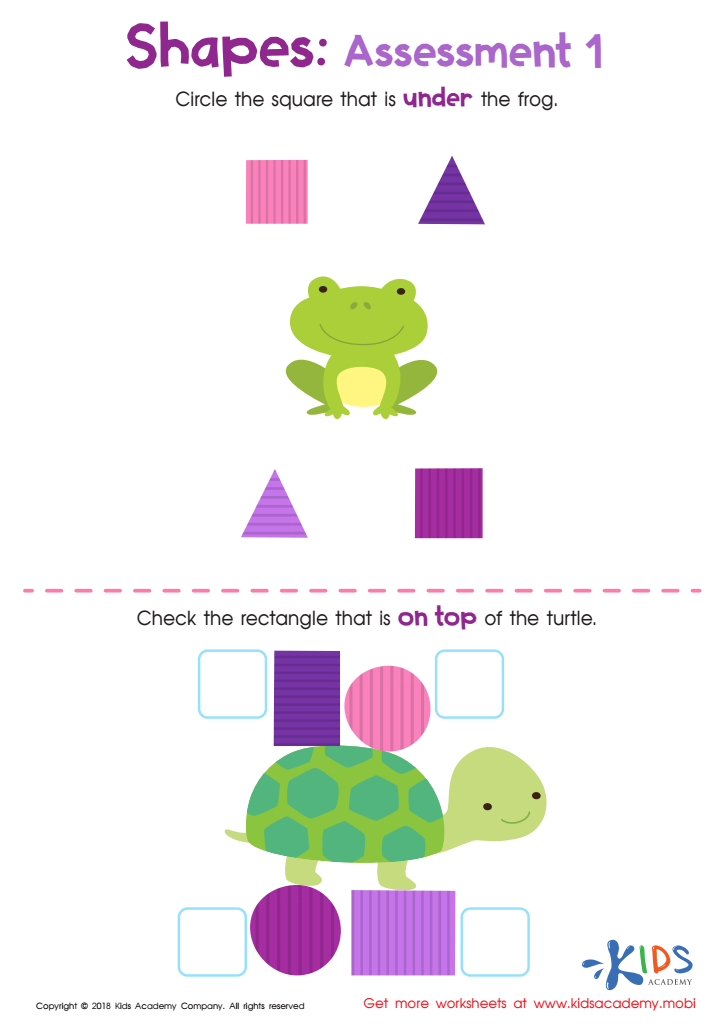
Geometry – Assessment 1 Worksheet
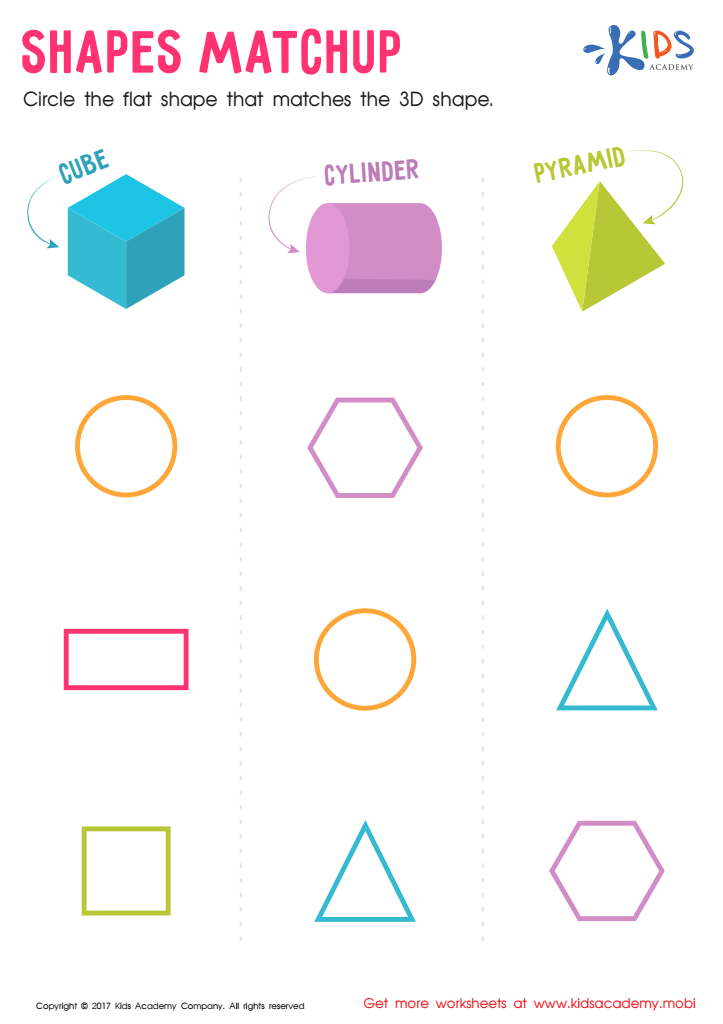
Shapes Matchup Worksheet








Basic geometry knowledge is crucial for children ages 6-7 as it lays the foundational groundwork for more advanced mathematical and cognitive skills. At this developmental stage, children are particularly receptive to spatial reasoning and shape recognition, which are core components of geometry. This early exposure can significantly enhance their problem-solving abilities and logical thinking, facilitating better performance in various academic subjects.
Geometry helps children comprehend the world around them. Recognizing basic shapes and understanding concepts like size, symmetry, and position are daily-life skills that are applicable in activities ranging from reading and writing to art and physical education. Furthermore, familiarity with geometric concepts nurtures creativity and critical thinking; for example, drawing or building with blocks involves understanding geometric principles.
From a pedagogical perspective, incorporating geometry into early education fosters engagement and motivation. Interactive lessons using colorful shapes and hands-on activities can make learning enjoyable and sustainably impactful, setting a positive tone for future mathematical education. Parents and teachers should note that early mastery of basic geometry improves children's spatial awareness and equips them with analytical tools needed throughout their education journey, resulting in a lasting and profound benefit to their overall intellectual development and academic success.








