Counting practice Geometry Worksheets for Ages 6-7
6 filtered results
-
From - To
Enhance your child's understanding of geometry with our engaging Counting Practice Geometry Worksheets, specially designed for ages 6-7! These interactive resources combine foundational counting skills with essential geometric concepts, making learning fun and effective. Your child will explore shapes, patterns, and spatial awareness through exciting activities tailored to their developmental stage. Each worksheet encourages hands-on practice, reinforcing both math fluency and geometric recognition in a playful way. Watch as your child gains confidence in their counting abilities while discovering the world of geometry. Perfect for classroom use or at-home learning, our worksheets are an excellent tool for early mathematical education!
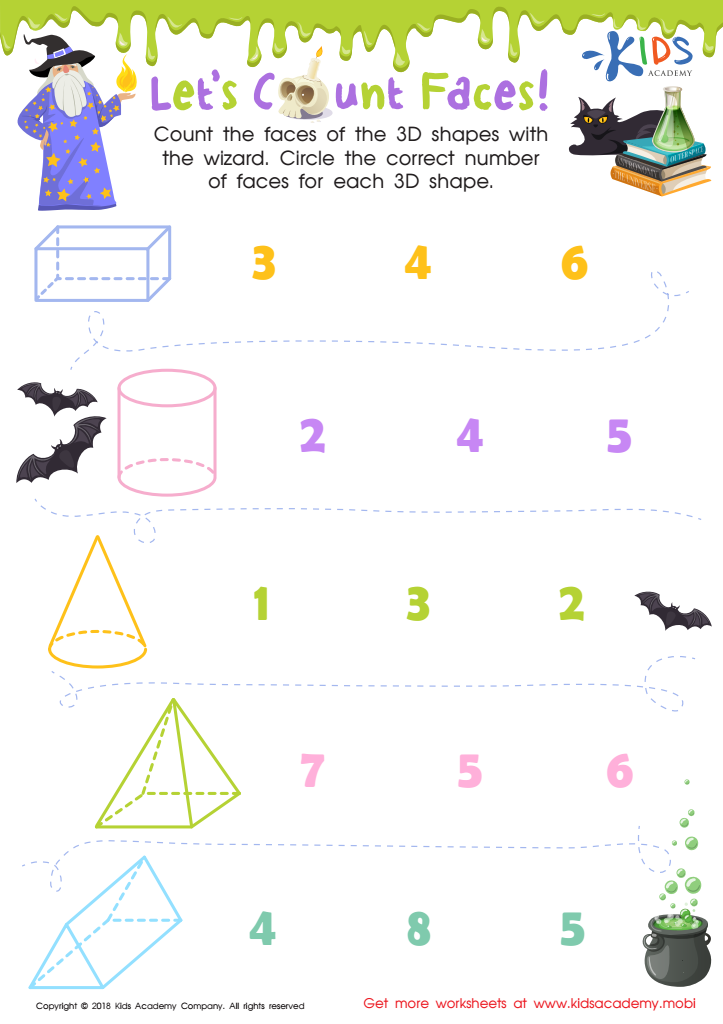
Let's Count Faces! Worksheet











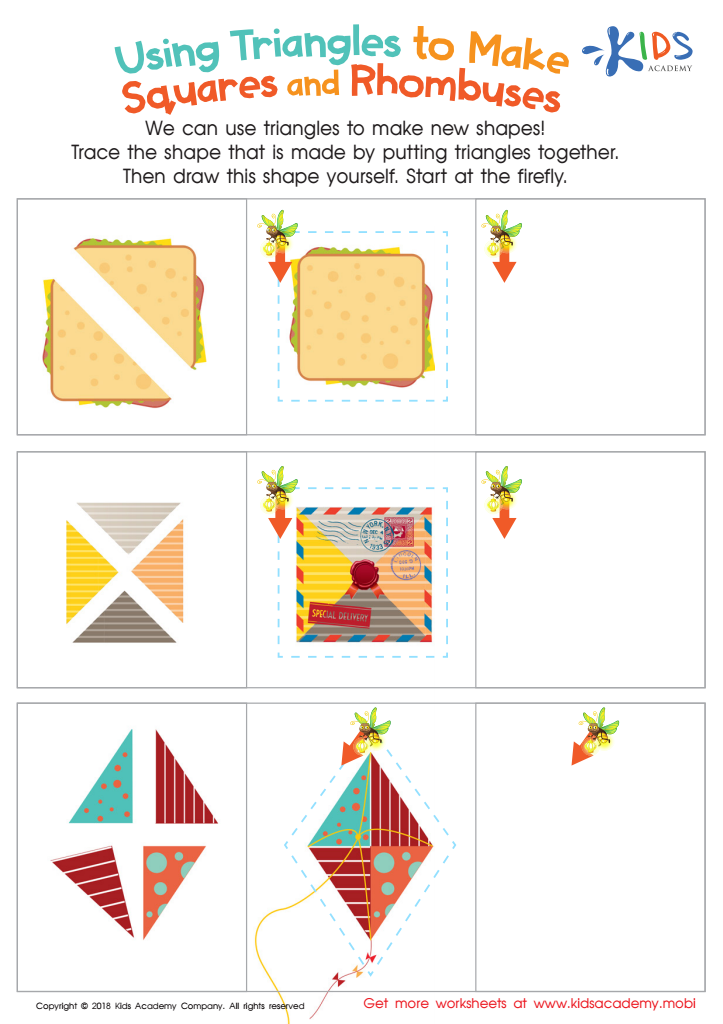
Using Triangles to Make Squares and Rhombuses Worksheet
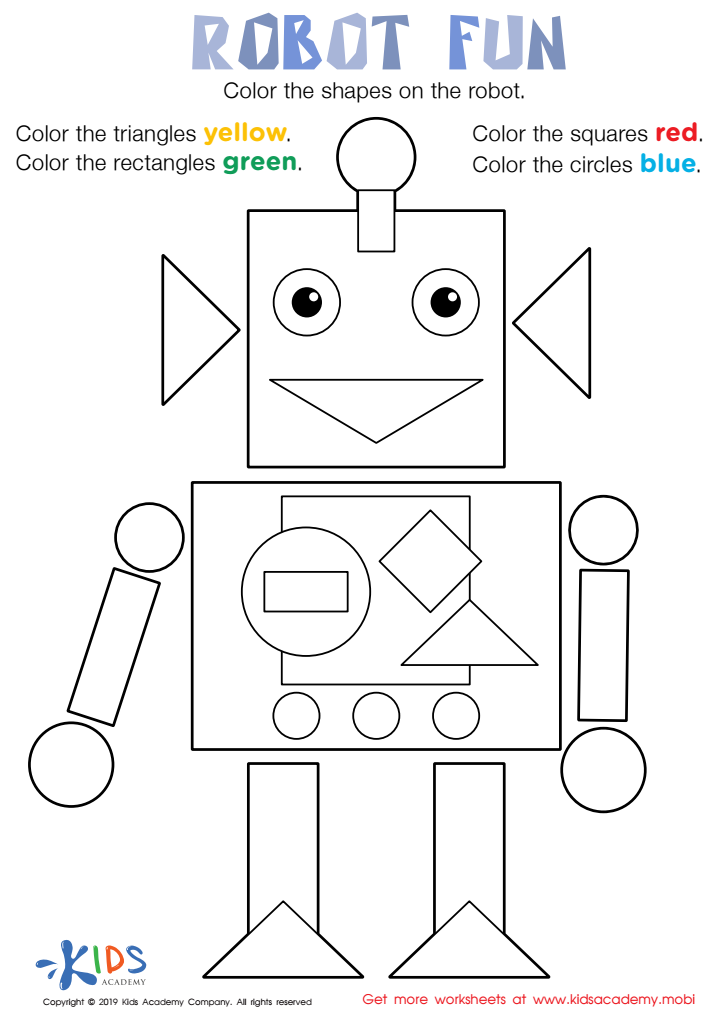
Robot Fun Worksheet
 Assign to My Students
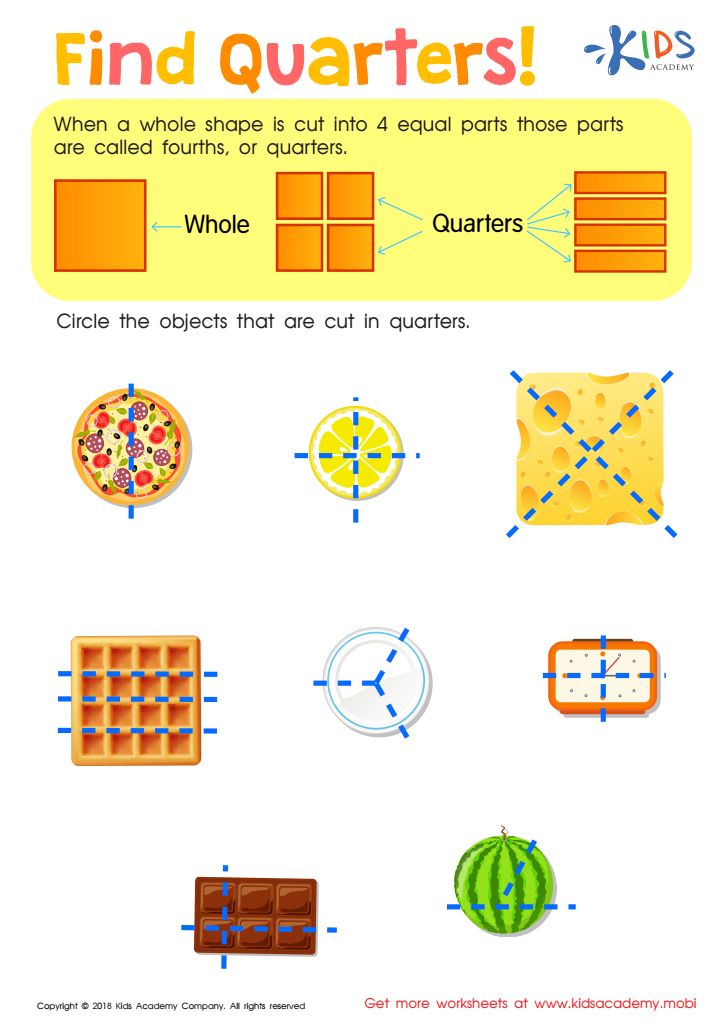
Find Quarters Worksheet
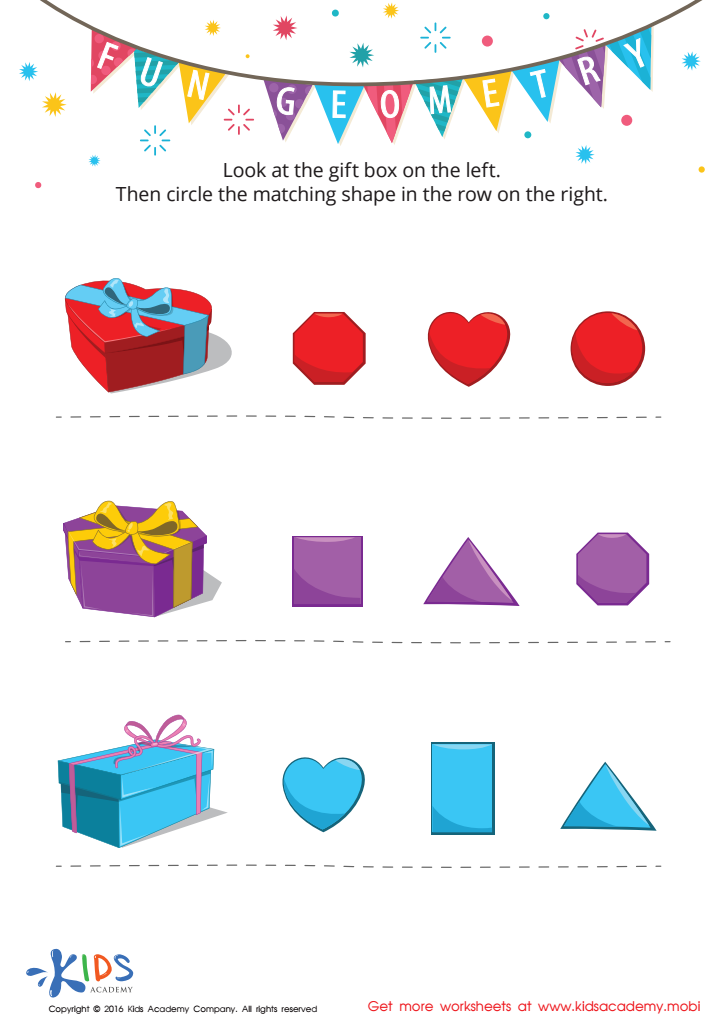
Fun Geometry Worksheet
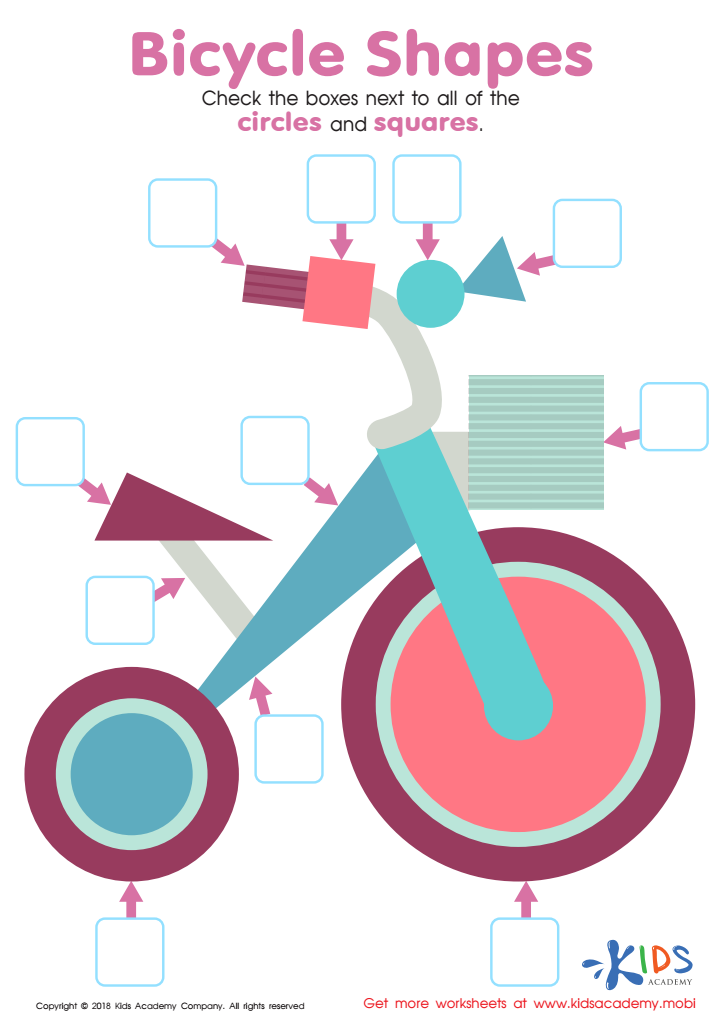
Bicycle Shapes Worksheet








Counting practice and geometry are vital components of early mathematics education for children aged 6-7. This developmental stage is crucial as children begin to grasp essential mathematical concepts that serve as the foundation for more complex learning in later years.
Firstly, counting lays the groundwork for all mathematical operations. Engaging in counting practice helps children develop number recognition, understand place value, and gain fluency in addition and subtraction. These skills promote confidence and competence in mathematics.
Similarly, introducing geometry through hands-on activities helps children understand shapes, spatial relationships, and measurements, enriching their overall cognitive development. Recognizing different shapes and their attributes enhances critical thinking and problem-solving abilities. When children interact with geometric concepts, they learn to categorize objects, understand symmetry, and visualize mathematical ideas in practical contexts.
By fostering these skills, parents and teachers not only enhance a child’s mathematical knowledge but also nurture skills like critical thinking, creativity, and spatial awareness that will be beneficial across various subjects and in everyday life. In a world increasingly dependent on technology and data, providing children with a strong mathematical foundation through counting and geometry empowers them to succeed in STEM fields and beyond. Therefore, investing time in these practices is crucial in shaping the future of learning.








