Differentiating shapes Geometry Worksheets for Ages 6-7
3 filtered results
-
From - To
Explore our "Differentiating Shapes Geometry Worksheets for Ages 6-7" designed to make learning fun and engaging for young minds! These worksheets help children easily distinguish between various geometric shapes, enhancing their critical thinking and observational skills. Perfect for first graders, our activities include colorful illustrations and interactive tasks that simplify concepts such as identifying circles, squares, triangles, and more. Watch as your child confidently masters basic geometry through hands-on practice and playful exercises. Boost their early math skills and develop a strong foundation with our expertly crafted resources, ideal for both home and classroom use!
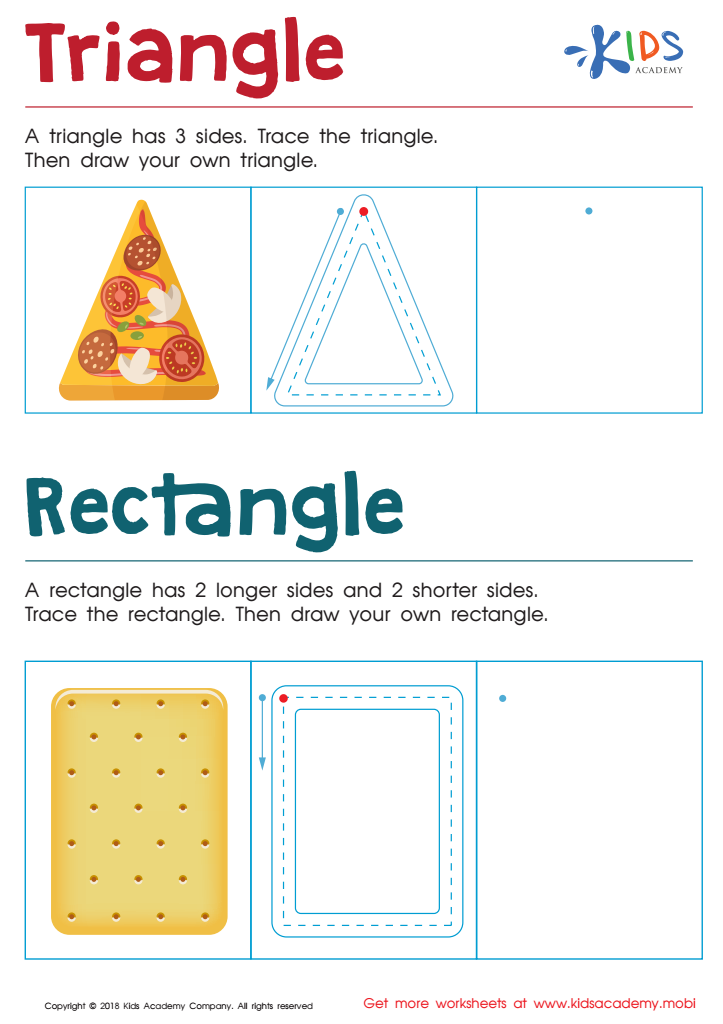
Triangle Rectangle Worksheet
 Assign to My Students











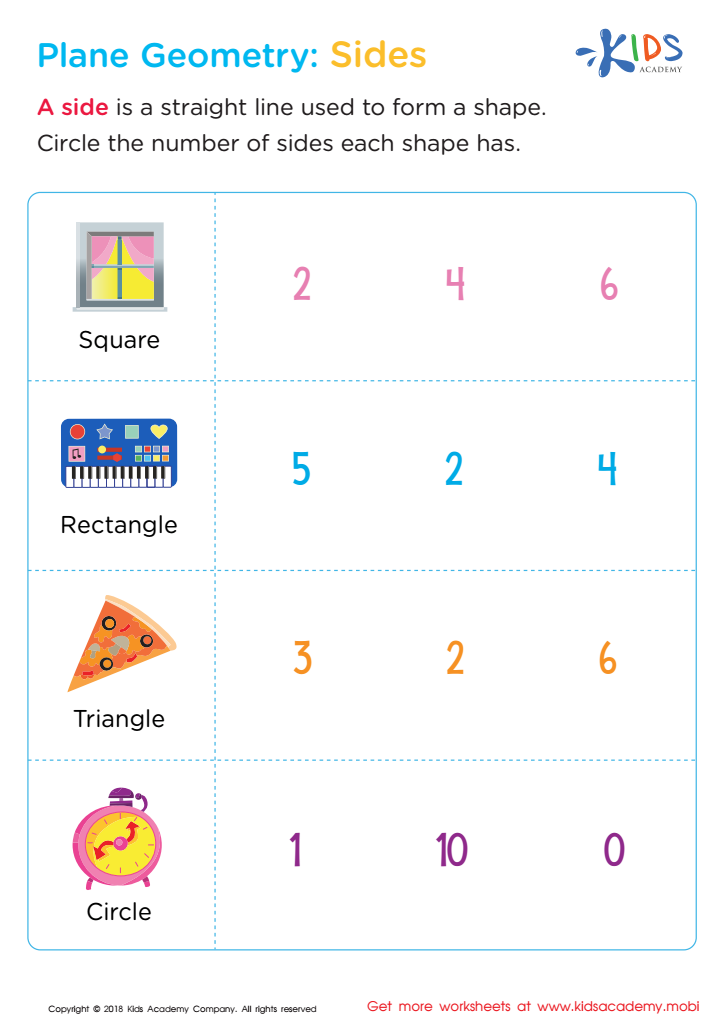
Plane Geometry: Sides Worksheet
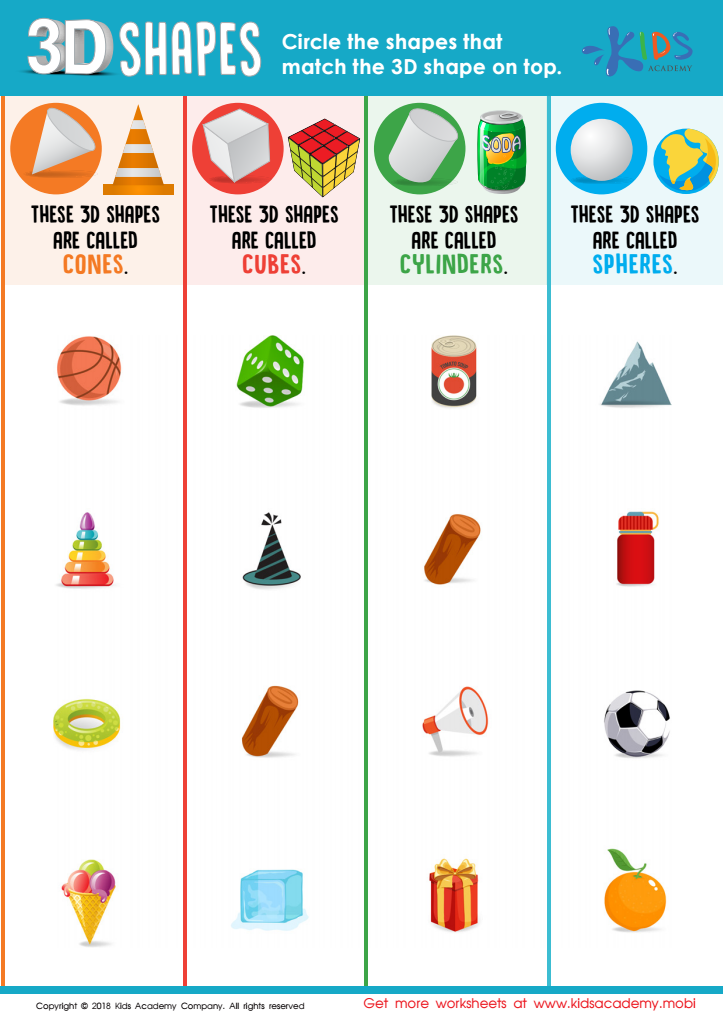
3D Shapes Worksheet








Differentiating shapes in geometry is a crucial building block for children aged 6-7. At this formative age, cognitive development includes the ability to recognize, categorize, and relate different shapes to objects in their environment. When children learn to differentiate shapes, they're not just handling abstract concepts but are developing critical thinking and problem-solving skills. Activities centered around geometry enhance spatial awareness, which is fundamental in everyday tasks and future learning in subjects such as mathematics, science, and art.
For parents and teachers, focusing on shape differentiation helps children improve their visual perception and fine motor skills. For instance, recognizing and drawing different shapes enhances hand-eye coordination, which is essential for writing and other manual tasks. Moreover, understanding shapes facilitates early numeracy; children learn about attributes such as sides and angles, laying the groundwork for more advanced mathematical concepts.
Integrating geometry into playtime through puzzles, drawing, or building blocks makes learning fun and engaging, fostering a positive attitude toward education. Emotional and social skills are also nurtured, as children frequently work collaboratively during these activities. Therefore, differentiating shapes at an early age plays a multi-faceted role in a child's overall cognitive and social development.








