Fine motor skills (drawing) Numbers Worksheets for Ages 6-7
3 filtered results
-
From - To
Discover engaging Fine Motor Skills (Drawing) Numbers Worksheets, specifically designed for children ages 6-7 at Kids Academy. These educational worksheets combine number recognition and fine motor skill development through fun drawing activities. By tracing and writing numbers, kids enhance their hand-eye coordination, pencil grip, and overall precision. Ideal for maintaining kids’ interest, our colorful and interactive printables ensure an enjoyable learning experience. Whether for classroom use or at-home practice, these worksheets are perfect tools for teachers and parents aiming to boost their children's early math skills and core cognitive development. Download now and start fostering essential skills today!

Make it Even: St. Valentine's Day Worksheet
 Assign to My Students
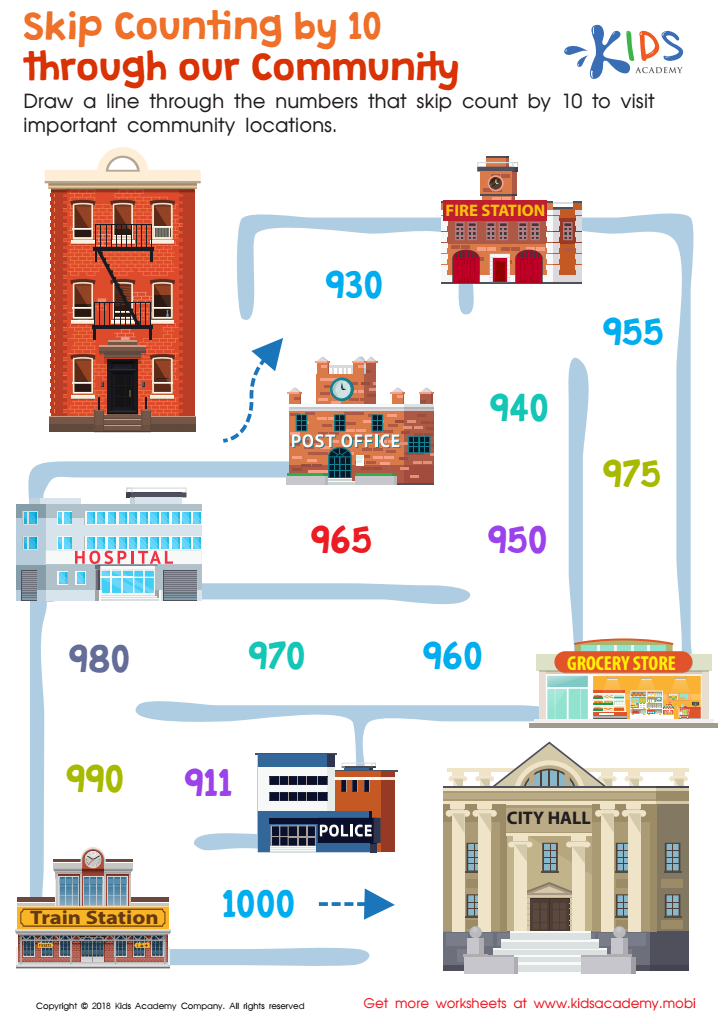
Skip Counting by 10 Through Our Community Worksheet
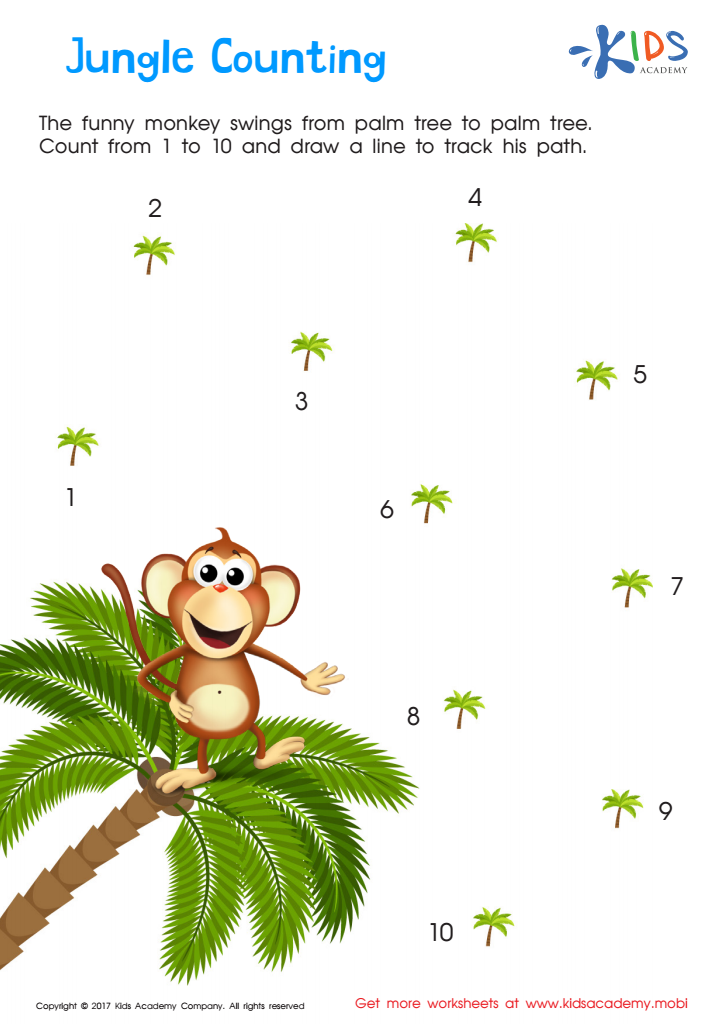
Jungle Counting Connect Dots Worksheet








Fine motor skills, which involve the coordination of small muscles in the hands and fingers, are integral to a child's overall development. For children aged 6-7, honing these skills through activities such as drawing numbers is particularly crucial. Firstly, mastering fine motor tasks enhances a child's ability to perform daily activities, such as buttoning clothes, tying shoelaces, and handling utensils, fostering independence and boosting self-esteem.
When children draw numbers, they also strengthen their handwriting foundation. Accurate number writing requires control and precision, thereby refining their hand-eye coordination and muscle memory. This skill is fundamental not only for clear and legible writing but also for success in mathematical tasks, allowing children to complete worksheets, tests, and projects more effectively.
Moreover, drawing numbers aids cognitive development. It encourages children to recognize, differentiate, and understand number concepts, which are foundational to mathematics. Engaging in such activities stimulates brain regions responsible for planning, attention to detail, and problem-solving.
Lastly, by practicing drawing numbers, children develop patience and focus, fostering a growth mindset. Teachers and parents should care about fine motor skills as they are foundational to academic success, practical daily functions, and cognitive and emotional growth, setting up children for holistic development and lifelong learning.








