Money recognition Numbers Worksheets for Ages 6-7
3 filtered results
-
From - To
Teach kids the vital skill of money recognition with our engaging worksheets for ages 6-7. Sure to keep young learners captivated, these printable activities help children identify, count, and differentiate various coins and bills. Boost their math skills and build financial literacy simultaneously through playful exercises, colorful illustrations, and real-world applications. Perfect for both classroom and home use, our worksheets offer hands-on learning that paves the way for future money management. Give your child a head start in numeracy and practical life skills with our expertly crafted money recognition numbers worksheets. Say goodbye to dull lessons and hello to fun learning!
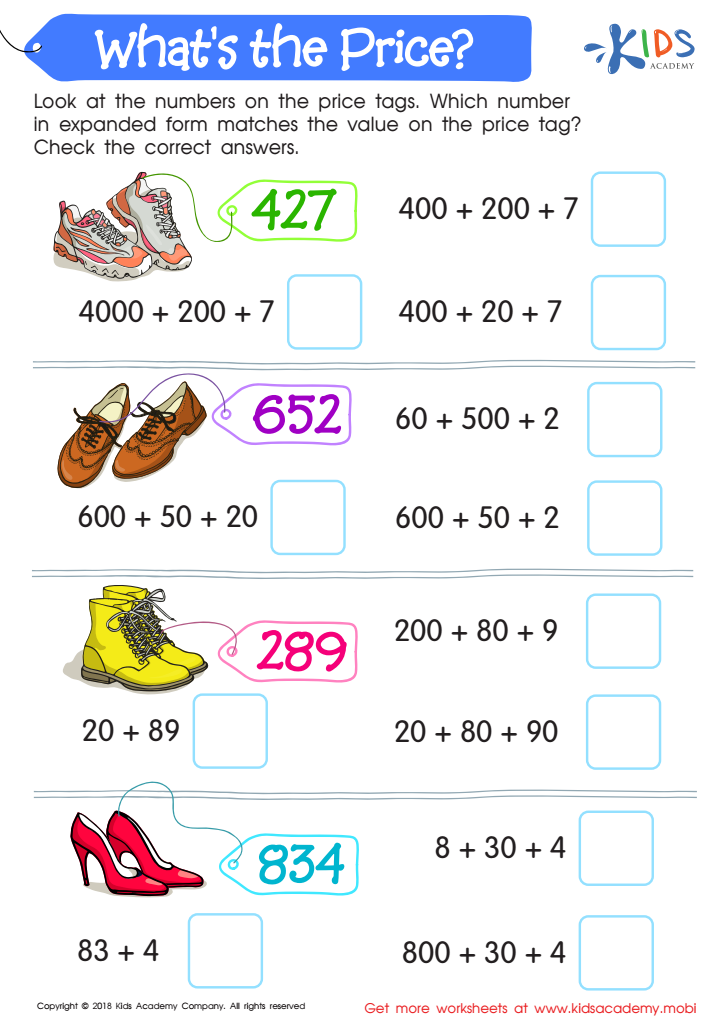
What's the Price? Worksheet
 Assign to My Students
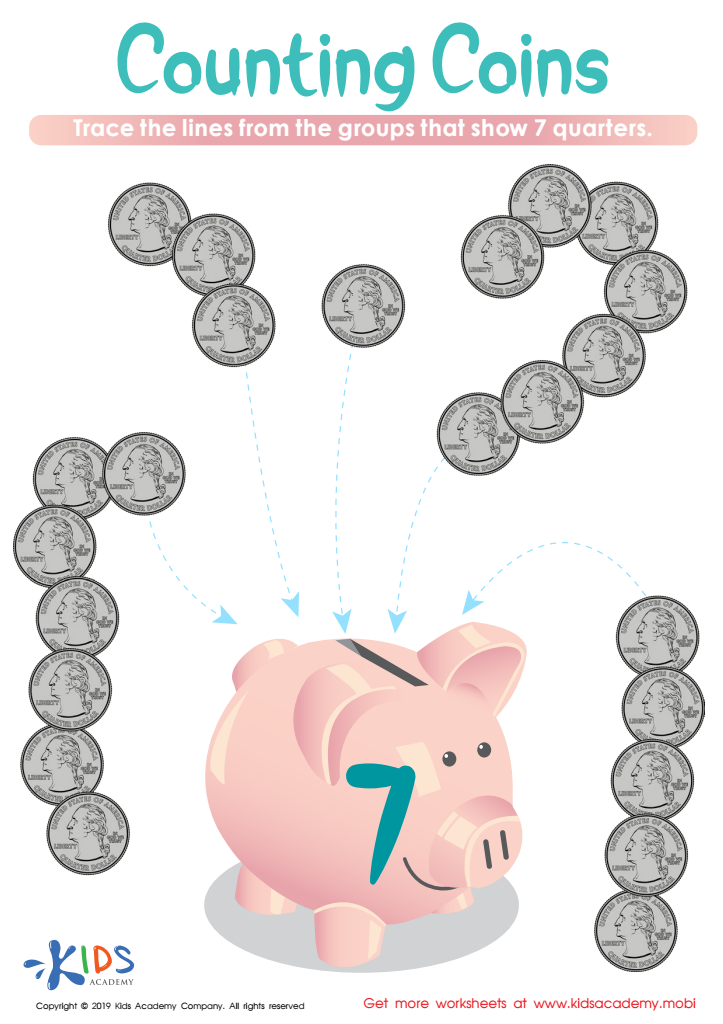
Counting Coins Worksheet
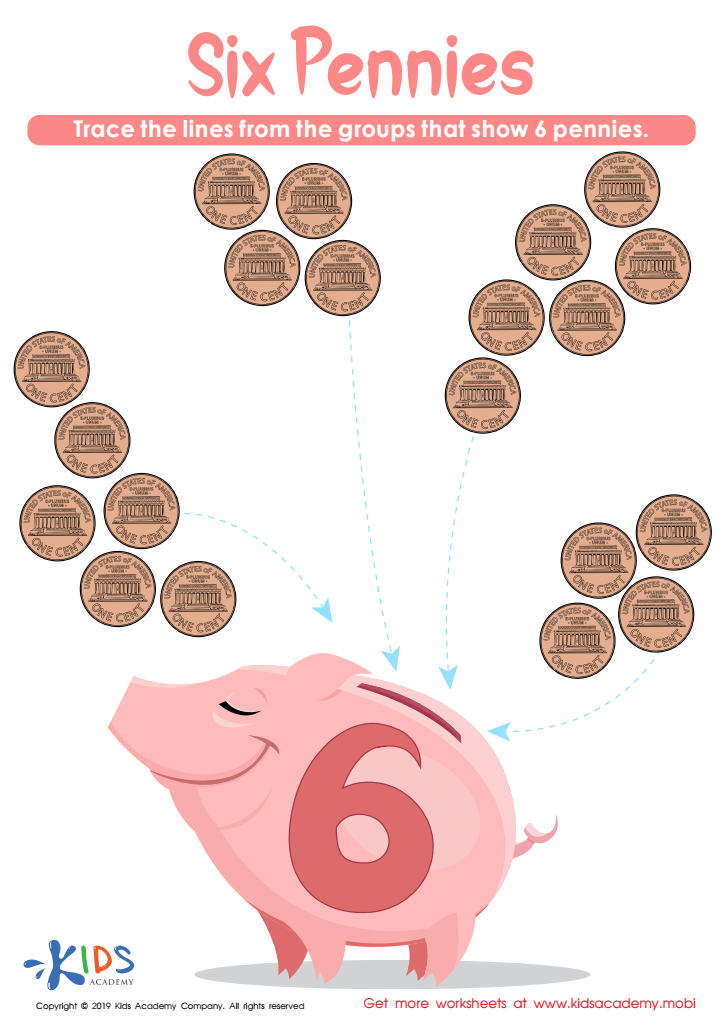
Six Pennies Worksheet








Teaching money recognition and numbers to children aged 6-7 is crucial for several key reasons. Firstly, it lays the foundation for essential life skills. Understanding money—knowing how to identify coins and bills, as well as grasping their values—teaches basic arithmetic skills like addition and subtraction. These skills are not only academic but practical, as they are used in everyday transactions and budgeting.
Secondly, early money education instills financial literacy. By understanding the concept of money, children learn about saving, spending, and the value of different amounts. This early exposure can develop positive financial habits and attitudes that will benefit them in adulthood, helping them to become more financially responsible.
Thirdly, learning about money can enhance their cognitive development. These activities can improve number recognition, counting, and problem-solving abilities, aligning with broader educational goals. It also fosters numerical fluency, which is a critical component of early mathematics education and critical thinking skills.
Lastly, engaging children in money recognition activities can be fun and interactive, often involving hands-on learning games that make the process enjoyable. This enthusiasm towards learning about money can cultivate a more profound interest in mathematics and other related subjects.
Overall, parents and teachers who prioritize money recognition practices at a young age equip children with invaluable skills for their academic journey and real-world financial savvy.








