
Number identification Numbers Worksheets for Ages 6-7
6 filtered results
Difficulty Level
Grade
Age
-
From - To
Subject
Activity
Standards
Discover engaging "Number Identification Worksheets for Ages 6-7" at Kids Academy. Designed to enhance early math skills, these fun and educational worksheets help young learners accurately recognize and write numbers. Each activity is crafted to strengthen number sense, boost confidence, and improve counting abilities through delightful exercises and colorful illustrations. Suitable for home or classroom use, these printable resources seamlessly support foundational math learning. Unlock the joy of numbers with our expertly developed worksheets, ensuring your child builds a strong mathematical foundation in an enjoyable and interactive way. Visit Kids Academy today to explore!
Favorites
With answer key
Interactive
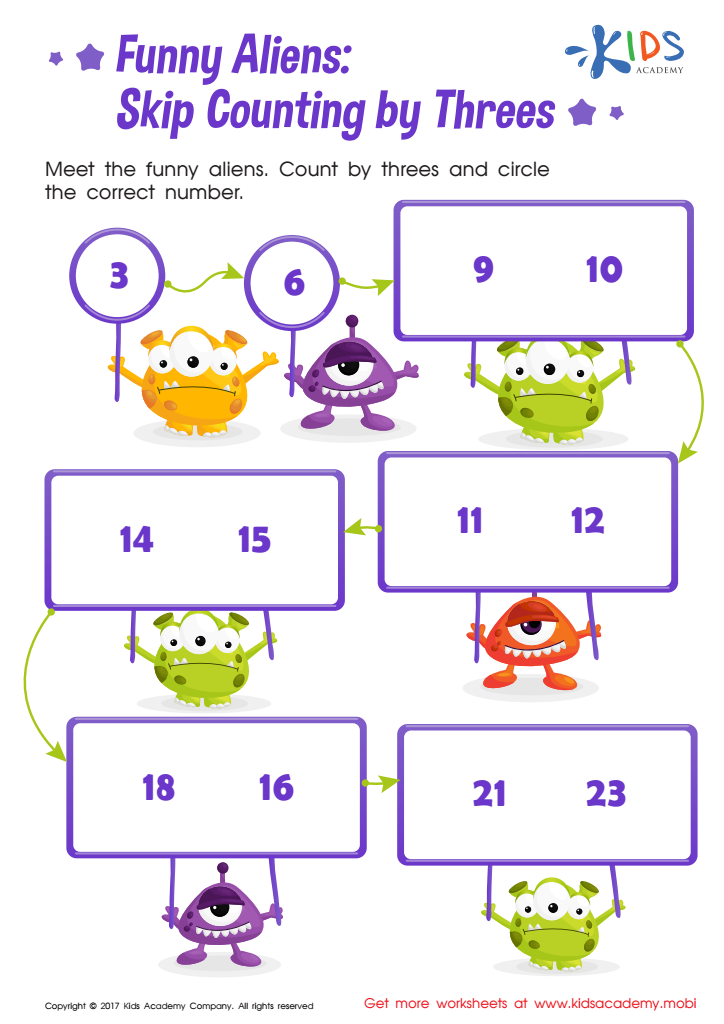
Skip Counting by 3s: Funny Aliens Printable
Blast off to outer space learning fun with this skip counting by 3 worksheet!
 Assign to My Students
Skip Counting by 3s: Funny Aliens Printable
Worksheet
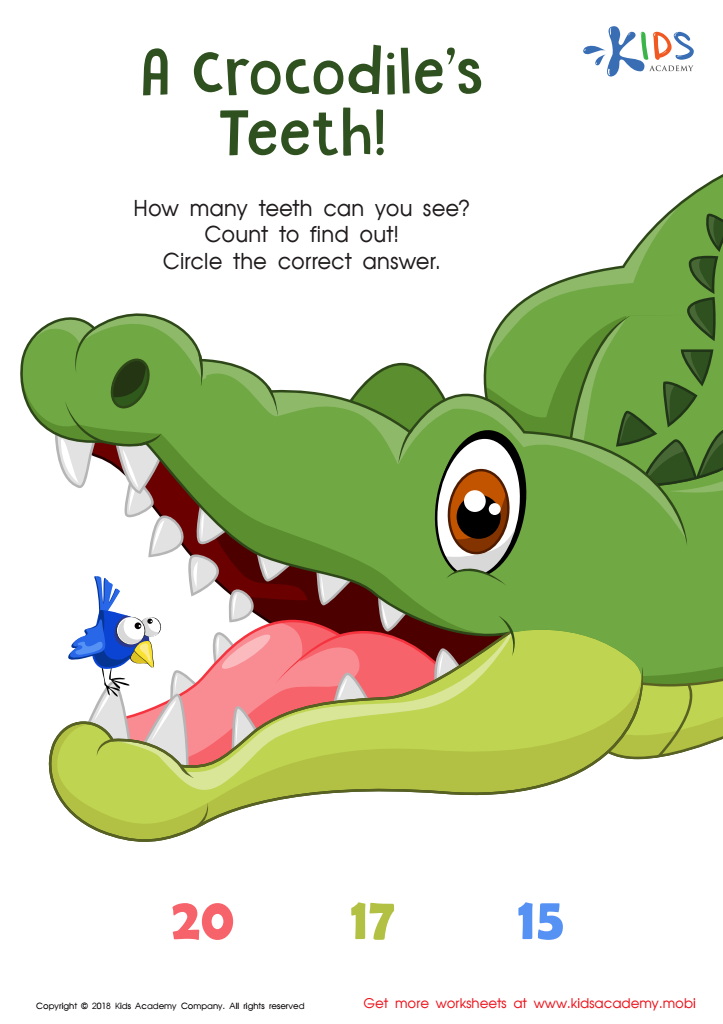
A Crocodile's Teeth Worksheet
Show your child the animal image and ask them to identify it. If they watch animal shows, they'll likely be interested. Count the teeth together, then look at the options and help them circle the right one.
A Crocodile's Teeth Worksheet
Worksheet
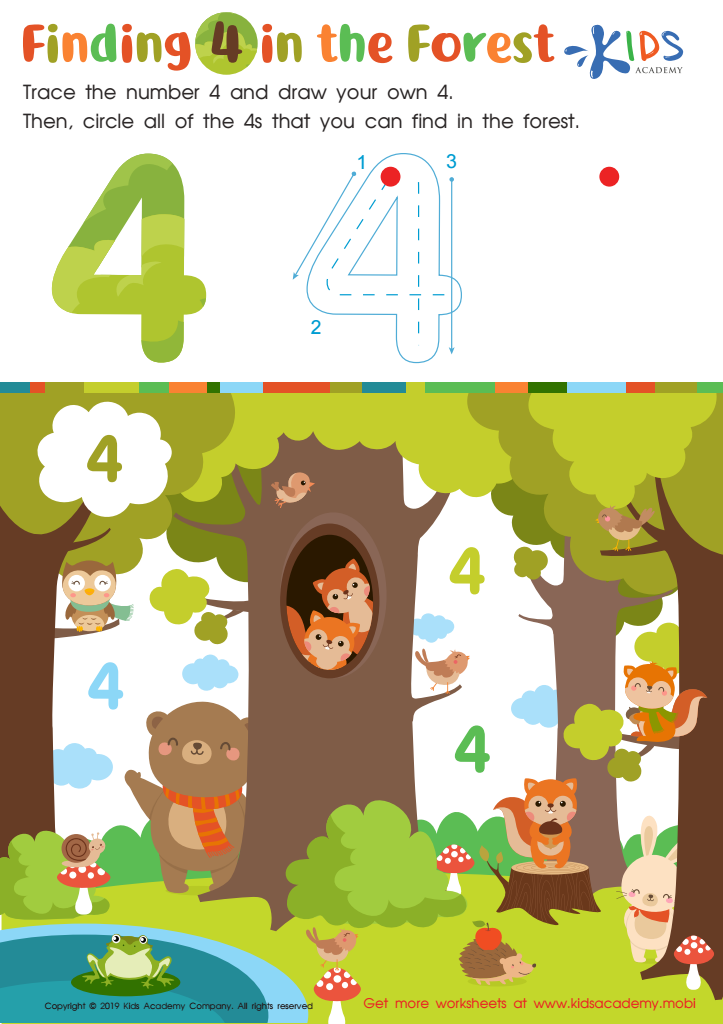
Finding 4 in the Forest Worksheet
Before starting, have your kids count as high as they can. Ask them to identify the setting and point out the 4s. Trace 4 and draw your own. Help your kids circle all the 4s they can find in the forest. How far can they count? How well did they find the hidden 4s?
Finding 4 in the Forest Worksheet
Worksheet
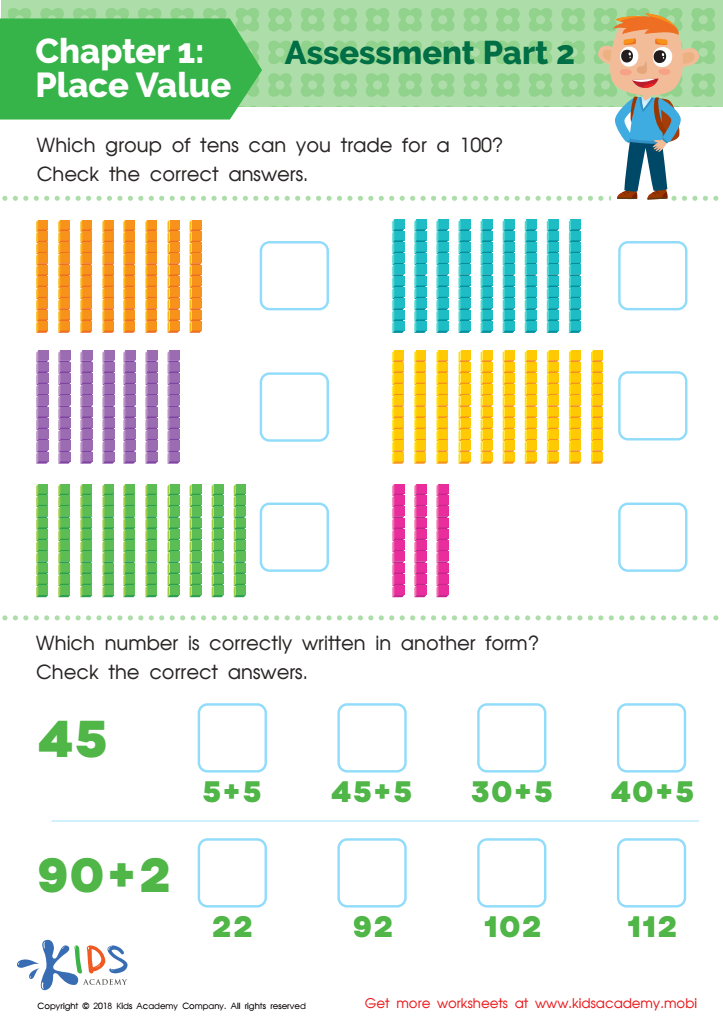
Place Value: Chapter 2 Worksheet
Place value is a key math topic. If your child needs more practice, use this worksheet. It challenges them to figure out which group of tens equals a 100, then check the answer and move to the next question.
Place Value: Chapter 2 Worksheet
Worksheet
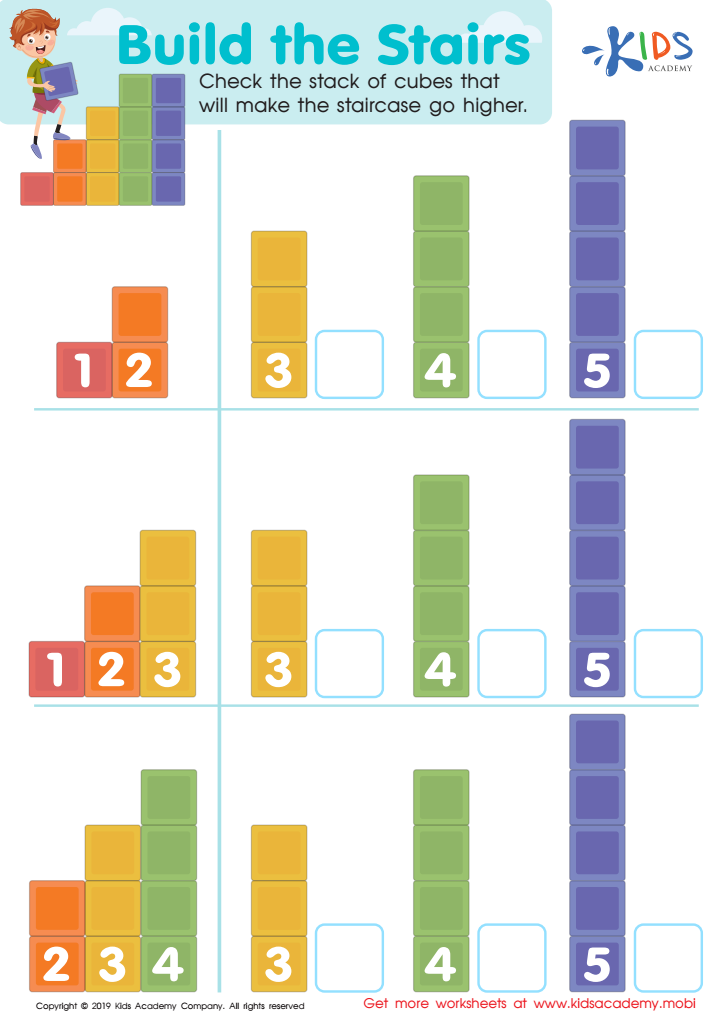
Build the Stairs Worksheet
Does your kid need help counting numbers? Make it fun with a staircase math worksheet! This printable PDF uses stairs to help your preschooler practice counting. Let them build the staircase by picking the next highest number as they go up! It's an interactive way to teach counting and sure to please your little one.
Build the Stairs Worksheet
Worksheet
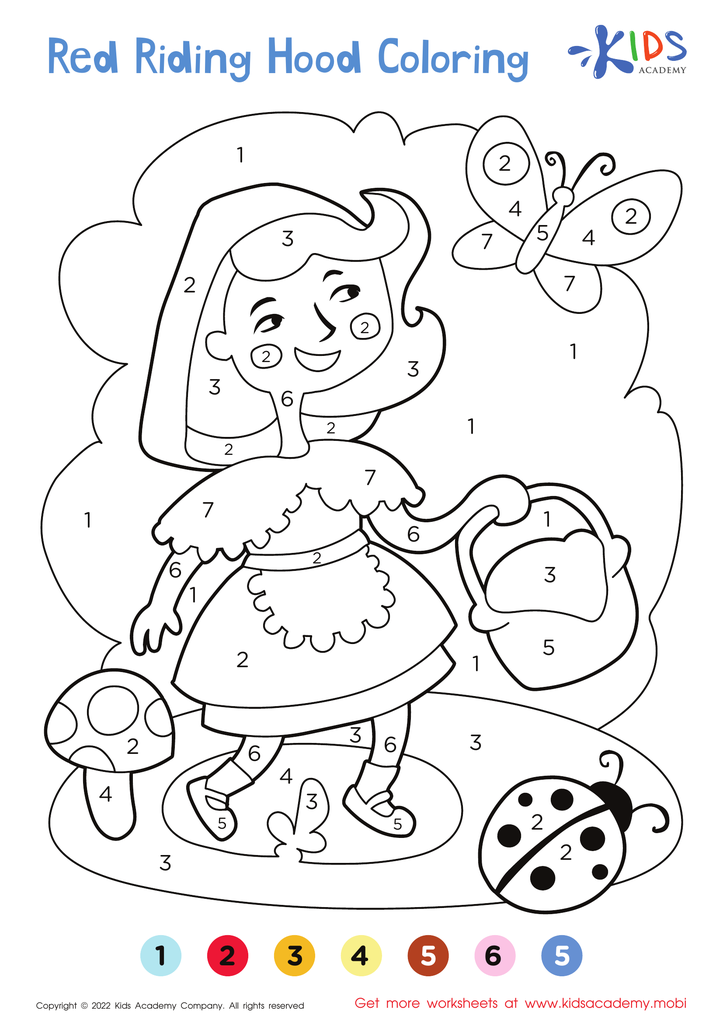
Little Red Riding Hood – Coloring by Numbers
Download this free PDF page and enjoy coloring Little Red Riding Hood. It's an easy and fun activity that everyone can do - just follow the numbers! Get your colored pencils ready and have a blast. 80 words.
Little Red Riding Hood – Coloring by Numbers
Worksheet
Join Kids Academy for Free
Who is primarily going to use this learning content?








Parents and teachers should prioritize number identification skills in children aged 6-7 because this foundational knowledge paves the way for more complex mathematical learning and practical life skills. At this early stage, children transition from recognizing basic numbers to comprehending and manipulating them in everyday contexts, which is crucial for their academic and cognitive development.
Number identification helps kids understand the concept of quantity, fostering abilities in counting, addition, and subtraction, skills that are cornerstones of early arithmetic. As children become proficient in recognizing numbers, they build confidence to solve problems, fostering a positive attitude towards learning mathematics. This ripples into other areas where math is applied, whether following a recipe, understanding the time, or handling money.
Moreover, developing number identification skills enhances a child's overall cognitive functions like memory, attention, and critical thinking. By recognizing numbers accurately, children also acquire the ability to follow sequences and patterns, which are essential skills outside of math learning.
Furthermore, catching learning difficulties early can make a significant difference. By actively engaging in number identification practices, parents and teachers can identify and address any developmental delays or learning disabilities early on, providing timely interventions that ensure every child has the opportunity to succeed academically and personally.








