Spatial reasoning Numbers Worksheets for Ages 6-7
3 filtered results
-
From - To
Discover our engaging Spatial Reasoning Numbers Worksheets designed for children aged 6-7! These thoughtfully crafted activities help young learners develop essential mathematical skills while enhancing their spatial awareness. Perfect for home or classroom use, the worksheets include fun exercises that encourage kids to visualize numbers, understand patterns, and solve puzzles. Through colorful illustrations and interactive challenges, students will improve their cognitive abilities and confidence in math. Whether it's through matching, sorting, or sequencing tasks, our spatial reasoning worksheets provide a comprehensive and enjoyable way for kids to build a strong foundation in numeracy. Start exploring today and unlock your child’s potential in math!
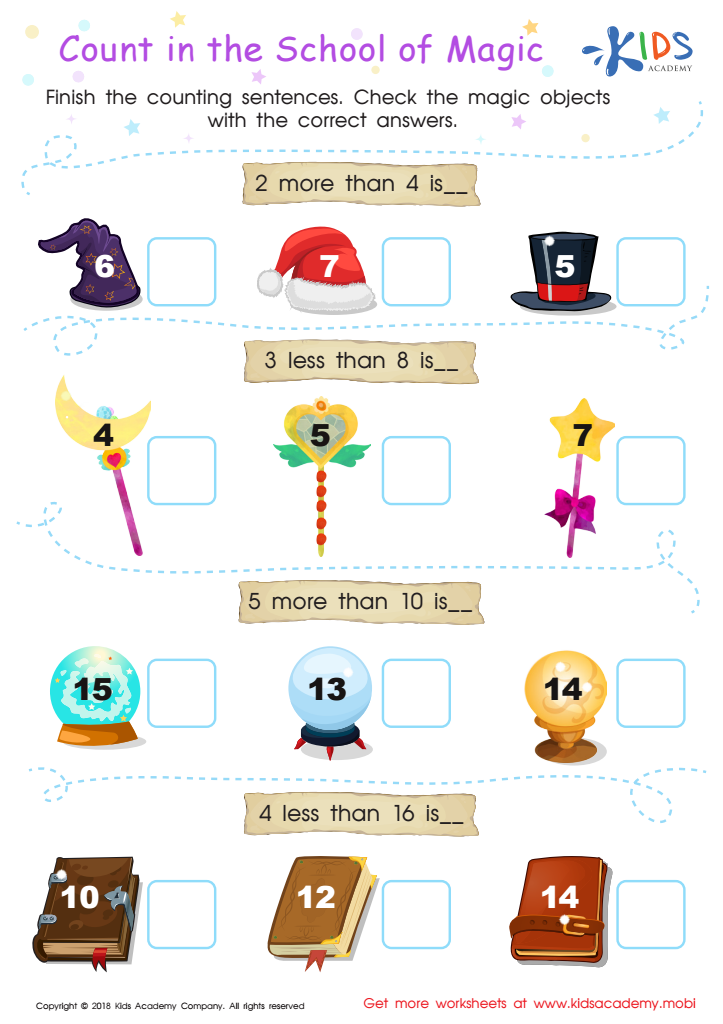
Count in the School of Magic Worksheet
 Assign to My Students
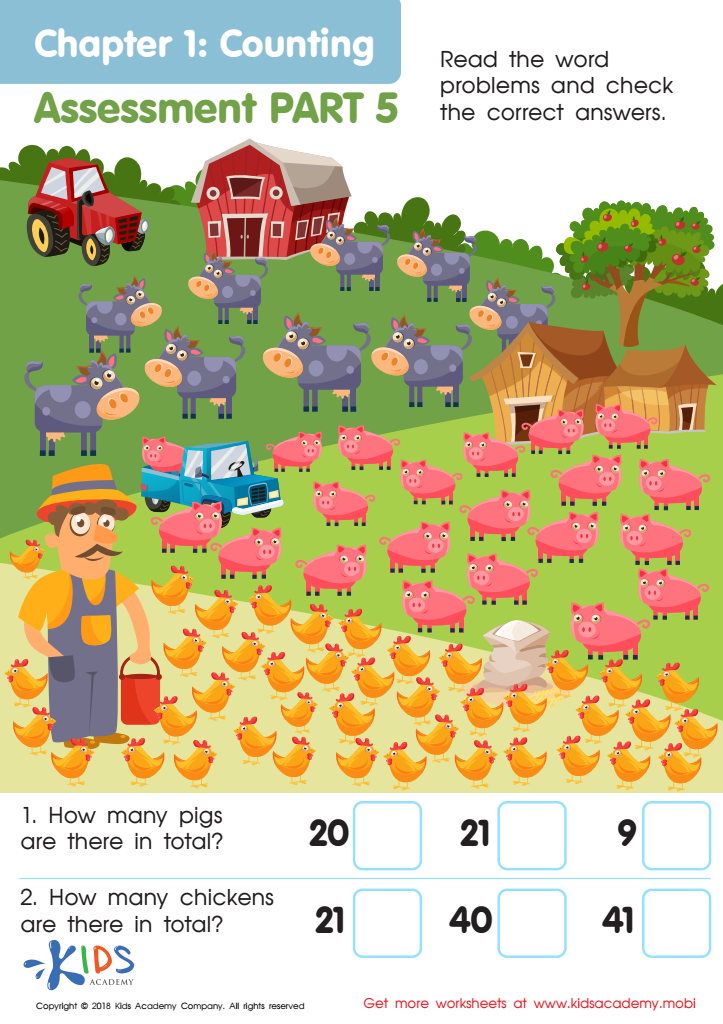
Counting: Assessment 5 Worksheet
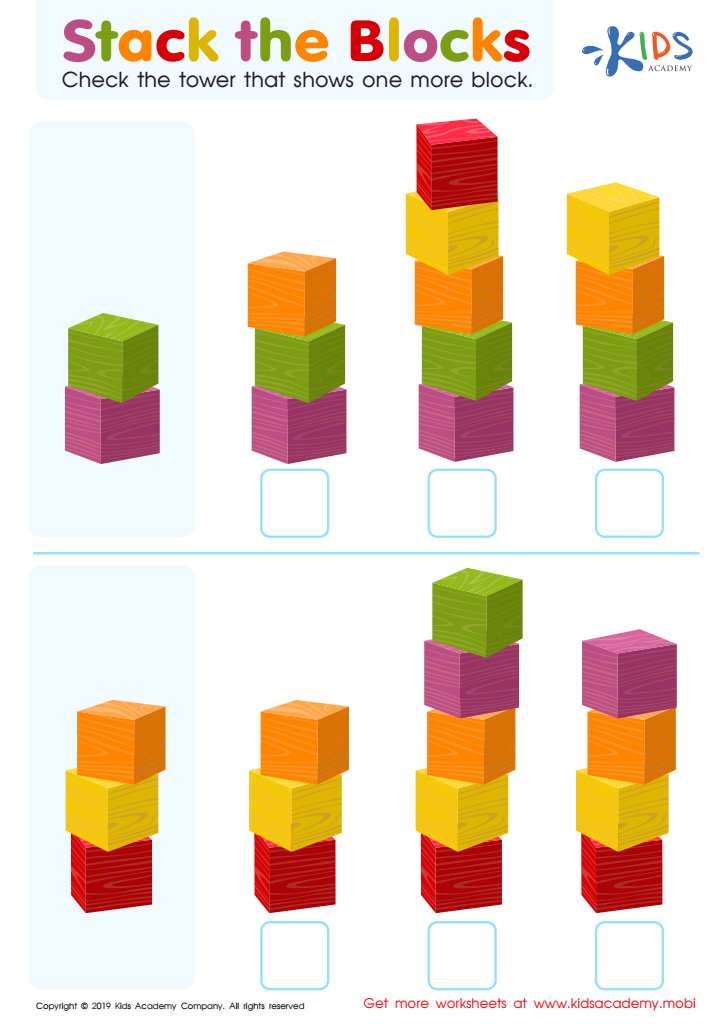
Stack the Blocks Worksheet





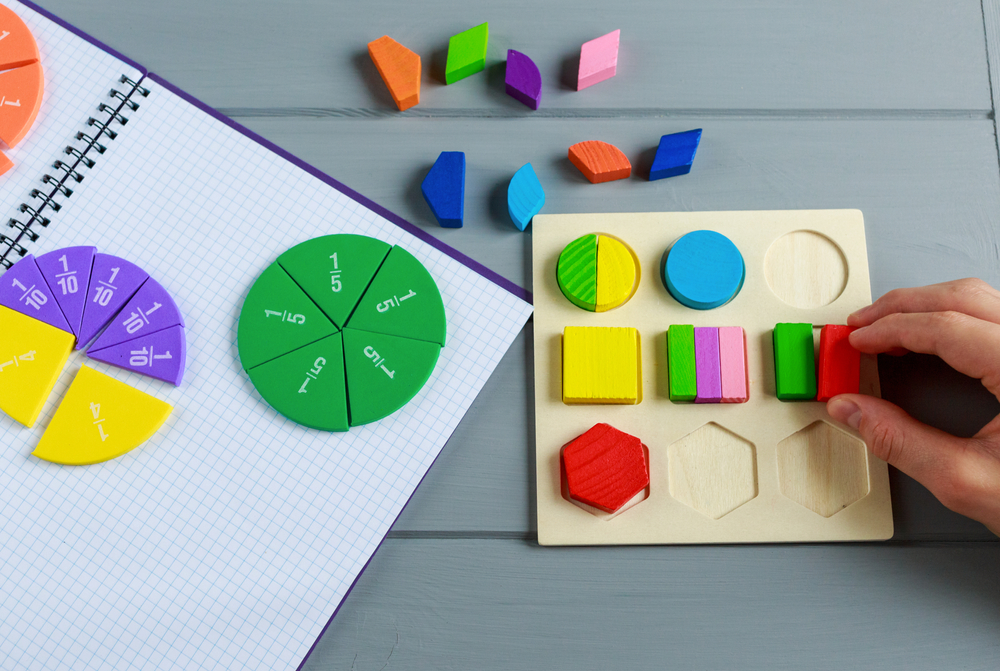


Spatial reasoning is a vital cognitive skill that significantly influences a child's development, especially for children aged 6-7. At this age, children are actively building the foundations of their mathematical understanding, and spatial reasoning plays a crucial role in various areas such as geometry, measurement, and problem-solving.
Parents and teachers should care about spatial reasoning because it helps children visualize and manipulate objects in their minds, enhancing their understanding of relationships and attributes of shapes. Strong spatial skills improve academic performance in math and science, leading to better overall educational outcomes. Activities like puzzles, building blocks, and drawing can stimulate spatial awareness and engage children in hands-on learning experiences.
Furthermore, spatial reasoning is linked to critical thinking and creativity; it encourages children to approach problems from different angles and devise strategical solutions. This skill is not only essential in academia but also applicable in everyday life and future careers, particularly in fields like engineering, architecture, and technology. By fostering spatial reasoning, parents and teachers equip children with necessary tools for future success, making it imperative for them to prioritize this aspect of learning during the formative years.








