
Analog Clock Understanding Math Worksheets for Ages 6-7
3 filtered results
Difficulty Level
Grade
Age
-
From - To
Subject
Activity
Standards
Explore our "Analog Clock Understanding Math Worksheets" designed specifically for ages 6-7! These engaging and interactive worksheets help young learners grasp the concept of telling time using analog clocks. Through fun activities, children will enhance their skills in reading clock hands, understanding time intervals, and applying their knowledge in practical scenarios. Our worksheets promote critical thinking and boost confidence in math, making learning enjoyable. Ideal for classroom use or at-home practice, these resources align with foundational math standards. Help your child master time-telling with our thoughtfully crafted worksheets that inspire curiosity and reinforce essential math concepts. Get started today!
Favorites
With answer key
Interactive
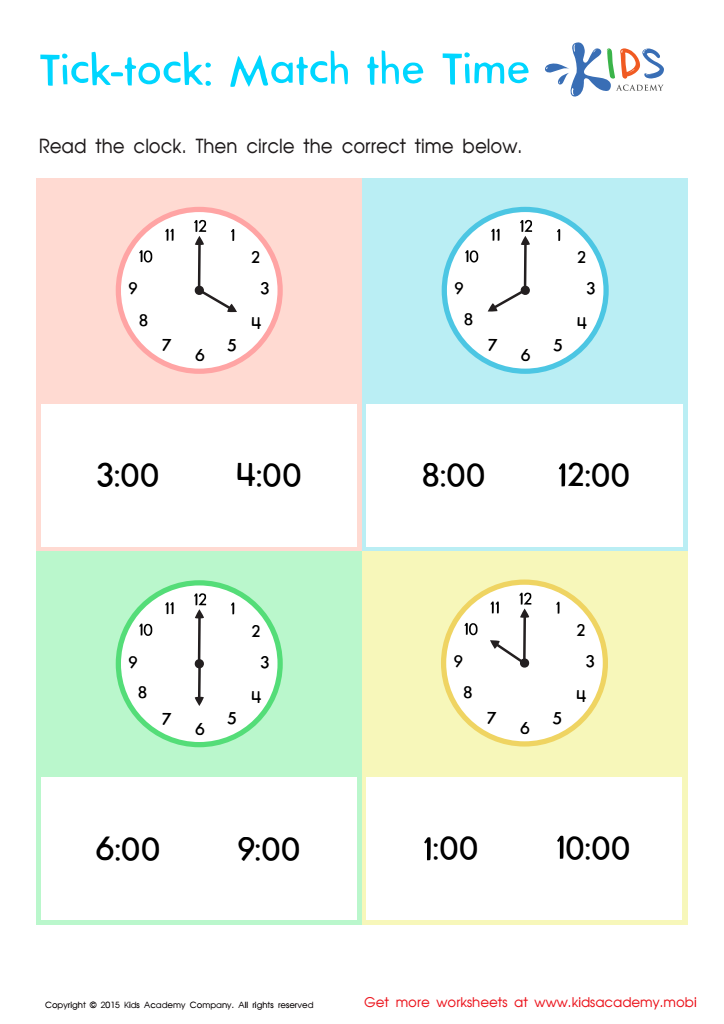
Telling The Time Worksheet: Part 4
Test your skills in telling the time! Circle the right time on 4 analog clock faces.
 Assign to My Students
Telling The Time Worksheet: Part 4
Worksheet
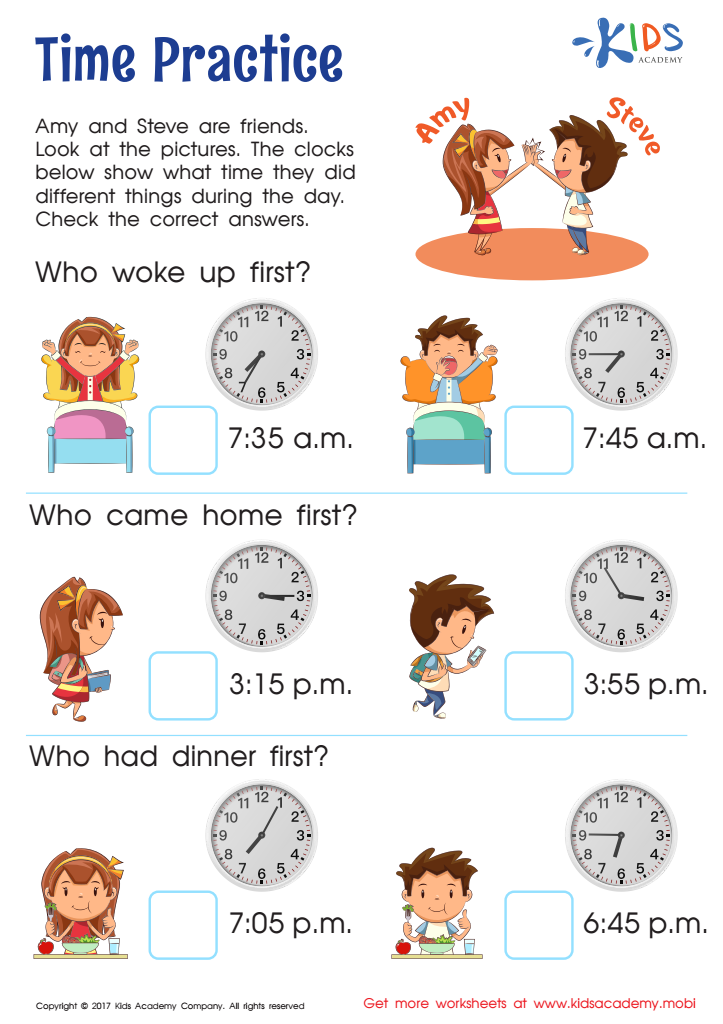
Time Practice Worksheet
It's perfect for 2nd graders as they gain a better understanding of time. Get them to tell the time on analog clocks, improve their math skills, and boost their confidence!
Second graders can brush up on timekeeping with our time practice worksheets. They'll learn to read minutes on analog clocks, honing math and confidence. Perfect for mastering this tricky concept!
Time Practice Worksheet
Worksheet
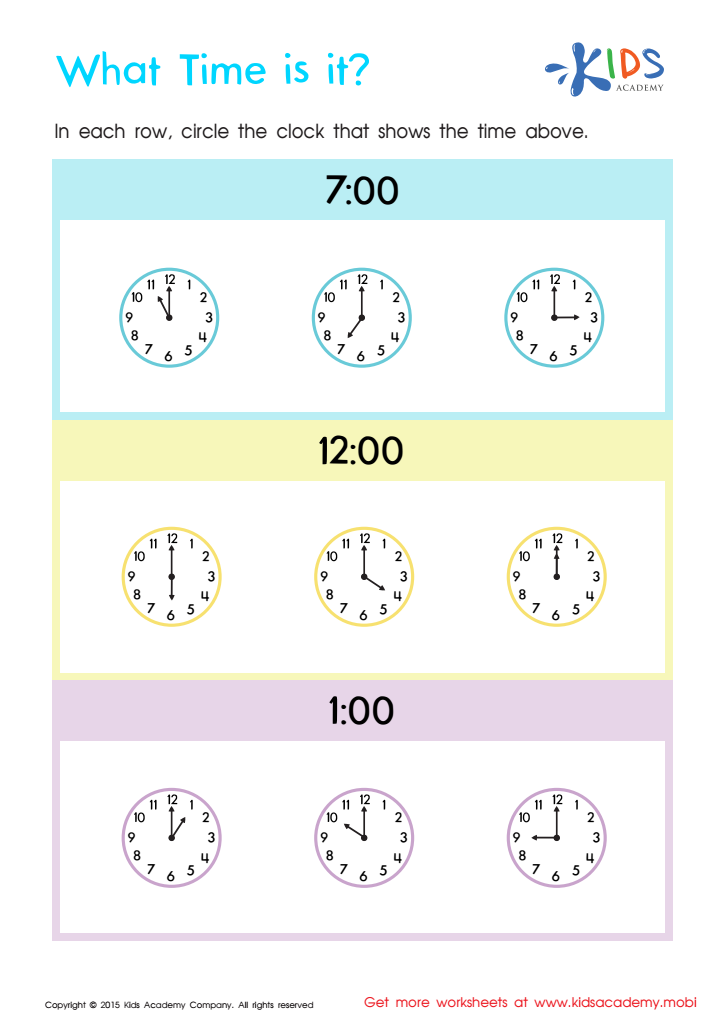
Telling The Time Worksheet: Part 3
Make learning to read clocks fun with our free printable worksheets! Have kids circle the clocks that show the time, remembering that the short hand is for hours and the long one is for minutes. For more worksheets, visit Kids Academy and explore the wonderful world of math with your little learners.
Telling The Time Worksheet: Part 3
Worksheet
Join Kids Academy for Free
Who is primarily going to use this learning content?








Understanding analog clocks is crucial for children aged 6-7 as it not only teaches them how to tell time but also supports broader mathematical concepts and cognitive development. Learning to read an analog clock encourages children to recognize patterns through the movement of the hour and minute hands, reinforcing skills in counting, sequencing, and understanding fractions. For instance, each hour represents a segment of a complete circle, helping children grasp the concept of divide and whole, which is foundational for future math concepts.
Moreover, learning to tell time on an analog clock promotes strong problem-solving skills. Children must think critically to understand time intervals and calculate the difference between various times, fostering their logical reasoning abilities. Additionally, being able to read an analog clock reduces reliance on digital devices, encouraging children to appreciate traditional methods.
For parents and teachers, instilling this skill cultivates independent thinking and confidence in children as they build their numeracy skills. It also enriches everyday routines, like scheduling activities or understanding the passing of time, which is vital as they navigate school and daily life. Thus, analog clock understanding is not just about telling time; it's an essential step in their overall math education and development.








