Basic measurement skills Math Worksheets for Ages 6-7
4 filtered results
-
From - To
Enhance your child's understanding of basic measurement concepts with our expertly designed math worksheets for ages 6-7. These worksheets introduce young learners to measuring length, weight, and capacity using simple, engaging activities. Each exercise is crafted to develop critical skills such as comparing, estimating, and using standard measurement units, making math both fun and educational. With colorful visuals and kid-friendly themes, our worksheets provide an excellent foundation for future math success. Help your child master measurement skills effortlessly and turn learning into a delightful adventure! Download our free printable worksheets today and start measuring up to success.
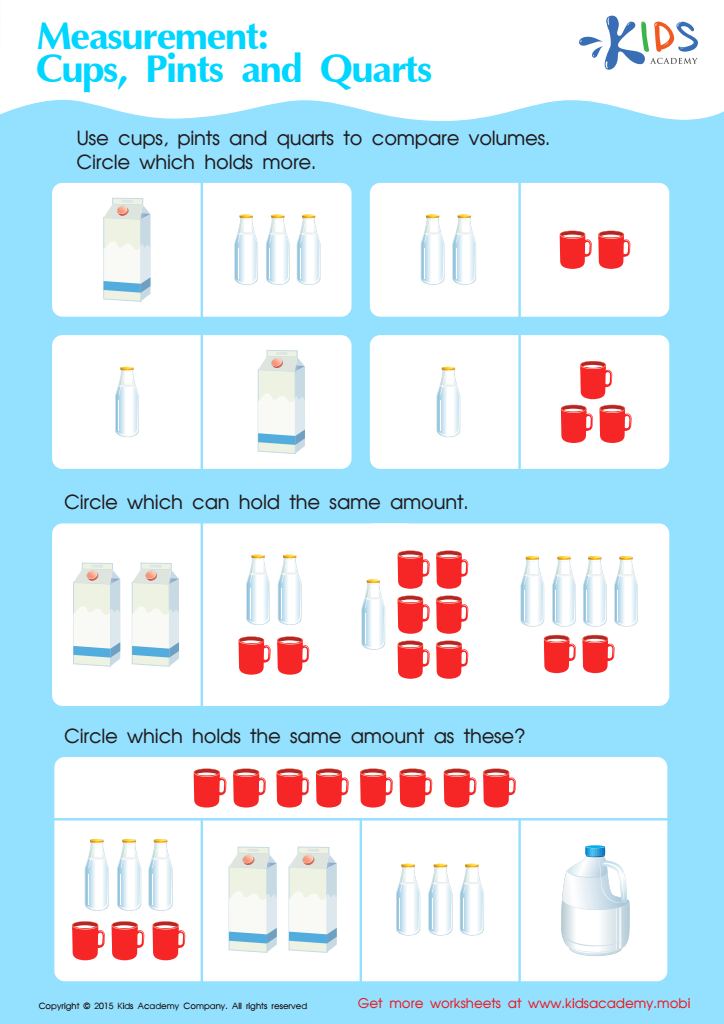
Measurement: Compare Volumes Worksheet
 Assign to My Students
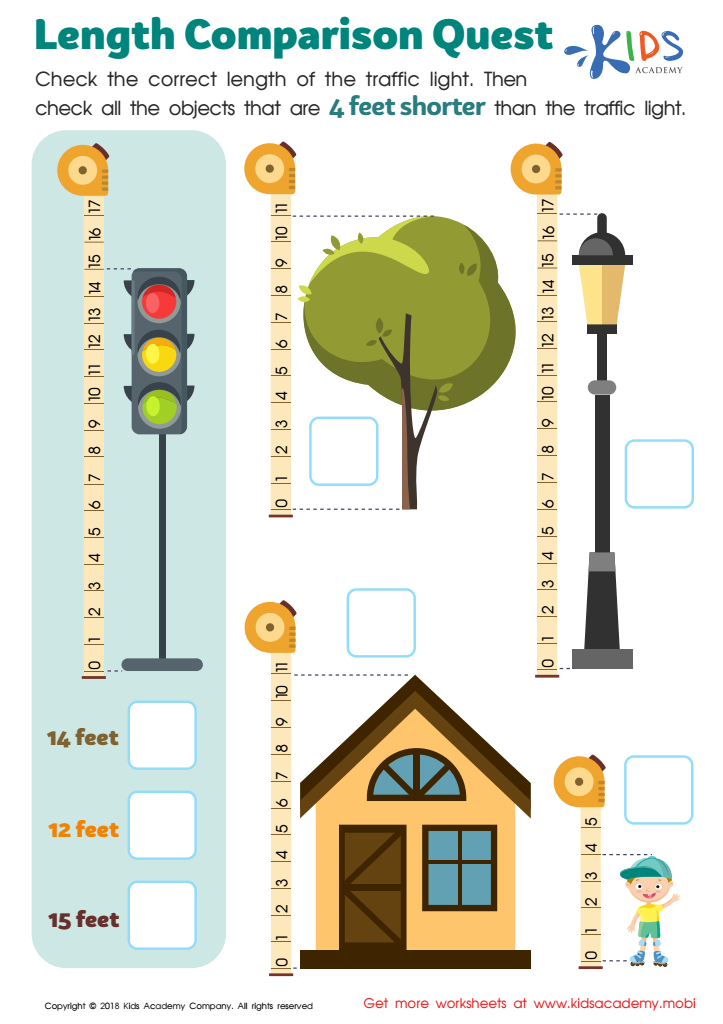
Length Comparison Quest Worksheet
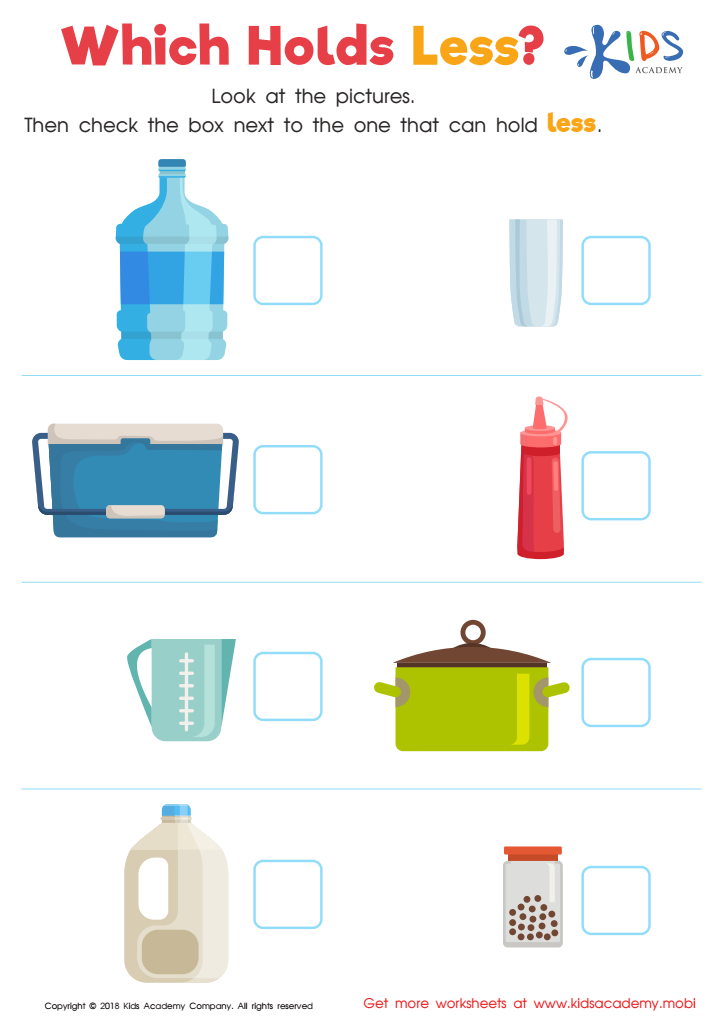
Which Holds Less? Worksheet


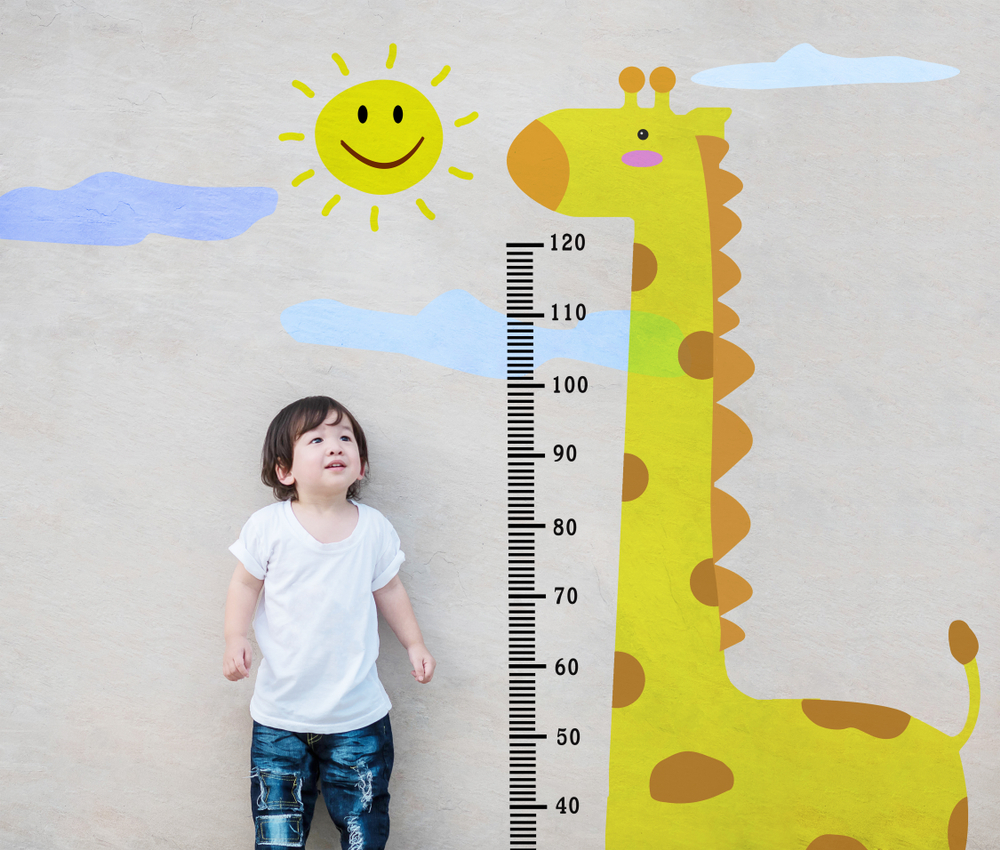




Understanding basic measurement concepts is crucial for children aged 6-7 as it sets a strong foundation for future mathematical learning and everyday life skills. At this stage, children are naturally curious about the world around them, asking questions like "How long is this?" or "How much does that weigh?" Introducing them to measurement helps answer these questions while developing their analytical and critical thinking abilities.
For parents and teachers, emphasizing measurement fosters a hands-on, practical approach to learning. It transforms abstract ideas into tangible experiences. Children learn to use tools such as rulers, measuring tapes, and scales, providing a direct application of their mathematical skills. These activities enhance fine motor skills and boost confidence as children see the results of their actions.
Moreover, basic measurement skills are interconnected with other educational areas such as science, reading instructions, and following recipes. They help children understand quantities, sizes, and the spatial relationships between objects, which are critical for both academic success and everyday activities.
Engaging children in measurement tasks also fosters a sense of responsibility and precision. They learn the importance of accuracy, which is not only vital for academic purposes but also for real-life tasks, like understanding lengths for a craft project or measuring ingredients for cooking. Encouraging these skills ensures children develop a well-rounded mathematical foundation, preparing them for subsequent grades and lifelong learning.








