Building vocabulary Math Worksheets for Ages 6-7
3 filtered results
-
From - To
Enhance your child's math vocabulary with our engaging Building Vocabulary Math Worksheets tailored for ages 6-7. These worksheets delve into key math terms and concepts, providing a solid foundation in early numeracy skills. By incorporating fun and interactive exercises, children will learn to recognize, understand, and use essential mathematical language in context. Ideal for young learners, these worksheets cover topics such as addition, subtraction, shapes, and measurement. Perfect for both classroom and home use, they foster confidence and academic growth, making math enjoyable and accessible for all students. Explore our collection today and give your child a head start in their mathematical journey!
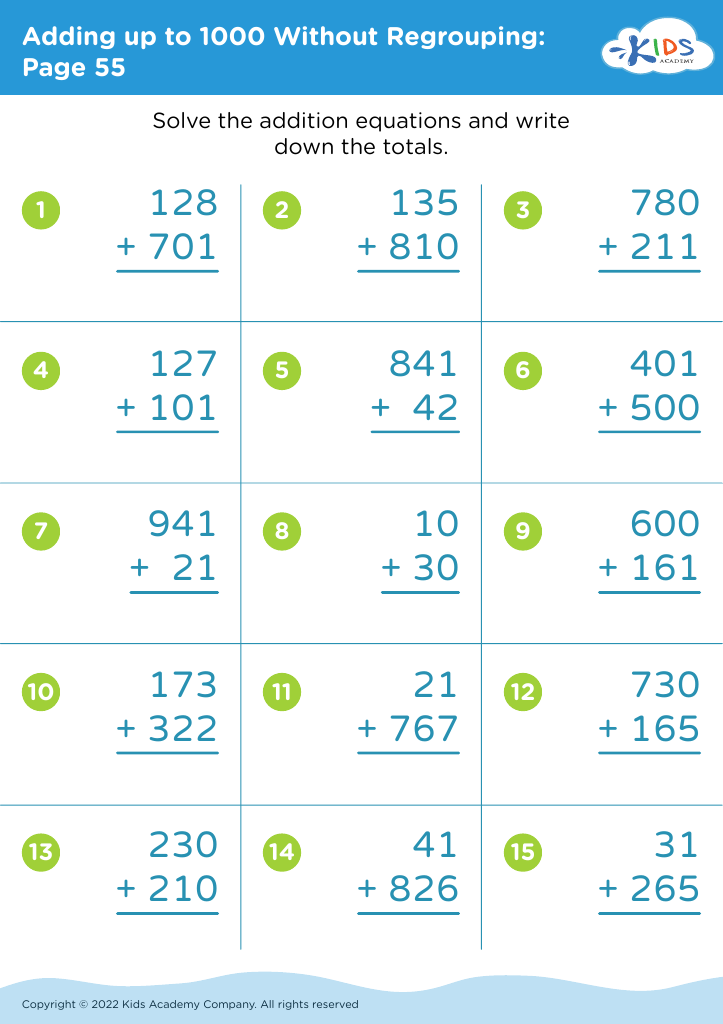
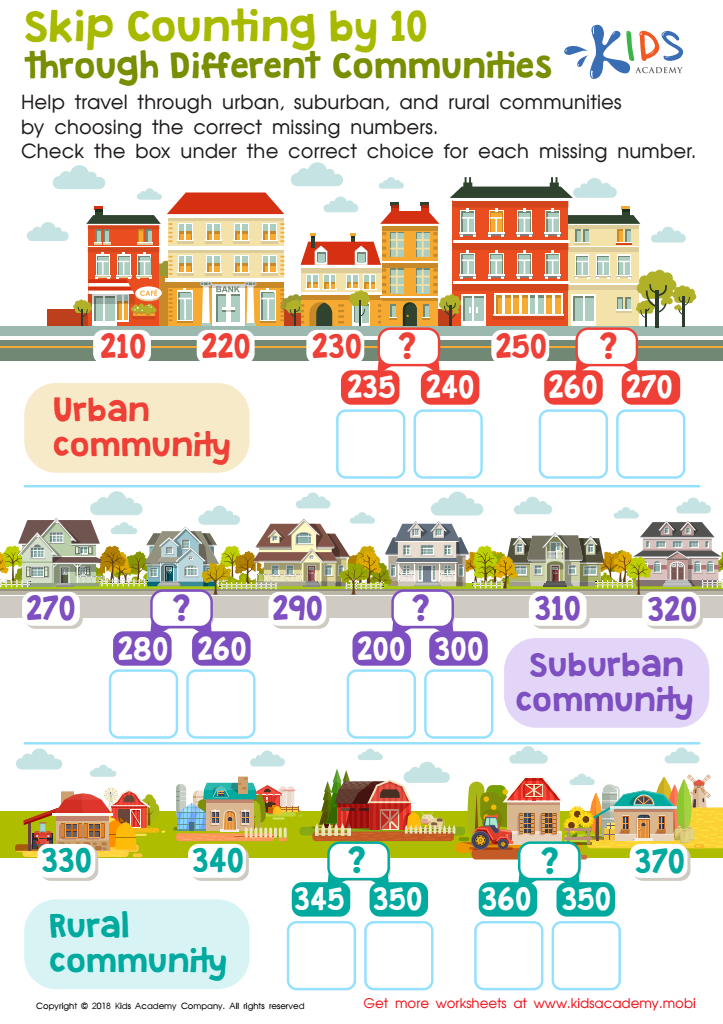
Skip Counting by 10 through Different Communities Worksheet
 Assign to My Students






.jpg)

Building vocabulary in math for ages 6-7 is crucial because it forms the foundation for future academic success and life skills. At this age, children are developing critical thinking abilities and beginning to grasp fundamental concepts that will be essential throughout their education. Vocabulary in math is not just about learning words; it’s about understanding concepts and processes that students will build on in later grades.
When parents and teachers focus on expanding math vocabulary, children become more comfortable with terms like “addition,” “subtraction,” “equal,” and “greater than.” This fluency helps kids follow instructions, understand assignments, and solve problems more efficiently. A robust math vocabulary can also improve overall communication skills; children learn to express their understanding clearly and ask precise questions when they need help.
Moreover, early exposure to math vocabulary demystifies math and makes it more approachable. When children feel confident in their understanding of math terms, they are less likely to develop math anxiety and more likely to enjoy learning the subject. This positive attitude towards math can lead to better performance and a lifelong interest in mathematics, which is valuable in a world where numeracy skills are increasingly important. Hence, building math vocabulary at a young age sets the stage for academic achievement and practical life skills.








