Developing problem-solving skills Math Worksheets for Ages 6-7
8 filtered results
-
From - To
Discover our engaging "Developing Problem-Solving Skills Math Worksheets" designed specifically for ages 6-7. These worksheets help young learners enhance their critical thinking and analytical skills through fun and interactive math challenges. By tackling real-world problems, children will improve their ability to solve mathematical equations and develop a strong foundation in problem-solving. Perfect for classroom use or at-home practice, our worksheets include colorful illustrations and age-appropriate exercises that captivate your child's interest. Foster a love for math while equipping your child with essential skills needed for future success in academics and everyday life. Start their math journey today!
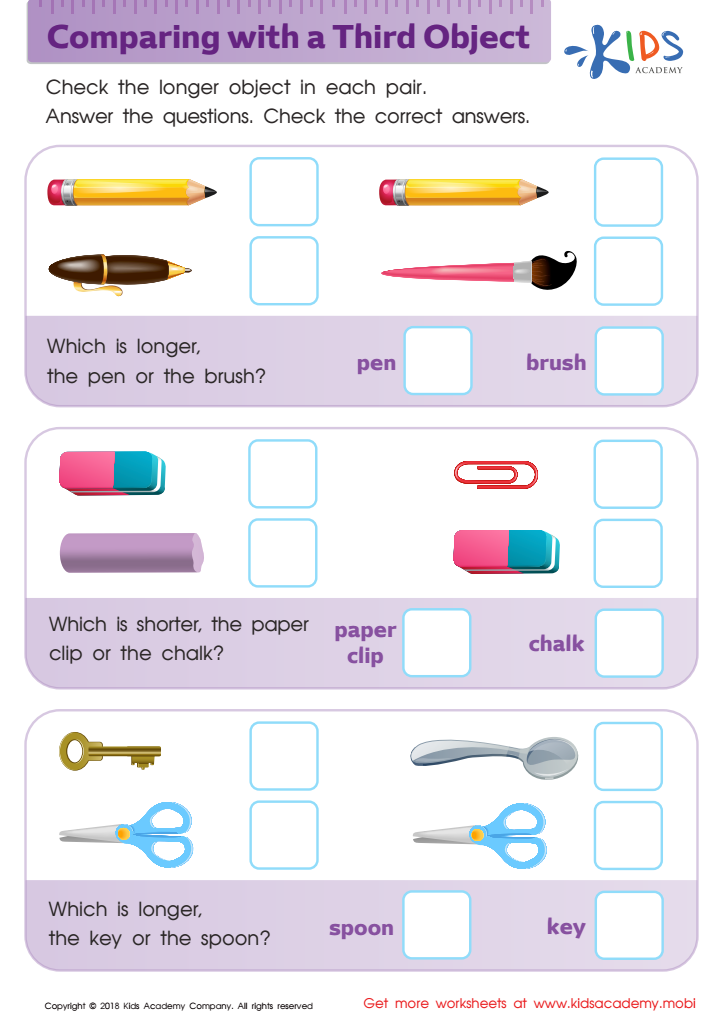
Comparing with a Third Object Worksheet
 Assign to My Students
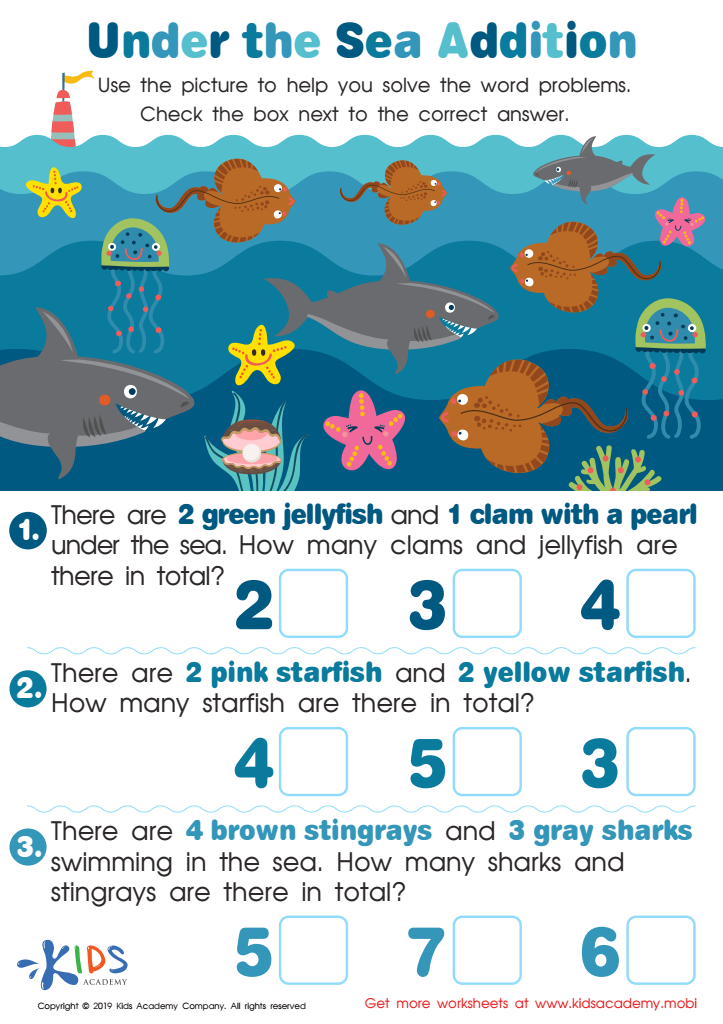
Under the Sea Addition Worksheet
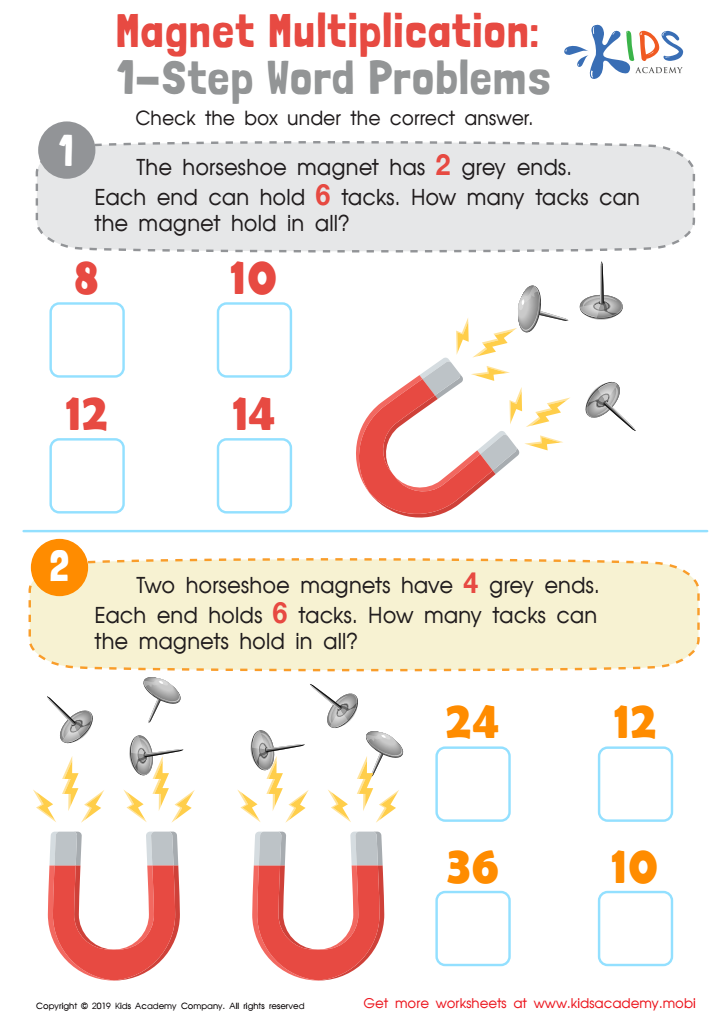
Magnet Multiplication: 1-Step Word Problems Worksheet
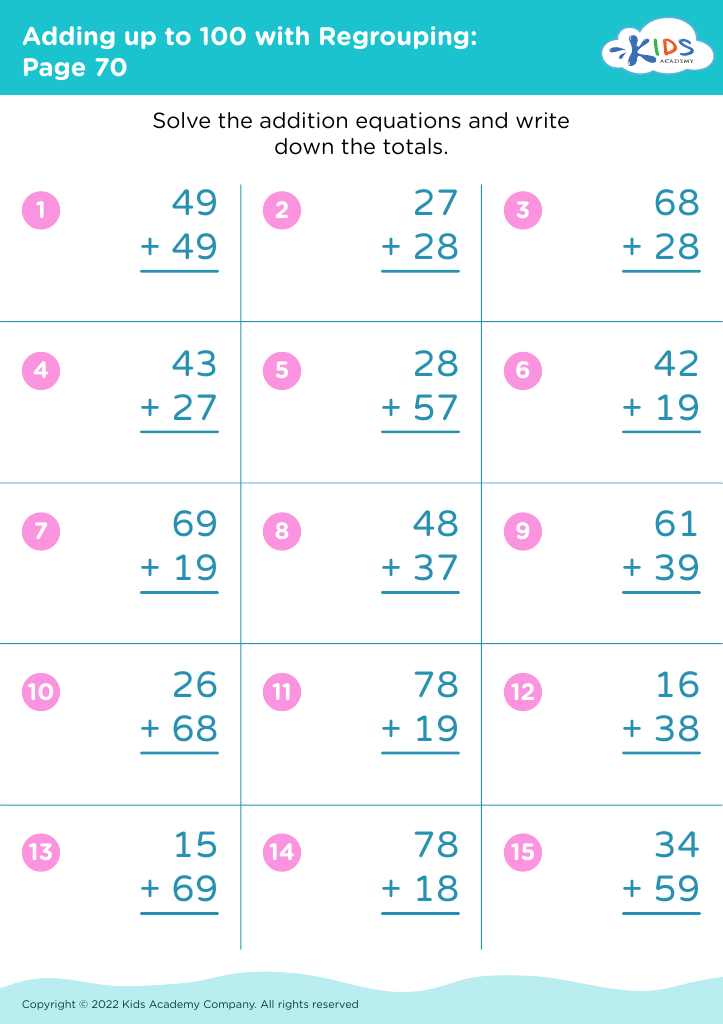
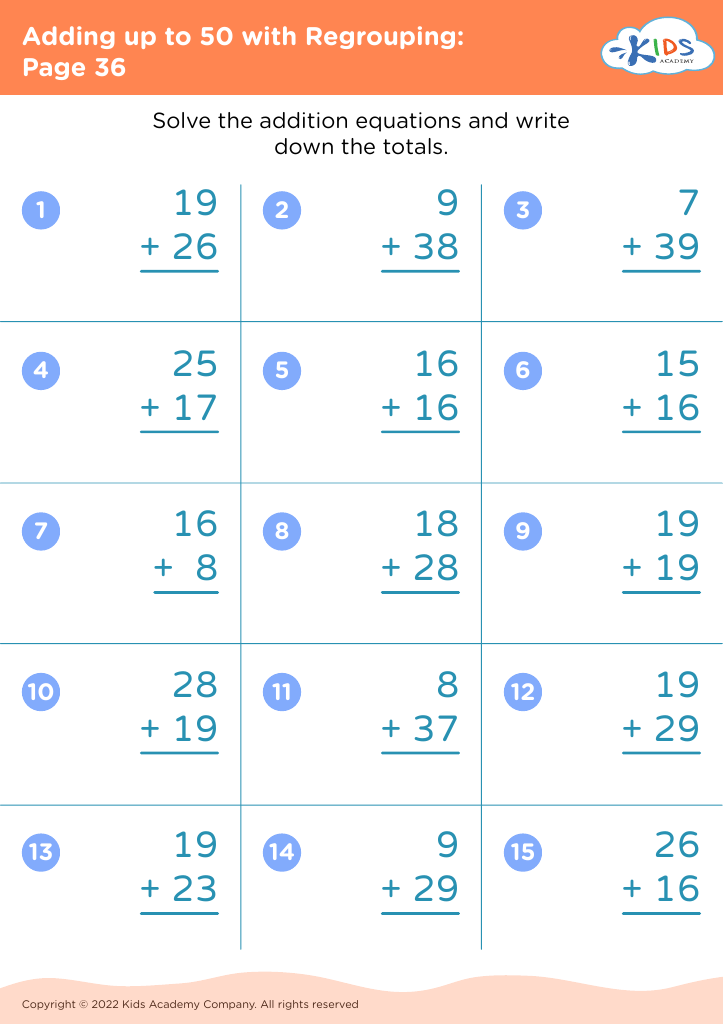
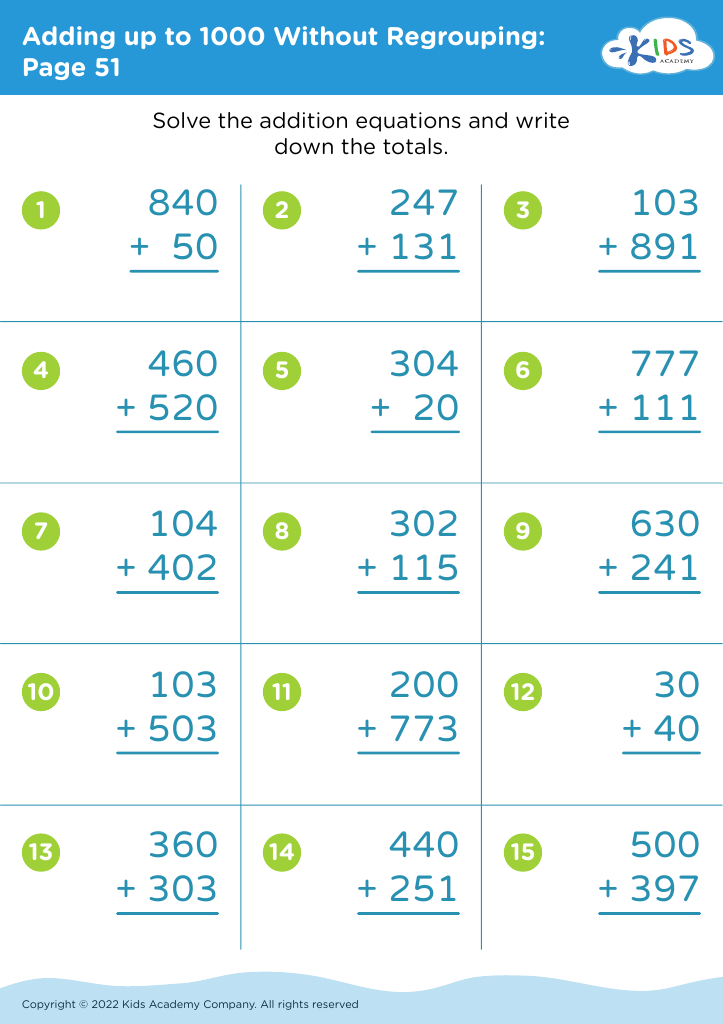







Developing problem-solving skills in math for children aged 6-7 is crucial for several reasons. Firstly, this age is critical for cognitive development; children begin to think more abstractly and learn to apply different strategies to tackle challenges. Cultivating problem-solving skills enables young learners to approach math with confidence and curiosity, which fosters a positive attitude toward the subject.
Secondly, these skills promote critical thinking, an essential life competency. By engaging with math problems, children learn to analyze situations, make decisions, and evaluate outcomes. This ability not only aids in math but is transferable to real-world situations, preparing them to handle problems in various contexts, such as science, social situations, and future studies.
Furthermore, early problem-solving experiences lay the groundwork for higher-order thinking skills. As children learn to break down complex problems into manageable parts, they create a strong foundation that supports more advanced concepts in later grades.
Involving parents and teachers in this development is vital. When stakeholders actively encourage and model problem-solving strategies, children receive consistent support and guidance, enhancing their overall learning experience and leading to academic success. Ultimately, problem-solving skills empower children to become independent thinkers and resilient learners.








