Develops fine motor skills Math Worksheets for Ages 6-7
3 filtered results
-
From - To
Our "Develops Fine Motor Skills Math Worksheets for Ages 6-7" offer children an engaging way to hone essential math concepts while enhancing their fine motor abilities. Designed by educational experts, these worksheets combine fun activities with learning to help kids develop precision and control in their hand movements. With captivating illustrations and interactive tasks, children will enjoy practicing writing numbers, solving puzzles, and drawing geometric shapes. These exercises not only build a strong math foundation but also support hand-eye coordination and dexterity, making them perfect for young learners. Help your child succeed in math and fine motor development with our expertly crafted worksheets.
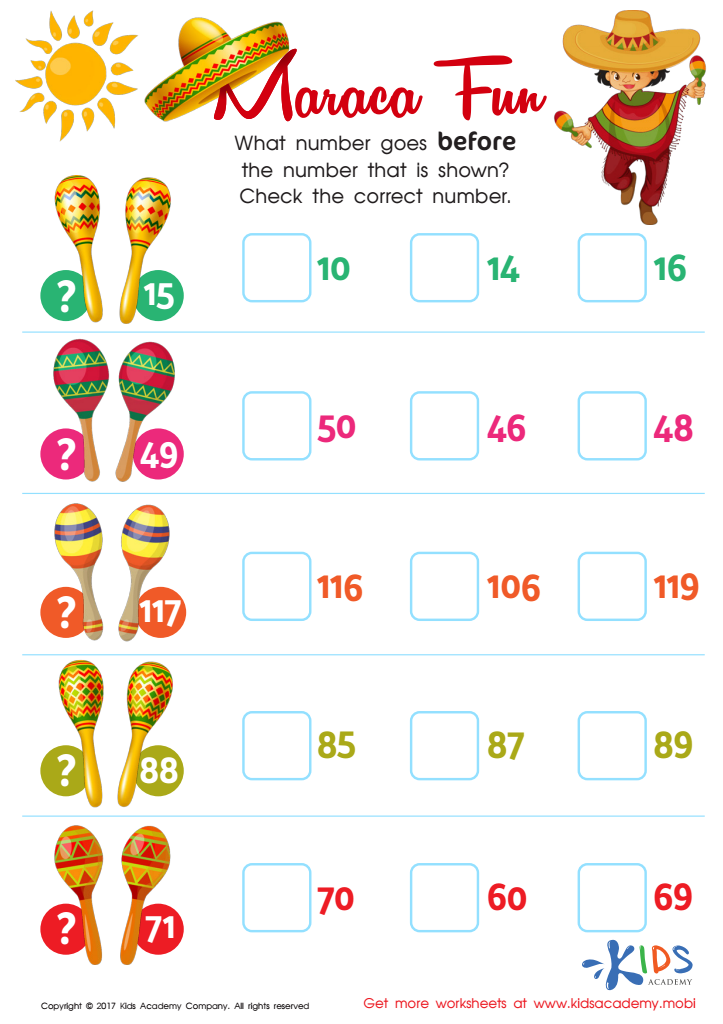
Counting: Maraca Fun Worksheet
 Assign to My Students
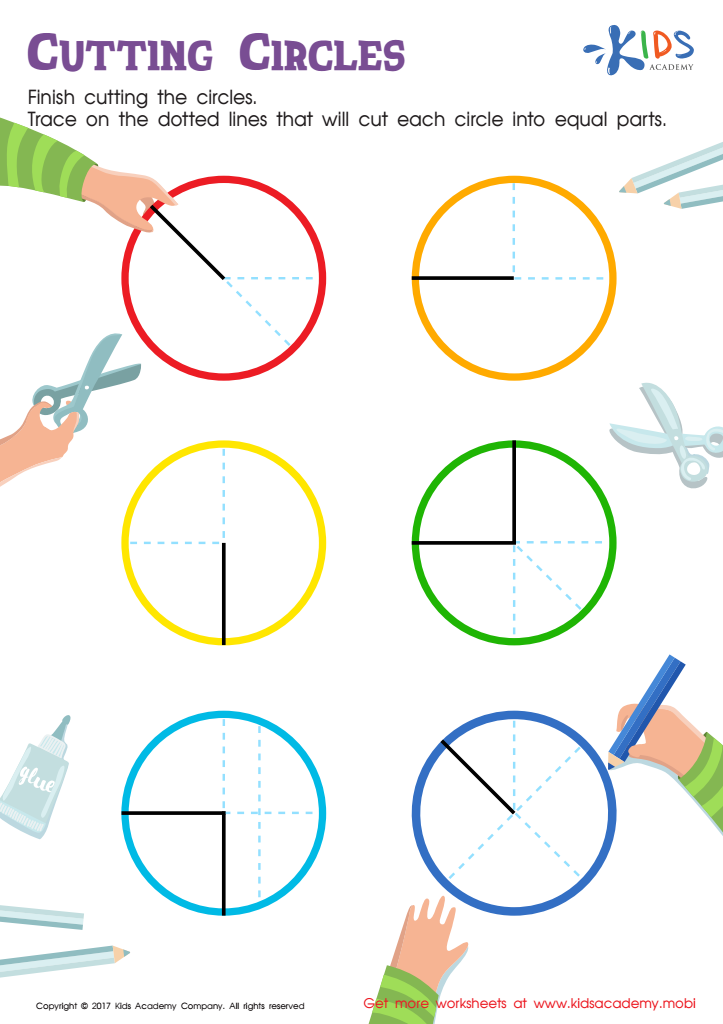
Cutting Circles Worksheet








Parents and teachers should place emphasis on developing fine motor skills in math for children aged 6-7 because these skills are foundational for both academic and daily life activities. Fine motor skills involve the coordination of small muscles in the hands and fingers, enabling children to perform precise tasks such as writing, manipulating small objects, and buttoning clothes. At the ages of 6-7, children are in first or second grade, a crucial period for forming their education base.
When incorporated into math activities, fine motor skills can enhance learning and comprehension. For instance, activities like counting small objects, using number blocks, or drawing shapes help children better understand mathematical concepts while simultaneously improving their hand-eye coordination and dexterity. Adequate fine motor skills are also crucial for neat handwriting and the ability to complete written math assignments efficiently and accurately.
Moreover, these activities foster greater attention to detail and perseverance, important skills for academic success. A strong development in this area allows children to progress seamlessly to more complicated mathematical tasks in the future. Thus, focusing on fine motor skill development in early math education equips children with both the practical skills necessary for everyday tasks and a strong cognitive foundation for complex problem-solving activities later in their academic journey.








