
Fruit identification Math Worksheets for Ages 6-7
4 filtered results
Difficulty Level
Grade
Age
-
From - To
Subject
Activity
Standards
Introduce your young learner to the exciting world of fruits with our Fruit Identification Math Worksheets for Ages 6-7. These engaging worksheets seamlessly combine fruit recognition with essential math skills, capturing children's interest through vivid illustrations and enjoyable activities. From counting juicy apples and adding plump strawberries to simple subtraction with colorful bananas, each worksheet offers a fun and educational experience tailored for first graders. Foster both math and critical thinking abilities while keeping young minds intrigued and entertained. Perfect for classroom practice or at-home learning, our printable worksheets make math and fruit identification easy and fun!
Favorites
With answer key
Interactive
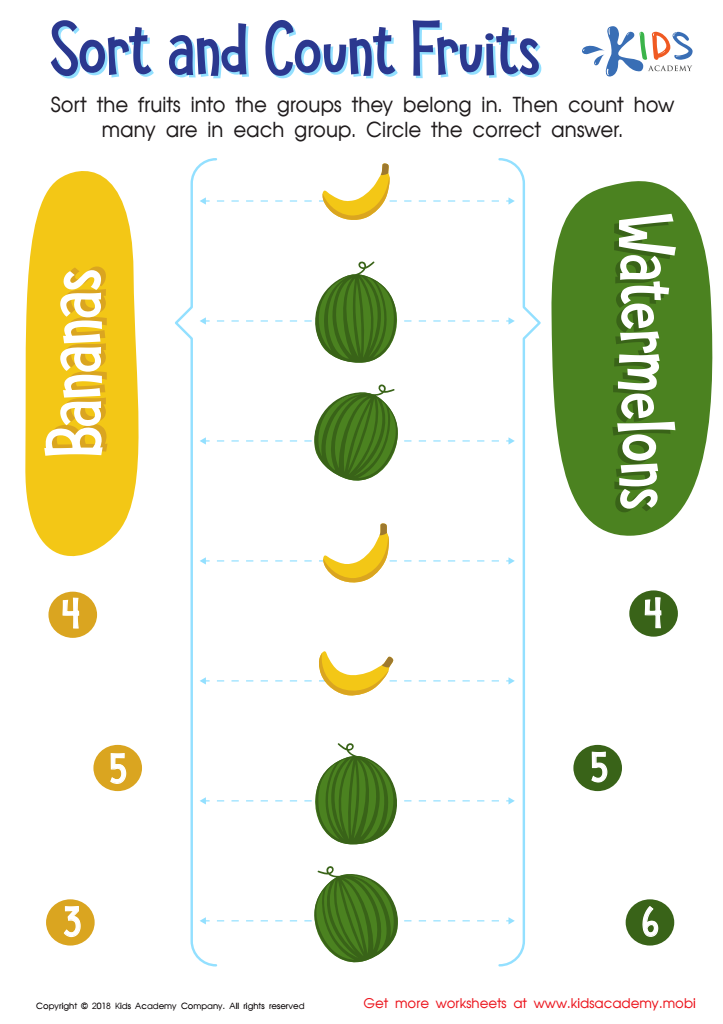
Sort and Count Fruits Worksheet
Allow your children to hone their critical thinking and number reasoning skills with this free worksheet. They'll sort, count, and trace fruits while learning basic number sense. A fun, delicious learning experience with familiar pictures they'll love.
 Assign to My Students
Sort and Count Fruits Worksheet
Worksheet
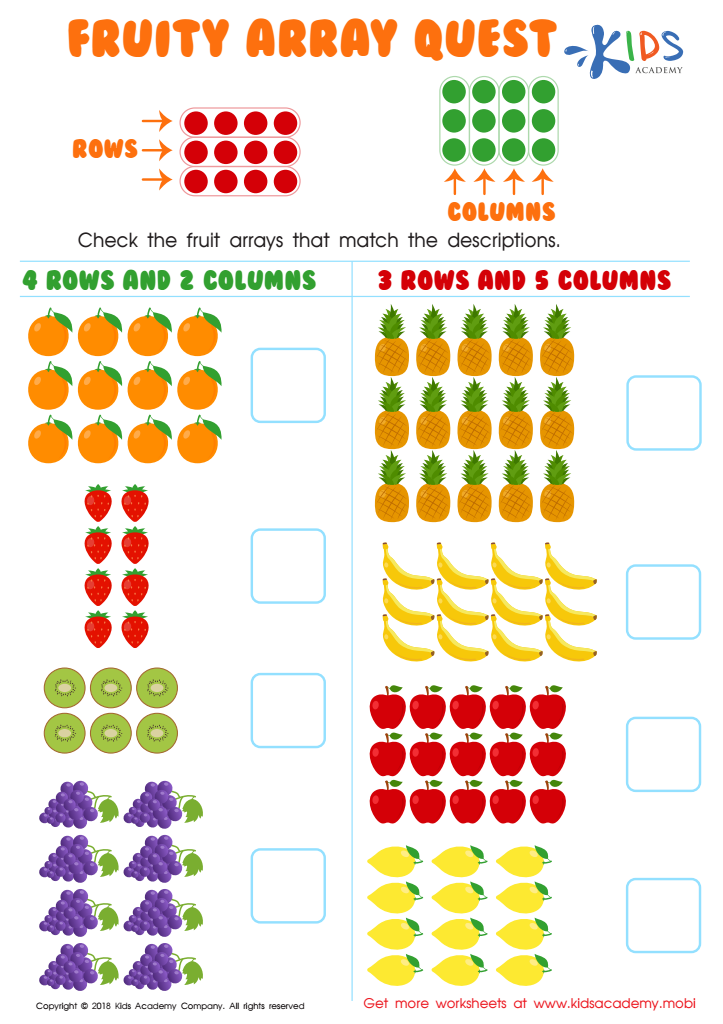
Fruity Array Quest Worksheet
Explain rows (horizontal) and columns (vertical) to your child before starting the worksheet. Show them the picture and the arrows indicating direction. Your child should be able to answer the questions easily after that. Help them match the fruit arrays that match the descriptions.
Fruity Array Quest Worksheet
Worksheet
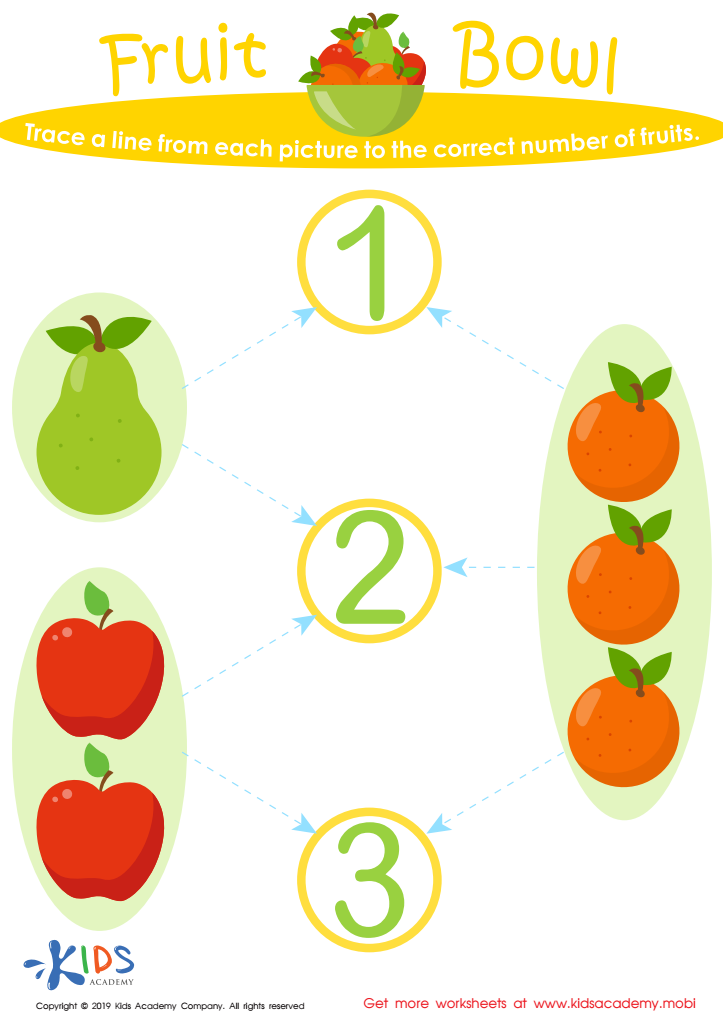
Fruit Bowl Worksheet
Kids love counting fruit! This fun math worksheet lets them count the number of fruit in each group and use the traceable lines to connect the correct number. It's a great way to learn one-to-one number representation, plus it's yummy and delicious!
Fruit Bowl Worksheet
Worksheet
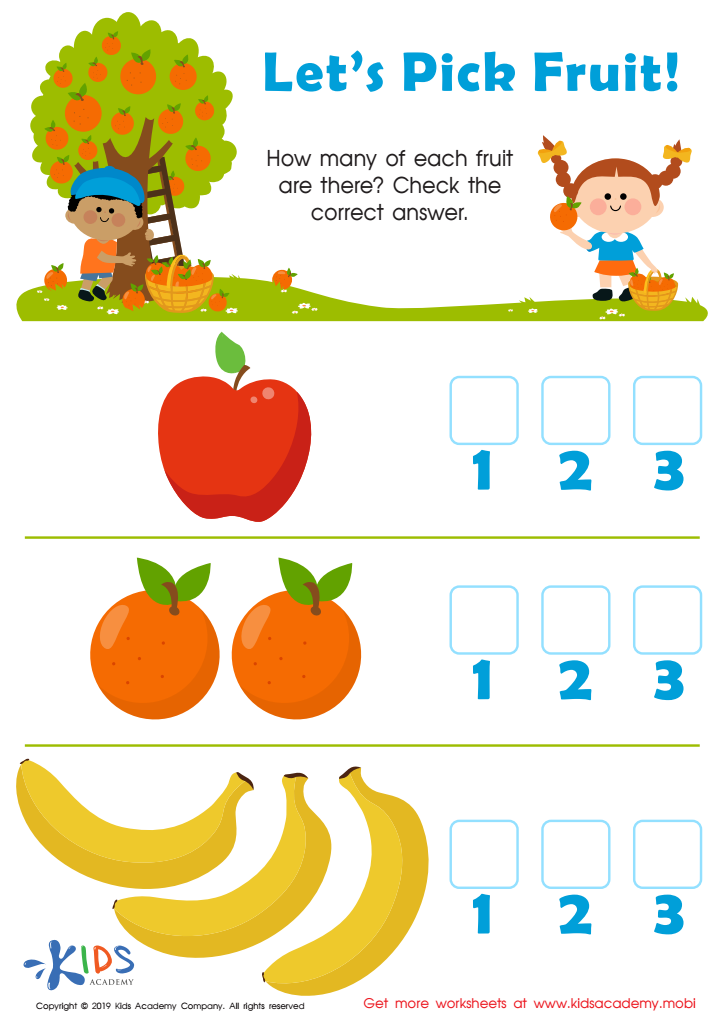
Let's Pick Fruit Worksheet
Picking fruit is fun - and counting it is even better! This free worksheet is perfect for young math learners. They'll use picture representation to count the fruit in each problem and then select the correct answer from the multiple-choice boxes. It's a great way to teach number sense in an easy, fun way!
Let's Pick Fruit Worksheet
Worksheet
Join Kids Academy for Free
Who is primarily going to use this learning content?



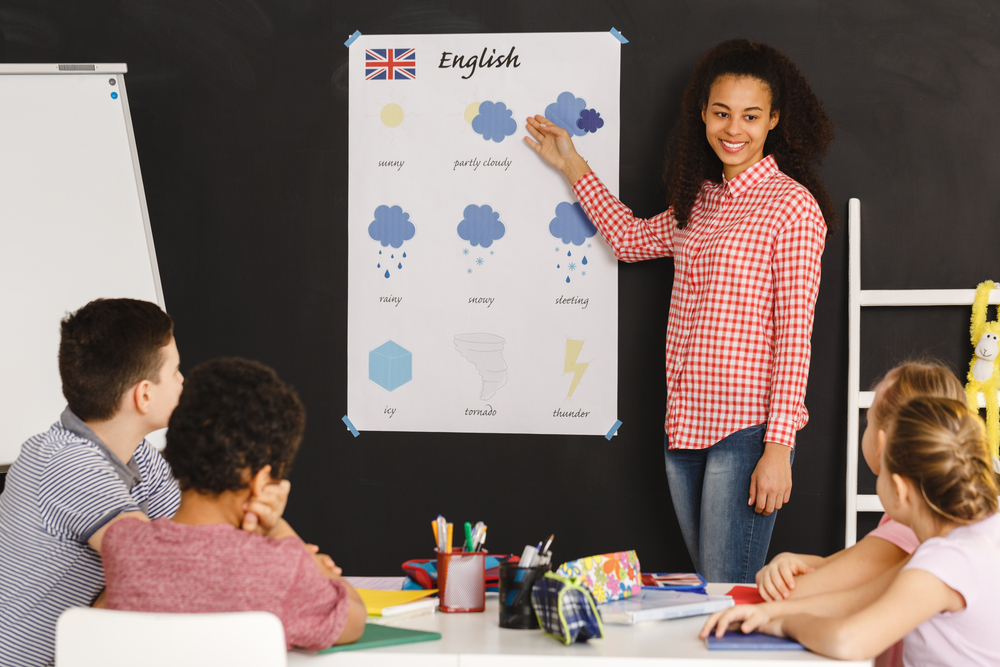




Teaching fruit identification math to children ages 6-7 is a highly beneficial educational activity for several reasons. Firstly, it integrates multiple learning domains, including mathematics, science, and health, creating a multidisciplinary approach that keeps young minds engaged. By using colorful and tangible objects like fruits, children can better grasp abstract mathematical concepts such as counting, addition, subtraction, and even grouping and categorization.
Fruit identification also inherently teaches kids about different types of fruits, sparking curiosity about nature and nutrition. Understanding where food comes from and its benefits lays a foundation for making healthier food choices as they grow older. This practical application of knowledge makes learning meaningful and relevant, fostering long-term retention and a more profound understanding.
Additionally, incorporating fruit into math lessons supports the development of fine motor skills. Picking up, sorting, and handling small fruits aids in hand-eye coordination and dexterity. This holistic approach not only caters to academic growth but also enhances physical development.
Furthermore, engaging in hands-on activities like these can make learning more enjoyable and less daunting, promoting a positive attitude toward education. In a classroom or home setting, this collaborative and interactive method can also build social skills as children work together, share, and discuss their findings. Immediately meaningful, interconnected, and fun, fruit identification math sets the stage for well-rounded development.








