Improve counting Math Worksheets for Ages 6-7
3 filtered results
-
From - To
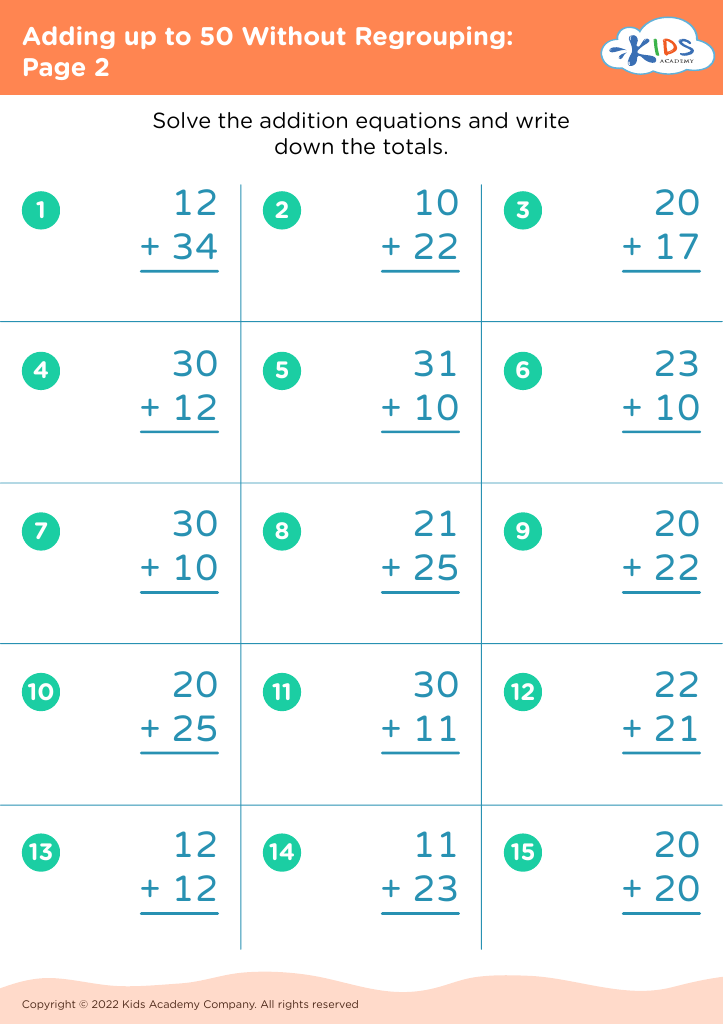
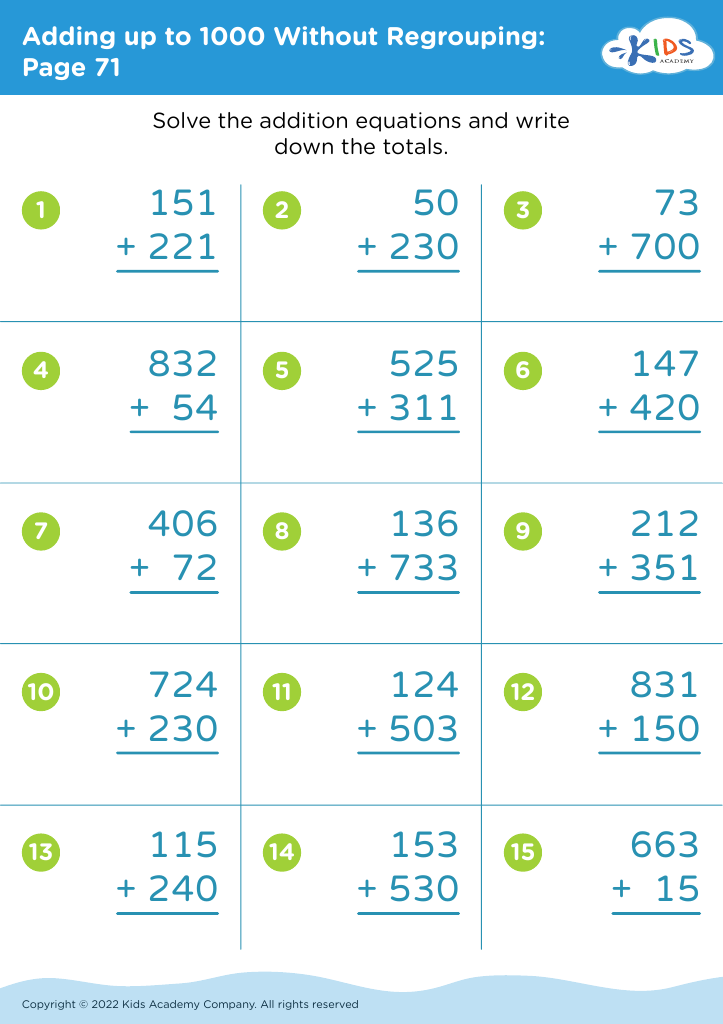
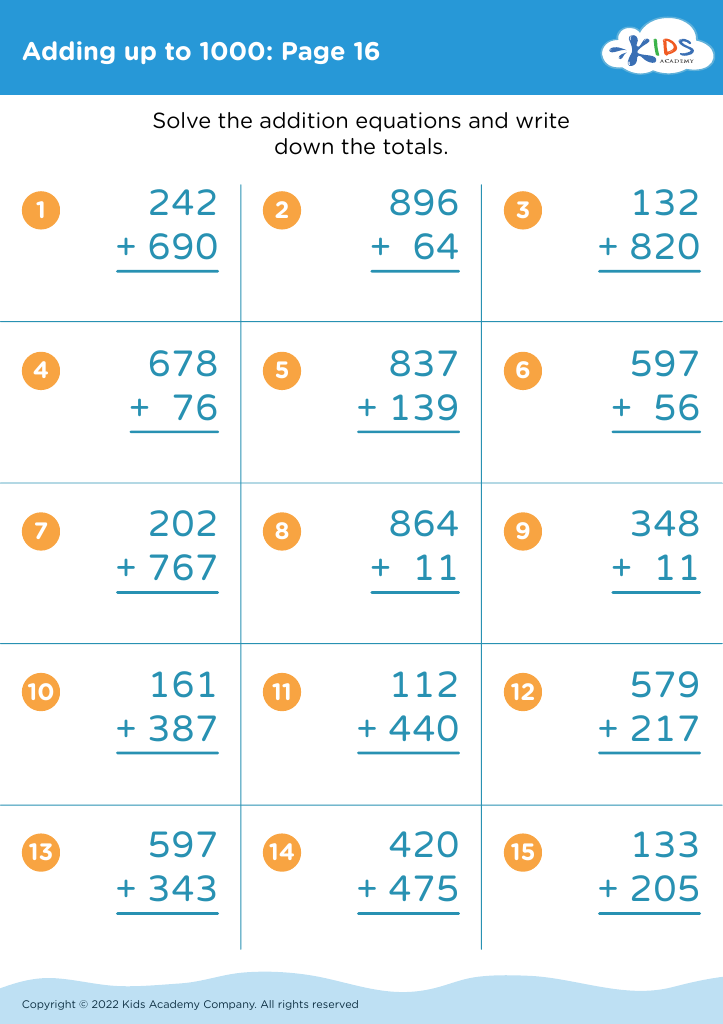
Enhance your child’s mathematical foundation with our “Improve Counting” math worksheets, designed specifically for ages 6-7. These engaging and enjoyable worksheets help young learners develop essential counting skills through a variety of exercises, including number recognition, sequencing, and basic addition. Our materials are tailored to align with educational standards, ensuring a well-rounded approach to early math skills. With fun illustrations and interactive activities, children will build confidence and a love for numbers while learning at their own pace. perfect for homeschooling or classroom use, our worksheets provide effective practice to support your child's growing understanding of counting concepts.








Improving counting skills for children aged 6-7 is essential for their overall mathematical development and lifelong learning. At this age, children are building foundational skills that will support more complex math concepts later on. Strong counting skills enhance children's ability to perform basic arithmetic, understand quantity, and develop number sense, which is crucial for problem-solving and critical thinking in mathematics.
Furthermore, counting aids in cognitive development, as it helps children recognize patterns and relationships in numbers. Mastering counting improves confidence and encourages a positive attitude towards math—an area where many children may experience anxiety.
Parents and teachers play a vital role in fostering these skills through engaging activities. Collaborative practices, such as counting objects during daily routines and incorporating games, provide contextual understanding of way counting applies in real-life situations.
Lastly, counting proficiency supports children's performance in standardized tests and classroom assessments, paving the way for success in more advanced math subjects. When parents and teachers prioritize counting math, they equip children with essential tools for academic achievement, ensuring a strong foundation for future learning and personal growth in an increasingly numerate world.








