Number sequence learning Math Worksheets for Ages 6-7
3 filtered results
-
From - To
Explore our engaging Number Sequence Learning Math Worksheets for children aged 6 to 7, designed to help young learners master essential math skills. Our thoughtfully crafted worksheets focusing on number sequences help children enhance their counting, pattern recognition, and problem-solving abilities in a fun and interactive way. Each worksheet offers a variety of exciting exercises, including fill-in-the-blank sequences and sequencing puzzles, making math enjoyable and stimulating. Perfect for use at home or in the classroom, these resources will boost confidence and nurture a love for learning math concepts. Start your child’s math journey today with our captivating worksheets!
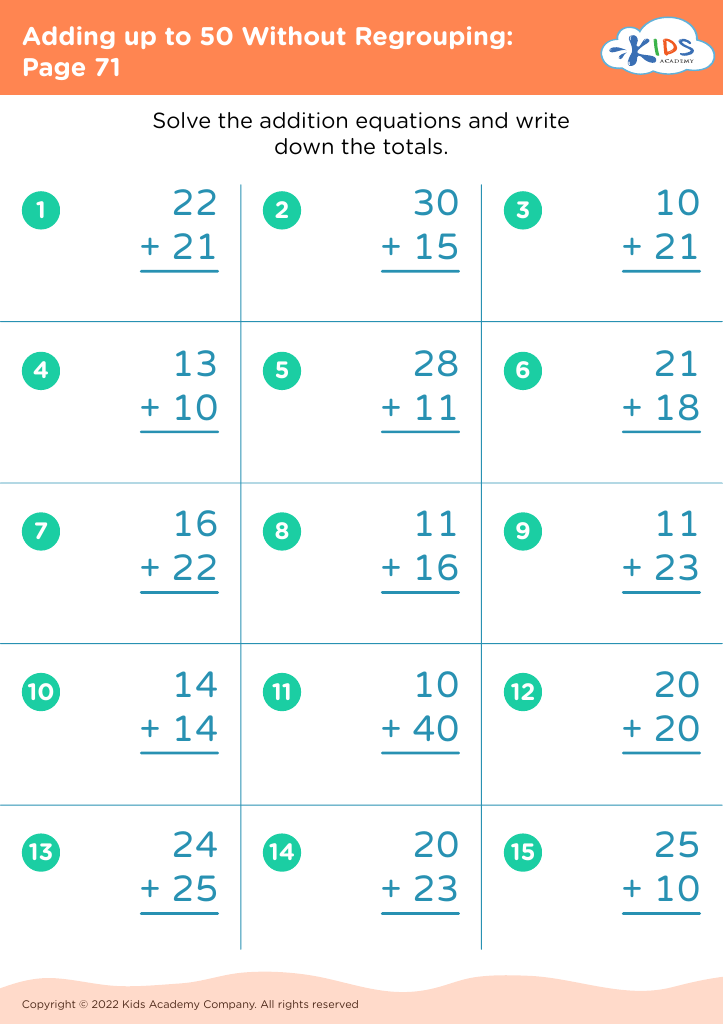
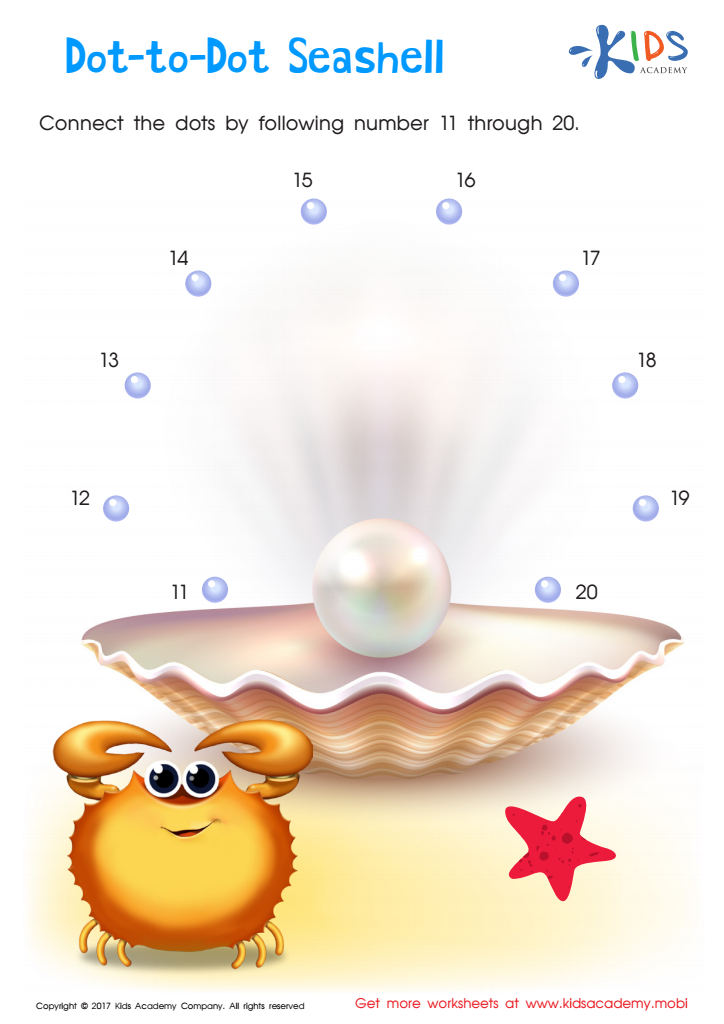
Ordering 11–20: Dot–to–dot Seashell Printable
 Assign to My Students
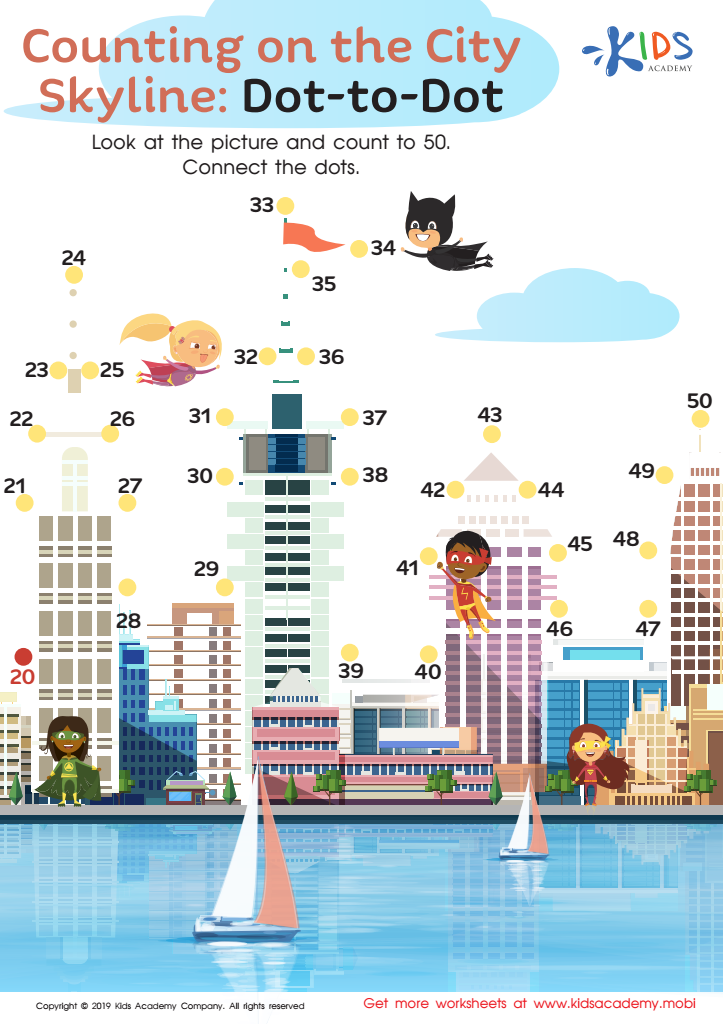
Counting on the City Skyline: Dot-to-Dot Worksheet






Number sequence learning is a fundamental aspect of early mathematics education that plays a crucial role in the cognitive development of children aged 6-7. At this stage, children are transitioning from simple counting to understanding patterns, relationships, and numerical concepts. Parents and teachers should care about this learning process because it lays the groundwork for future math skills.
Firstly, mastering number sequences enhances children's ability to perform basic operations, such as addition and subtraction. It fosters a stronger understanding of the number line, which is essential for grasping larger mathematical concepts as they progress in their education.
Secondly, number sequence learning promotes critical thinking and problem-solving abilities. When children recognize patterns, they begin to develop analytical skills that extend beyond mathematics, influencing their overall academic competence.
Moreover, engaging with number sequences helps cultivate a positive attitude towards math. Early success in these foundational skills can build confidence, reducing anxiety in later years where self-doubt may hinder performance.
Lastly, a solid foundation in number sequences supports real-life applications, such as telling time or managing money, which are vital skills outside the classroom. Overall, fostering number sequence learning is key to ensuring children thrive both academically and personally.








