
Object identification Math Worksheets for Ages 6-7
3 filtered results
Difficulty Level
Grade
Age
-
From - To
Subject
Activity
Standards
Explore our engaging Object Identification Math Worksheets designed for ages 6-7! These worksheets bridge fun and learning by helping young learners grasp early math concepts through vibrant activities. From sorting objects by shapes and colors to counting and categorizing, each worksheet promotes critical thinking and problem-solving skills. Ideal for both classroom and home use, our printable materials encourage hands-on practice that strengthens observational abilities. Enhance your child’s learning experience with exercises that turn everyday objects into educational adventures. Perfect for educators and parents seeking effective resources to support math development in children. Dive into a world of discovery today!
Favorites
With answer key
Interactive
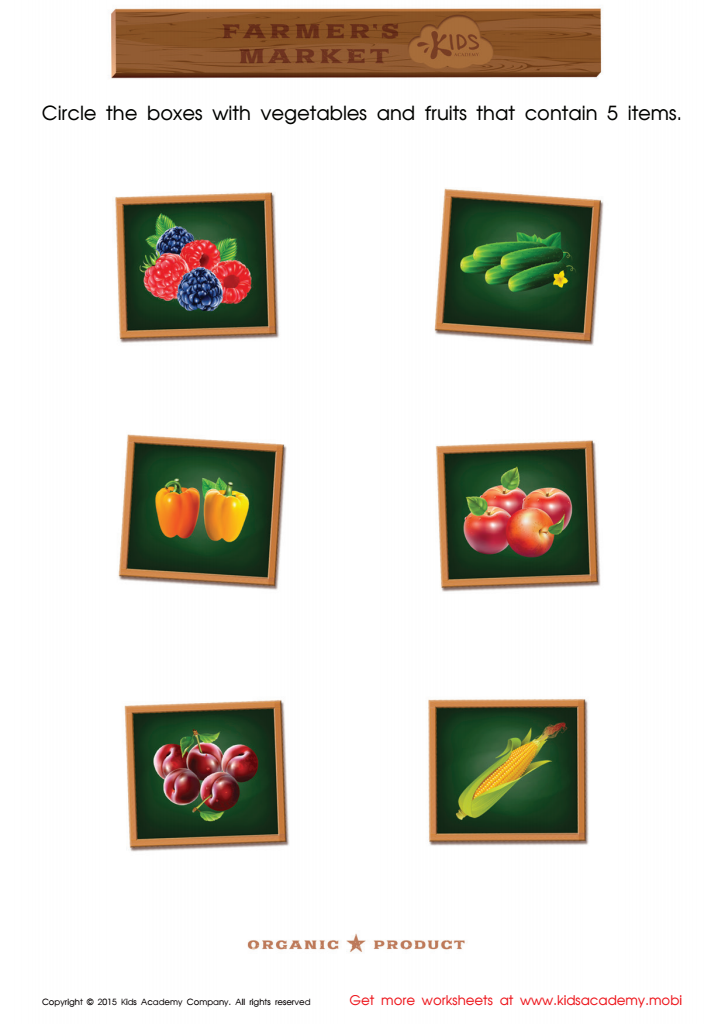
Count and Match Vegetables 1 – 7 Math Worksheet
Print this bright math worksheet from Kids Academy and give your child a fun way to enhance their counting skills. Based on Singapore Math, the colourful pictures make it easy for children to comprehend math. Get additional free worksheets here!
 Assign to My Students
Count and Match Vegetables 1 – 7 Math Worksheet
Worksheet
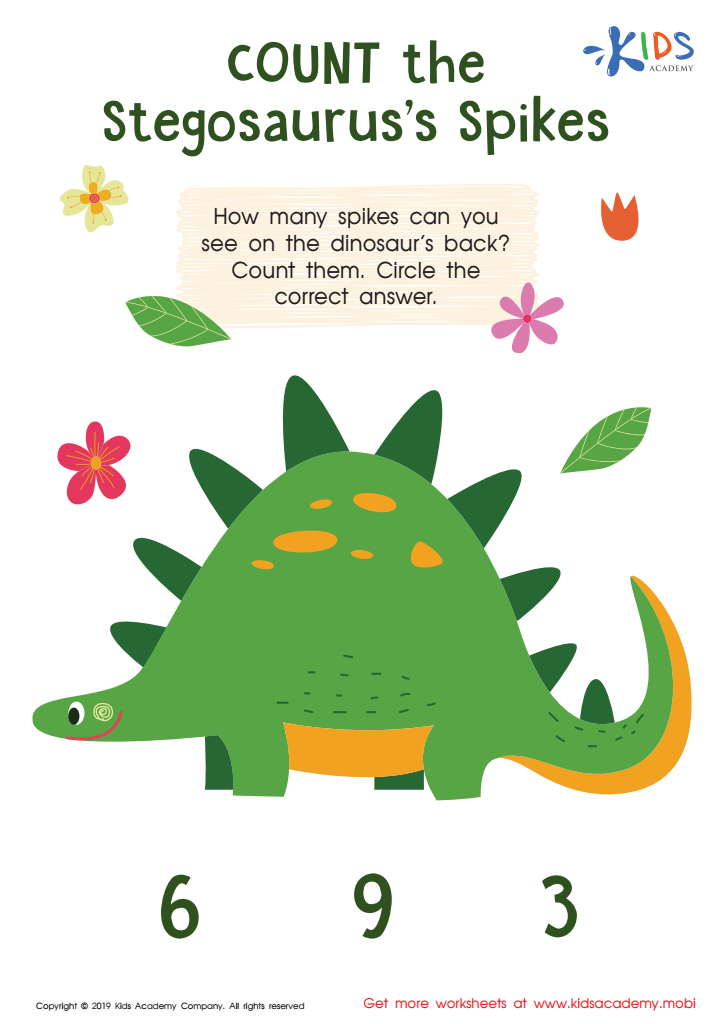
Count the Stegosaurus's Spikes Worksheet
Dinosaurs walked the earth long before humans, meaning no contact was made before they became extinct. Scientists have used research and diggings to find out about these animals, even giving them names. In this worksheet, help your students count the spikes on the stegosaurus and circle the correct answer.
Count the Stegosaurus's Spikes Worksheet
Worksheet
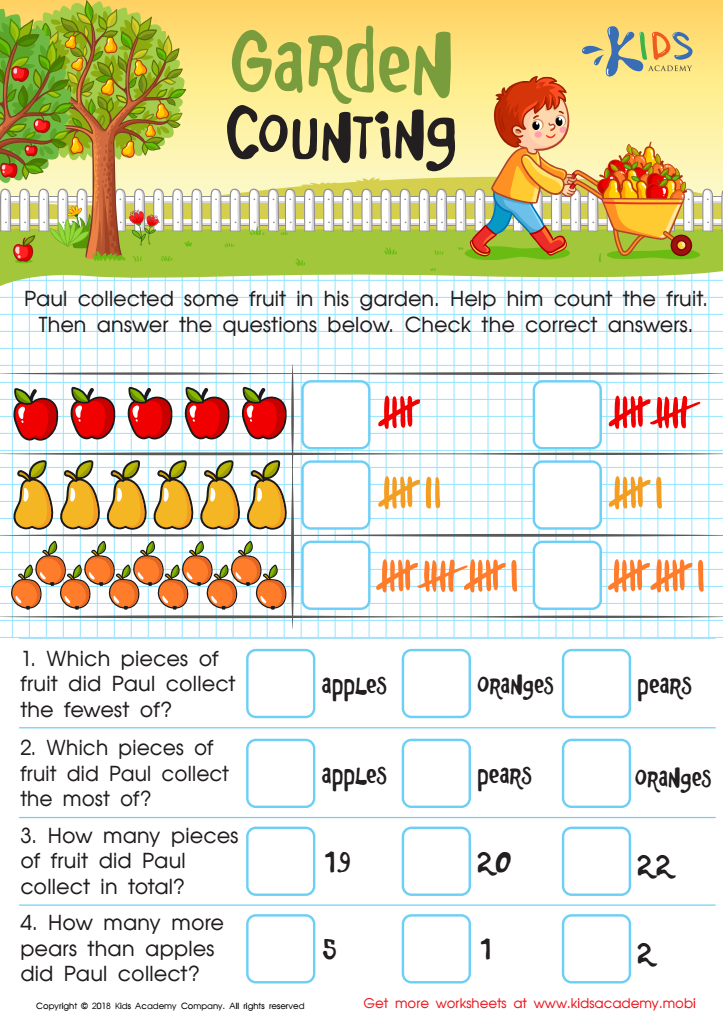
Garden Counting Worksheet
Help Paul count his fruit! Look at each type and count the total; check the box with the right number. Answer the questions below to report your findings and the types of fruit. Let's help Paul count his delicious harvest!
Garden Counting Worksheet
Worksheet
Join Kids Academy for Free
Who is primarily going to use this learning content?




Object identification in math for children aged 6-7 is crucial for multiple reasons. Firstly, it forms the foundational block of spatial awareness and geometry, which are key components in the broader subject of mathematics. When kids can identify and classify objects based on attributes like shape, size, or color, they start to develop reasoning and analytical thinking skills. This early experience with classification and categorization lays down the cognitive pathways that make more complex mathematical concepts, such as patterns and sequences, easier to grasp as they mature.
Secondly, object identification helps children connect math to their surroundings. It makes math tangible and relevant to their everyday experiences. Whether they are comparing the shapes of various fruits or recognizing the differences between two toys, these activities make abstract math concepts grounded in their real world.
Moreover, strong skills in object identification and categorization assist in developing language proficiency. Kids learn new vocabulary and refine their descriptive skills as they explain their classifications and choices, fostering better communication skills.
Early attention to object identification thus supports the child’s overall cognitive, linguistic, and perceptual development, creating a solid foundation for future educational achievement. Teachers and parents play a pivotal role in nurturing these skills through intentional, playful, and exploratory interactions in everyday activities.








